Artwork
Large Pendant, Strength Standing at Centre
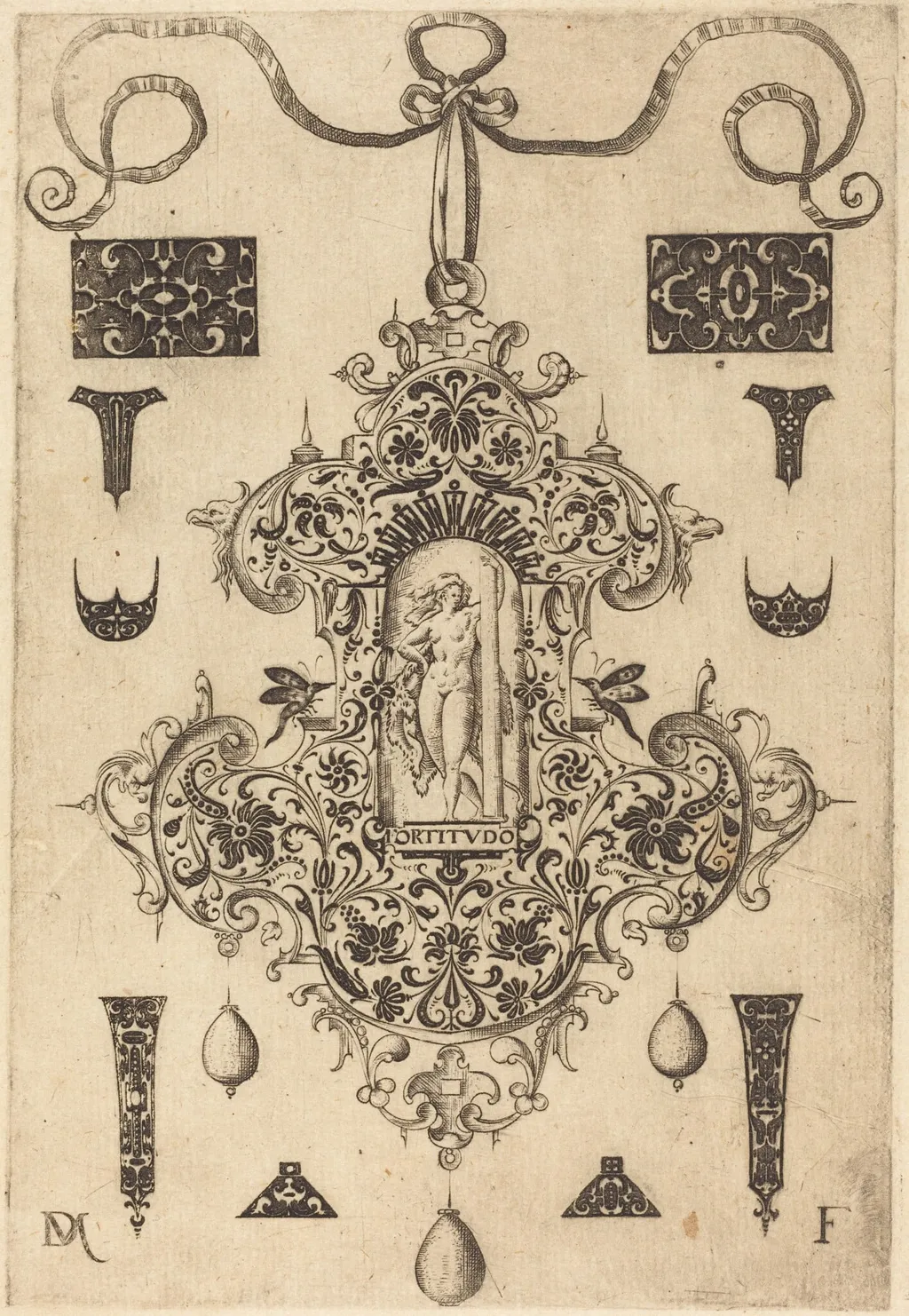
Large Pendant, Strength Standing at Centre is an ink print by the Renaissance artist Daniel Mignot. It dates from 1593 and is held in the collection of the National Gallery of Art.
About this work
The painting shows a large pendant with Strength standing at its center.
This work is interesting because it was created using a detailed process.
The artist likely used a lot of time to get the details just right, which was not easy to do in 1593.
You can learn more about this kind of detailed work by looking into the technique: engraving.
Overview
Created in 1593 by Daniel Mignot, this engraving takes the form of a large pendant design. Unlike a painted object, it is a printed image intended to serve as a model or template, likely for metalwork or jewelry. The work reflects the precision demanded by engraving techniques of the late Renaissance, where fine lines were incised into a metal plate to transfer intricate compositions onto paper.
Subject & Meaning
Surrounding elements may include allegorical symbols—such as chains, columns, or beasts—common in Renaissance iconography to convey moral or political virtues.
At the center of the composition stands a personification of Strength, depicted in a static, monumental pose. Surrounding elements may include allegorical symbols—such as chains, columns, or beasts—common in Renaissance iconography to convey moral or political virtues. The figure’s centrality suggests an emphasis on inner fortitude as a foundational ideal, possibly commissioned for a noble or civic context.
Technique & Style
Mignot employed the engraving method, using a burin to carve fine lines into a copper plate. The resulting print captures delicate textures and tonal gradations through controlled incisions, requiring steady hands and deep technical knowledge. The style is meticulous, with attention to anatomical detail and linear rhythm, characteristic of Northern European printmakers of the period who valued precision over expressive brushwork.
History & Provenance
The engraving was produced in 1593, during a period when decorative arts and emblematic imagery were widely circulated among European elites. While its original commission remains unrecorded, similar pendants were used as patterns for goldsmiths or as collectible prints. Surviving impressions are rare, and the work is now held in a limited number of institutional collections, primarily in Europe.
Context
In late 16th-century Europe, allegorical imagery was integral to courtly and intellectual culture. Engravings like this one functioned as visual references for artisans and as symbols of virtue in private collections. Mignot’s work aligns with a broader trend of translating humanist ideals into portable, reproducible forms, bridging fine art and applied design in an era before mass reproduction.
Legacy
Though not widely known today, Mignot’s engraving exemplifies the craftsmanship of Renaissance printmakers who elevated technical precision to an art form. Its survival offers insight into how symbolic imagery was standardized and disseminated before photography. The piece remains a reference for scholars studying the intersection of print culture, allegory, and material design in early modern Europe.
Artist & collection


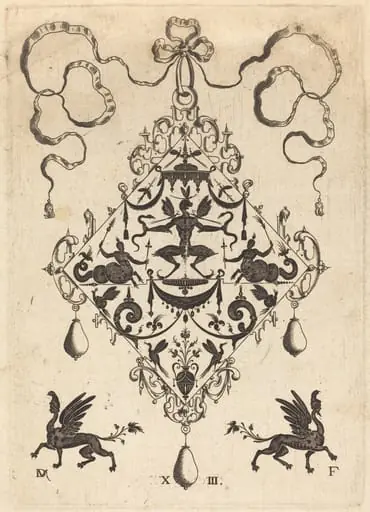 Large Pendant, Winged Fantasy Creature Holding Two Snakes
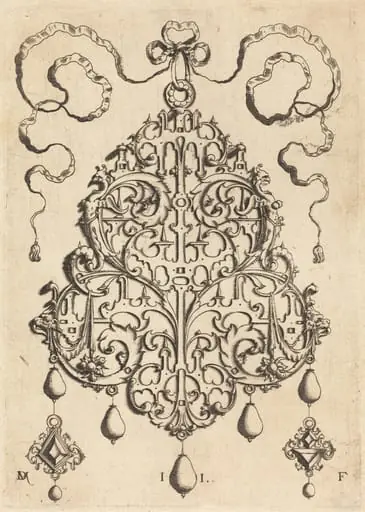 Large Strapwork Pendant with Two Hangers as Earrings at Left and Right
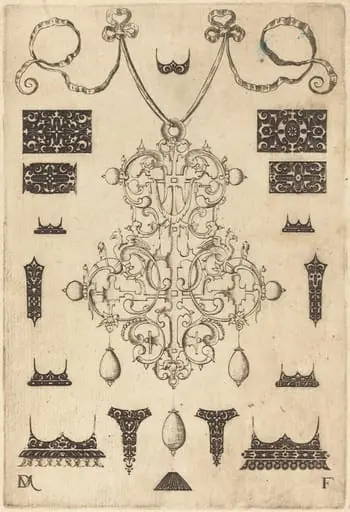 Large Pendant with Three Drops Below, Surrounded by Fifteen Different Studs
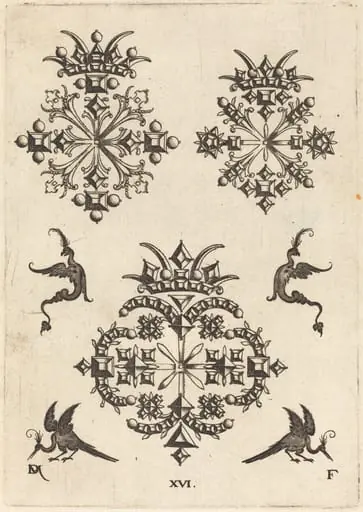 Three Brooches with Fantasy Birds at Left, Right, and Bottom
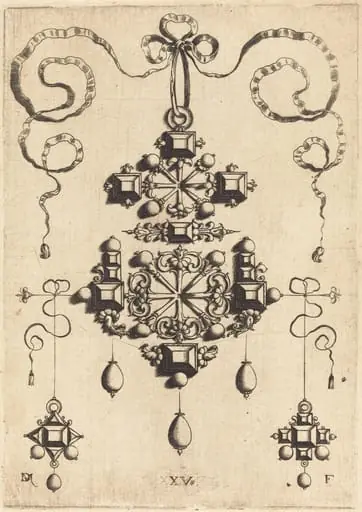 Pendant with Two Double Crosses, Surrounded by Four Diamond-Shaped Stones, Five Table-Stones, and Thirteen Pearls
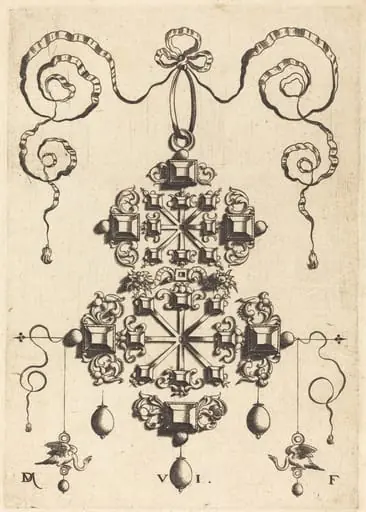 Large Pendant with Two Double Crosses, Surrounded by Six Large and Sixteen Small Table-Stones
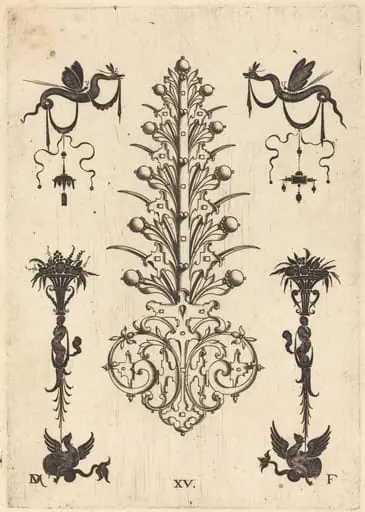 Hyacinth-Shaped Brooch with Winged Snakes at Top and Winged Animals at Bottom
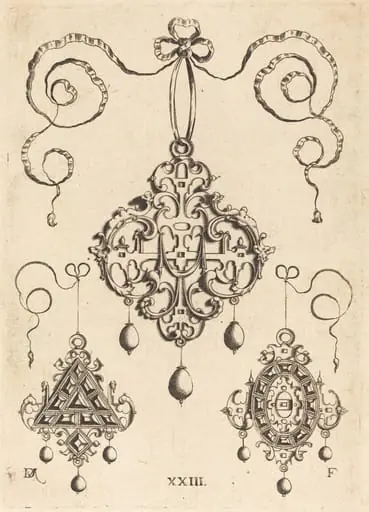 Three Strapwork Pendants, The Lower Ones Triangular and Oval
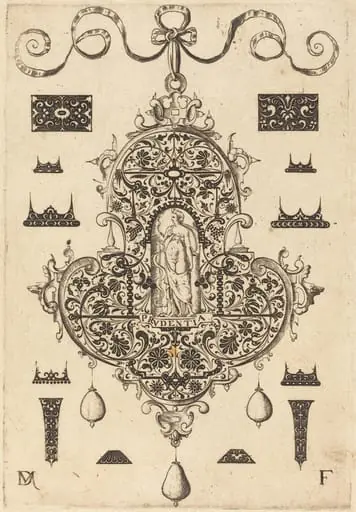 Large Pendant, Prudence Standing at Centre
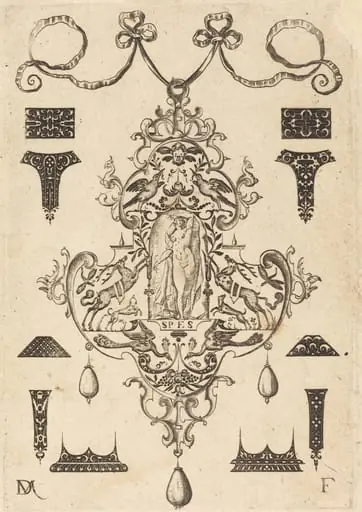 Large Pendant, Hope Standing at Centre
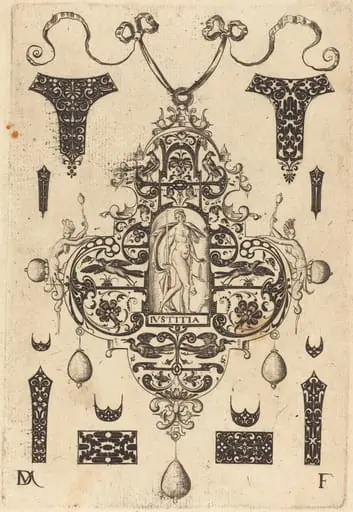 Large Pendant, Justice Standing at Centre
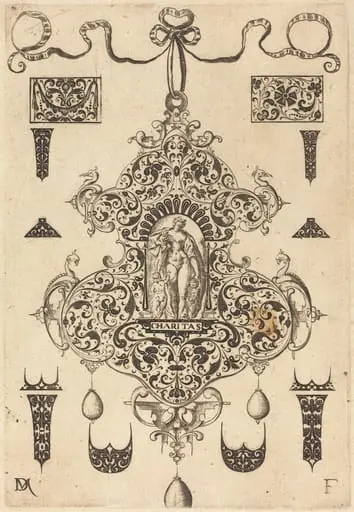 Large Pendant, Charity Standing at Centre
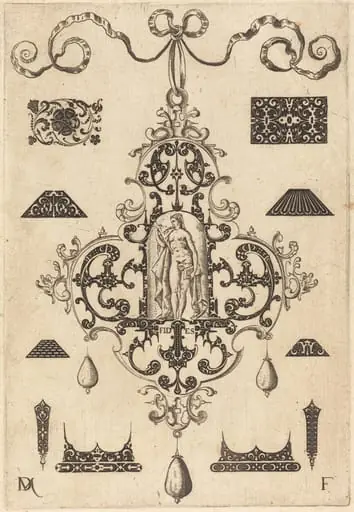 Large Pendant, Faith Standing at Centre
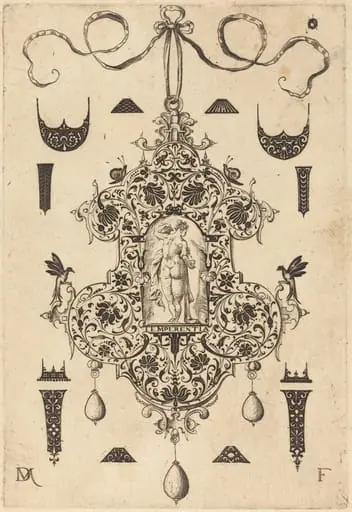 Large Pendant, Temperance Standing at Centre
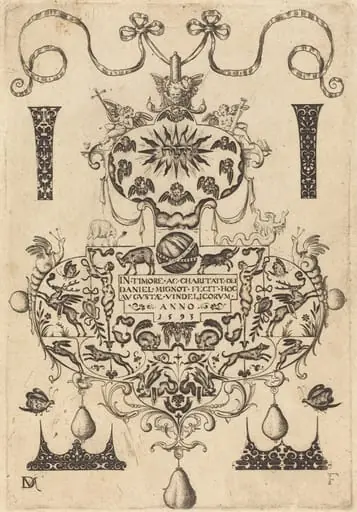 Title Page: Large Pendant
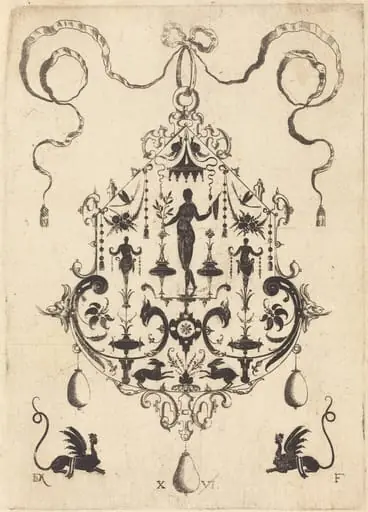 Large Pendant, Victory Flanked by Two Herms at Centre
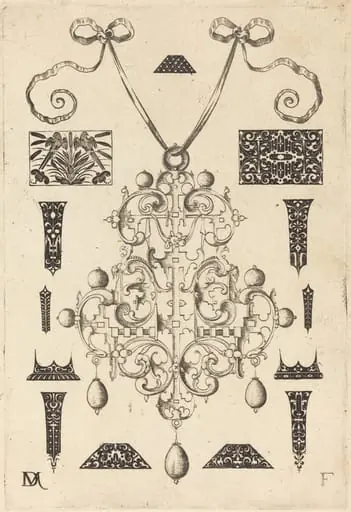 Large Pendant, Surrounded by Thirteen Studs
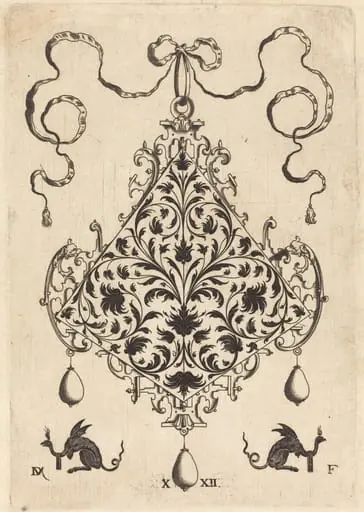 Large Pendant, Ornamental Foliage Design
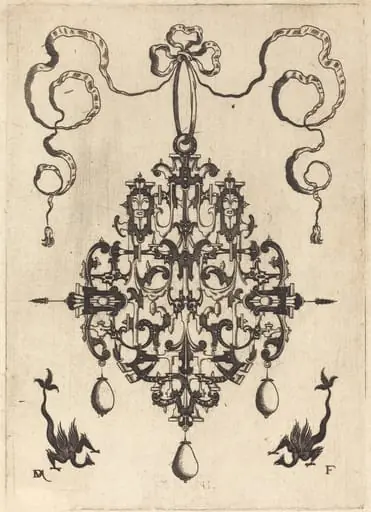 Large Pendant, Two Fantasy Creatures with Long Tails at Bottom