Artwork
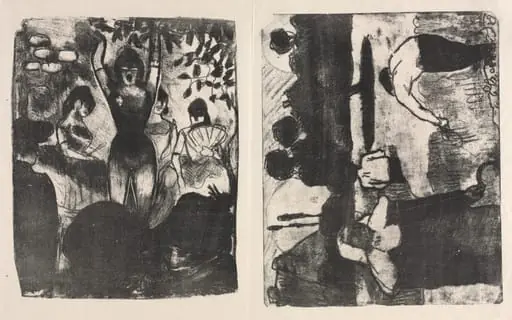
Singer at the Café-Concert
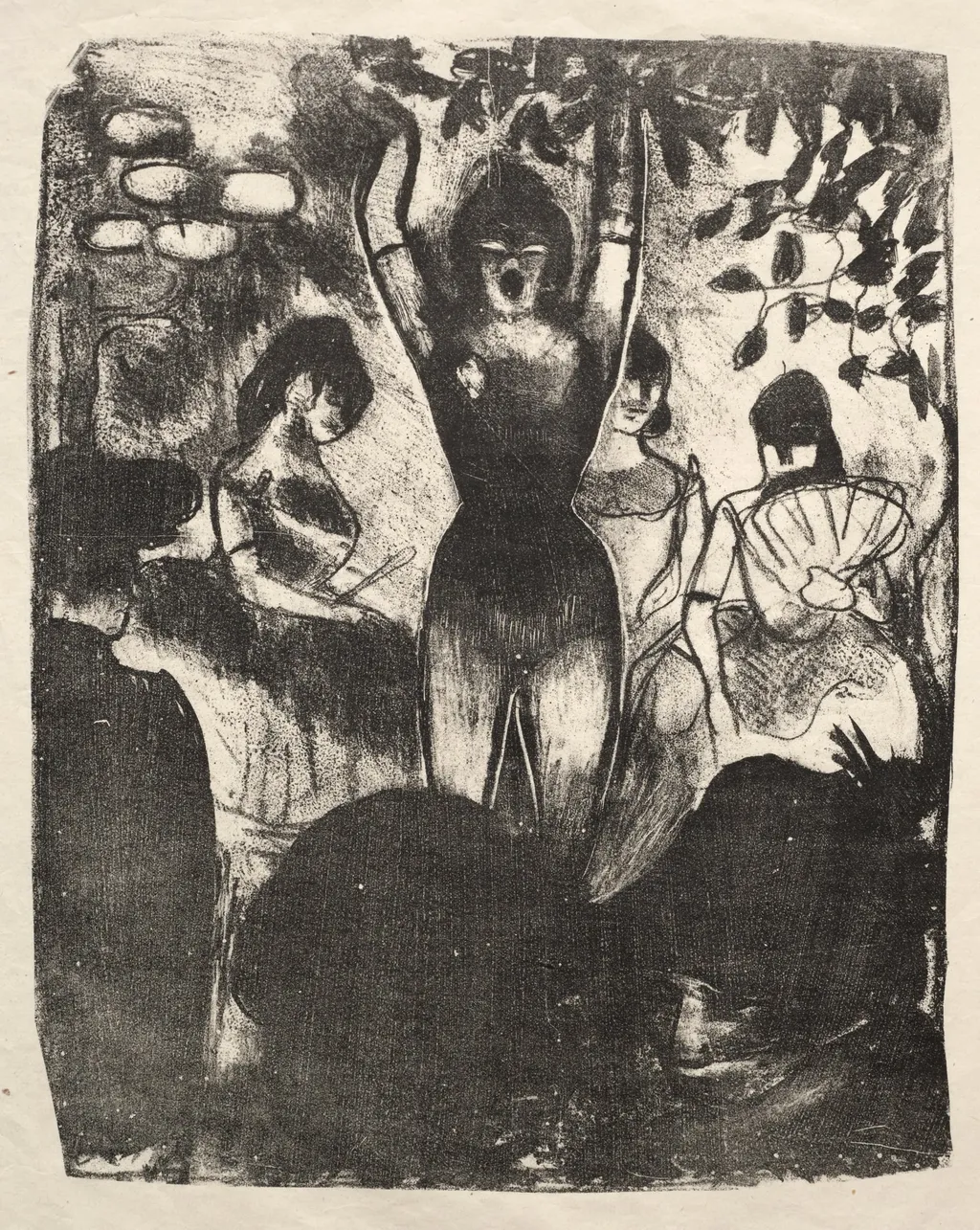
Singer at the Café-Concert is a print by the Impressionist artist Émile Bernard. It dates from 1888 and is held in the collection of the Cleveland Museum of Art.
About this work
Overview
Bernard, associated with Post-Impressionist circles and the Cloisonnism movement, used simplified forms and bold outlines to convey emotion rather than realism.
Created in 1888 by French artist Émile Bernard, *Singer at the Café-Concert* is a print that captures a moment from a popular Parisian entertainment venue. Bernard, associated with Post-Impressionist circles and the Cloisonnism movement, used simplified forms and bold outlines to convey emotion rather than realism. The work reflects his interest in everyday urban life and the psychological presence of performers.
Subject & Meaning
The print portrays a female singer on stage, arms raised in motion, her face obscured but her posture radiating intensity. The audience, rendered as shadowed figures, gazes upward, their attention fixed on her. By omitting facial detail, Bernard shifts focus from individual identity to the emotional resonance of performance, suggesting the anonymity and vulnerability of artists in public spaces.
Technique & Style
Bernard employed Cloisonnism, using flat areas of color bounded by dark contours to define forms. The background is nearly black, with a single source of light illuminating the singer from the right, creating stark contrast. This dramatic lighting isolates the figure, while the lack of depth and modeled shading aligns with Synthetist principles—prioritizing emotional synthesis over optical accuracy.
History & Provenance
Made during Bernard’s time in Pont-Aven, where he collaborated with Paul Gauguin, the print emerged from a period of artistic experimentation. Though less documented than his paintings, this work reflects his engagement with printmaking as a medium for expressive reduction. Its early circulation among avant-garde circles helped disseminate Synthetist ideals beyond canvas.
Context
Café-concerts were hubs of working-class leisure in late 19th-century Paris, blending music, drink, and spectacle. Bernard’s choice of subject reflects a broader interest among artists in depicting modern urban life outside elite salons. Unlike Impressionist depictions of light and movement, his approach emphasized emotional weight and symbolic form, distinguishing his work from contemporaries like Degas.
Legacy
Though Bernard is less widely known than Gauguin or van Gogh, his prints like this one contributed to the evolution of modern graphic art. The emphasis on emotional structure over naturalism influenced later Symbolist and Expressionist artists. *Singer at the Café-Concert* remains a quiet but significant example of how printmaking could convey psychological depth within a reductive visual language.
Artist & collection
Artist
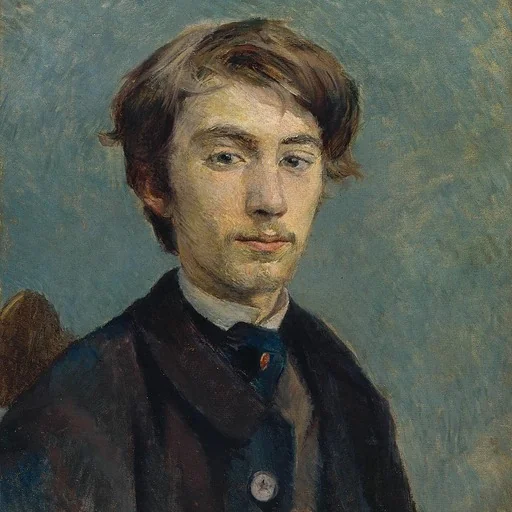
Émile Henri Bernard (French pronunciation: ; 28 April 1868 – 16 April 1941) was a French Post-Impressionist painter and writer, who had artistic friendships with Vincent van Gogh, Paul Gauguin and Eugène Boch, and at a later time, Paul…

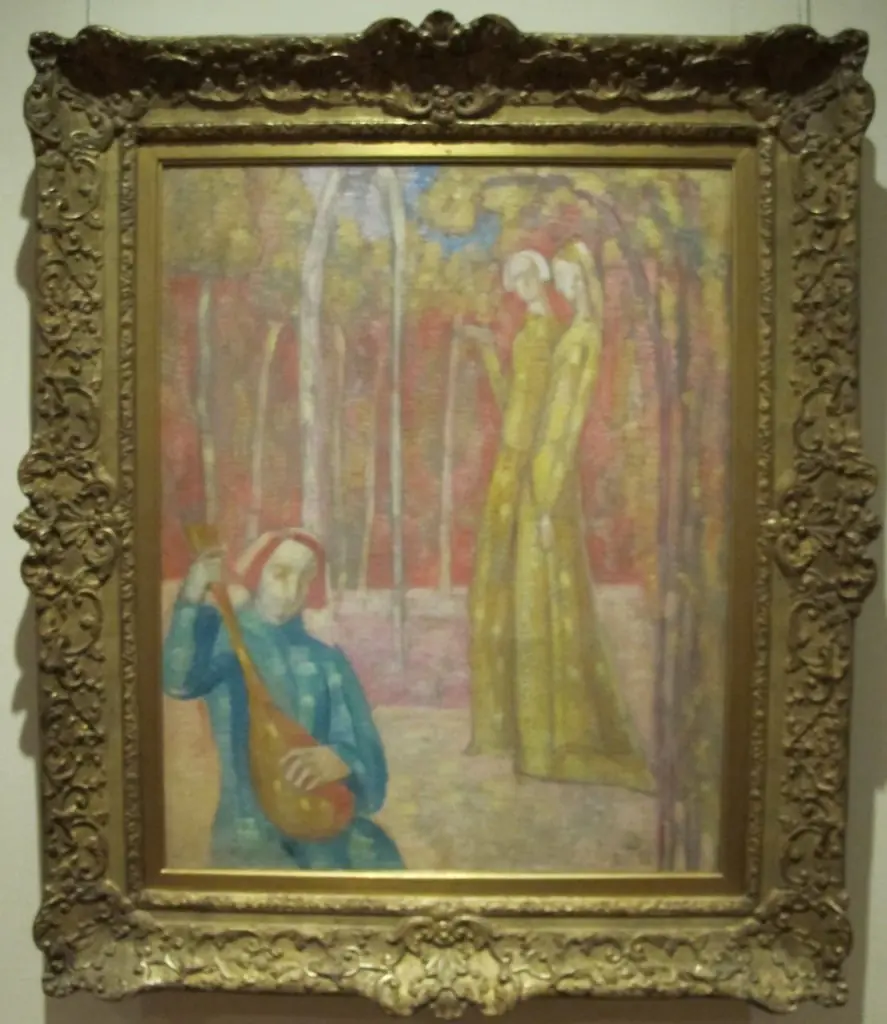
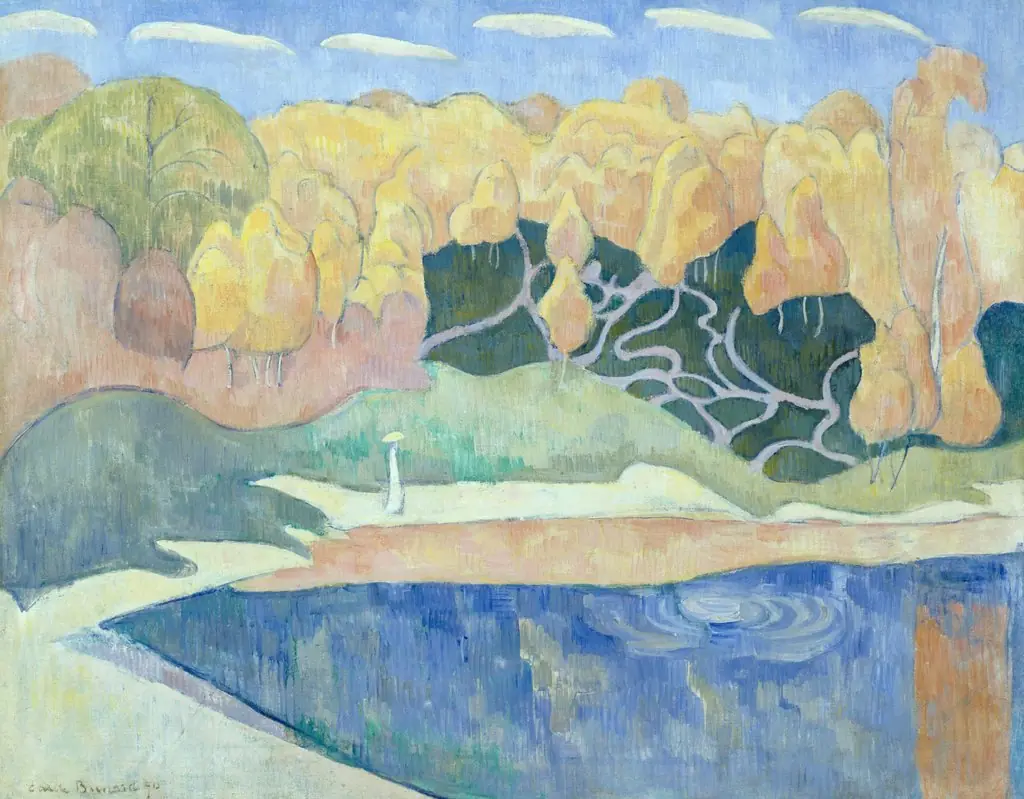
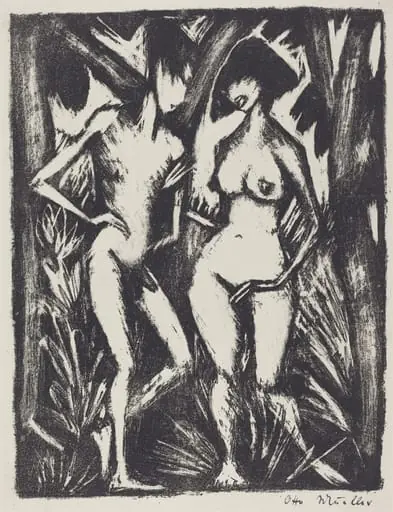 Adam and Eve (Adam und Eva)
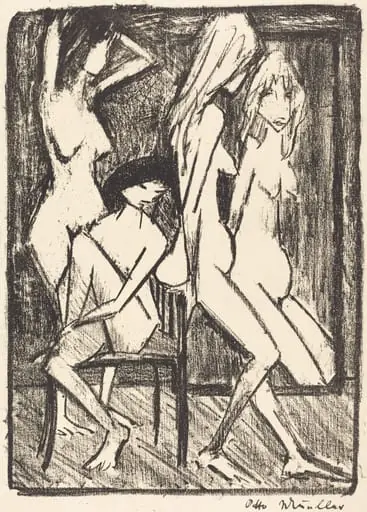 Three Girls in front of a Mirror (Drei Madchen vor dem Speigel)
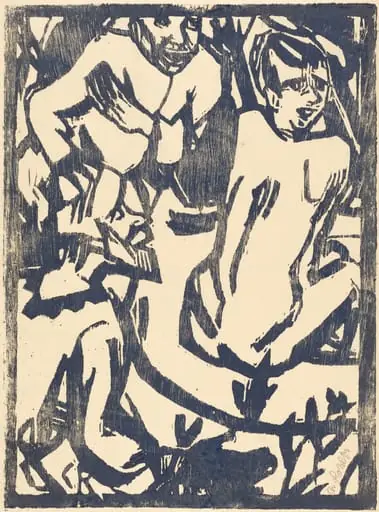 Susanna and the Elders
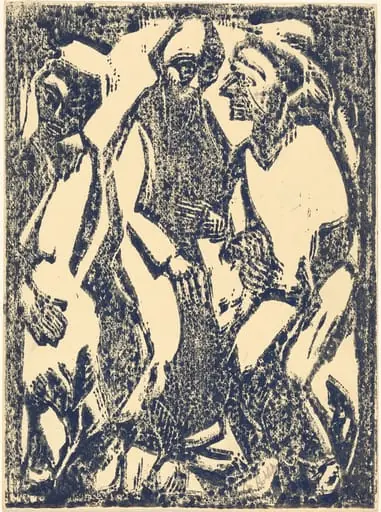 Deliberation (Beratung)
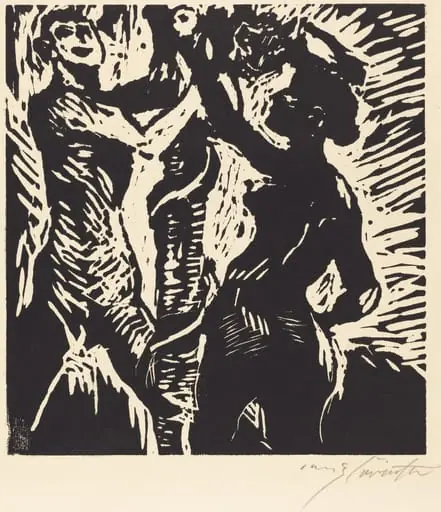 The Fall of Man (Der Sündenfall)
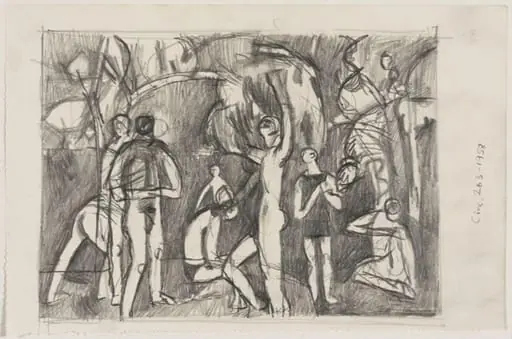 Landscape with figures
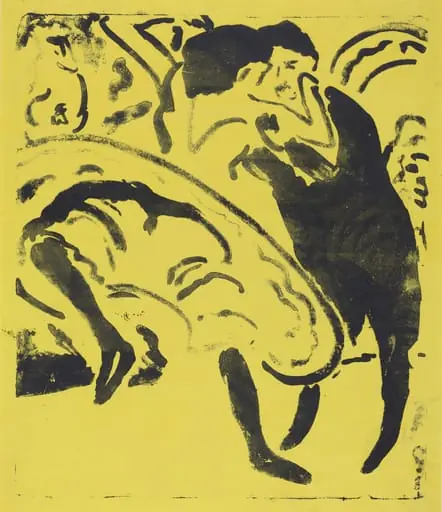 Dancing Couple (Tanzpaar)
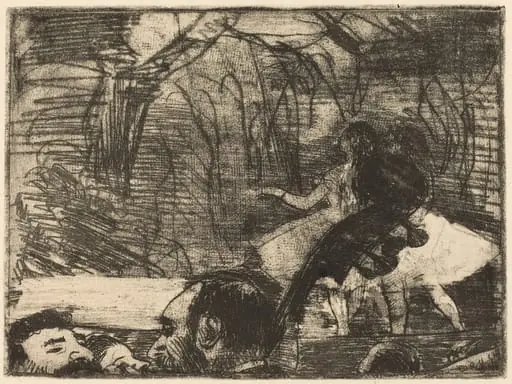 On Stage I
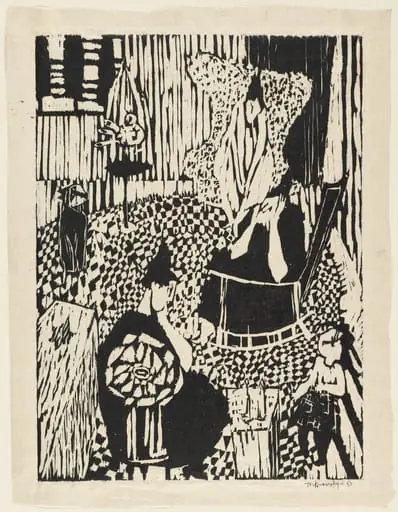 Untitled
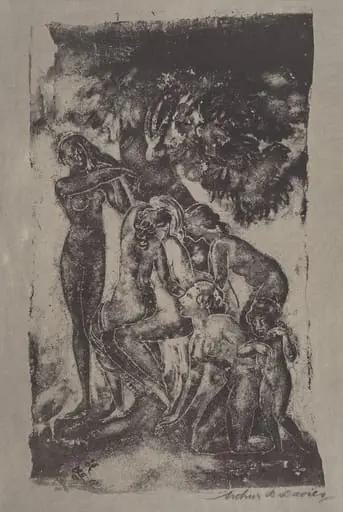 Figures of Earth
 Doorway to Illusion
 Singer at the Café-Concert and The Harvesters (Les Moissonneurs)