Artwork
Saint William the Hermit
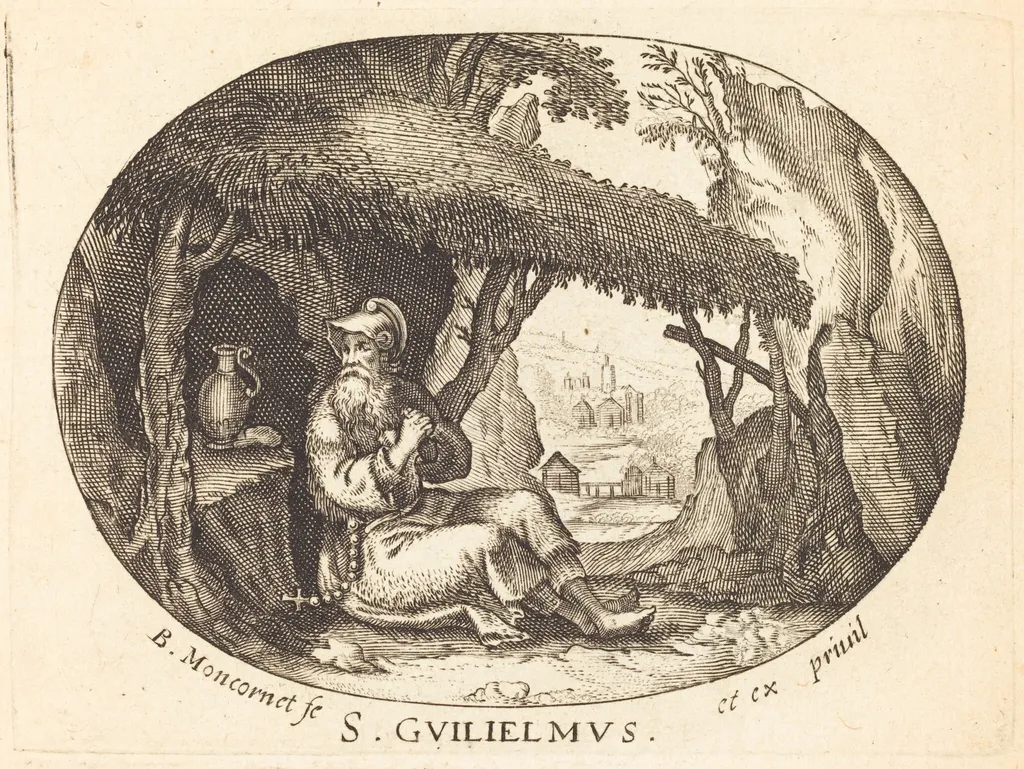
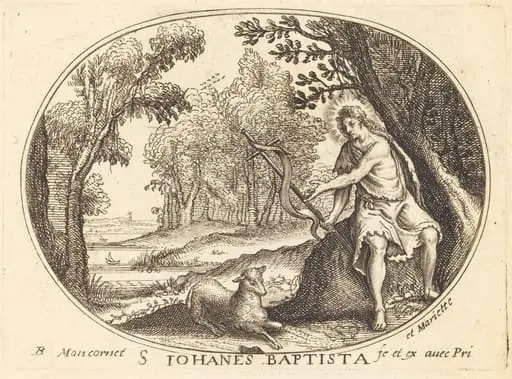
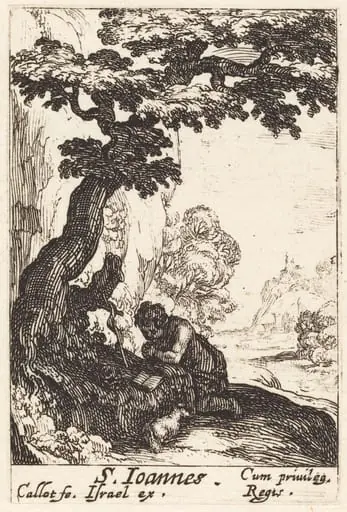
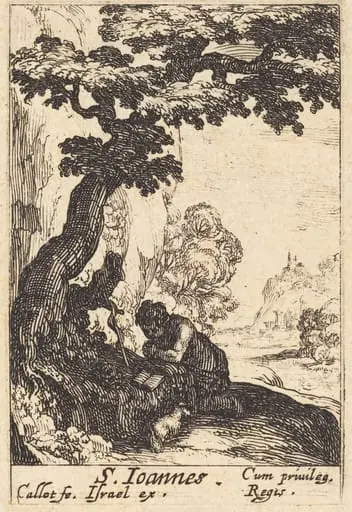
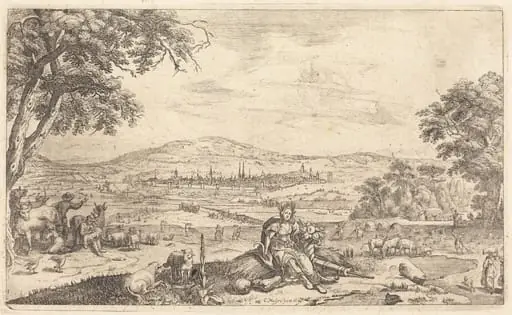
Saint William the Hermit is an ink print by the Baroque artist Balthasar Moncornet. It dates from 1634 and is held in the collection of the National Gallery of Art.
About this work
Overview
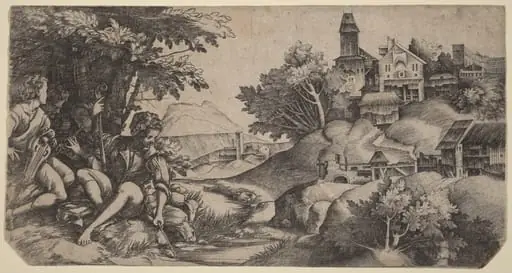
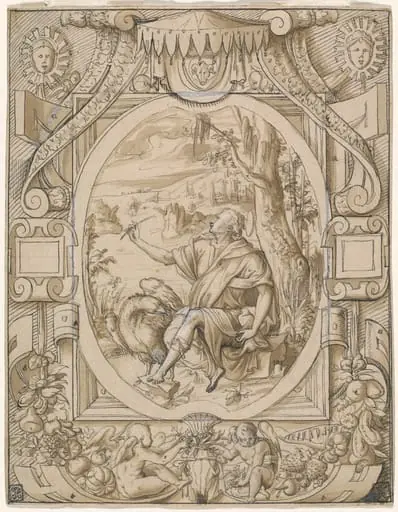
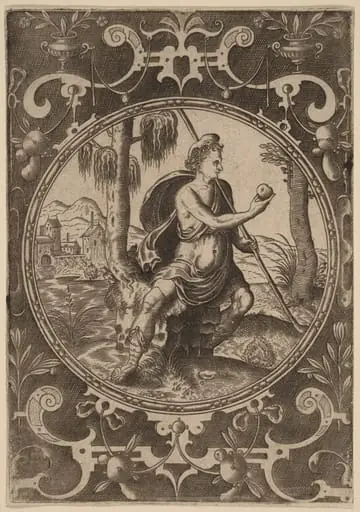
Saint William the Hermit is a 1634 engraving by French artist Balthasar Moncornet, falling within the religious genre. It depicts the titular saint in a serene, natural setting.
Subject & Meaning
The engraving portrays Saint William the Hermit as an aged man with a long white beard, dressed in a fur cloak, accompanied by a staff and a dog. A distant village with a church underscores the saint's connection to both solitude and community.
Technique & Style
Moncornet employed fine lines to achieve detailed shadows and textures, notably in the fur cloak and tree foliage. This technique aligns with the meticulous and expressive qualities of Baroque-era engraving.
History & Provenance
Created in 1634, this work is part of Moncornet's religious oeuvre, alongside his portraits of 17th-century notables. Specific provenance details are not provided.
Context
The piece reflects the Baroque emphasis on detail and texture in printmaking. The subject, Saint William, would have been recognizable to a 17th-century audience, highlighting the enduring appeal of religious themes during this period.
Legacy
While specific influence or notable exhibitions of *Saint William the Hermit* are not detailed, the engraving contributes to the broader understanding of Moncornet's contribution to 17th-century religious art and Baroque print techniques.
Artist & collection
Artist
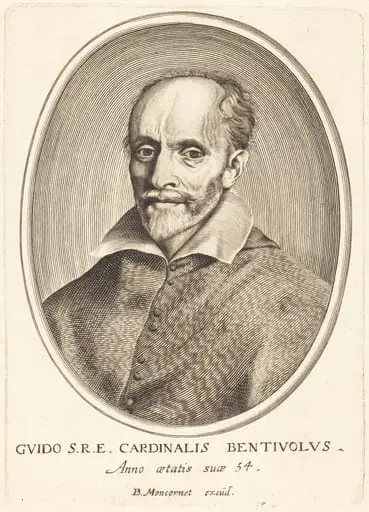
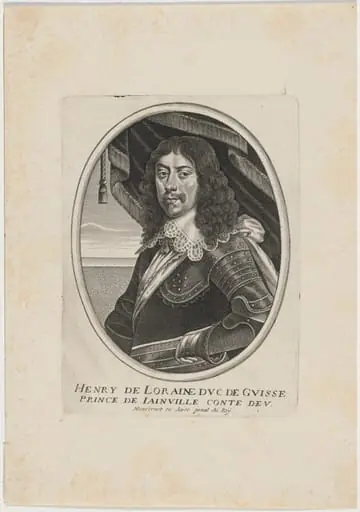
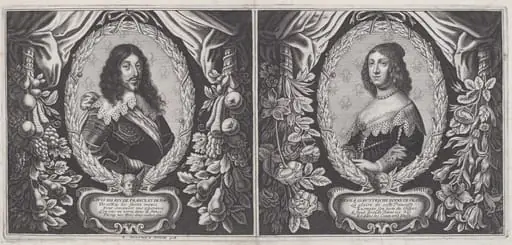
Balthasar Moncornet (1600, Rouen – 1668, Paris) was a French painter, engraver, and tapissier revered for his depictions of around 45 different prominent figures of the 17th century.