Artwork
Francois de Villemontee
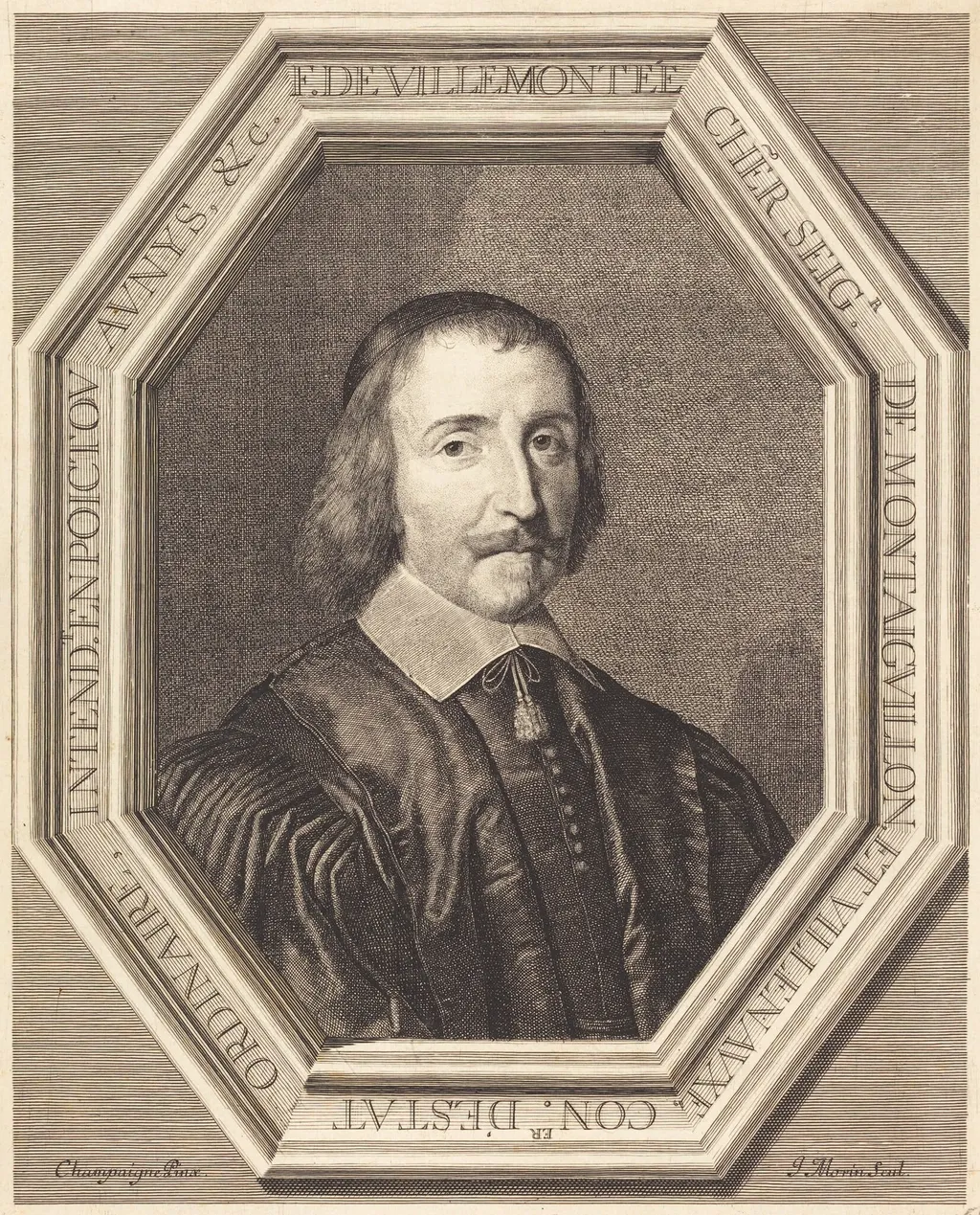
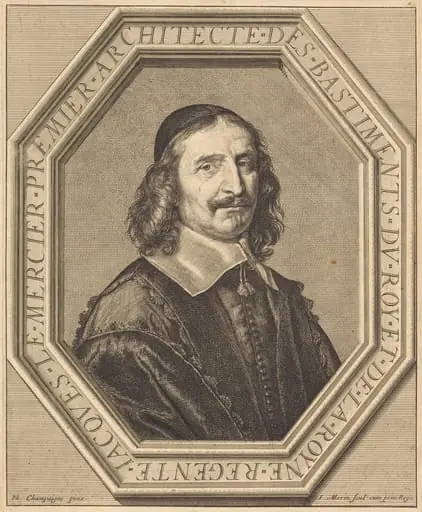
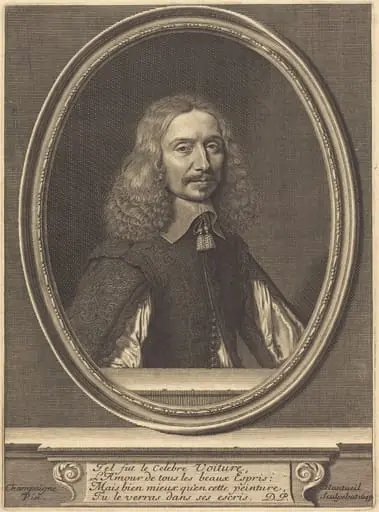
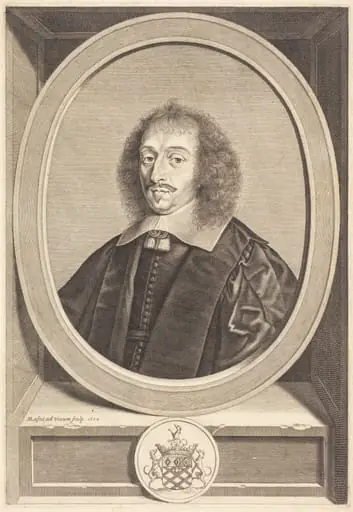
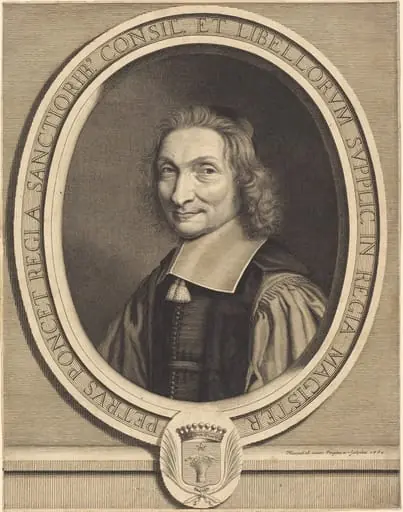
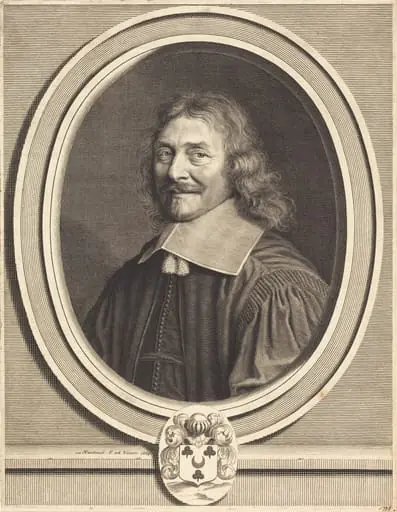
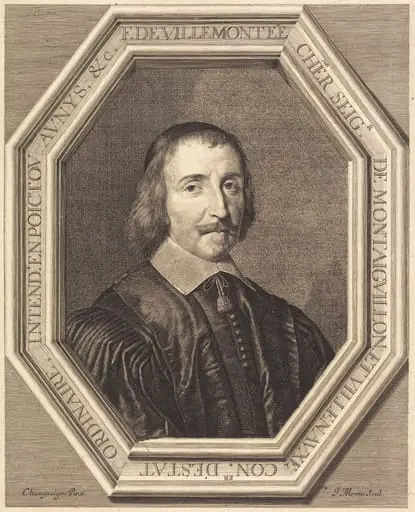
Francois de Villemontee is an ink print by the Baroque artist Jean Morin. It dates from 1625 and is held in the collection of the National Gallery of Art.
About this work
Overview
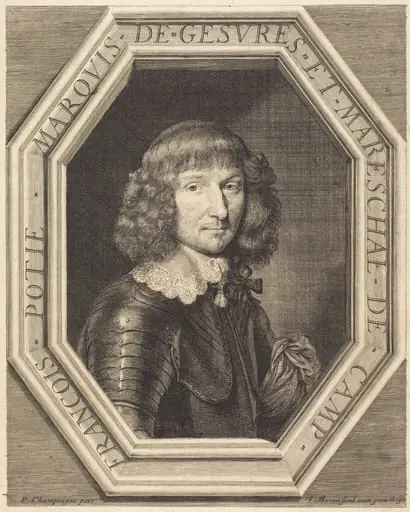
Jean Morin produced this portrait of François de Villemontée in 1625 as a printed image on laid paper, combining etching, engraving, and stippling.
Jean Morin produced this portrait of François de Villemontée in 1625 as a printed image on laid paper, combining etching, engraving, and stippling. These methods allowed for nuanced tonal variation and fine detail, characteristic of Morin’s approach to printmaking. The work belongs to a period when French artists were refining techniques to achieve painterly effects in prints, bridging the gap between drawing and engraved portraiture.
Subject & Meaning
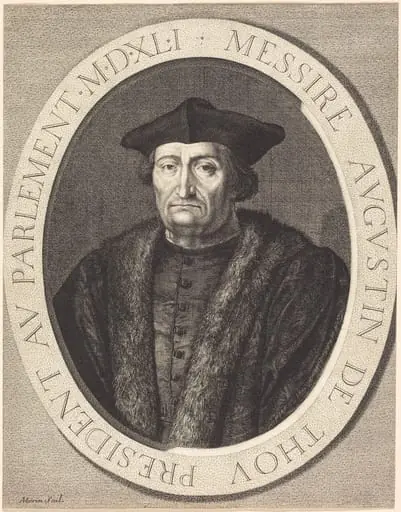
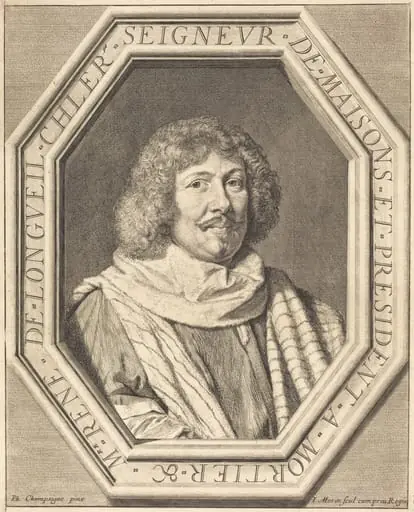
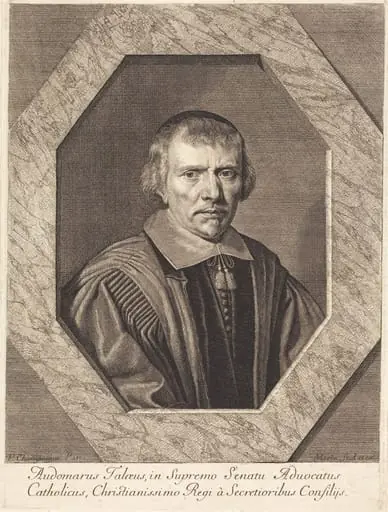
The portrait depicts François de Villemontée, a French nobleman, rendered with formal dignity. His long hair and dark robe suggest a refined, possibly courtly, identity, while the white collar and tasseled tie indicate status and attention to contemporary dress. The composition avoids overt symbolism, focusing instead on the quiet presence of the sitter, consistent with early 17th-century portraiture that valued restraint over theatricality.
Technique & Style
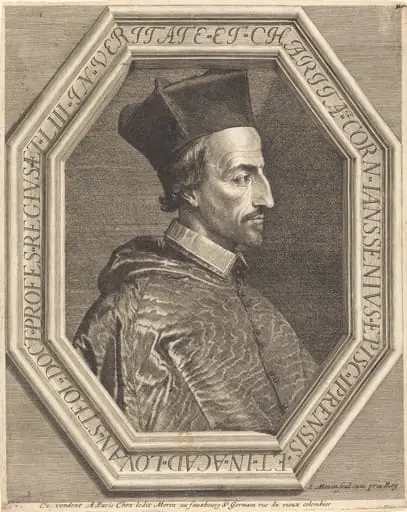
Morin employed etching for fluid lines, engraving for precise contours, and stippling to build gradations of tone. This layered approach created a sense of volume and texture without color, relying on ink density and line variation. The subtle interplay of light and shadow in the background enhances the three-dimensionality of the figure, reflecting Morin’s skill in merging multiple printmaking methods on a single plate.
History & Provenance
The print was made in 1625 during Morin’s active years in Paris, a time when portrait prints circulated among the educated elite. While specific ownership records are sparse, the work’s survival in institutional collections suggests it was valued for its technical innovation. The octagonal frame and inscriptions, though partially illegible, align with period conventions for presenting engraved portraits as objects of intellectual and aesthetic interest.
Context
In early 17th-century France, printmaking was gaining recognition as a medium for portraiture beyond mere reproduction. Morin’s fusion of techniques reflected broader European trends, particularly the influence of Dutch and Italian printmakers. This work contributes to a growing corpus of engraved likenesses that documented aristocratic and intellectual figures, serving both commemorative and social functions.
Legacy
Morin’s integration of etching, engraving, and stippling influenced later French printmakers seeking greater tonal range. Though not widely known today, his technical experiments helped expand the expressive potential of the medium. This portrait remains a representative example of how printmaking evolved from reproductive craft to a vehicle for nuanced artistic expression in the Baroque era.
Artist & collection
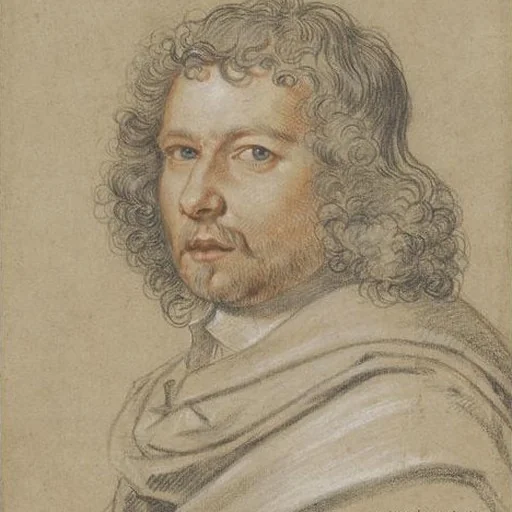
Artist
Jean Morin (c.1595 or 1605 – 1650) was a French baroque painter, printmaker, painter, etcher, engraver and publisher.