Artwork
Untitled
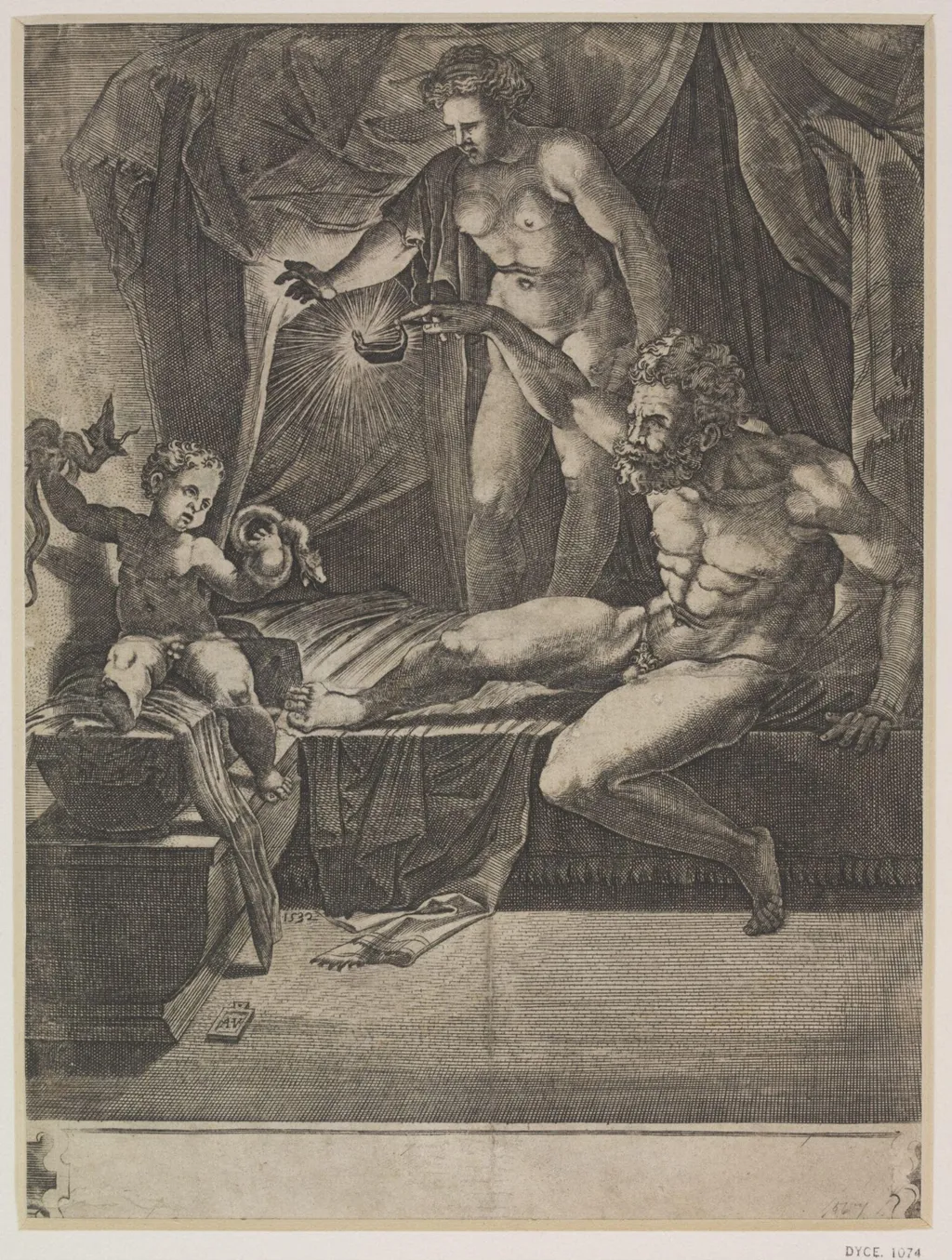
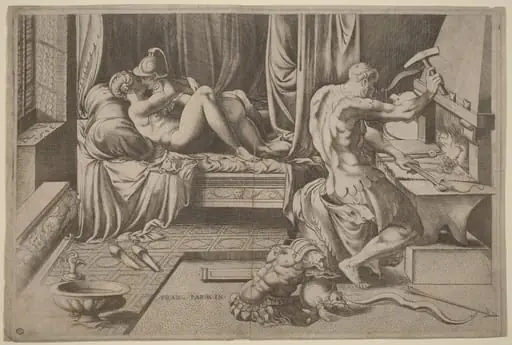
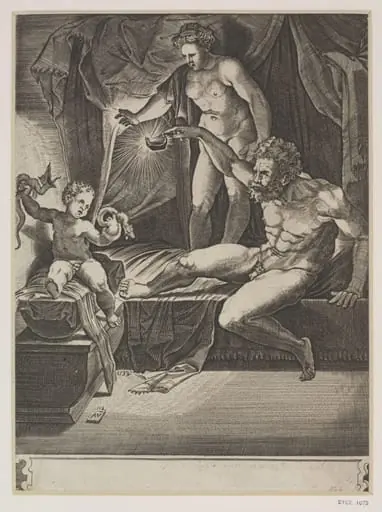
Untitled is a print by the Renaissance artist Agostino dei Musi. It dates from 1532 and is held in the collection of the Victoria and Albert Museum. This 1532 print depicts a mythological moment with three figures in a tightly composed scene.
About this work
The woman looks up, her body draped in flowing cloth, while the man’s face is turned downward.
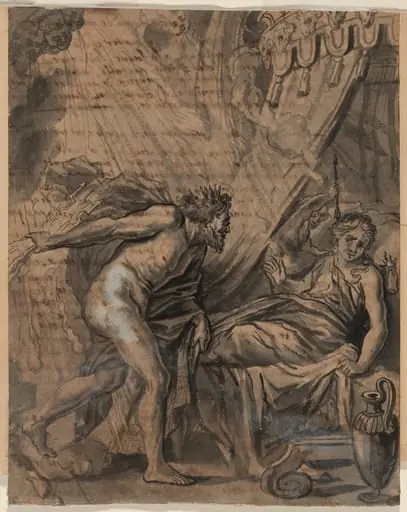
This print shows a dramatic scene with three figures. A muscular man with a beard leans over a bed, touching the bare foot of a reclining woman. Above them, a winged child holds a glowing orb. The woman looks up, her body draped in flowing cloth, while the man’s face is turned downward. Shadows and light create strong contrasts, making the figures stand out sharply.
The print was made in 1532, using a method that highlights deep shadows and bright light. This technique helps show the figures’ shapes and emotions clearly.
Look up chiaroscuro to learn more about this dramatic lighting style.
Overview
This 1532 print depicts a mythological moment with three figures in a tightly composed scene. Executed in chiaroscuro, the work uses stark contrasts of light and shadow to define form and mood. It is an early state of an engraving derived from a design by Giulio Romano, produced on paper using a technique that emphasizes dramatic illumination and deep tonal ranges.
Subject & Meaning
The scene illustrates the infant Hercules strangling serpents sent by Hera to kill him in his cradle. A female figure, likely Amphitrite or a nurse, observes the event with a lamp, while a bearded man leans over the bed, his gesture suggesting intervention or awe. The winged child above, holding a glowing orb, may symbolize divine presence or fate, reinforcing the myth’s theme of destined heroism.
Technique & Style
The print employs chiaroscuro to model the figures with sharp, sculptural clarity. Deep blacks and bright highlights define musculature, drapery, and facial expressions, enhancing emotional intensity. The engraving technique allows fine lines to render texture and volume, while the absence of mid-tones heightens the sense of drama and tension within the confined space.
History & Provenance
Created in 1532, this is the first known state of the engraving, based on a design by Giulio Romano, a key figure in the Roman Mannerist movement. The print was likely produced in Rome or Mantua, where Romano worked, and circulated among collectors interested in classical themes rendered through innovative graphic techniques of the early 16th century.
Context
Produced during the height of Mannerism, the print reflects a fascination with dynamic composition, mythological narrative, and expressive anatomy. Artists and patrons of the period favored prints as vehicles for disseminating complex imagery, often adapting designs from painters like Romano. This work aligns with broader trends in Northern and Italian printmaking that prioritized emotional and visual impact over naturalism.
Legacy
As an early state of a Romano-derived engraving, this print offers insight into the transmission of Mannerist aesthetics through graphic media. Its use of chiaroscuro influenced later printmakers exploring light as a narrative tool. Though not widely reproduced, it remains a significant example of how classical myths were reinterpreted in print form during the Renaissance.
Artist & collection
Artist
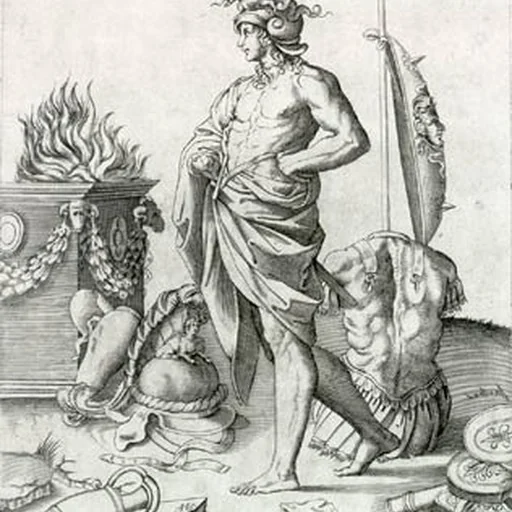
Agostino Veneziano ("Venetian Agostino"), whose real name was Agostino de' Musi (c. 1490 – c. 1540), was an important and prolific Italian engraver of the Renaissance.