Artwork
The Massacre under the Roman Triumvirate
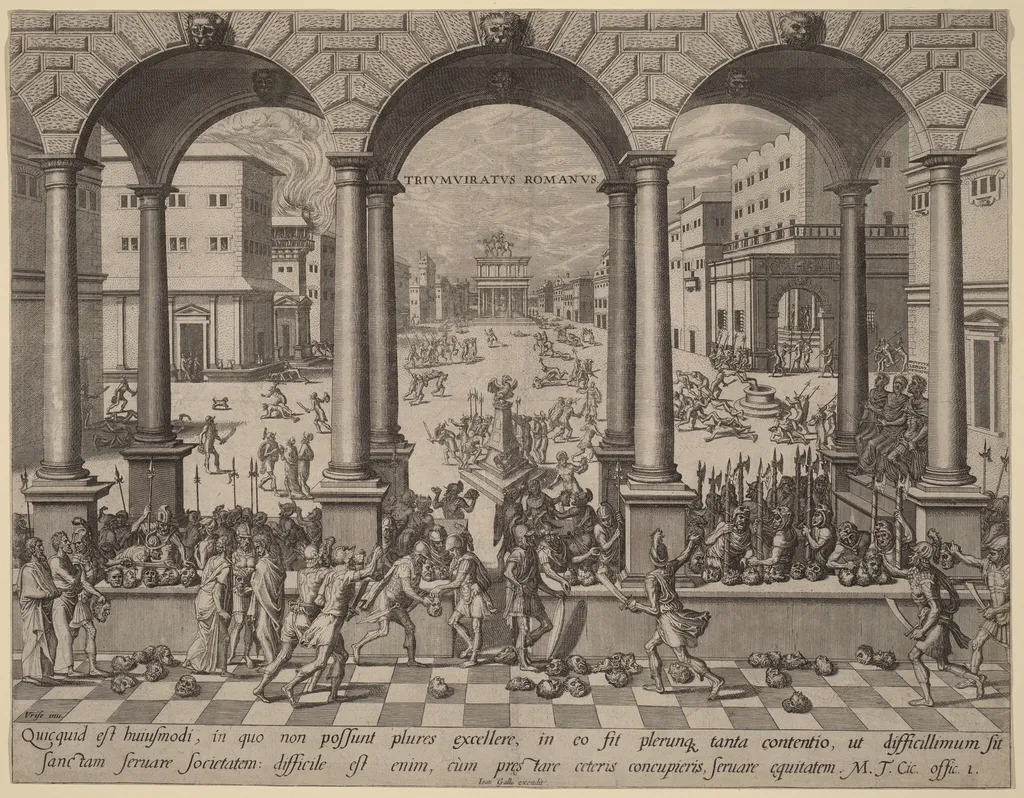
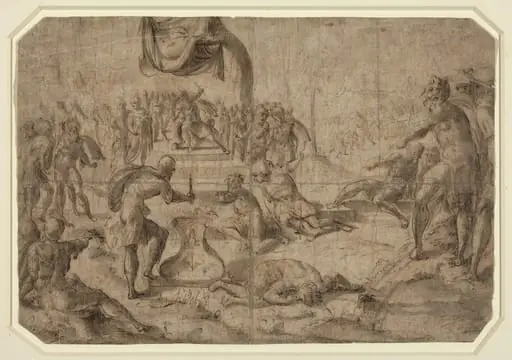
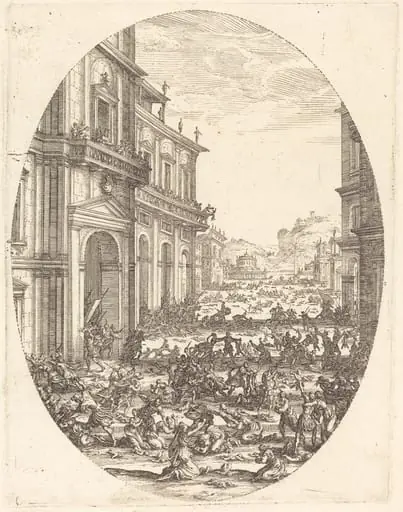
The Massacre under the Roman Triumvirate is an ink print by the Renaissance artist Netherlandish 16th Century. It dates from 1550 and is held in the collection of the National Gallery of Art.
About this work
Overview
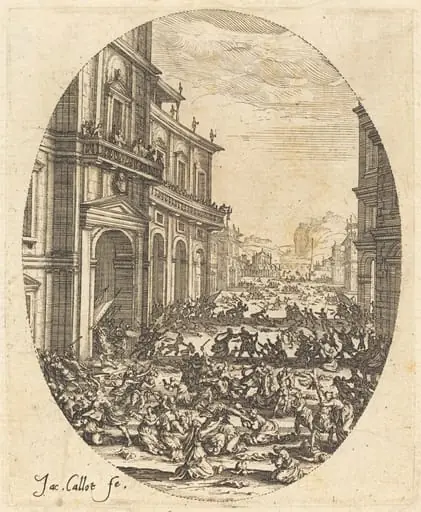
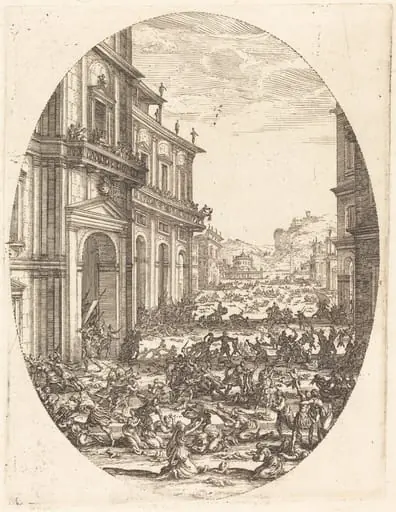
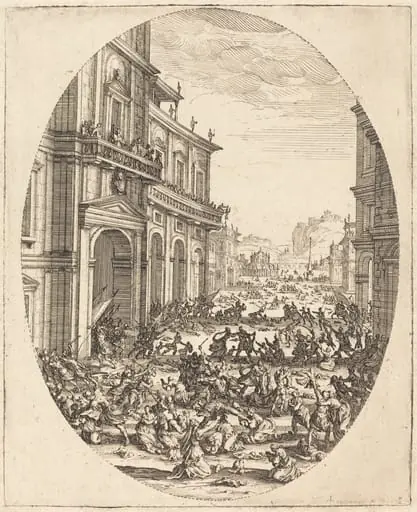
The Massacre under the Roman Triumvirate is an engraving depicting a chaotic and violent scene set against a backdrop of burning buildings and beneath a banner proclaiming 'Triumviratus Romanus'. The composition features a tumultuous crowd, architectural elements, and incidental details like roaming dogs, all rendered in meticulous detail.
Subject & Meaning
The engraving illustrates a moment of brutal conflict, possibly alluding to historical events associated with the Roman Triumvirate, a period marked by political alliances and violence. The scene conveys turmoil, fear, and aggression among the figures, while the 'Triumviratus Romanus' banner contextualizes the action within a specific, though unspecified, historical or allegorical framework.
Technique & Style
The artist employed cross-hatching, a technique involving closely spaced parallel lines at varying angles, to achieve deep shadows and a sense of three-dimensionality. This method, characteristic of detailed engravings, contributes to the overall busy and dramatic atmosphere of the piece. The use of engraving as the medium allowed for the mass production of this intricate design.
History & Provenance
Unfortunately, specific details regarding the creation date, artist, and ownership history of 'The Massacre under the Roman Triumvirate' are not provided in the available information.
Context
The work reflects the artistic and technical capabilities of engravers during its time, possibly serving as a commentary on political strife or a historical record of events under the Roman Triumvirate. The inclusion of architectural details and the banner suggests an intent to ground the scene in a recognizable, if not precisely dated, historical context.
Legacy
The legacy of 'The Massacre under the Roman Triumvirate' would depend on its reception, the artist's prominence, and its influence on subsequent works, all of which are not detailed in the provided facts. However, the use of cross-hatching and engraving techniques places it within a broader tradition of detailed, narrative printmaking.
Artist & collection

Artist
This artist carved scenes with fine lines, mostly religious and mythological ones.