Artwork
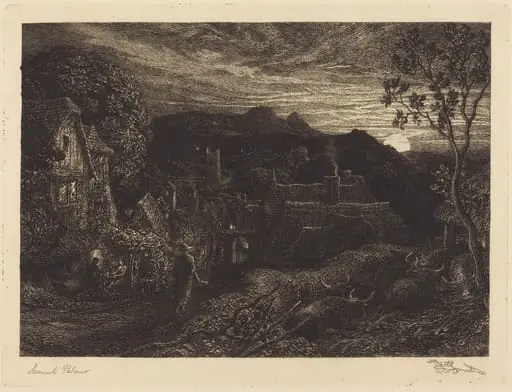
The Rising Moon
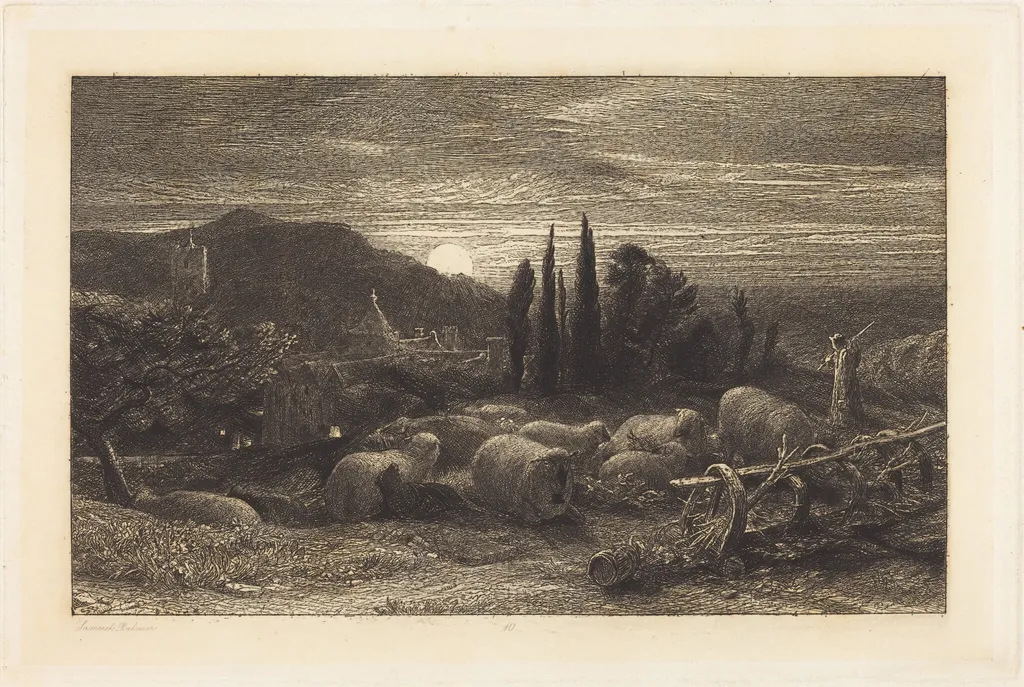
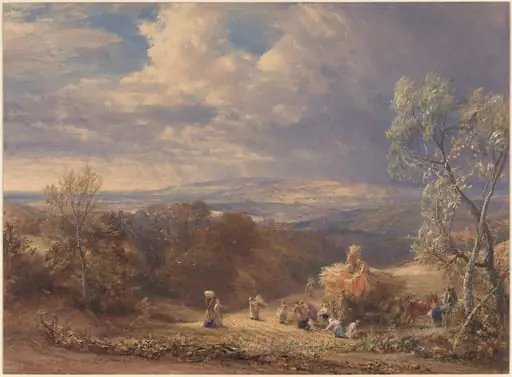
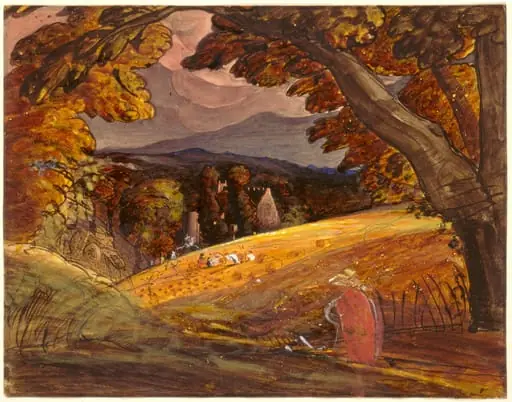
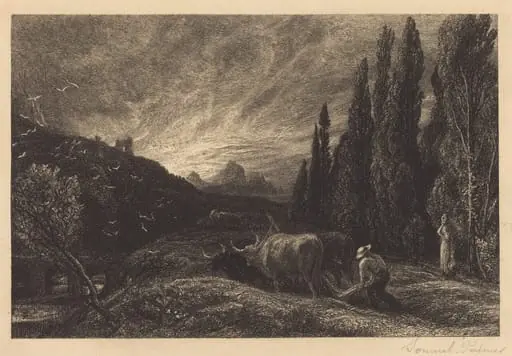
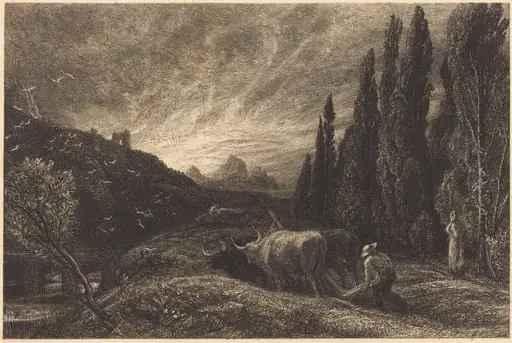
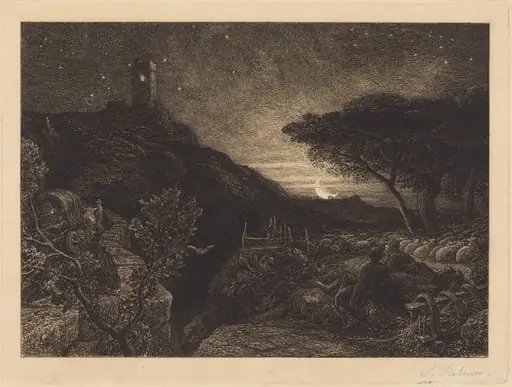
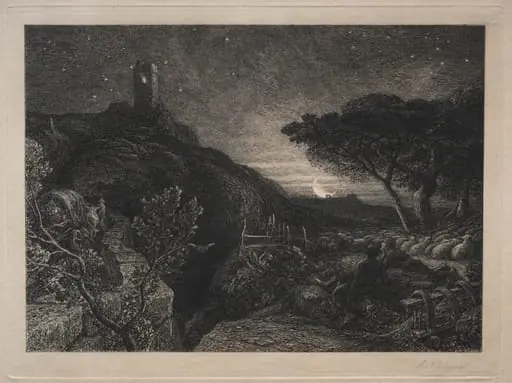
The Rising Moon is an ink print by the Impressionist artist Samuel Palmer. It dates from 1857 and is held in the collection of the National Gallery of Art.
About this work
Overview
Samuel Palmer produced *The Rising Moon* in 1857 as an etching on chine collé, a technique that layers thin paper onto a heavier support to enhance tonal depth.
Samuel Palmer produced *The Rising Moon* in 1857 as an etching on chine collé, a technique that layers thin paper onto a heavier support to enhance tonal depth. The work belongs to his later period, when his focus remained on nocturnal landscapes infused with quiet reverence. Though executed in monochrome, the print conveys a sense of stillness and spiritual calm, characteristic of Palmer’s enduring engagement with the English countryside at twilight.
Subject & Meaning
The scene depicts a solitary shepherd beside his flock on a hillside under a rising moon, with a distant church steeple and towering trees framing the composition. The figures and forms suggest a harmonious coexistence between human labor, nature, and the divine. Palmer avoids dramatic narrative, instead inviting contemplation through stillness—offering a vision of rural life as a sacred, unchanging rhythm.
Technique & Style
Palmer employed fine, controlled etching lines to model light and shadow, creating subtle gradations across the moonlit landscape. The use of chine collé allowed him to achieve delicate tonal contrasts, particularly in the moon’s glow and the textured earth. His linework is precise yet fluid, capturing the softness of night air and the roughness of stone with equal care, reinforcing the dreamlike stillness of the scene.
History & Provenance
Created in 1857, *The Rising Moon* emerged during Palmer’s later years, after his association with the Shoreham Ancients had waned. Though less publicly celebrated than his earlier visionary works, this print reflects his sustained commitment to intimate, nocturnal landscapes. It was likely produced in small editions for private collectors, preserving its quiet, personal character rather than seeking broad commercial appeal.
Context
In mid-19th-century Britain, industrialization reshaped the landscape and rural life. Palmer’s etchings stood in quiet opposition to this change, reviving Romantic ideals of nature as a spiritual refuge. His work resonated with a growing nostalgia for pre-industrial rhythms, offering viewers a meditative alternative to the accelerating modern world.
Legacy
Though overshadowed in his time by larger artistic movements, Palmer’s etchings, including *The Rising Moon*, later influenced 20th-century British printmakers drawn to lyrical, introspective imagery. His ability to convey emotional depth through minimal means and meticulous technique secured his place as a distinctive voice in the history of British printmaking.
Artist & collection
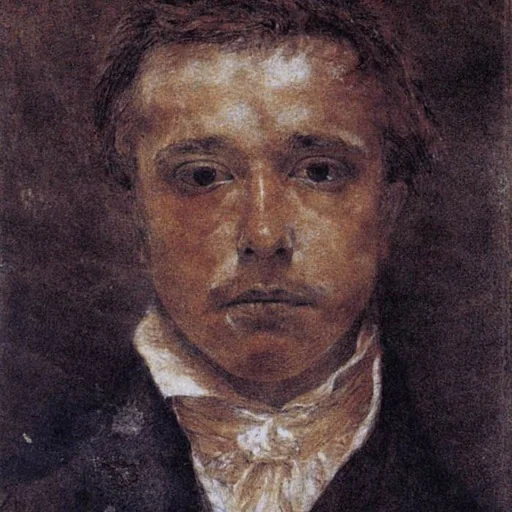
Artist
Samuel Palmer Hon.RE (Hon. Fellow of the Society of Painter-Etchers) (27 January 1805 – 24 May 1881) was a British landscape painter, etcher and printmaker. He was also a prolific writer. Palmer was a key figure in…