Artwork
Henry Rich, First Earl of Holland
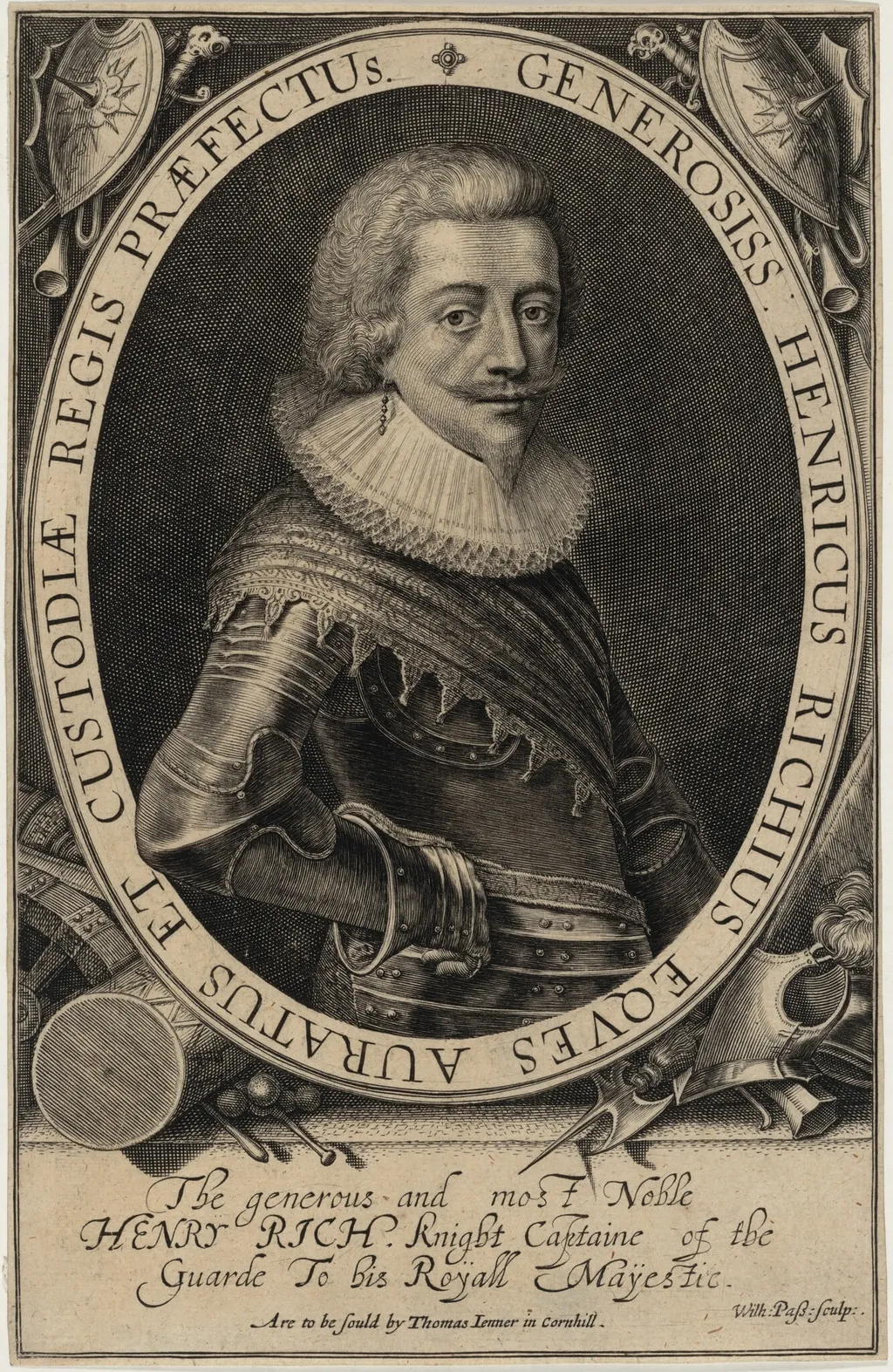
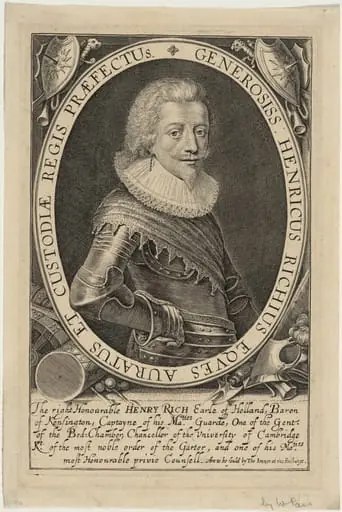
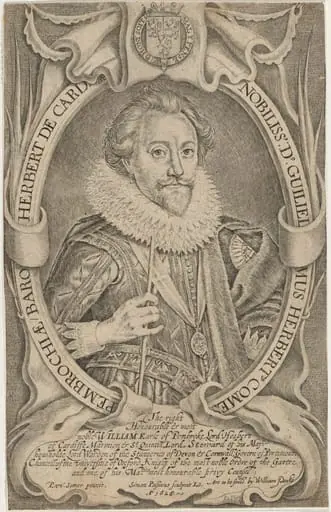
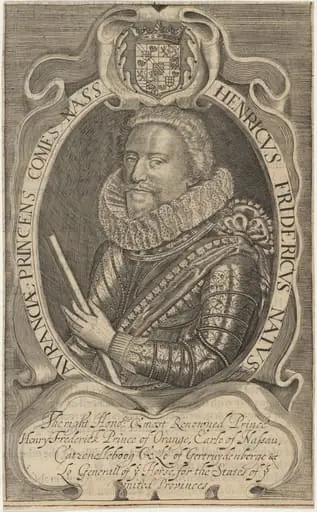
Henry Rich, First Earl of Holland is an ink print by the Renaissance artist Willem de Passe. It dates from 1618 and is held in the collection of the National Gallery of Art.
About this work
Overview
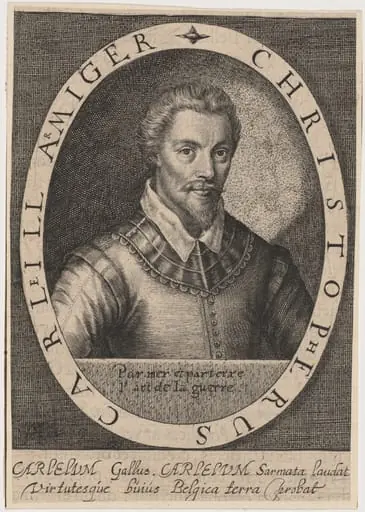
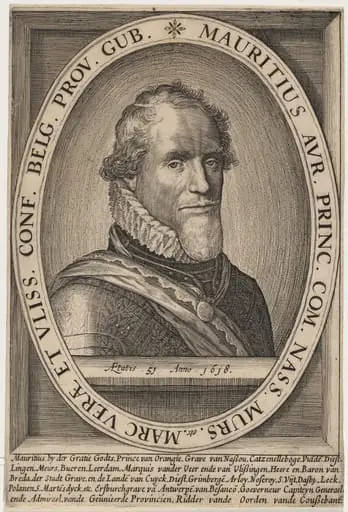
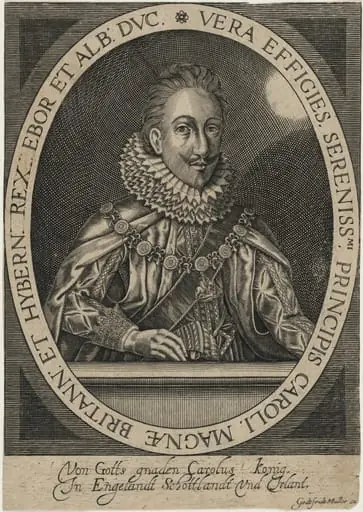
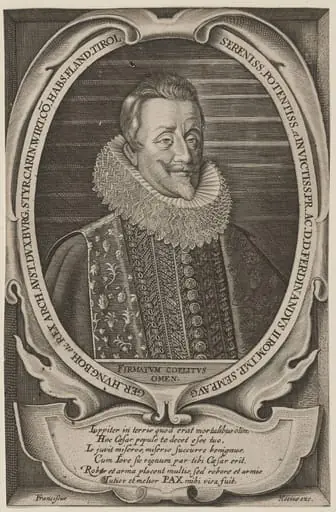
Willem de Passe’s 1618 engraving presents Henry Rich, First Earl of Holland, in a formal portrait. Rendered in stark black‑and‑white, the image captures the nobleman in ornate armor, a curled wig, and a stiff ruff, framed by a flowing Latin‑inscribed banner. The composition emphasizes his status through meticulous line work and a composed, dignified bearing.
Subject & Meaning
The sitter, identified in the inscription as Henry Rich, holds the title of knight captain, reflecting his military and courtly roles. The Latin terms on the banner—such as *Generosus* and *Auratis*—allude to noble lineage and perhaps to the gilded qualities associated with his rank, reinforcing the portrait’s function as a statement of aristocratic identity.
Technique & Style
Executed by engraving, the print relies on fine incised lines to model the intricate details of armor, straps, and buckles. De Passe’s hand is evident in the crisp delineation of textures and the subtle gradations achieved through cross‑hatching, which give the portrait a precise, almost sculptural quality despite the monochrome medium.
History & Provenance
Created in the early seventeenth century, the print likely served as a commemorative image for patrons or as a means of disseminating the Earl’s likeness. While specific ownership records are sparse, de Passe’s works were widely circulated among English and Dutch collectors, suggesting the engraving entered the broader market for portrait prints shortly after its production.
Context
The portrait belongs to a period when engraved likenesses were a primary vehicle for asserting status and political allegiance. Rich’s armor and the Latin motto reflect the martial culture of the Stuart court, while the formal pose aligns with contemporary conventions of noble portraiture that emphasized order and authority.
Legacy
De Passe’s portrait of the Earl of Holland remains a valuable visual document for scholars of early modern English aristocracy, illustrating both the aesthetic conventions of portrait engraving and the visual rhetoric employed to convey rank and virtue in the early 1600s.
Artist & collection