Artwork
Frederick Henry of Nassau
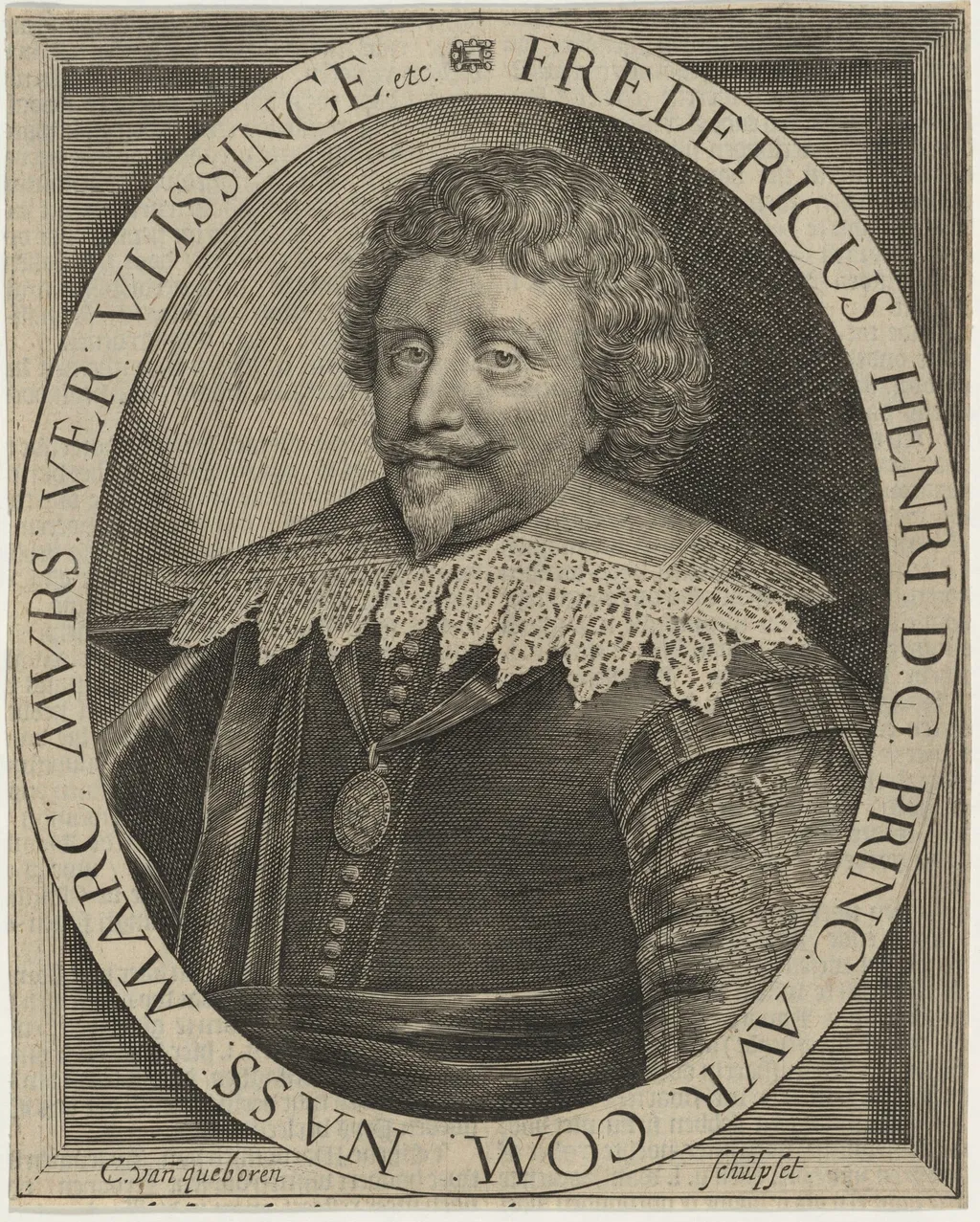
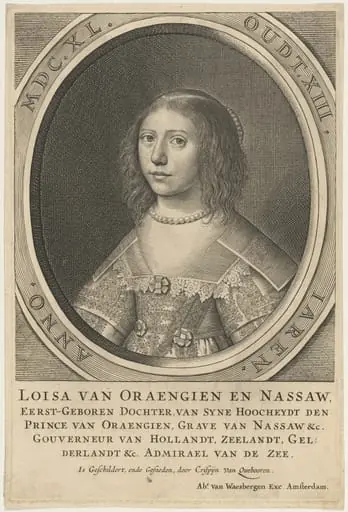
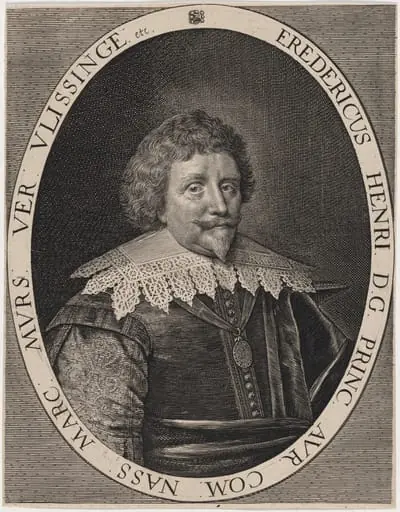
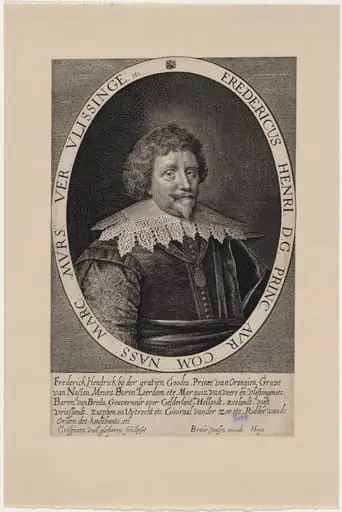
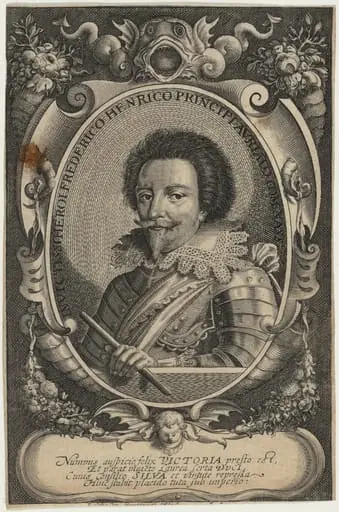
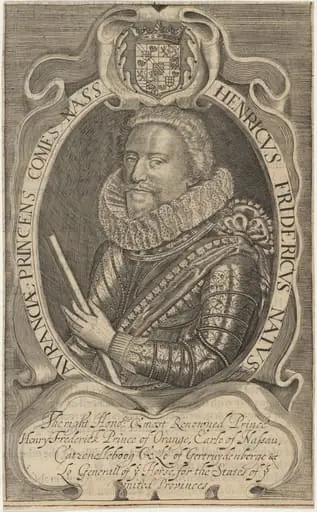
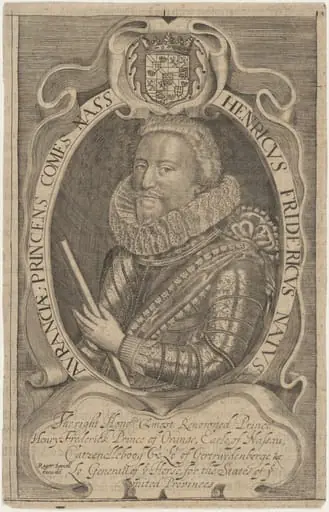
Frederick Henry of Nassau is an ink print by the Baroque artist Crispyn van den Queboorn. It dates from 1628 and is held in the collection of the National Gallery of Art.
About this work
The level of detail in the engraving is high, with intricate lines and textures visible in the man's clothing and hair.
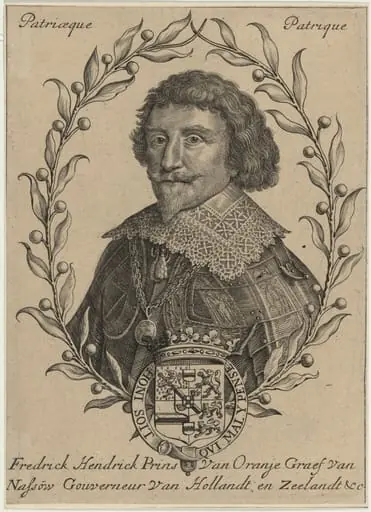
The painting is an oval portrait of a man with curly hair and a mustache, wearing a dark shirt with a lace collar. The background is dark, with a lighter oval shape behind the man's head. The man is looking directly at the viewer.
The man's clothing and hairstyle suggest a formal portrait from the 17th century. The level of detail in the engraving is high, with intricate lines and textures visible in the man's clothing and hair.
The painting is a portrait of a man, likely a noble or aristocrat, created using the technique of engraving. To learn more about this style of art, look up the movement: Baroque.
Overview
Crispyn van den Queboorn's 1628 engraving, Frederick Henry of Nassau, presents an oval portrait of a nobleman, characterized by meticulous detail and a formal 17th-century aesthetic.
Subject & Meaning
The subject, identified by the work's title, is portrayed with direct gaze, emphasizing his stature. His curly hair, mustache, dark attire, and lace collar align with the dignified representation of nobility during the period.
Technique & Style
Executed with high technical proficiency, the engraving showcases intricate lines and textures, particularly in the subject's clothing and hair. The dark background, offset by a lighter oval halo behind the head, contributes to the work's Baroque sensibilities.
History & Provenance
Created in 1628 by Crispyn van den Queboorn, specific details regarding the work's ownership history and exhibition record are not provided in the available information.
Context
This engraving reflects the Baroque movement's emphasis on detail and dramatic contrast, common in 17th-century portraiture of European nobility.
Artist & collection