Artwork
The Blind Leading the Blind
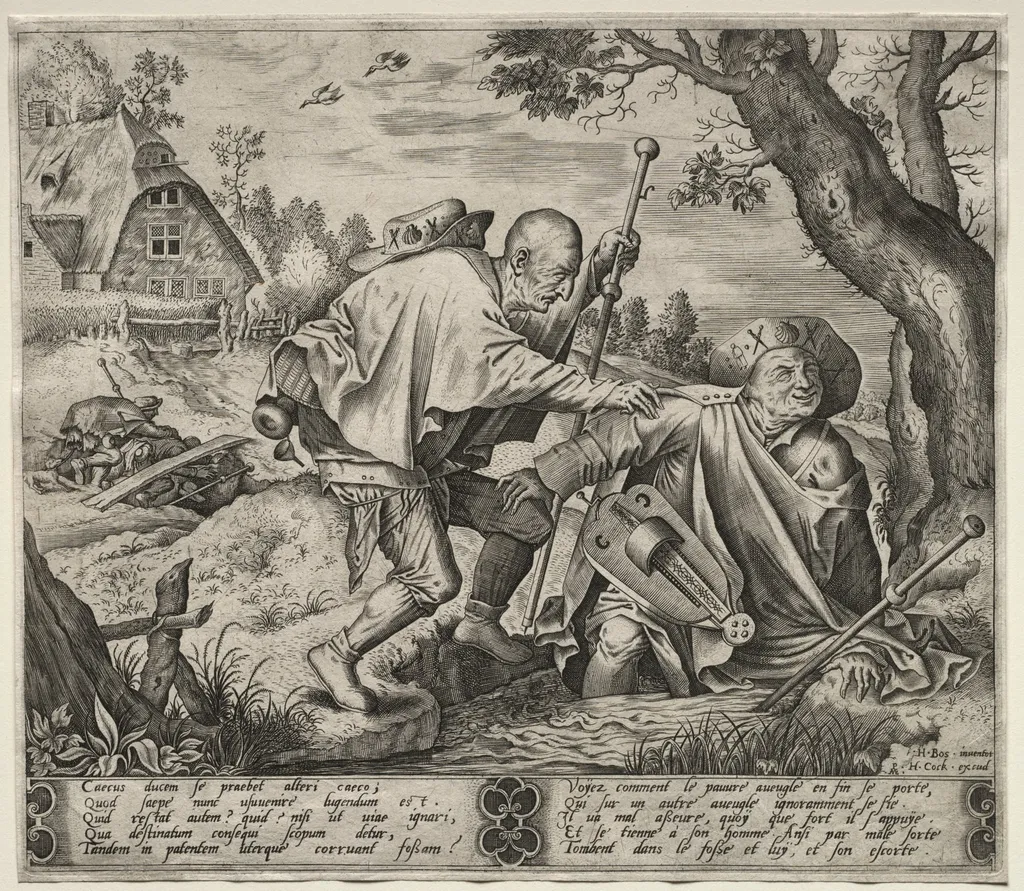
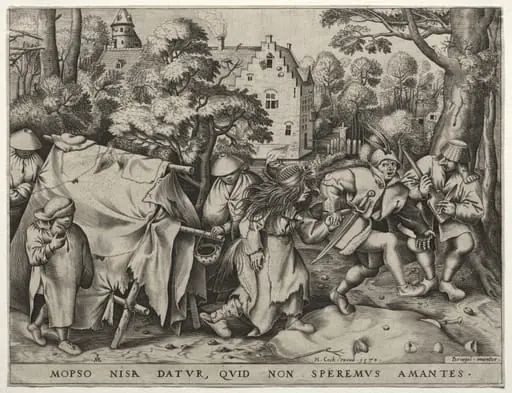
The Blind Leading the Blind is a print by the Renaissance artist Pieter van der Heyden. It dates from 1561 and is held in the collection of the Cleveland Museum of Art.
About this work
Overview
As a reproductive printmaker, van der Heyden specialized in translating Bruegel’s drawings into detailed copperplate engravings for wider circulation.
Created around 1561, this engraving by Pieter van der Heyden reproduces a composition originally conceived by Pieter Bruegel the Elder. As a reproductive printmaker, van der Heyden specialized in translating Bruegel’s drawings into detailed copperplate engravings for wider circulation. The work captures a group of blind figures moving in single file, their bodies tense and unsteady, as they traverse a rural path. The image served as a visual proverb, rooted in biblical and folk traditions, warning against flawed authority.
Subject & Meaning
The scene illustrates a proverb from the Gospel of Matthew, where blind leaders lead others into the ditch. Each figure, dressed in simple garments and guided only by touch, moves with rigid determination despite their shared blindness. The composition emphasizes collective delusion, with no single figure aware of the danger ahead. The landscape, though serene, underscores the irony of their perilous journey, transforming a quiet countryside into a metaphor for societal misdirection.
Technique & Style
Van der Heyden employed fine, controlled lines typical of 16th-century engraving to render texture and form. The figures’ clothing, staffs, and facial expressions are meticulously detailed, while the background—trees, a distant house, and uneven ground—is suggested with subtle tonal gradations. Light and shadow are used sparingly but effectively to model volume and suggest depth, avoiding dramatic chiaroscuro in favor of a restrained, observational clarity characteristic of Flemish printmaking of the period.
History & Provenance
The print was produced during a period when Bruegel’s designs were widely disseminated through engravings, helping to cement his reputation beyond the Low Countries. Van der Heyden, working in Antwerp, was one of the primary engravers entrusted with reproducing Bruegel’s imagery. This particular impression is now held by the Cleveland Museum of Art, where it has been part of the collection since the 20th century, preserved as a key example of Northern Renaissance reproductive print culture.
Context
In mid-16th-century Flanders, visual proverbs were popular subjects, reflecting both religious instruction and social commentary. Bruegel’s interest in human folly and rural life aligned with broader humanist trends that valued moral allegory. Van der Heyden’s engraving responded to a market eager for accessible, didactic imagery, making Bruegel’s complex compositions available to a broader audience through the medium of print.
Legacy
The engraving preserved Bruegel’s vision for generations, influencing later interpretations of the proverbial theme. While Bruegel’s original drawing is lost, van der Heyden’s print remains one of the most faithful and widely studied records of it. It stands as a testament to the collaborative nature of Flemish art production, where designers and printmakers worked in tandem to shape public visual culture during the Reformation era.
Own this work as a print
Artist & collection

Artist
Pieter van der Heyden (c. 1530 - after March 1572) was a Flemish printmaker who is known for his reproductive engravings after works by leading Flemish painters and designers of the 16th century.

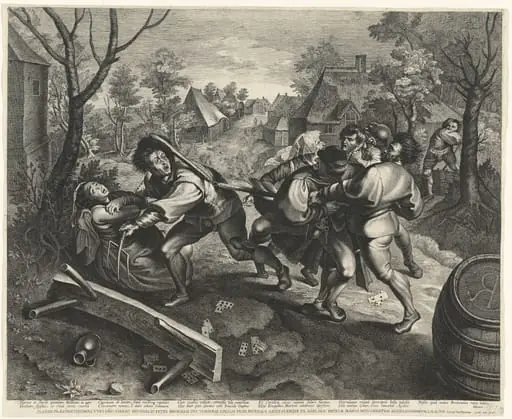 Peasants Fighting over a Game of Cards
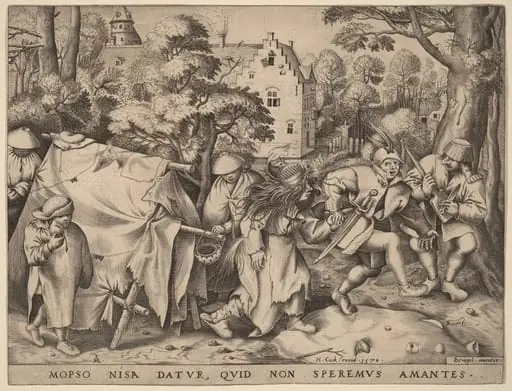 The Wedding of Mopsus and Nisa
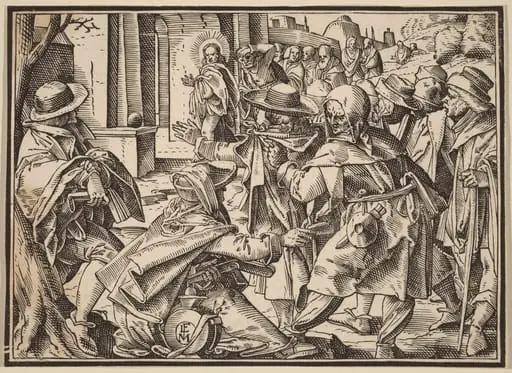 Christ Tells His Disciples of the Last Judgment
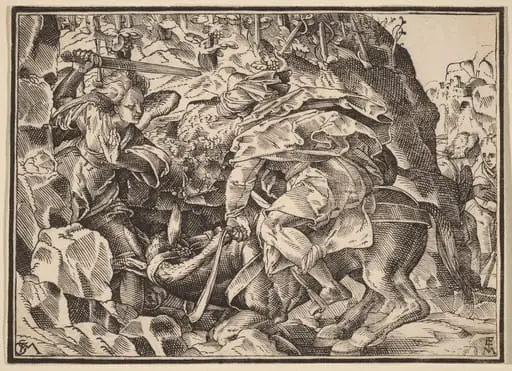 Christ Tells His Disciples of the Last Judgment
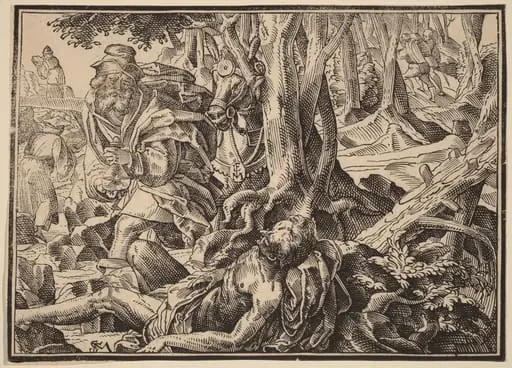 Christ Tells His Disciples of the Last Judgment
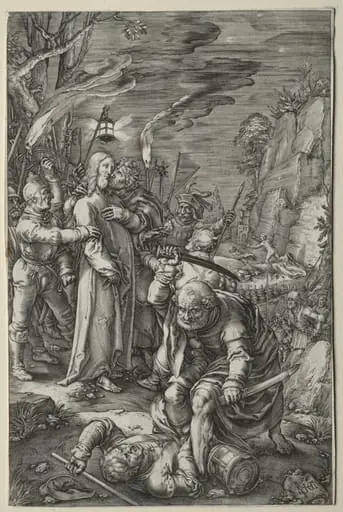 The Passion: The Betrayal of Christ
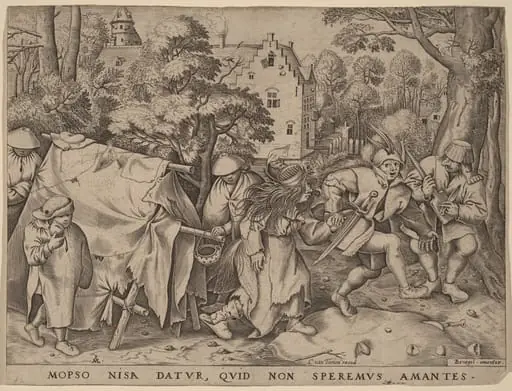 The Wedding of Mopsus and Nisa
 Mahomet and the Monk Sergius
 St. Christopher
 The Triumph of Time
 Abraham Casting Out Hagar
 The Wedding of Mopsus and Nisa (The Dirty Bride)