Artwork
The Seconda Macchina for the Chinea of 1756: The Temple of Ceres
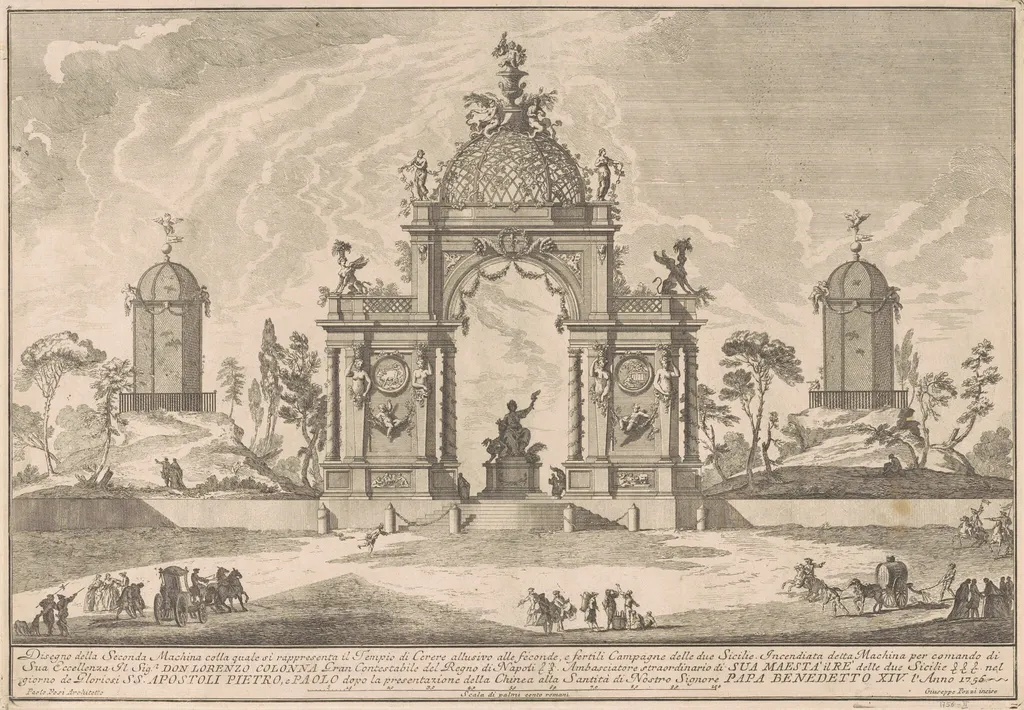
The Seconda Macchina for the Chinea of 1756: The Temple of Ceres is an ink print by the Romanticist artist Giuseppe Pozzi. It dates from 1756 and is held in the collection of the National Gallery of Art.
About this work
Overview
Giuseppe Pozzi’s 1756 etching, titled The Seconda Macchina for the Chinea of 1756: The Temple of Ceres, depicts an elaborate, imagined temple set within a theatrical landscape. The composition combines architectural fantasy with a bustling crowd, horses and carriages, and a watery foreground, all rendered in fine, linear detail characteristic of eighteenth‑century printmaking.
Subject & Meaning
The central focus is a monumental temple featuring three towering columns; the middle column bears a clock face while diminutive figures ascend its shaft.
The central focus is a monumental temple featuring three towering columns; the middle column bears a clock face while diminutive figures ascend its shaft. Flanking domed pavilions and surrounding trees and crags create a staged environment, suggesting a temporary spectacle rather than a real building. The surrounding figures in period dress evoke a public celebration linked to the Chinea, a ceremonial tribute to the Pope.
Technique & Style
Pozzi employed copper‑plate etching, using delicate incised lines to model the folds of clothing, the texture of stone, and the intricate architectural ornamentation. The print’s linear clarity and controlled hatching convey depth and surface detail, typical of mid‑century Italian printmakers who favored precise, narrative scenes for theatrical use.
History & Provenance
Created as a “Seconda Macchina,” the work functioned as a design for a movable stage set employed during the 1756 Chinea festivities, a grand procession honoring the papal authority. While the original plate’s ownership history is not fully documented, surviving impressions are held in several European print collections, confirming its role in the visual culture of papal ceremonies.
Context
The Chinea was an annual tribute from the Kingdom of Naples to the Pope, celebrated with elaborate pageantry in Rome. Temporary machines, or “macchine,” were constructed to stage theatrical spectacles for the event. Pozzi’s etching records one such contrivance, reflecting the intersection of civic ritual, theatrical engineering, and the decorative arts in mid‑eighteenth‑century Rome.
Artist & collection


 The Prima Macchina for the Chinea of 1757: The Colonnade of the Athenian Lyceum
 The Prima Macchina for the Chinea of 1757: The Colonnade of the Athenian Lyceum
 The Prima Macchina for the Chinea of 1756: A Triumphal Arch between Mount Etna and Mount Vesuvius
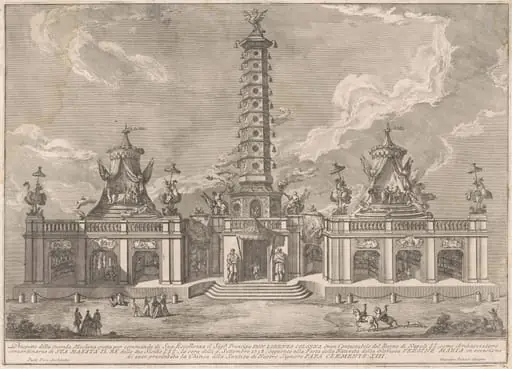 The Seconda Macchina for the Chinea of 1758: The Porcelain Tower of Nanjing
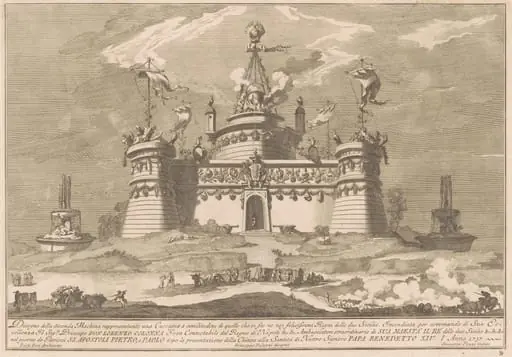 The Seconda Macchina for the Chinea of 1757: The Fortress of Cockaigne
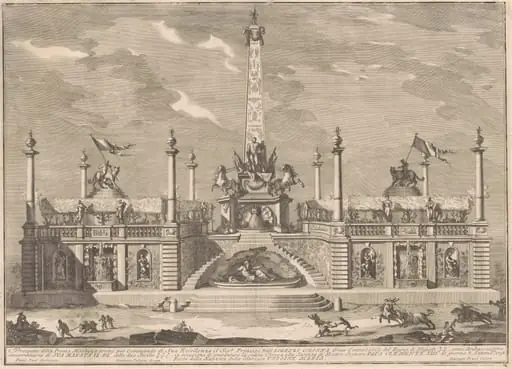 The Prima Macchina for the Chinea of 1758: A "Deliziosa" with Hanging Gardens
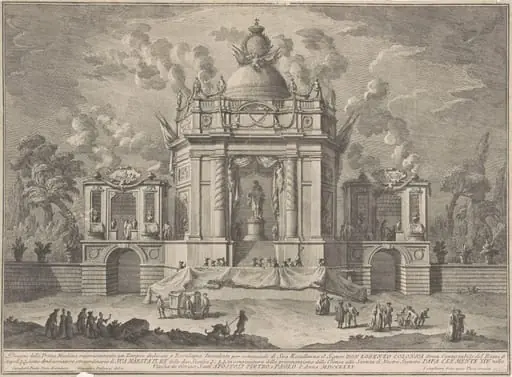 The Prima Macchina for the Chinea of 1771: The Temple of Asclepius
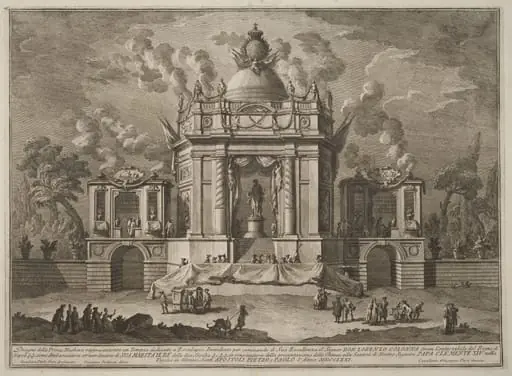 The Prima Macchina for the Chinea of 1771: The Temple of Asclepius
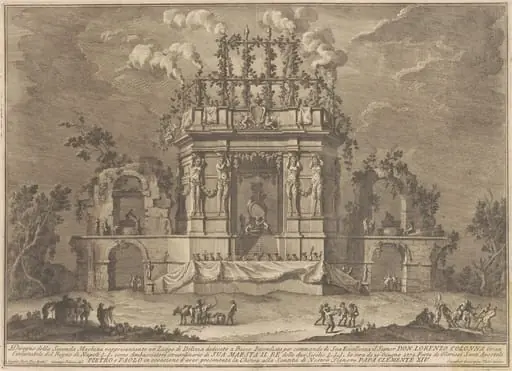 The Seconda Macchina for the Chinea of 1771: A Pleasure Palace Dedicated to Bacchus
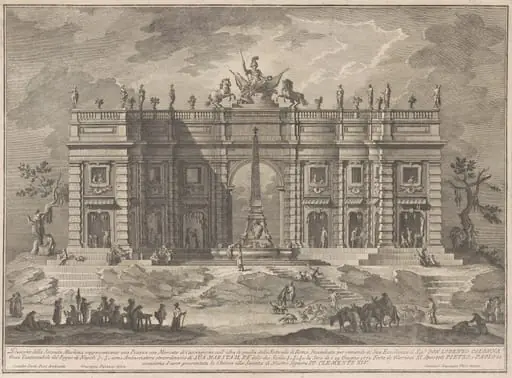 The Seconda Macchina for the Chinea of 1772: A Square with a Game Market and the Pantheon Fountain
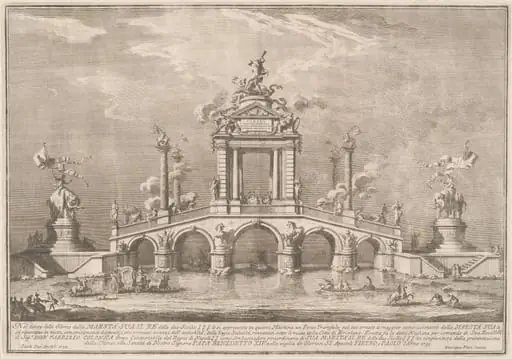 The Prima Macchina for the Chinea of 1755: A Triumphal Bridge with Antiquities from Herculaneum
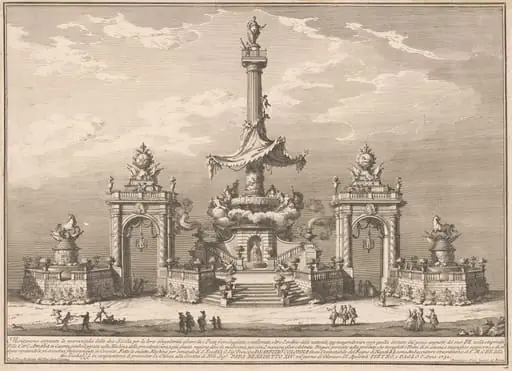 The Seconda Macchina for the Chinea of 1752: The Banquet of the Gods in Villa Carl'Amalia in Caserta
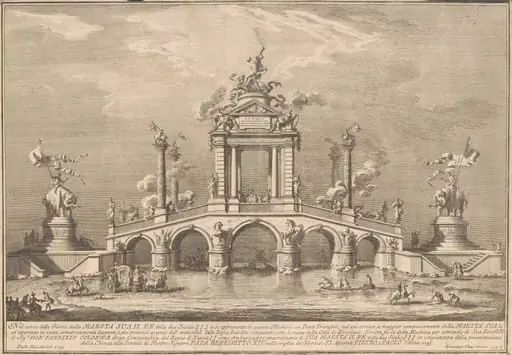 The Prima Macchina for the Chinea of 1755: A Triumphal Bridge with Antiquities from Herculaneum
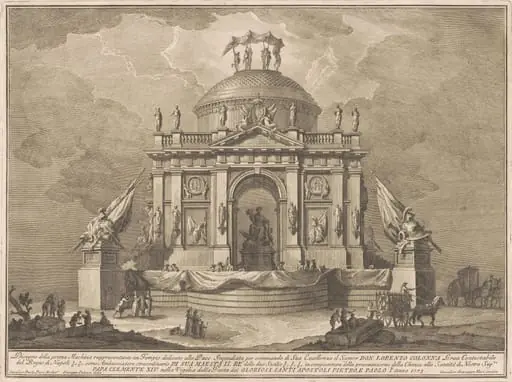 The Prima Macchina for the Chinea of 1773: The Temple of Peace
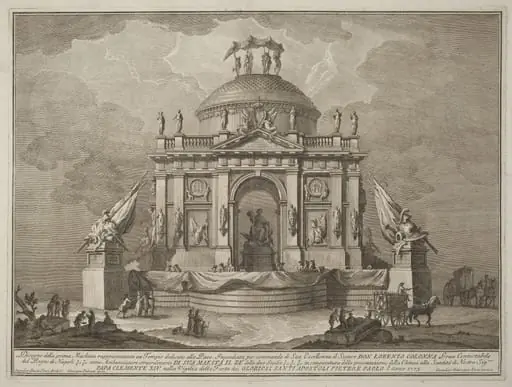 The Prima Macchina for the Chinea of 1773: The Temple of Peace
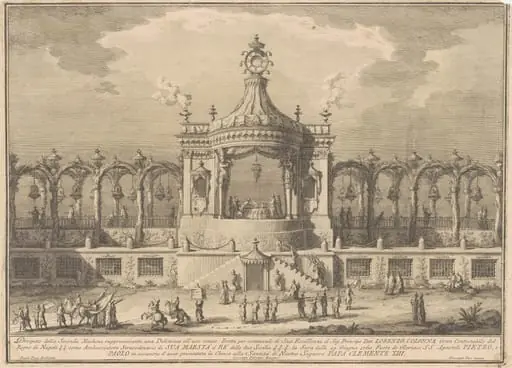 The Seconda Macchina for the Chinea of 1760: A Chinoiserie Pavilion
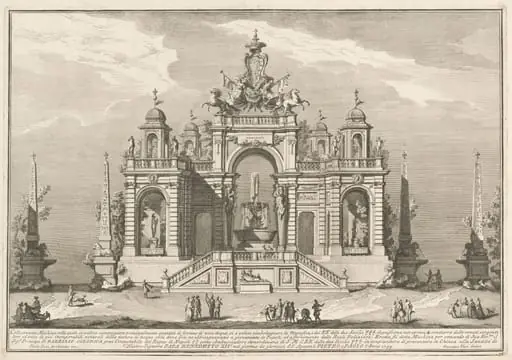 The Seconda Macchina for the Chinea of 1754: An Allegory of Waterworks