Artwork
The Prima Macchina for the Chinea of 1765: The Garden of the Hesperides
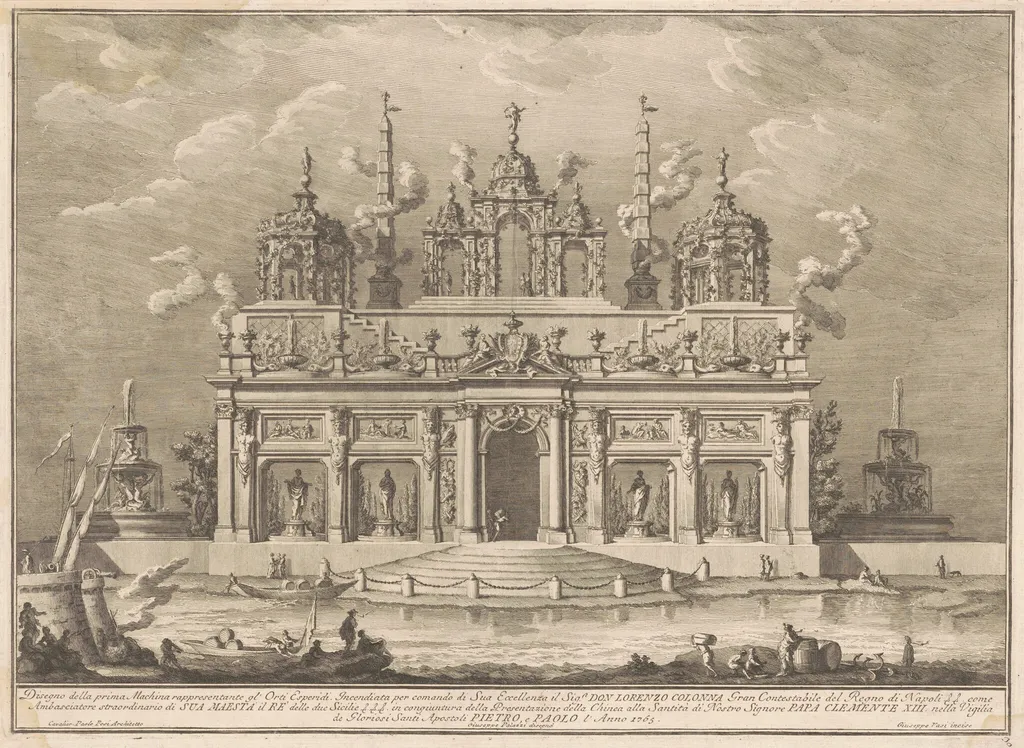
The Prima Macchina for the Chinea of 1765: The Garden of the Hesperides is an ink print by the Romanticist artist Giuseppe Vasi. It dates from 1765 and is held in the collection of the National Gallery of Art.
About this work
It’s packed with details—like the tiny figures and ships—that make the scene feel alive.
This drawing shows a grand, imaginary stage set for a big outdoor event. At the center is a tall, fancy building with columns and statues inside its windows. Above it, three tall towers with ornate tops rise like a skyline. In front, a small crowd gathers near a waterfront with boats and people moving around.
The text at the bottom says this was built for a special visit to Rome in 1765. It’s packed with details—like the tiny figures and ships—that make the scene feel alive.
If you like this, check out etching to see how artists create prints like this.
Overview
Created in 1765 by Giuseppe Vasi, this etching documents a temporary architectural spectacle erected in Rome for the annual Chinea ceremony. It depicts an elaborate, fictionalized landscape designed as a backdrop for a ceremonial procession, blending real urban elements with imaginative structures. The work functions as both a record of a fleeting event and a demonstration of Vasi’s skill in rendering complex spatial arrangements through fine-line engraving.
Subject & Meaning
The scene represents the Garden of the Hesperides, a mythological setting referenced in the ceremonial context of the Chinea, a tribute paid to the Pope by the Kingdom of Naples. The central building, adorned with columns and statues, symbolizes an idealized classical paradise, while the three towers evoke a celestial or divine presence. The inclusion of figures and boats grounds the fantasy in the lived reality of Rome’s waterfront, merging allegory with contemporary spectacle.
Technique & Style
Vasi employed fine, precise etching lines to capture architectural detail and atmospheric depth. The composition layers distant towers, mid-ground structures, and foreground activity with careful tonal gradation, creating a sense of spatial recession. Tiny figures and vessels are rendered with clarity, enhancing the scene’s vitality without overwhelming its architectural grandeur. The technique reflects the topographical precision typical of 18th-century Roman printmaking.
History & Provenance
The print was produced to commemorate the 1765 Chinea ceremony, a tradition in which the Kingdom of Naples presented a symbolic tribute to the Pope. Vasi, known for his detailed vedute of Rome, documented such ephemeral events for a broader audience. The etching likely circulated among collectors and foreign visitors, preserving a visual memory of a ritual that otherwise vanished after the procession ended.
Context
The Chinea ceremony was a political and religious ritual reinforcing papal authority and Neapolitan loyalty. Temporary architectural displays like this one were common in 18th-century Rome, serving as public theater for power and piety. Vasi’s etching aligns with a broader tradition of documenting urban pageantry, offering insight into how spectacle shaped the experience of Rome as a ceremonial capital.
Legacy
Vasi’s etching remains a valuable historical document, illustrating the intersection of myth, politics, and urban design in Baroque Rome. While the physical structure was dismantled, the print preserved its form for future generations. It contributes to the study of ephemeral architecture and the role of print culture in shaping public memory of ceremonial events in early modern Europe.
Artist & collection

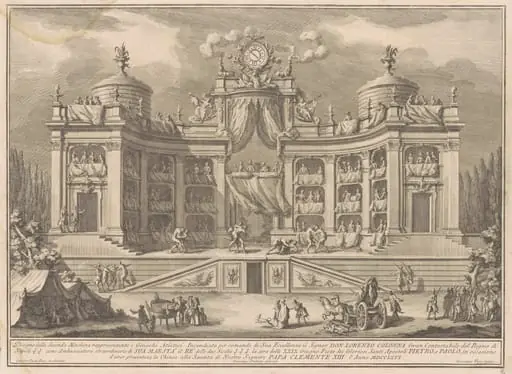 The Seconda Macchina for the Chinea of 1766: A Theater for Athletic Games
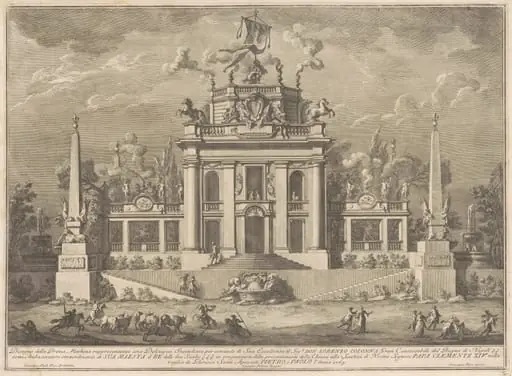 The Prima Macchina for the Chinea of 1769: A "Deliziosa"
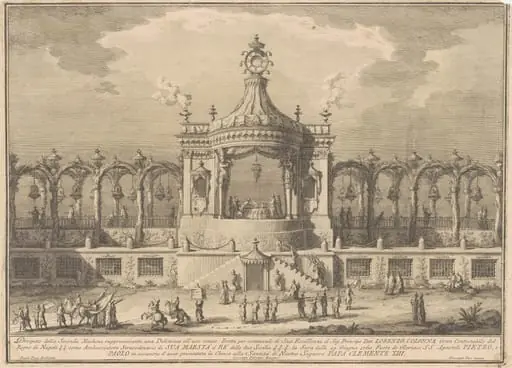 The Seconda Macchina for the Chinea of 1760: A Chinoiserie Pavilion
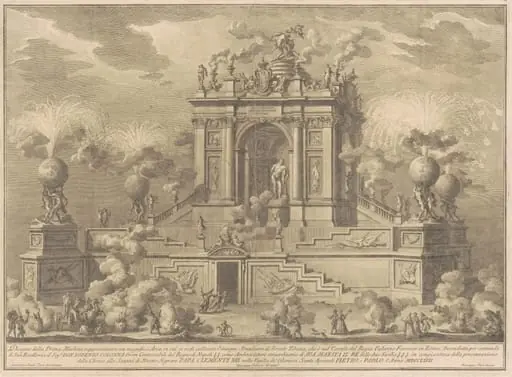 The Prima Macchina for the Chinea of 1767: A Triumphal Arch with the Farnese Hercules
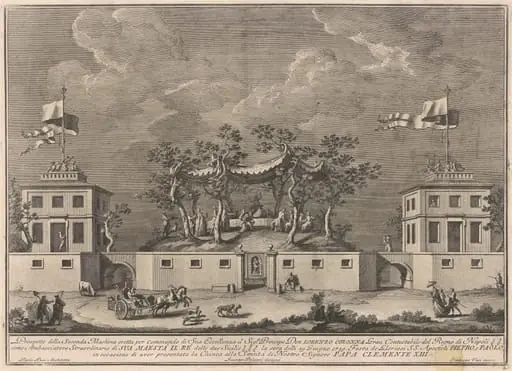 The Seconda Macchina for the Chinea of 1759: A "Deliziosa" with a Bacchanal
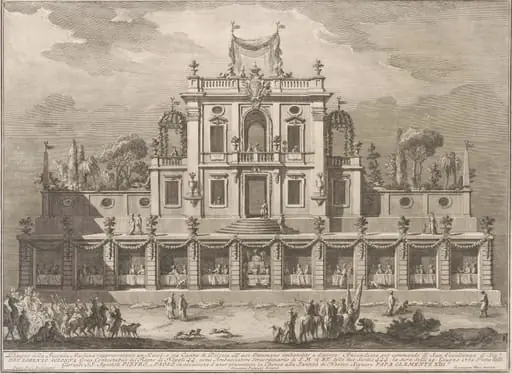 The Seconda Macchina for the Chinea of 1762: A Kiosk, or Pleasure-House in Ottoman Style
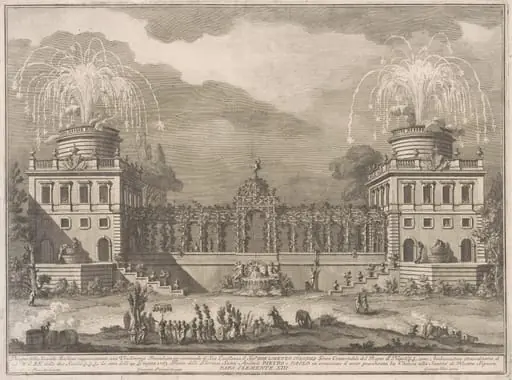 The Seconda Macchina for the Chinea of 1763: The Grape Harvest
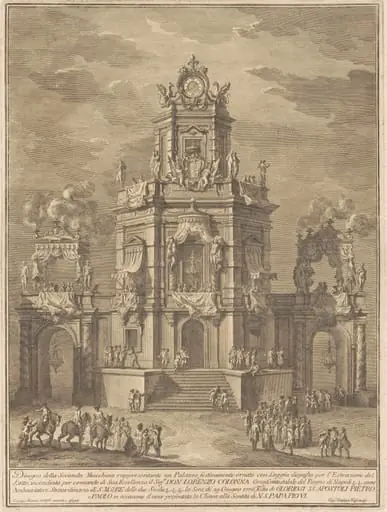 The Seconda Macchina for the Chinea of 1776: A Palace with a Loggia for the Lottery Draw
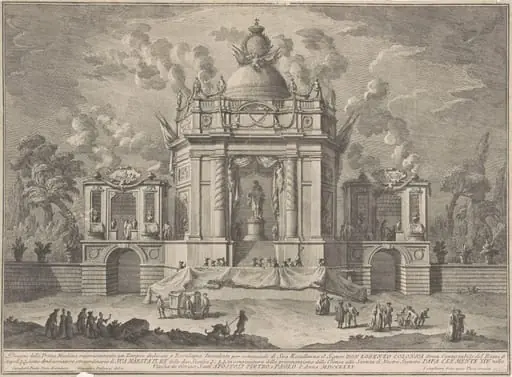 The Prima Macchina for the Chinea of 1771: The Temple of Asclepius
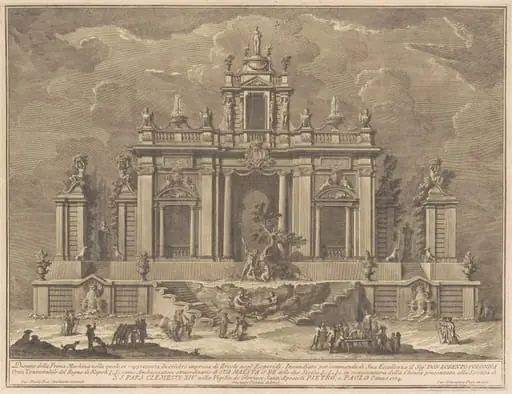 The Prima Macchina for the Chinea of 1774: Hercules and the Dragon in the Garden of the Hesperides
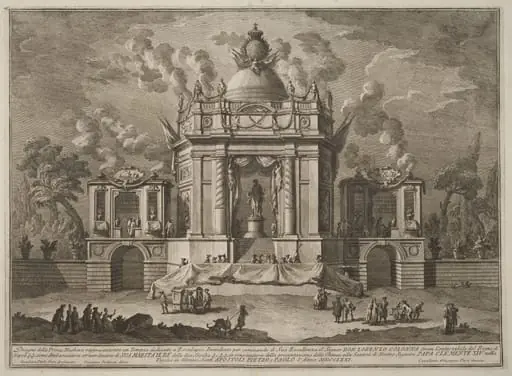 The Prima Macchina for the Chinea of 1771: The Temple of Asclepius
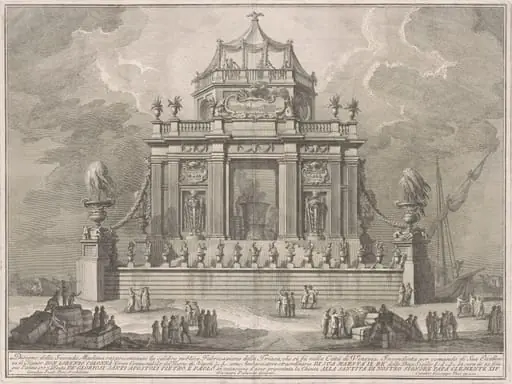 The Seconda Macchina for the Chinea of 1773: The Preparation of Theriac in Venice
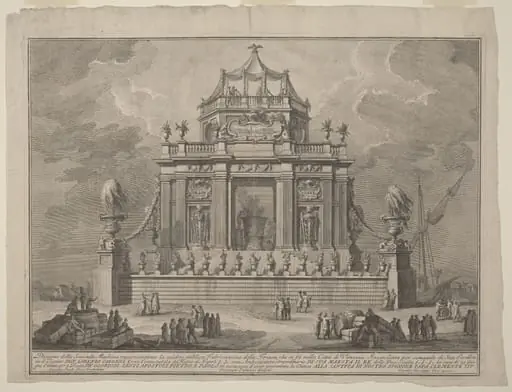 The Seconda Macchina for the Chinea of 1773: The Preparation of Theriac in Venice
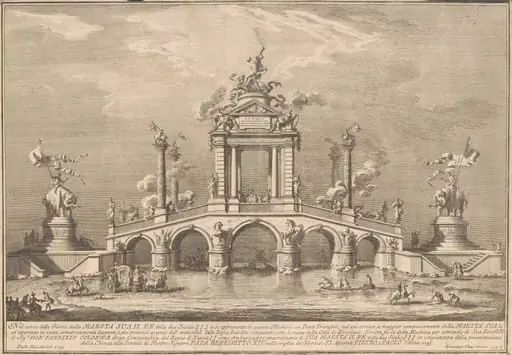 The Prima Macchina for the Chinea of 1755: A Triumphal Bridge with Antiquities from Herculaneum
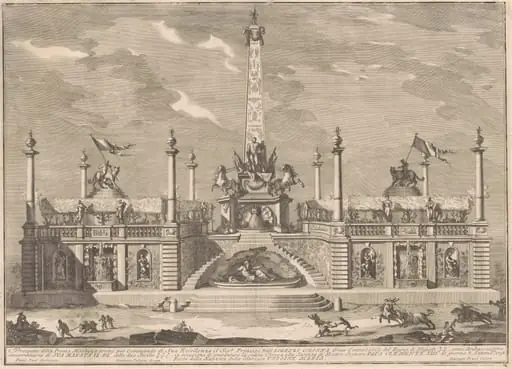 The Prima Macchina for the Chinea of 1758: A "Deliziosa" with Hanging Gardens
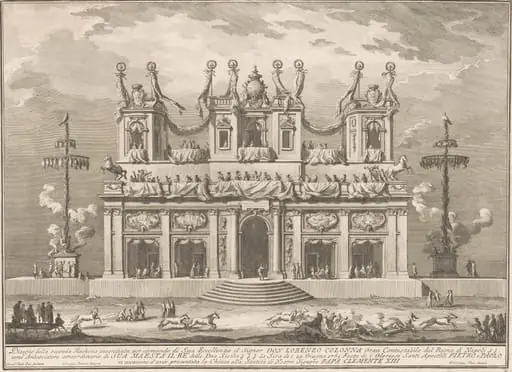 The Seconda Macchina for the Chinea of 1765: A Decorated Building with Cockaigne Poles
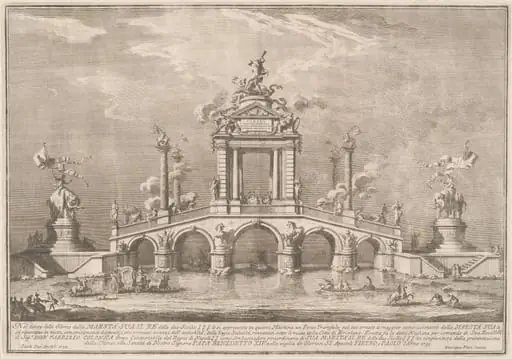 The Prima Macchina for the Chinea of 1755: A Triumphal Bridge with Antiquities from Herculaneum
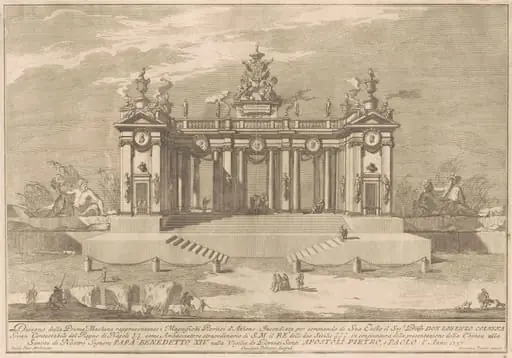 The Prima Macchina for the Chinea of 1757: The Colonnade of the Athenian Lyceum
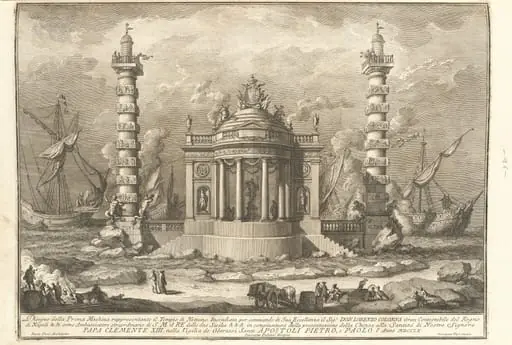 The Prima Macchina for the Chinea of 1760: The Temple of Neptune