Artwork
Queen Elizabeth
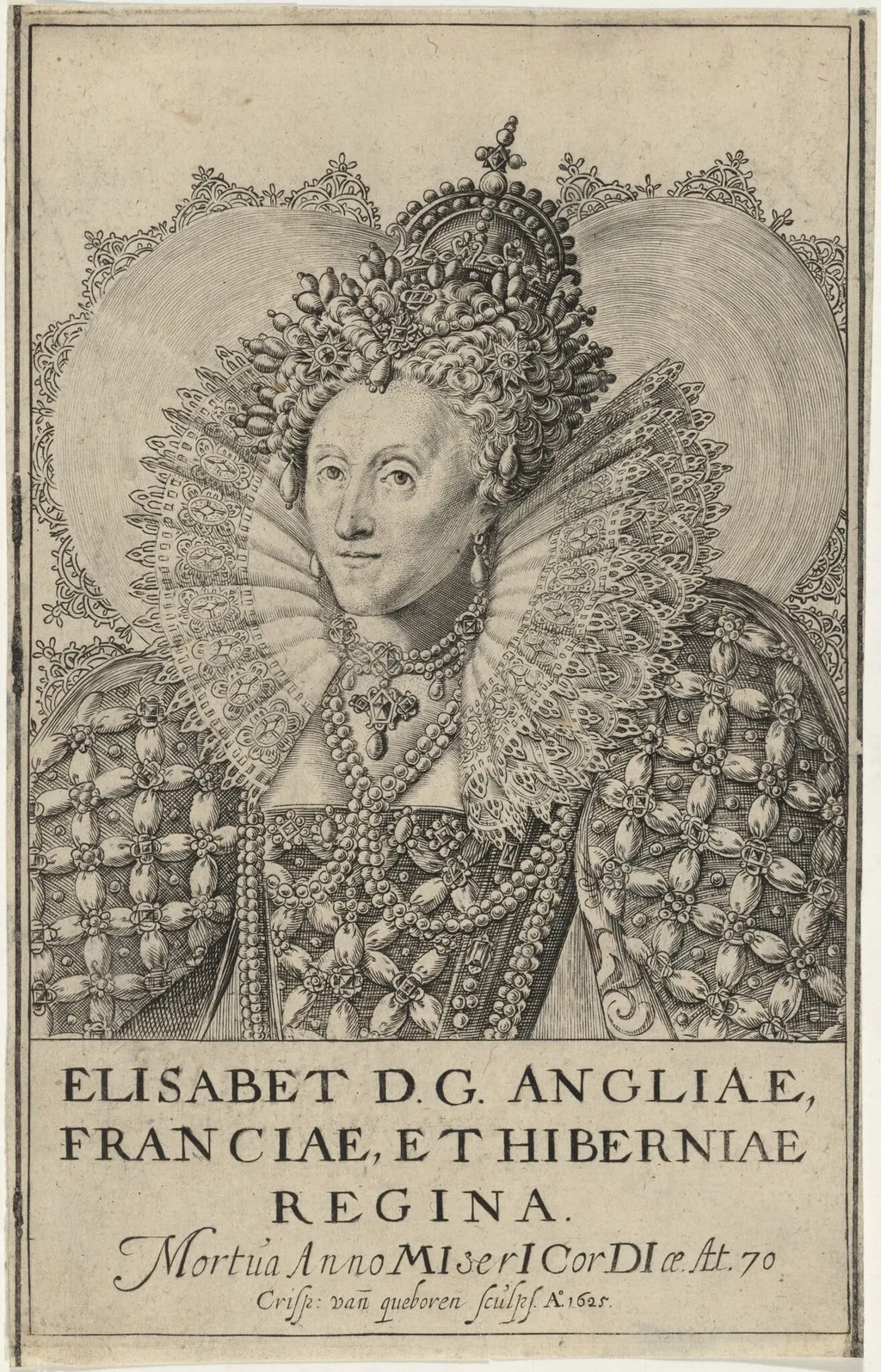
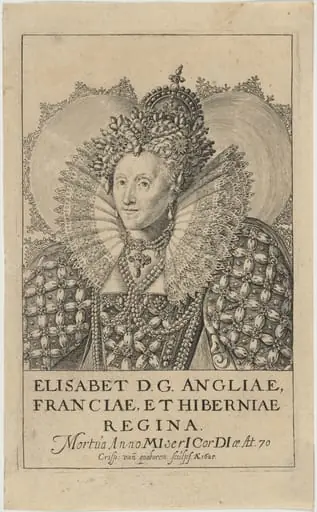
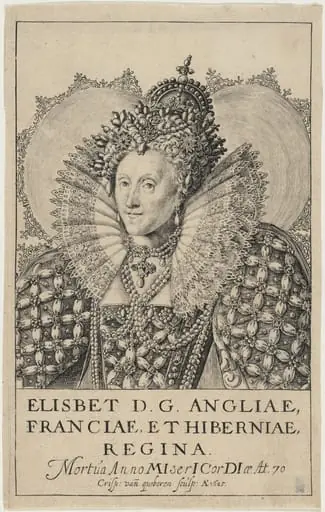
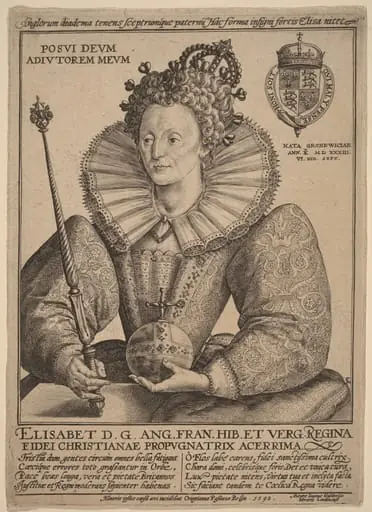
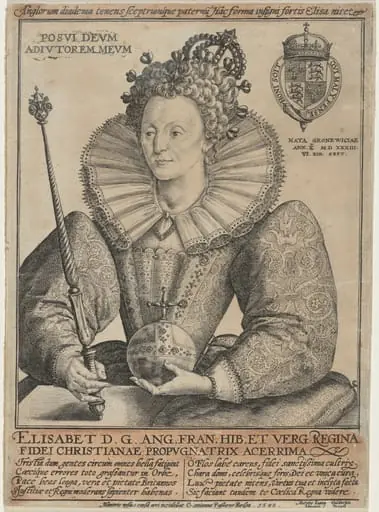
Queen Elizabeth is an ink print by the Baroque artist Crispyn van den Queboorn. It dates from 1625 and is held in the collection of the National Gallery of Art.
About this work
Overview
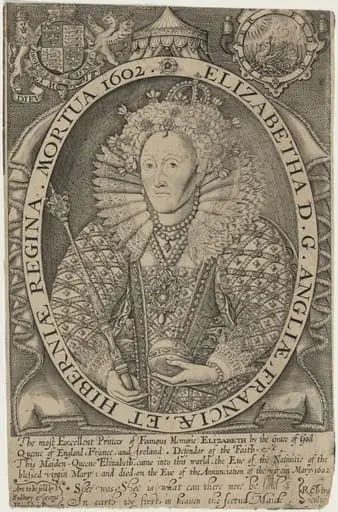
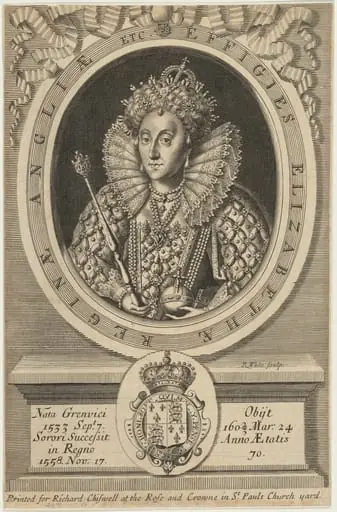
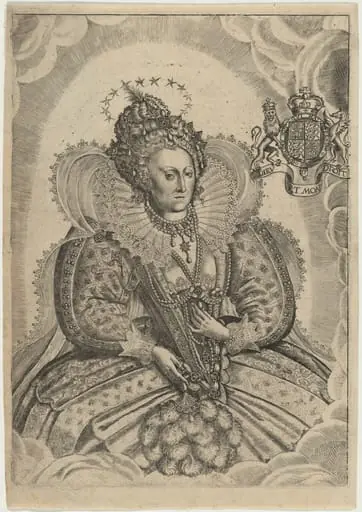
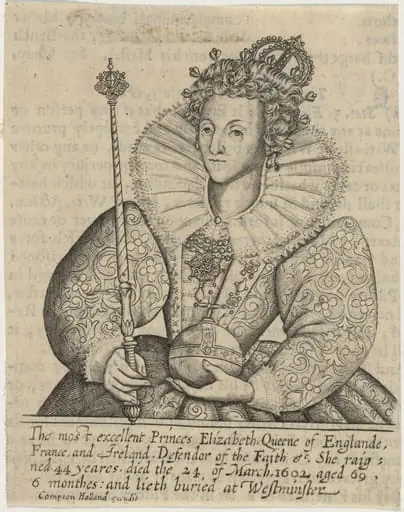
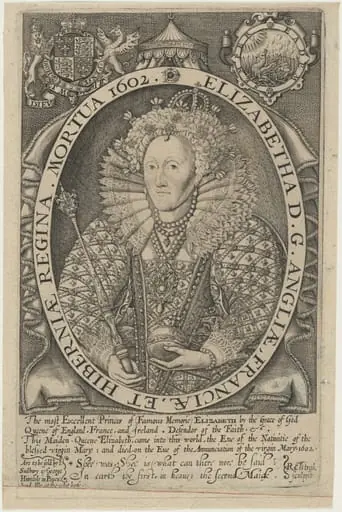
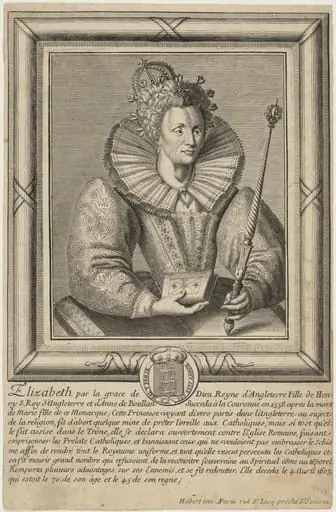
Crispyn van den Queboorn’s 1625 engraving presents a posthumous portrait of Queen Elizabeth I. Rendered in monochrome, the print depicts the monarch in elaborate attire, highlighted by a towering headdress, layered lace, and extensive pearl ornamentation. The composition is set against an unadorned backdrop, allowing the intricate line work of her garments to dominate the visual field.
Subject & Meaning
The portrait identifies Elizabeth as “Queen of England, France, and Ireland,” emphasizing her claim to multiple thrones. The inclusion of pearls and regal dress underscores her status and the traditional iconography associated with her reign, while the memorial nature of the image reflects contemporary practices of commemorating sovereigns after death.
Technique & Style
Executed as an engraving, the work demonstrates van den Queboorn’s skill in incising fine detail into a metal plate. The artist employs cross‑hatching and line engraving to render the texture of lace, the sheen of pearls, and the complex patterns of the clothing, achieving depth and contrast without the aid of colour.
History & Provenance
Created shortly after Elizabeth I’s death at age seventy, the print functioned as a commemorative item. While specific ownership records are scarce, the engraving’s attribution to van den Queboorn and its 1625 date place it within the early‑modern print market that circulated royal imagery across Europe.
Context
The early seventeenth century saw a surge in printed portraits of deceased monarchs, serving both as tribute and as political affirmation of dynastic continuity. Van den Queboorn’s depiction aligns with this trend, offering a visual reaffirmation of Elizabeth’s claimed titles and her enduring symbolic presence in the English realm.
Artist & collection