Artwork
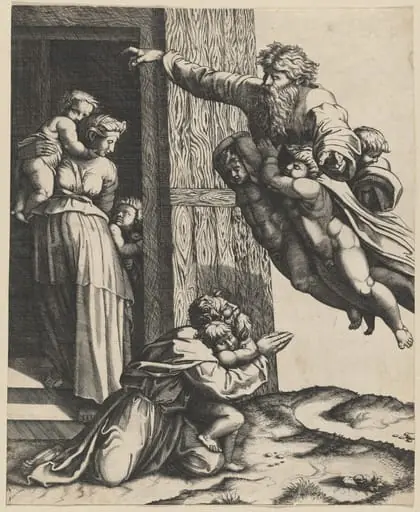
God Appearing to Noah
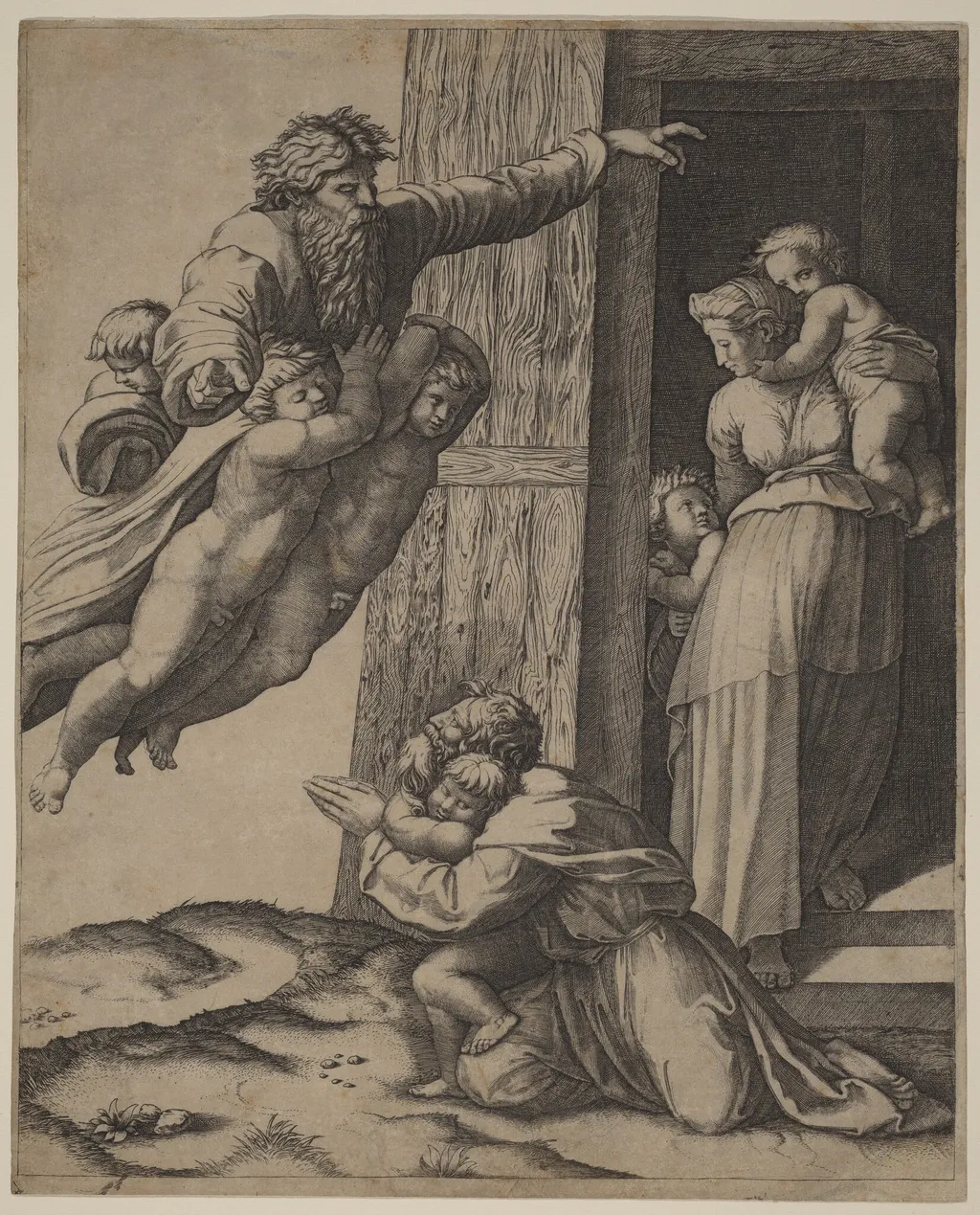
God Appearing to Noah is an ink print by the Renaissance artist Marcantonio Raimondi. It dates from 1514 and is held in the collection of the National Gallery of Art.
About this work
Overview
This work exemplifies his technical precision and his role in spreading Renaissance imagery across Europe through the medium of print.
Created around 1514 by Marcantonio Raimondi, this engraving on laid paper depicts a moment from the biblical story of Noah. As a leading reproductive printmaker of the early 16th century, Raimondi translated painted compositions into detailed ink impressions, making high art accessible beyond elite circles. This work exemplifies his technical precision and his role in spreading Renaissance imagery across Europe through the medium of print.
Subject & Meaning
The scene illustrates God’s divine revelation to Noah, though the deity is not visually present. Instead, the figures react to an unseen presence: the central bearded man gestures toward a wooden door, suggesting divine instruction. The surrounding family—kneeling children, a woman with an infant—conveys awe and submission. The composition emphasizes human response to the sacred, framing faith as intimate and familial rather than monumental.
Technique & Style
Raimondi employed fine, controlled lines to model form and texture, using cross-hatching to suggest volume in fabric, rock, and wood. The engraved surface captures subtle shifts in light and shadow, giving the flat paper a sense of depth. His rendering of the door’s grain and the folds of garments reflects close observation and mastery of the burin, the engraver’s sharp tool, aligning with High Renaissance ideals of naturalism and clarity.
History & Provenance
The print emerged during Raimondi’s productive collaboration with Raphael, whose designs he frequently adapted. While the original painting this engraving references is lost, the composition aligns with Raphael’s early narrative style. Copies of this print circulated widely in Italy and beyond, contributing to Raimondi’s reputation and the broader dissemination of Renaissance iconography through print culture.
Context
In early 16th-century Italy, prints like this served as both devotional aids and artistic references. The biblical theme resonated with contemporary religious sentiment, while the composition’s clarity and emotional restraint reflected Humanist values. Raimondi’s work bridged the gap between elite painting and public visual culture, helping standardize religious imagery across social classes.
Legacy
Raimondi’s engravings, including this one, established a model for reproductive printmaking that influenced generations of artists. His ability to translate painterly effects into linear precision set technical standards for the medium. Though the original painting is gone, this print preserves its visual language and remains a key document in the history of Renaissance image circulation.
Artist & collection

Artist
Marcantonio Raimondi, often called simply Marcantonio (c. 1470/82 – c. 1534), was an Italian engraver, known for being the first important printmaker whose body of work consists largely of prints copying paintings. He…

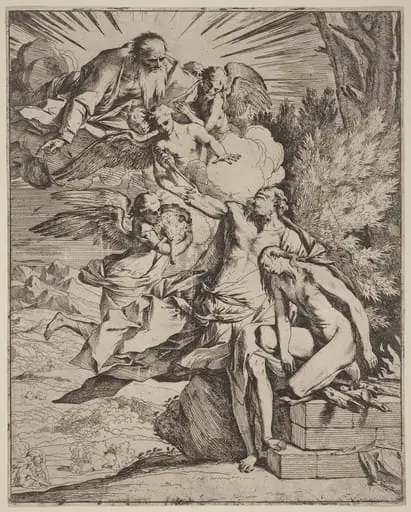 The Sacrifice of Abraham
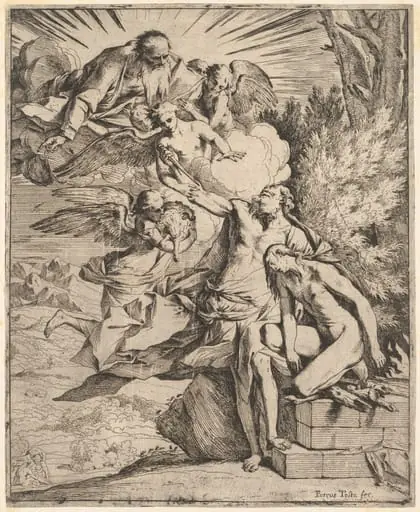 The Sacrifice of Abraham
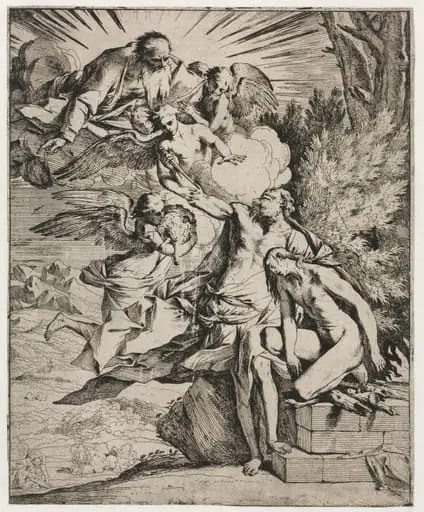 The Sacrifice of Abraham
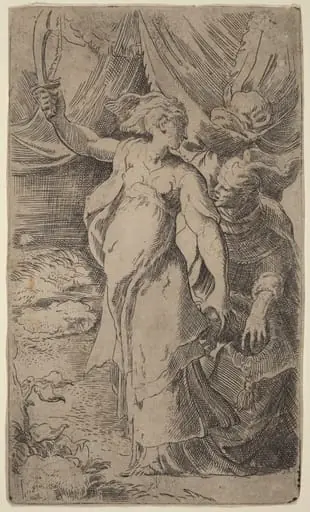 Judith
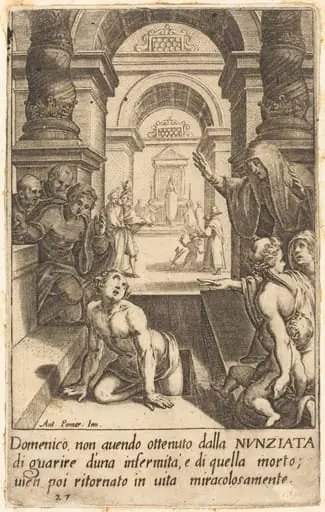 Domenico
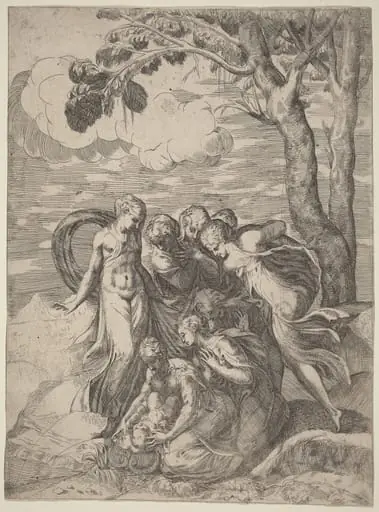 The Finding of Moses
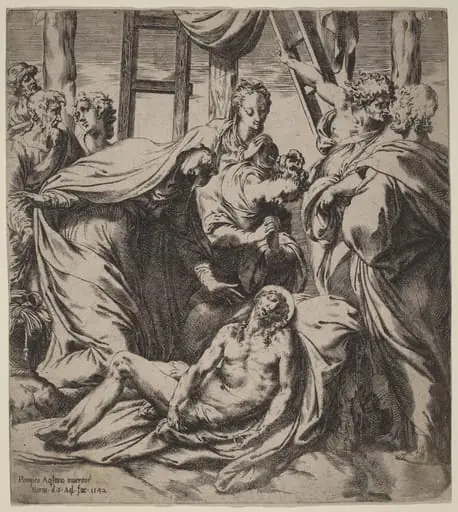 The Descent from the Cross
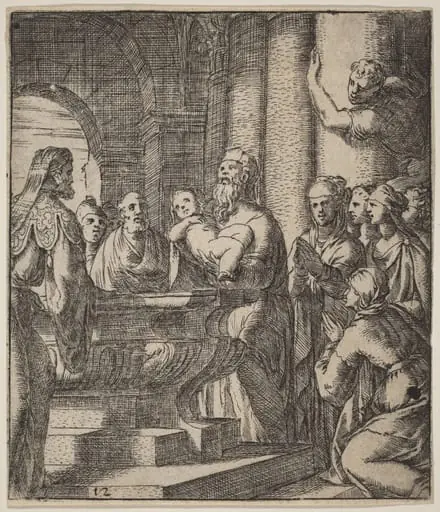 The Baptism of Christ
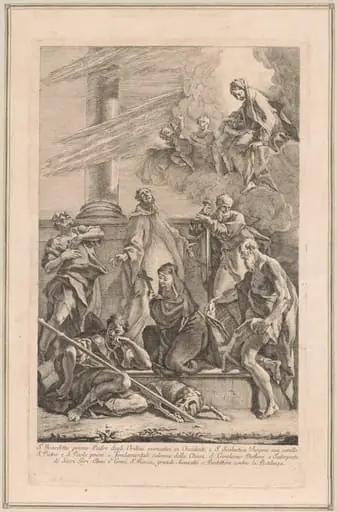 The Madonna and Child with Two Angels and Saints Scholastica, Benedict, Roch, Peter, Paul and Jerome
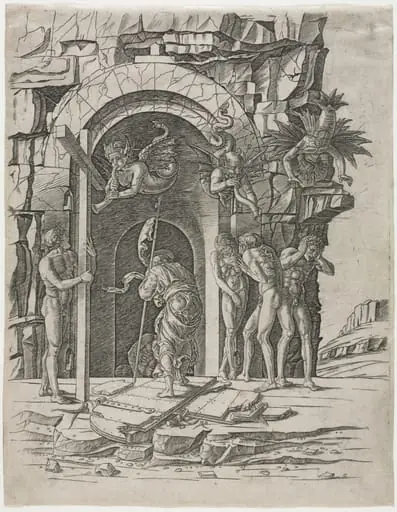 Descent into Limbo
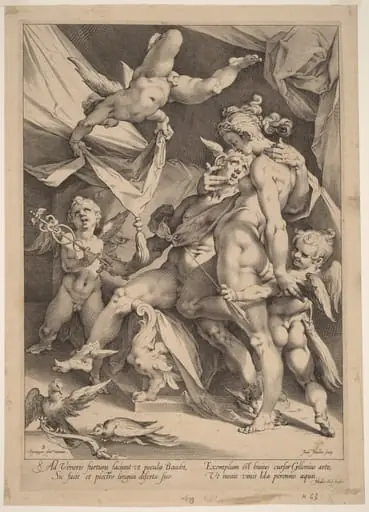 Venus and Mercury
 God Appearing to Noah