Artwork
The Massacre of the Innocents
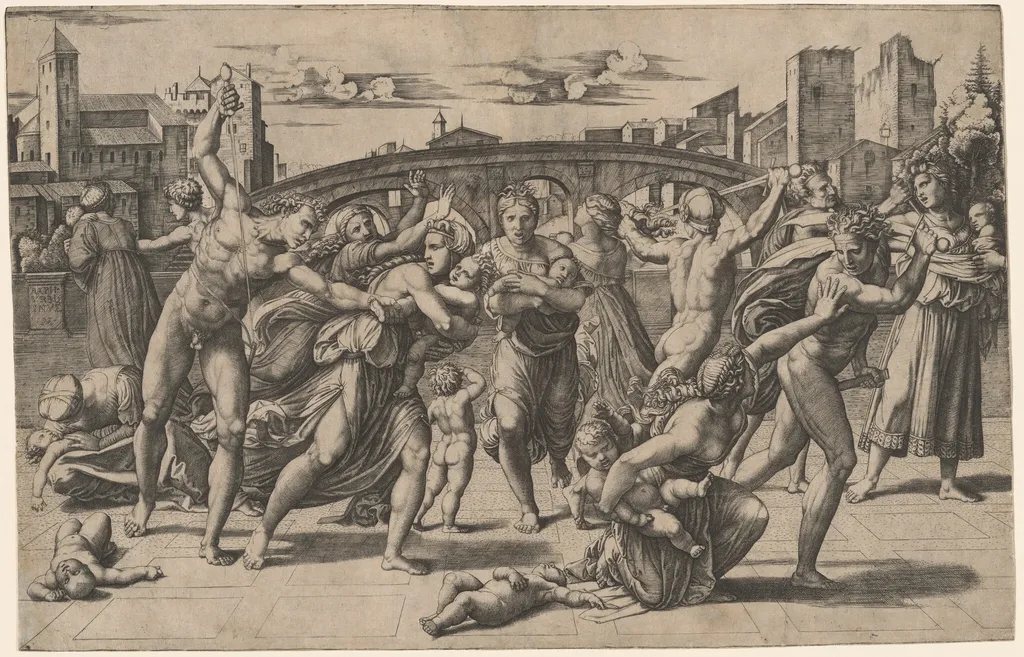
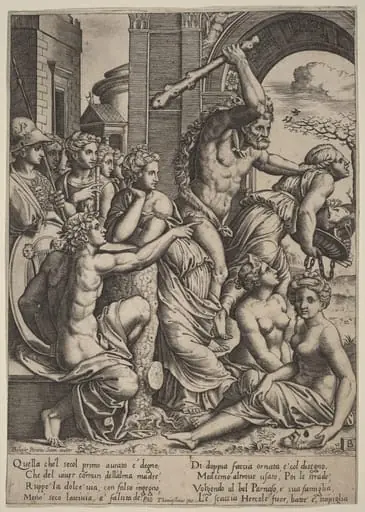
The Massacre of the Innocents is an ink print by the Renaissance artist Marcantonio Raimondi. It dates from 1511 and is held in the collection of the National Gallery of Art.
About this work
Overview
The Massacre of the Innocents is an engraving created by Marcantonio Raimondi around 1511. As a leading figure in reproductive printmaking, Raimondi's work helped spread the High Renaissance style across Europe, particularly through his collaborations with Raphael.
Subject & Meaning
The engraving depicts a chaotic and violent scene of Herod's soldiers killing infants, conveying a sense of panic and desperation through the entwined figures of men, women, and children in various states of distress.
Technique & Style
Raimondi employed his characteristic precise, line-based engraving technique to achieve detailed shadows and textures, blending urgency with compositional planning. The use of fine lines adds depth to the dramatic, twisted poses of the figures.
History & Provenance
Created circa 1511, this work showcases Raimondi's technical innovations in engraving, which were widely adopted in Italy and beyond, contributing to the dissemination of the High Renaissance style.
Context
Produced during the High Renaissance, the engraving reflects Raimondi's role in collaborative artistic practices, notably with Raphael, facilitating the broad European reach of Renaissance aesthetics.
Legacy
The Massacre of the Innocents contributed to Raimondi's legacy as a pioneer in reproductive printmaking, with his engraving techniques influencing subsequent artistic practices in Europe.
Artist & collection

Artist
Marcantonio Raimondi, often called simply Marcantonio (c. 1470/82 – c. 1534), was an Italian engraver, known for being the first important printmaker whose body of work consists largely of prints copying paintings. He…

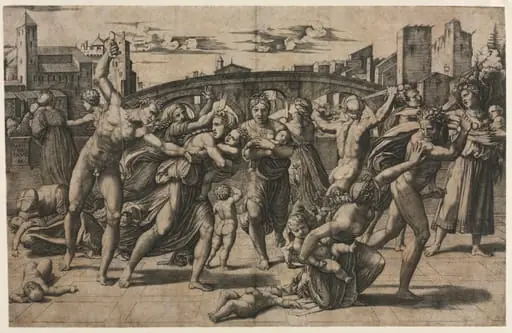 Massacre of the Innocents (With the Fir Tree)
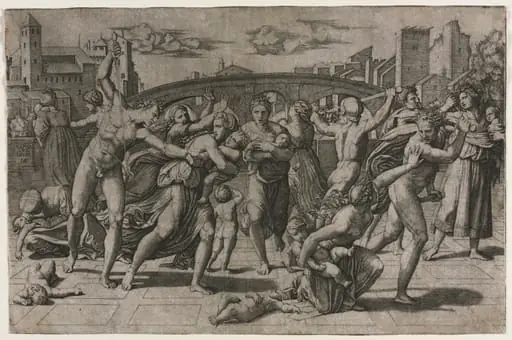 Massacre of the Innocents without the Fir Tree
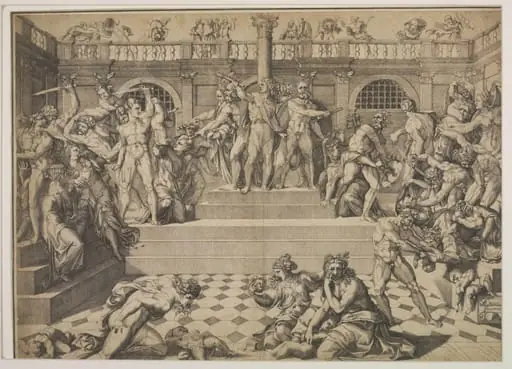 Murder of the Innocents
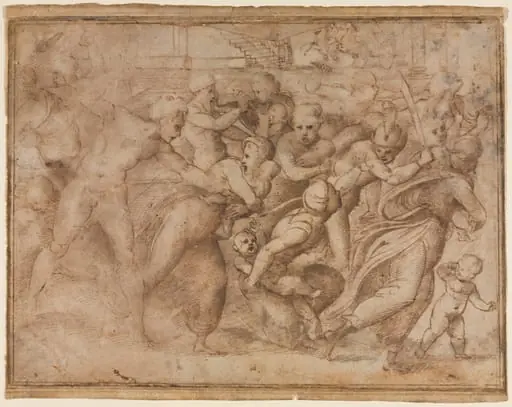 Copy of Raphael's Massacre of the Innocents
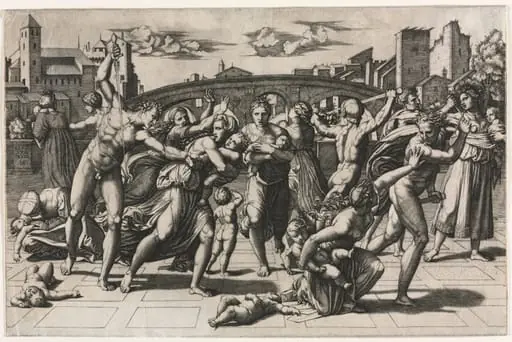 The Massacre of the Innocents (Without the Fir Tree)
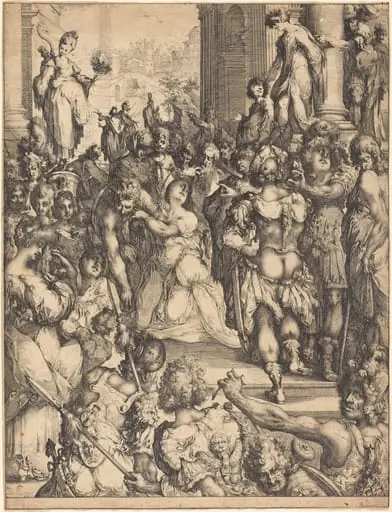 Martyrdom of Saint Lucy
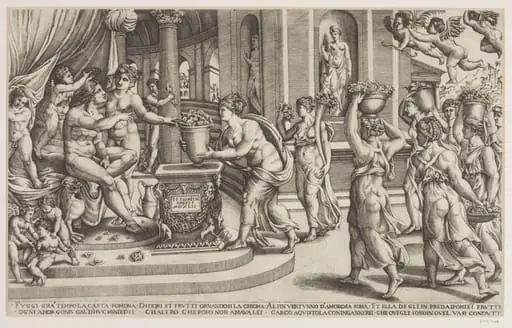 Marriage of Vertumnus and Pomona
 Envy Driven from the Temple of the Muses