Artwork
Death Appearing to a Wedded Couple from an Open Grave
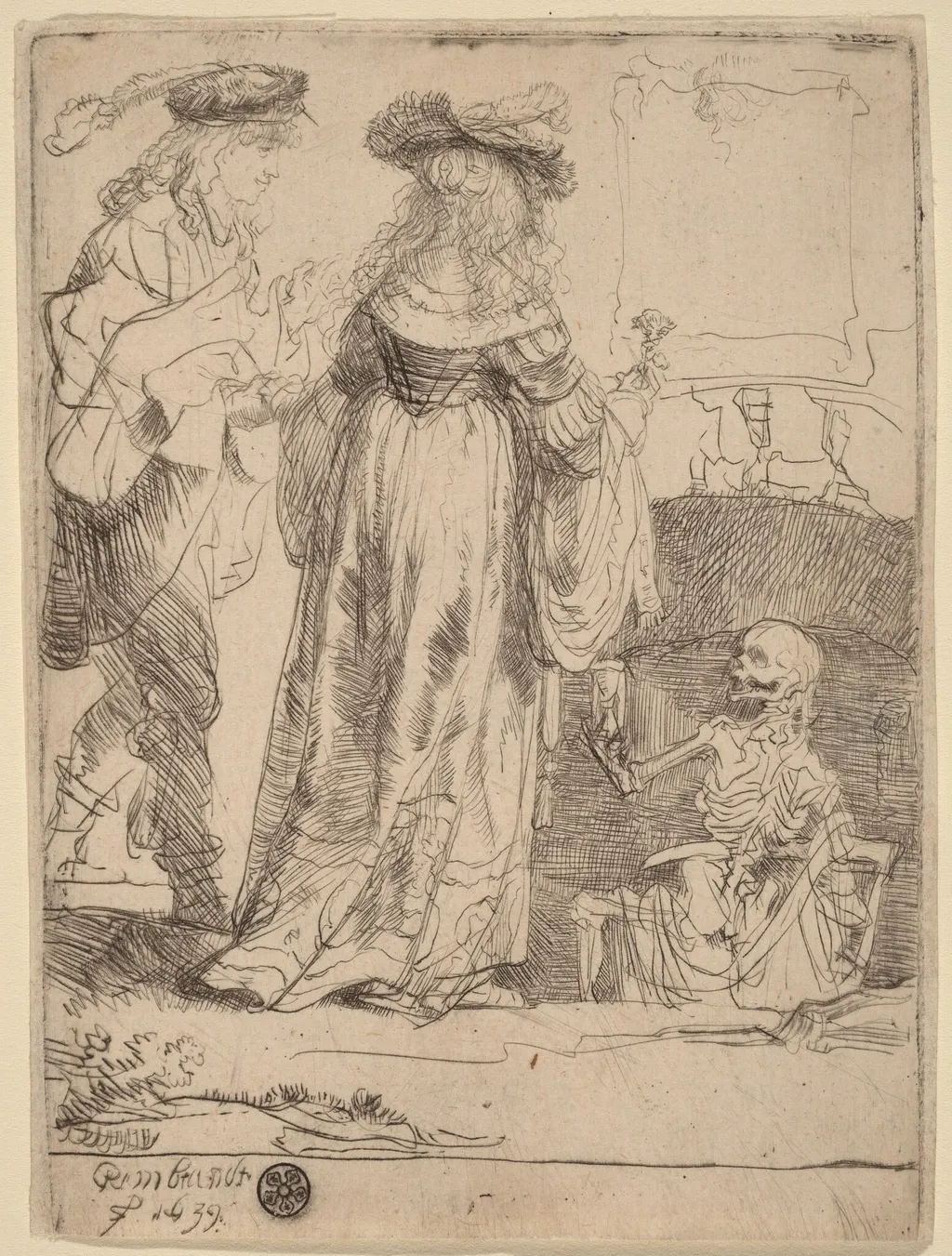
Death Appearing to a Wedded Couple from an Open Grave is an ink print by the Baroque artist Rembrandt. It dates from 1639 and is held in the collection of the National Gallery of Art.
About this work
Overview
Death Appearing to a Wedded Couple from an Open Grave is a 1639 etching by Rembrandt van Rijn, depicting a somber nocturnal scene where mortality intrudes upon domestic intimacy.
Subject & Meaning
A tall, shadowy figure of Death, characterized by a long robe and loose hair, looms over a married couple in bed. The couple, concealed under blankets with only a hand visible, is reminded of their inevitable fate, underscoring the universal theme of mortality's inescapability.
Technique & Style
The etching features loose, swirling lines that imbue the scene with a sense of unease and tension, typical of Rembrandt's expressive use of chiaroscuro and line work in his prints.
History & Provenance
Created in 1639, specific details about the etching's provenance and historical context of creation are not provided in the available information.
Context
This work reflects the 17th-century European fascination with themes of mortality and the transience of life, common in Dutch Golden Age art, where religious and philosophical reflections were prevalent.
Legacy
While the broader impact of this specific etching on subsequent art is not detailed here, it contributes to Rembrandt's legacy as a master of etching, influencing generations in exploring themes of mortality through printmaking.
Artist & collection
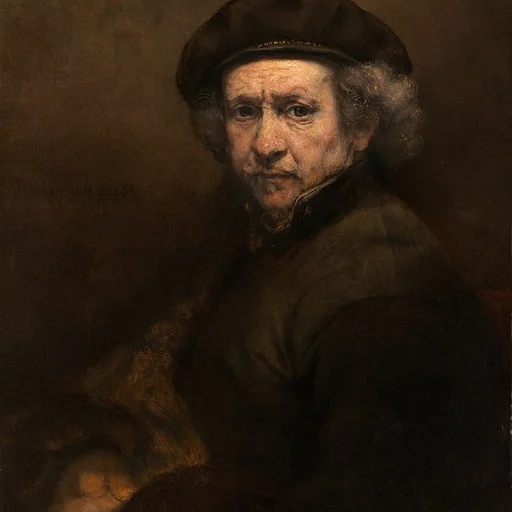
Artist
Rembrandt Harmenszoon van Rijn (15 July 1606 – 4 October 1669), known mononymously as Rembrandt, was a Dutch Golden Age painter, printmaker, and draughtsman.

![An Elegant Lady in Classical Dress [recto], by George Romney](https://artifactworldgallery.com/img/george-romney--an-elegant-lady-in-classical-dress-recto--c0f4e57cf0adb97c-w320.webp)