Artwork
Auch ein Todtentanz V
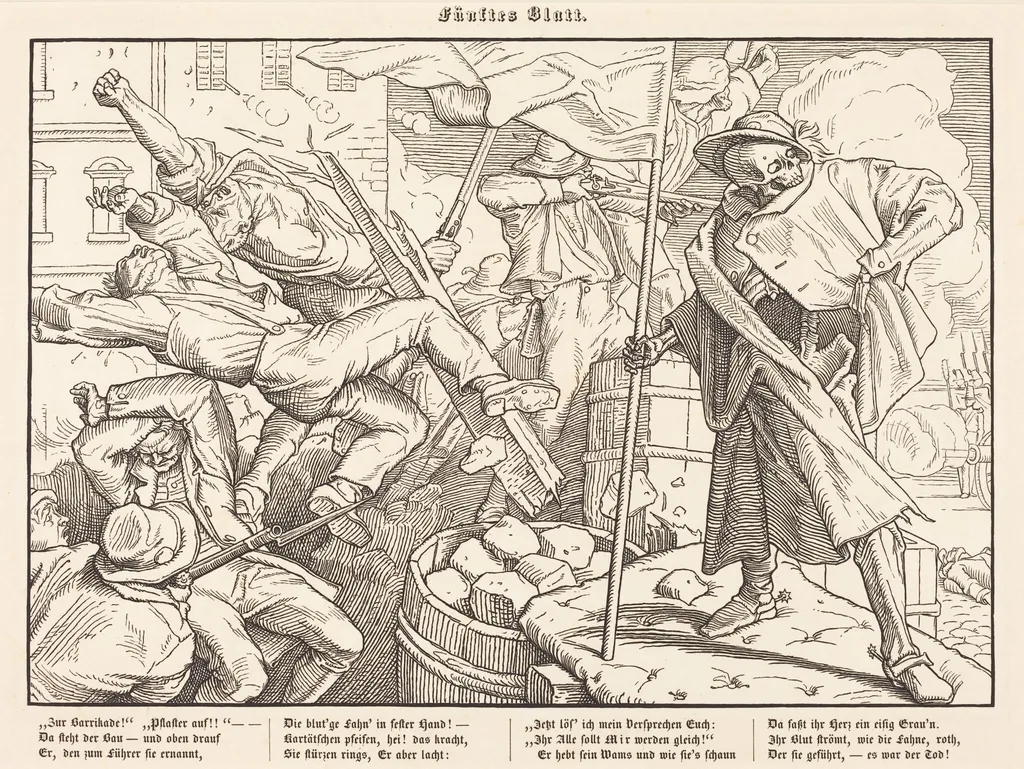
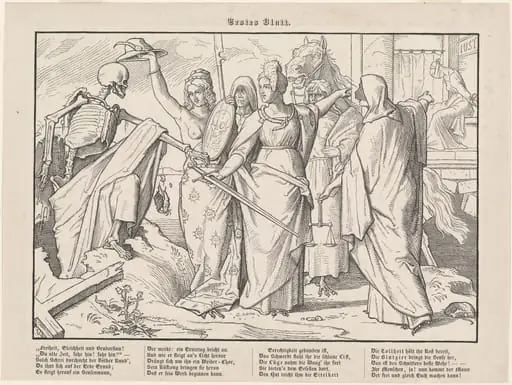
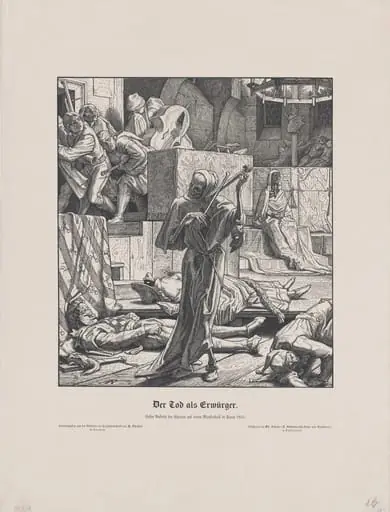
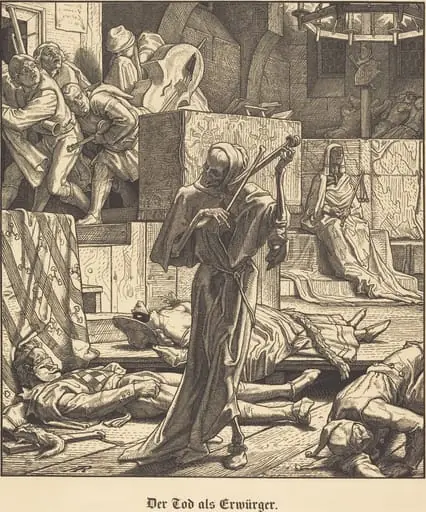
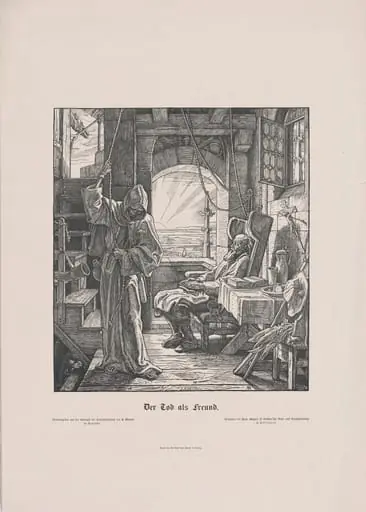
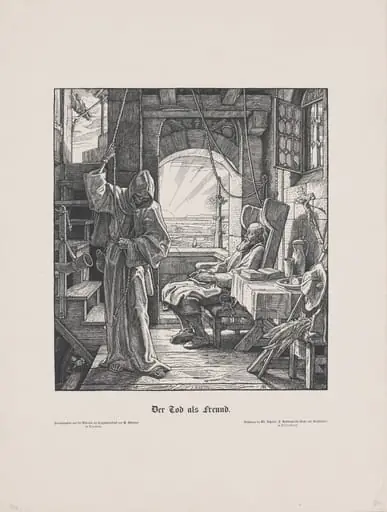
Auch ein Todtentanz V is an ink print by the Romanticist artist Alfred Rethel. It dates from 1849 and is held in the collection of the National Gallery of Art.
About this work
Overview
The image conveys a sense of disorder and urgency through its tightly packed figures and aggressive line work, suggesting a collective confrontation with death.
Auch ein Todtentanz V is a wood engraving by Alfred Rethel, completed in 1849 as part of a larger series exploring mortality. The composition presents a dense, chaotic assembly of human and spectral forms, rendered in high-contrast black and white. The image conveys a sense of disorder and urgency through its tightly packed figures and aggressive line work, suggesting a collective confrontation with death.
Subject & Meaning
The scene depicts a procession or struggle involving figures of varying social status, all caught in the grip of death’s inevitability. Some stand rigidly, clutching staffs or weapons; others collapse or writhe on the ground. The title, referencing the medieval danse macabre tradition, implies a universal reckoning, but Rethel avoids literal allegory, leaving the narrative ambiguous and emotionally charged.
Technique & Style
Rethel employed fine, overlapping incisions to build dense tonal areas and textured surfaces. The scratchy, energetic lines create a sense of movement and tension, with deep shadows emerging from layered hatching. The wood engraving medium allowed for sharp detail, yet the deliberate roughness of the strokes enhances the scene’s raw, unsettling atmosphere.
History & Provenance
Created in 1849, the print was produced during a period of political upheaval in Germany, shortly after the failed revolutions of 1848. Rethel, who had been involved in revolutionary circles, infused the work with the era’s sense of collective trauma. The series was published as a set of engravings, intended for broad circulation among educated audiences.
Context
Rethel’s series responds to the medieval tradition of the danse macabre but reinterprets it through a 19th-century lens of social anxiety and existential dread. Unlike earlier versions that emphasized moral instruction, this work reflects Romantic-era preoccupations with chaos, mortality, and the fragility of order, mirroring contemporary disillusionment after political collapse.
Legacy
Though less widely known than his mural work, this engraving contributed to Rethel’s reputation as a visual chronicler of national trauma. Its intense style influenced later German Expressionists, who adopted similar techniques to convey psychological distress. The series remains a significant example of how printmaking was used to engage with public grief and historical rupture.
Artist & collection