Artwork
Urocissa cucullata
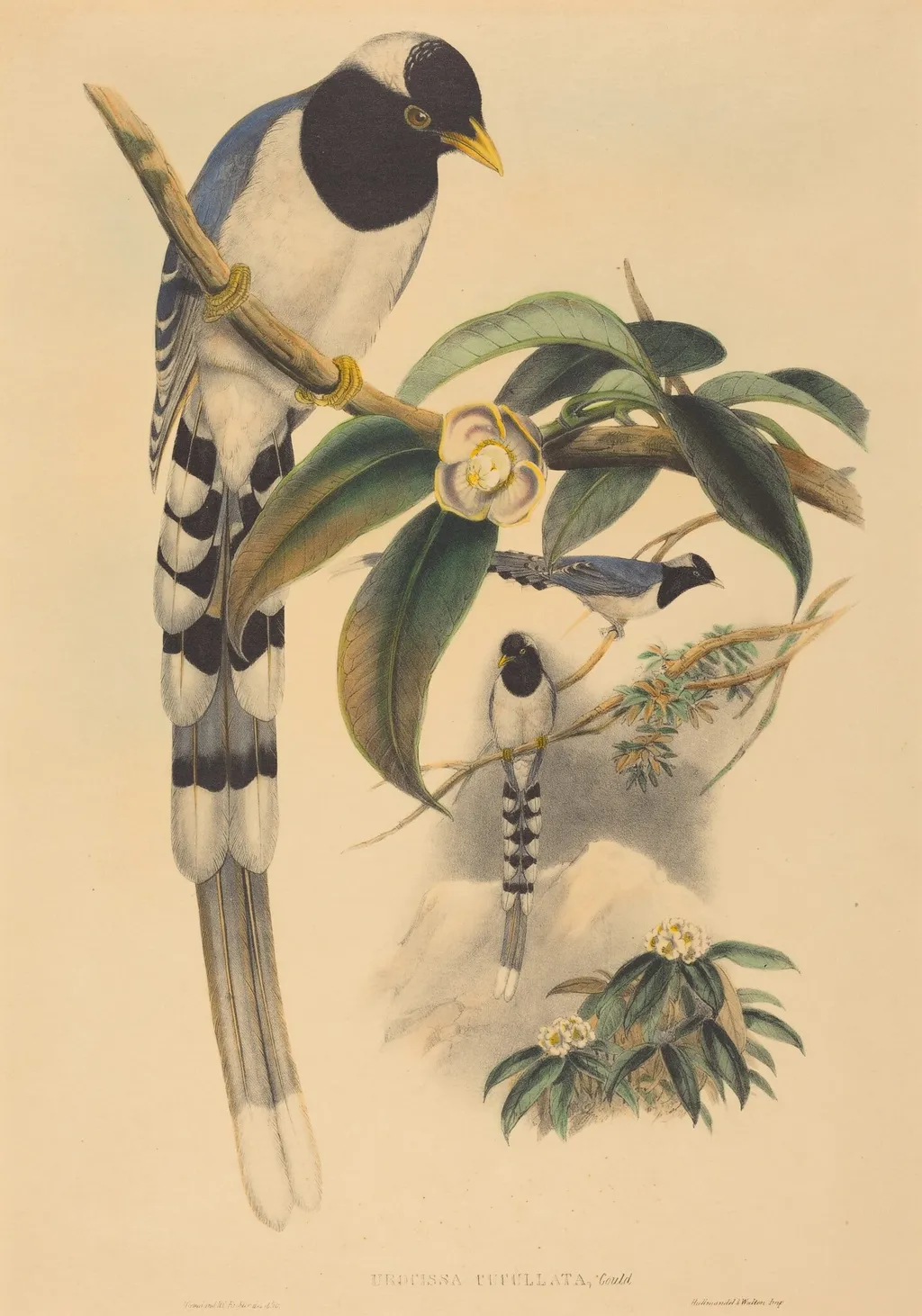
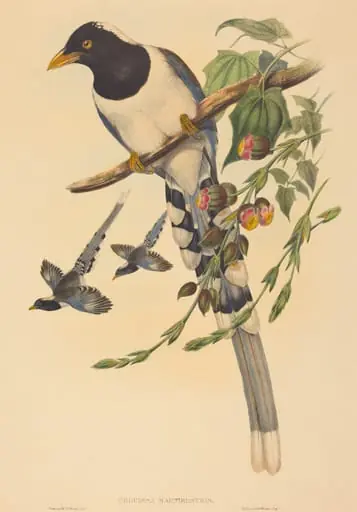
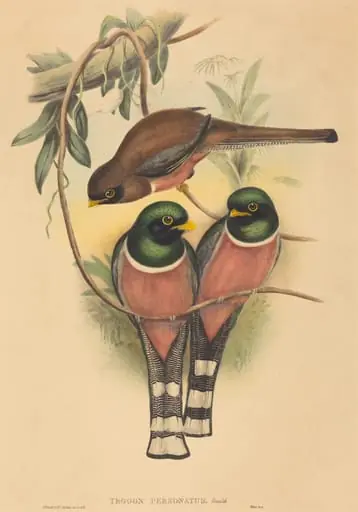
Urocissa cucullata is an ink print by the Impressionist artist H.C. Richter. It dates from 1850 and is held in the collection of the National Gallery of Art. Created around 1850 by H.
About this work
Overview
Created around 1850 by H.C. Richter, this hand-colored lithograph depicts two birds of the species Urocissa cucullata. The print belongs to a series of ornithological illustrations produced during a period of heightened scientific interest in avian taxonomy. The composition isolates the subjects against a neutral background, emphasizing anatomical accuracy over environmental narrative.
Subject & Meaning
The dominant bird displays a striking black-and-white striped tail, while the subordinate shows a simpler tail structure.
The two birds, one larger and one smaller, are rendered with attention to their distinct plumage patterns. The dominant bird displays a striking black-and-white striped tail, while the subordinate shows a simpler tail structure. Their perched posture and naturalistic positioning suggest observational study rather than staged display, reflecting the era’s emphasis on documenting species in their presumed wild behavior.
Technique & Style
The image was produced using lithography, a print method relying on oil and water repulsion to transfer ink from a stone surface. Each impression was then meticulously hand-painted with watercolors to achieve subtle gradations in feather tones and leaf textures. The precision in rendering individual barbs and veins underscores a commitment to scientific illustration over artistic embellishment.
History & Provenance
Richter, a German-born artist active in London, collaborated with naturalists and publishers to produce detailed zoological plates during the mid-nineteenth century. This print likely originated from a published ornithological work, though its exact publication context remains undocumented. Its survival in private and institutional collections attests to its enduring value as a specimen record.
Context
Produced during a time when European naturalists were cataloging global biodiversity, this image reflects the intersection of science and art. Advances in printing allowed for wider dissemination of accurate biological imagery, aiding both researchers and collectors. The plain background and focused composition align with contemporary standards for taxonomic clarity, prioritizing identification over aesthetic flourish.
Legacy
Though not widely exhibited today, the print remains a representative example of mid-Victorian natural history illustration. Its technical precision and restrained color palette influenced later generations of scientific draftsmen. As a physical artifact, it preserves a moment when visual accuracy was central to the documentation of species before the advent of photographic reproduction.
Artist & collection