Artwork
Blue Jay
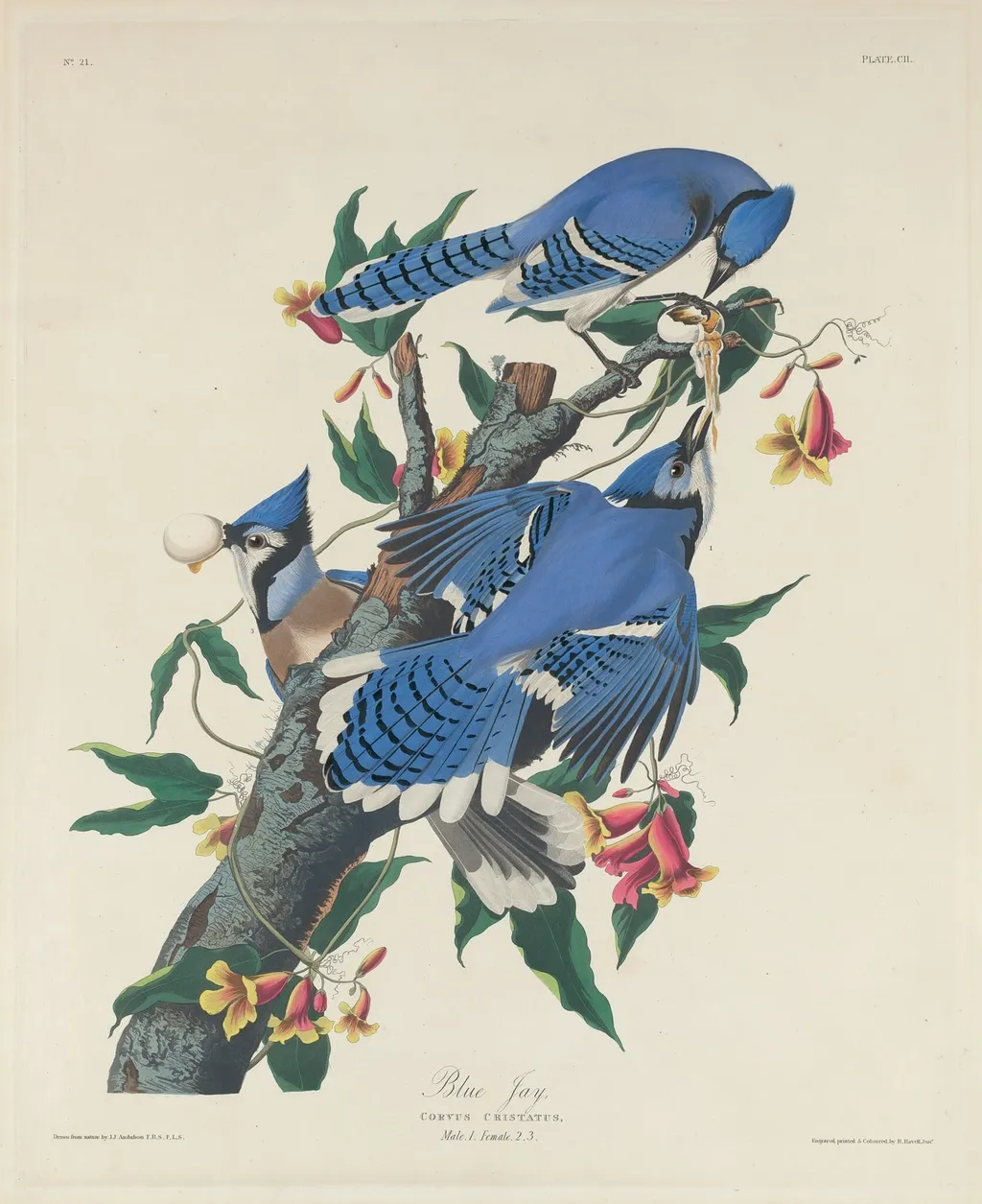
Blue Jay is an ink print by the Romanticist artist Robert Havell Jr.. It dates from 1831 and is held in the collection of the National Gallery of Art.
About this work
Overview
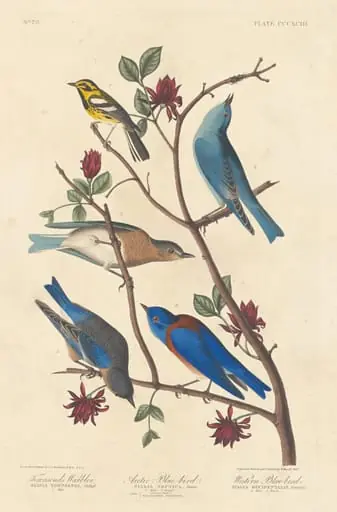
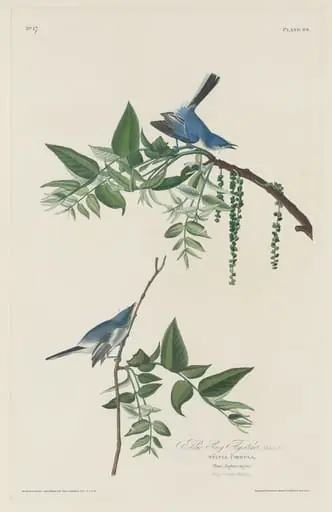
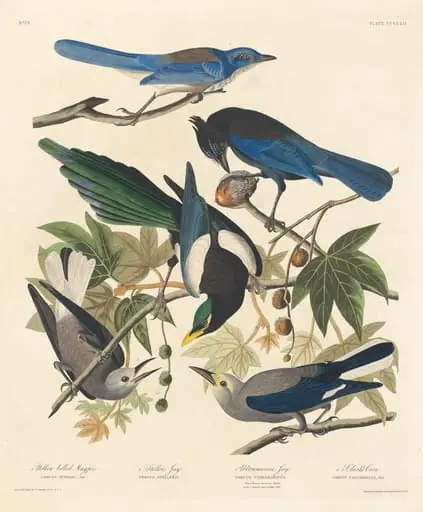
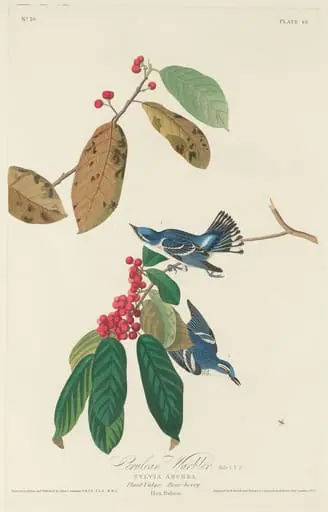
Robert Havell Jr. produced a hand‑colored engraving and aquatint titled *Blue Jay* in 1831, printed on Whatman wove paper. The work presents two vividly rendered blue jays perched on a branch, one clutching a nut while the other gazes upward, set against foliage, red blossoms and scattered berries.
Subject & Meaning
The composition focuses on the naturalistic observation of the blue jay, emphasizing its plumage and behavior. By depicting the birds in a domestic, garden‑like setting, the image reflects 19th‑century interests in ornithology and the study of native wildlife.
Technique & Style
The piece combines engraving with aquatint, a method that allows subtle tonal gradations. Havell’s hand‑coloring adds bright blues and complementary greens, while fine line work defines feather texture, creating a realistic surface that contrasts with the plain paper background.
History & Provenance
The Havell family were noted practitioners of aquatint, and Robert Havell Jr. continued this tradition in the early 1830s. The work is part of a broader engagement with natural history illustration that the family pursued alongside their involvement with Indian art and culture.
Context
During the early nineteenth century, printmaking served both scientific documentation and decorative purposes. *Blue Jay* exemplifies how artists employed technical skill to produce accessible images of wildlife for a growing audience interested in natural history.
Artist & collection

Artist
The Havell family of Reading, Berkshire, England, included a number of notable engravers, etchers and painters, as well as writers, publishers, educators, and musicians.