Artwork
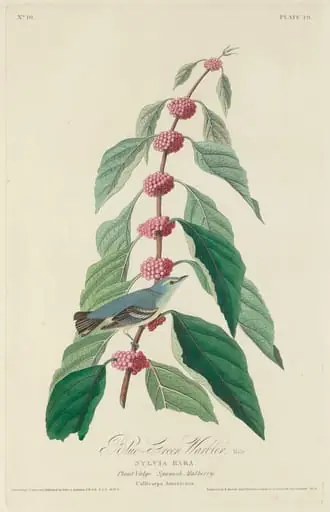
Cerulean Warbler
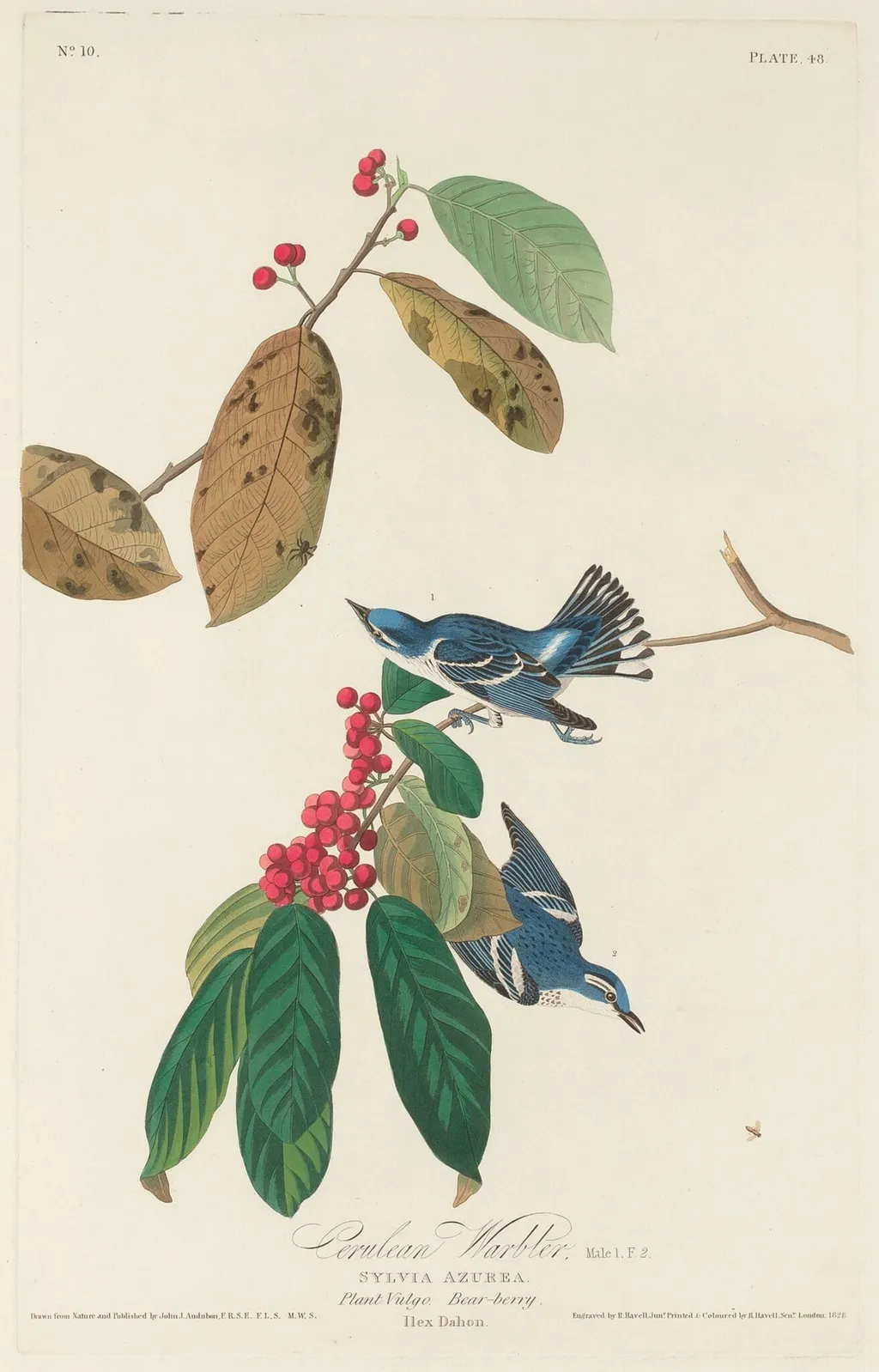
Cerulean Warbler is an ink print by the Romanticist artist Robert Havell Jr.. It dates from 1828 and is held in the collection of the National Gallery of Art.
About this work
Overview
The work combines scientific observation with decorative detail, typical of natural history publishing at the time.
Created in 1828 by Robert Havell Jr., this print is a hand-colored engraving and aquatint on Whatman wove paper. It belongs to a series of ornithological illustrations produced during the early 19th century, reflecting the technical precision and artistic care characteristic of Havell’s family workshop. The work combines scientific observation with decorative detail, typical of natural history publishing at the time.
Subject & Meaning
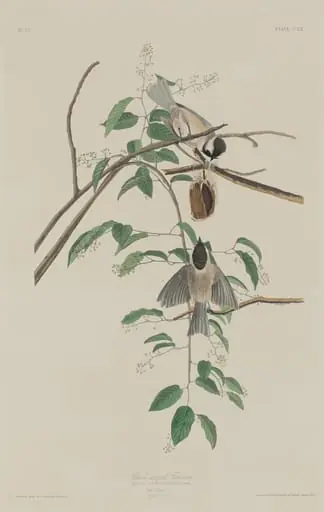
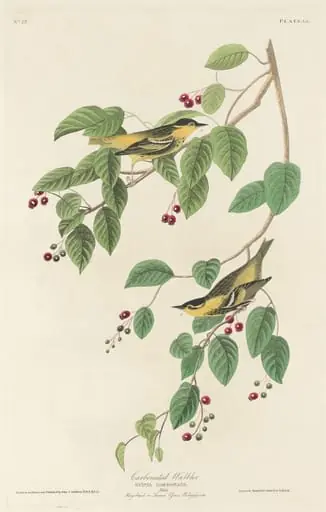
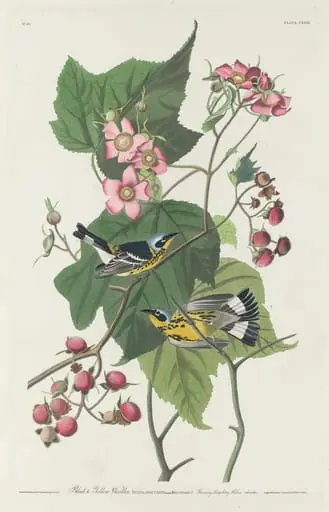
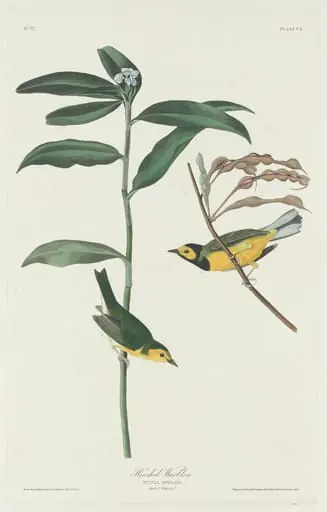
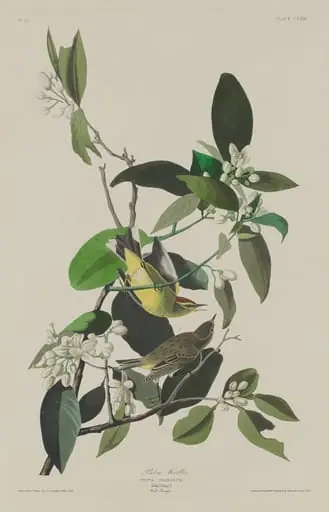
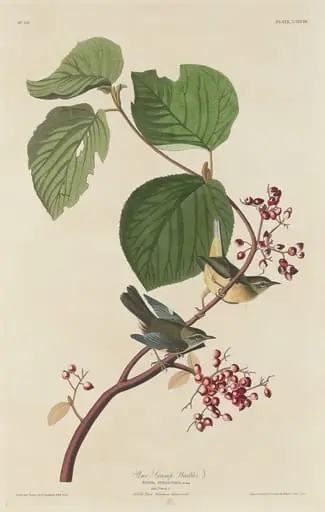
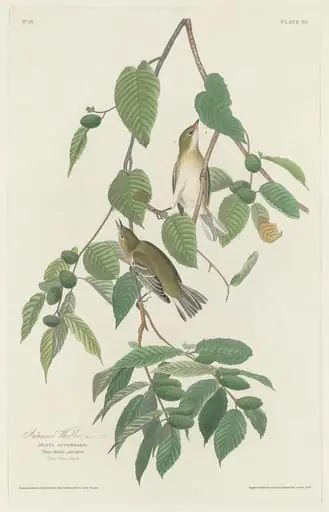
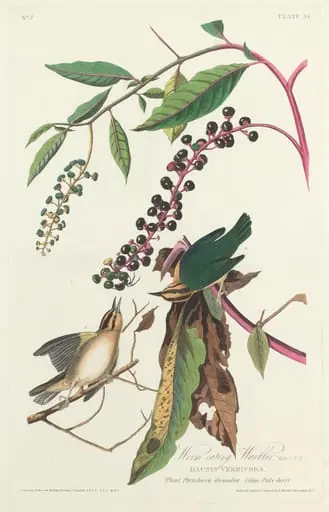
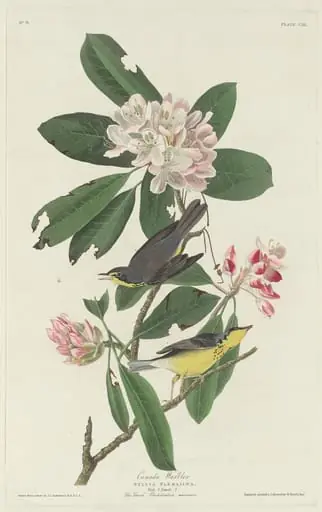
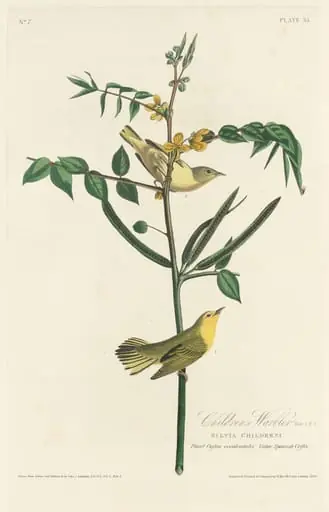
The image depicts two cerulean warblers—one perched on a branch, another in flight—alongside bear-berry plants with red berries and spotted green foliage. The birds, native to North American woodlands, are rendered with attention to plumage and posture, suggesting both biological accuracy and aesthetic harmony. The inclusion of the plant hints at ecological context, aligning with contemporary naturalists’ interest in species interdependence.
Technique & Style
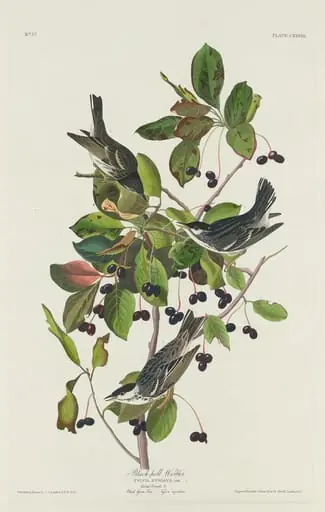
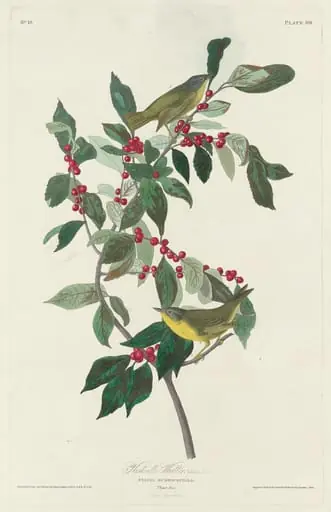
Havell employed engraving and aquatint to achieve fine linear detail and subtle tonal gradations, enhanced by meticulous hand-coloring. The white background isolates the subjects, emphasizing form and texture. Feathers, berries, and leaf veins are rendered with precision, reflecting the conventions of naturalist illustration before photography. The use of Whatman paper, prized for its durability and smooth surface, supported the delicate inking and coloring process.
History & Provenance
Robert Havell Jr. worked within a family firm established by his father, Robert Havell the Elder, known for producing high-quality prints for natural history publications. This piece likely originated from a larger project, possibly connected to Audubon’s ornithological works, though not part of the main folio. The Havells were central to the British print trade, bridging scientific illustration and artisanal craftsmanship in the early 1800s.
Context
In the 1820s, illustrated natural history books were vital tools for science and public education. Artists like Havell collaborated with naturalists to document species before widespread photography. The focus on North American birds and native plants reflects growing interest in domestic fauna, distinct from European traditions. These prints served both scholarly and collector audiences, blending accuracy with visual appeal.
Legacy
Havell’s work contributed to the standardization of ornithological illustration, influencing later naturalists and publishers. While not widely known outside specialist circles, his technique helped preserve visual records of species now facing habitat loss. The print remains a testament to pre-photographic methods of documenting biodiversity, valued today for its craftsmanship and historical insight.
Artist & collection

Artist
The Havell family of Reading, Berkshire, England, included a number of notable engravers, etchers and painters, as well as writers, publishers, educators, and musicians.