Artwork
Grande robe de cour
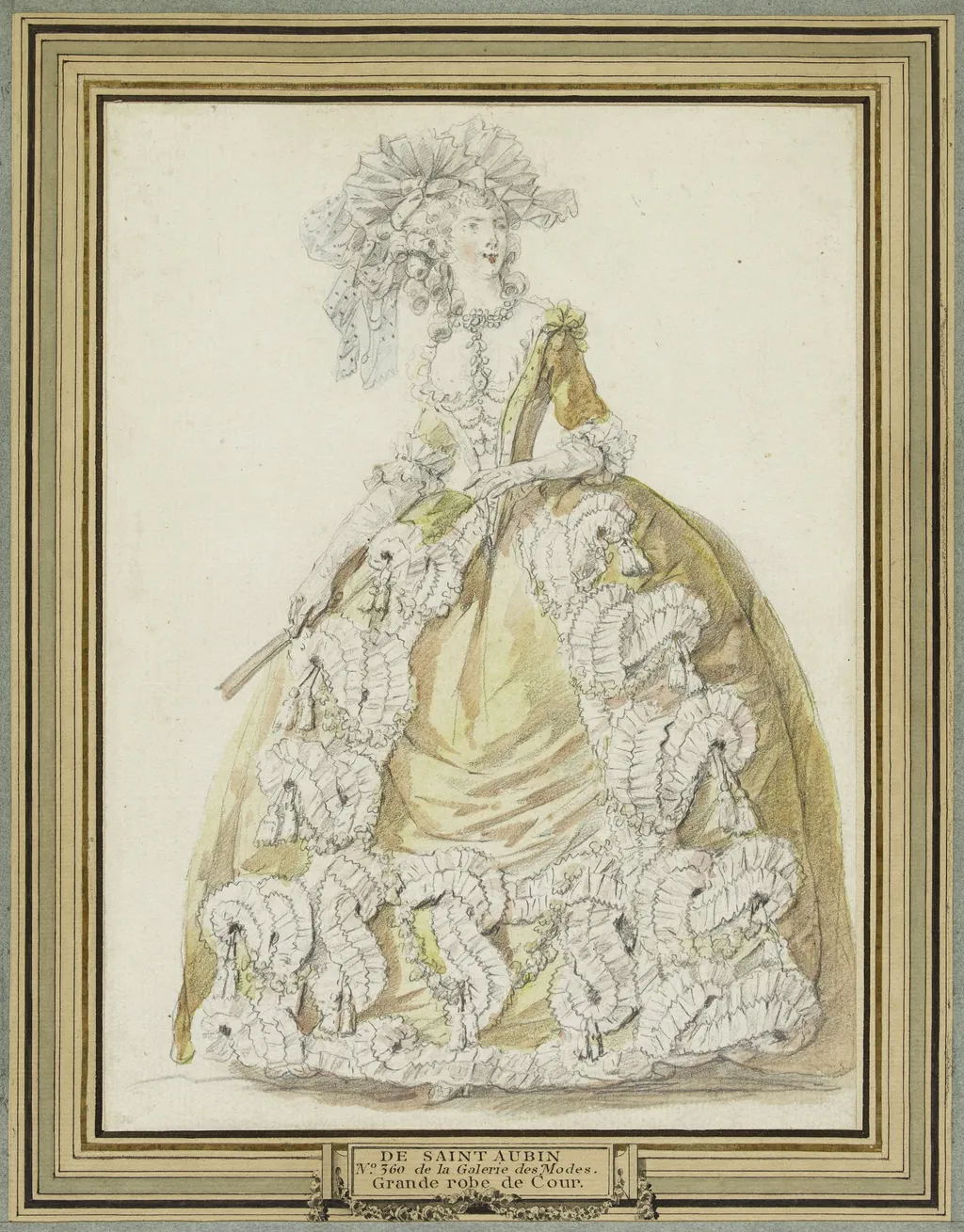
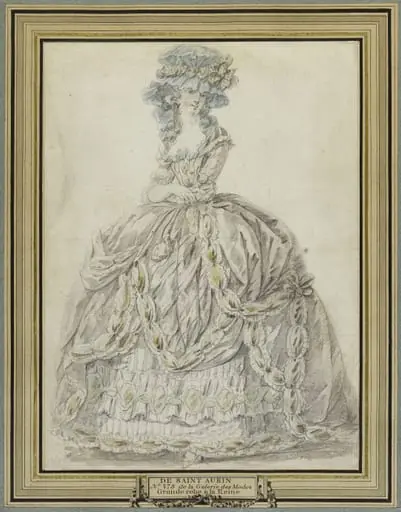
Grande robe de cour is an unspecified work on paper by the Rococo painting artist Augustin de Saint-Aubin. It dates from 1788 and is held in the collection of the Palais Galliera - Musée de la Mode de la Ville de Paris. Created in 1788 by French designer and engraver Augustin de Saint‑Aubin, this work depicts a woman dressed in an elaborate court gown.
About this work
Overview
Created in 1788 by French designer and engraver Augustin de Saint‑Aubin, this work depicts a woman dressed in an elaborate court gown. The image, now part of the Museum of Ethnography’s collection, exemplifies the late Rococo taste for ornate costume and refined detail.
Subject & Meaning
The figure is presented in a sumptuous robe de cour, a ceremonial dress worn at royal courts. The garment’s abundant white ruffles, gold edging, and voluminous sleeves emphasize status and ceremonial splendor, while the towering powdered wig underscores contemporary ideals of elegance and femininity.
Technique & Style
Executed in watercolor, the artist achieves a delicate, luminous surface by blending pigment with water, allowing soft transitions between pale yellow, ivory, and gold tones. The handling of light and the intricate rendering of fabric folds reflect Rococo’s preference for graceful, decorative composition.
History & Provenance
Augustin de Saint‑Aubin, a member of a prominent artistic family, produced the piece toward the end of the eighteenth‑century Rococo period. It entered the Museum of Ethnography’s holdings at an unspecified date, where it remains accessible for study of court fashion and decorative arts of pre‑revolutionary France.
Artist & collection
Artist
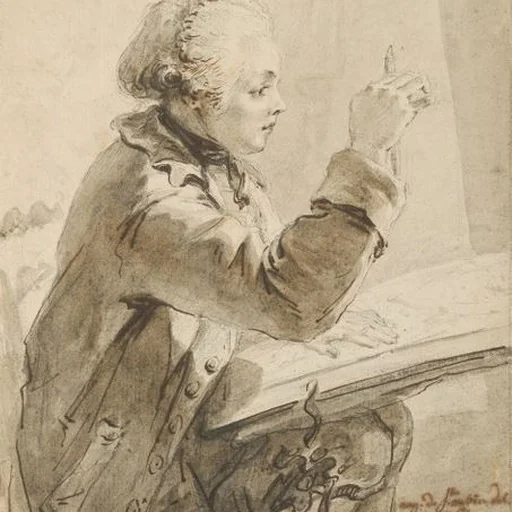
Augustin de Saint-Aubin sometimes styled Auguste de Saint-Aubin (3 January 1736 – 9 November 1807), belongs to an important dynasty of French designers and engravers.
Museum
Palais Galliera - Musée de la Mode de la Ville de Paris
Continue through works from the same source collection.
 Laban Searching for His Stolen Gods
 Parade (A Theatrical Procession in Paris)
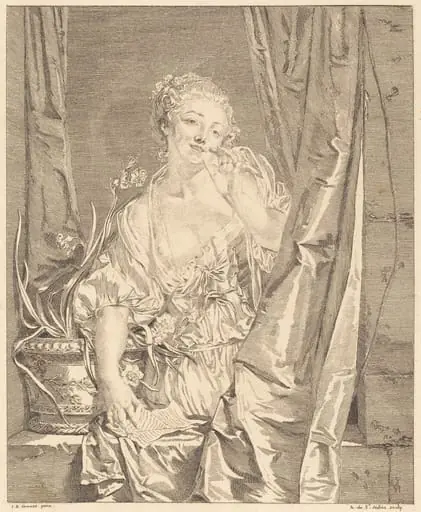 Le baiser envoyé
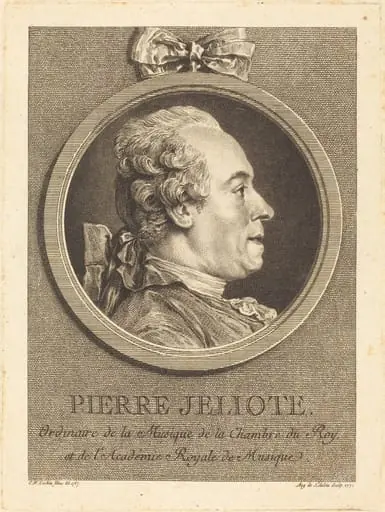 Pierre Jeliote
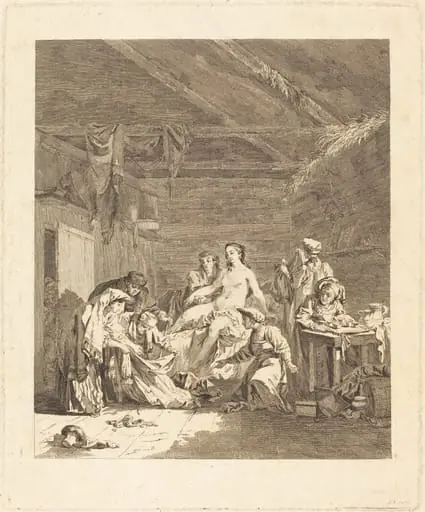 Le lever de la mariée russe (Custom of the Russians after the Marriage Ceremony and before the Wedding Feast)
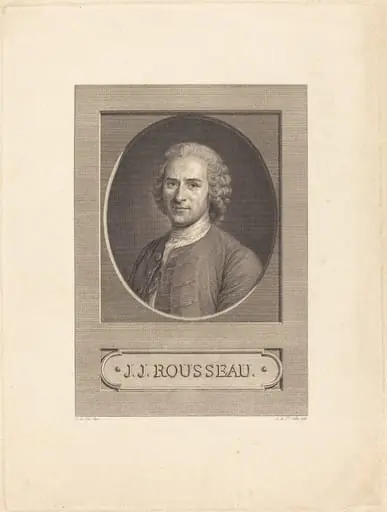 J.J. Rousseau
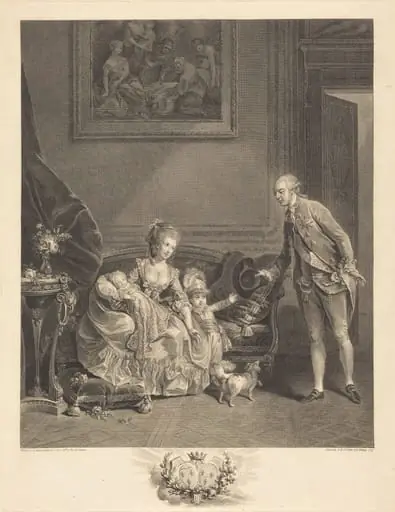 Le duc de Chartres, son epouse et ses enfants
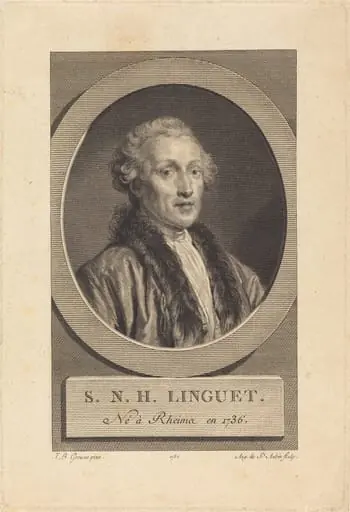 Simon-Nicolas-Henri Linguet
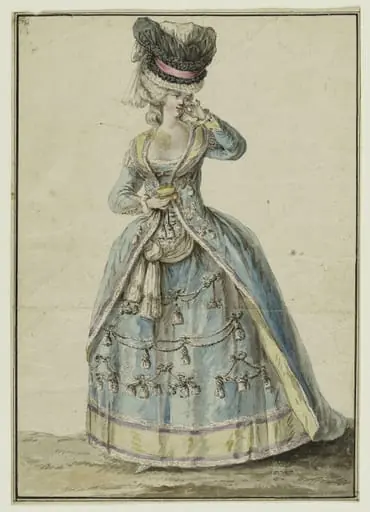 Habit en lévite enrichi de glands, d'épaulettes et de cordonets
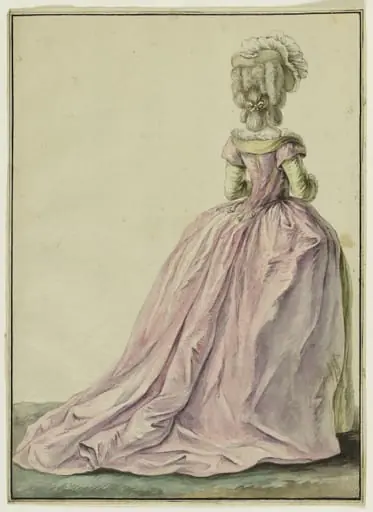 Robe dite à la turque
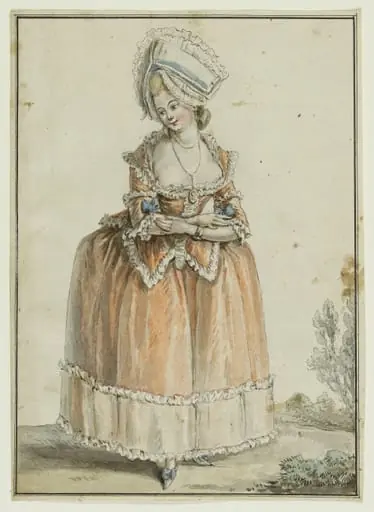 Jeune femme
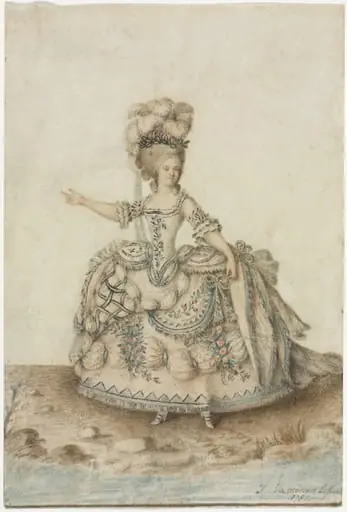 Costume Study for Opera Singer
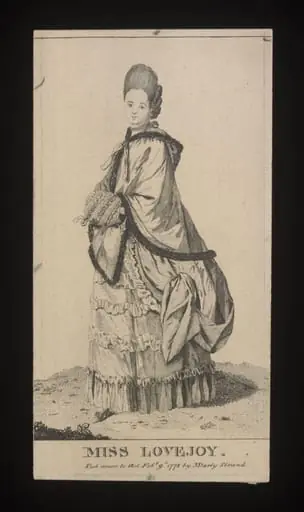 Miss Lovejoy
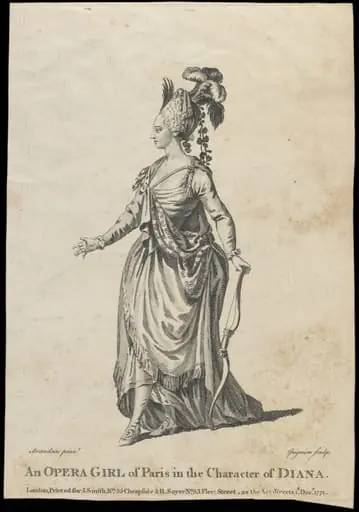 H Beard Print Collection
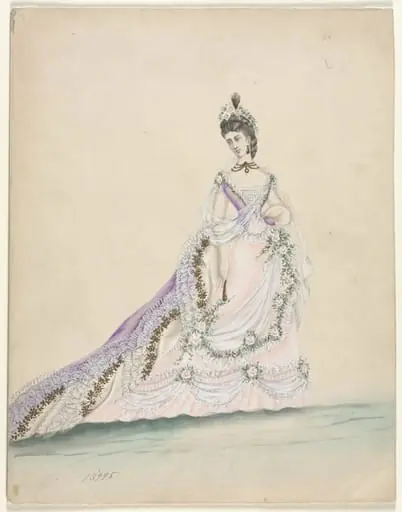 Fashion Study (designed for Worth)
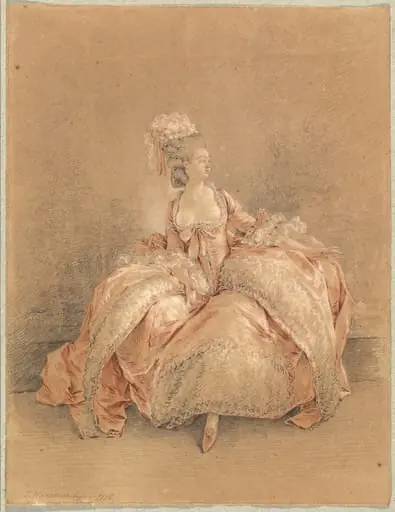 Yes or No
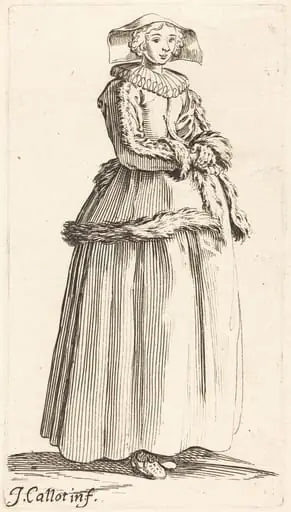 Young Woman with Hands Folded, Facing Right
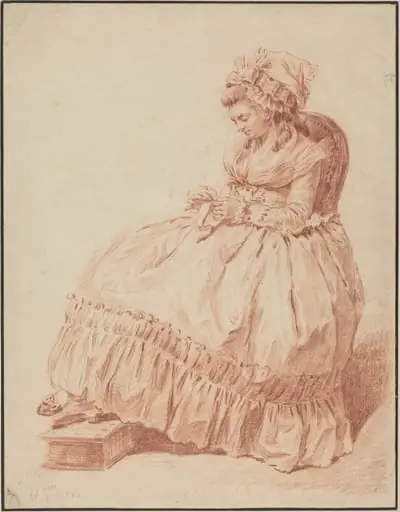 Seated Woman Sewing
 H Beard Print Collection
 Grande robe à la reine