Artwork
Jean-Charles-Philibert Trudaine
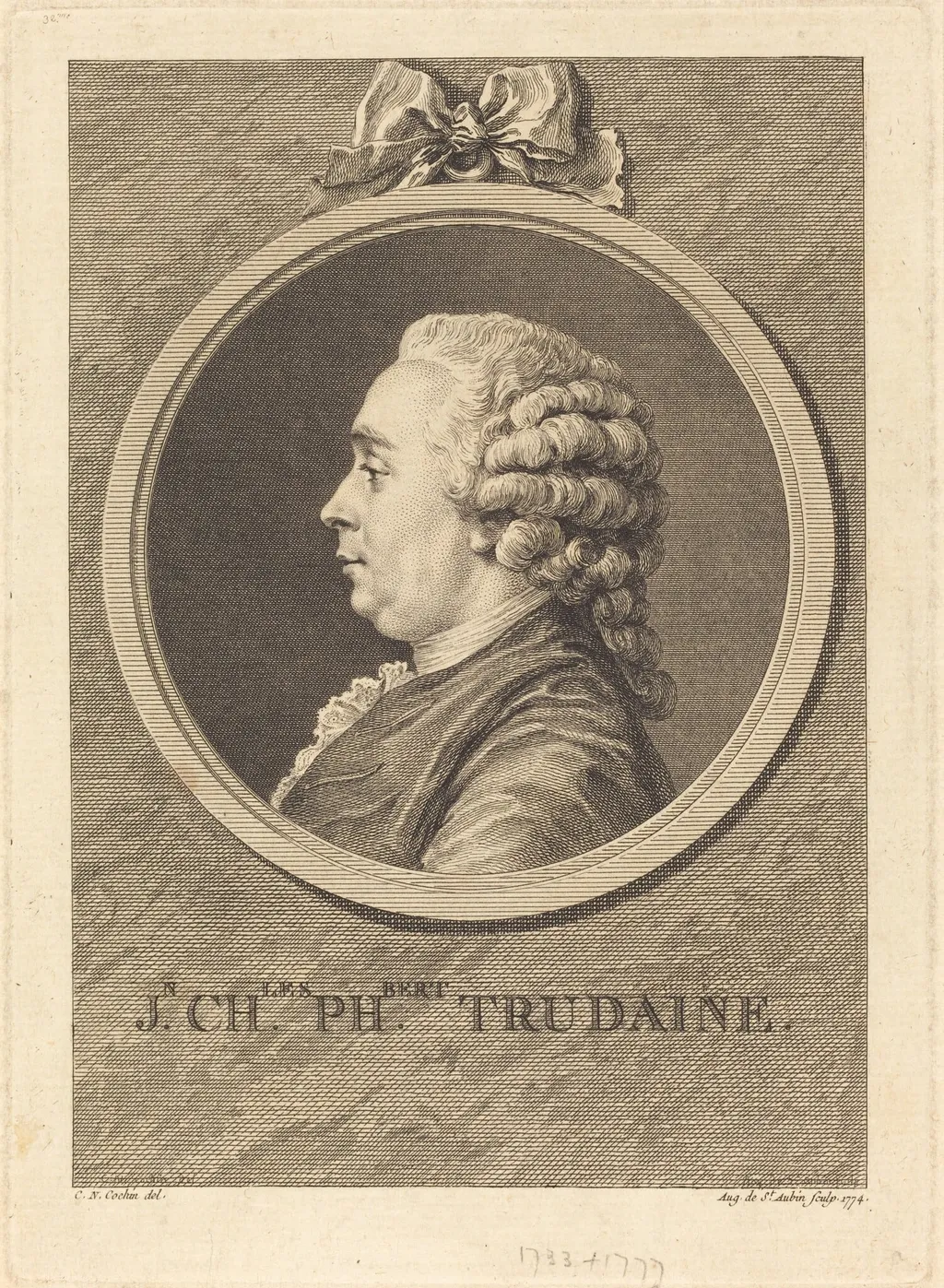
Jean-Charles-Philibert Trudaine is an ink print by the Romanticist artist Augustin de Saint-Aubin. It dates from 1774 and is held in the collection of the National Gallery of Art.
About this work
The background is plain, but the edges of the oval frame are decorated with a subtle pattern, and there’s a small bow or flower design at the top.
This is a black-and-white portrait of a man with curly white hair and a powdered wig. He’s turned slightly to the side, looking off to the left, with a serious expression. The background is plain, but the edges of the oval frame are decorated with a subtle pattern, and there’s a small bow or flower design at the top.
The name “S. CH. P. TRUDAINE” is written below the portrait, hinting at who this might be. The artist’s signature and the year “1774” are also printed at the bottom.
If you like this style, check out the technique: etching.
Overview
This 1774 etching on laid paper by Augustin de Saint-Aubin portrays Jean-Charles-Philibert Trudaine in a black-and-white portrait. The subject, depicted with curly white hair and a powdered wig, is turned slightly to the side with a serious expression. The oval frame features a subtle decorative pattern at its edges and a small bow or flower motif at the top. The print includes the subject's name, the artist's signature, and the creation year at the bottom.
Subject & Meaning
The etching depicts Jean-Charles-Philibert Trudaine, a figure identifiable by the inscription 'S. CH. P. TRUDAINE' below the portrait. His serious demeanor and formal attire, including a powdered wig, suggest a portrayal of dignity and respect, likely reflecting his social standing or professional importance at the time.
Technique & Style
Executed in etching on laid paper, the work showcases Saint-Aubin's proficiency in printmaking techniques prevalent in 18th-century French art. The use of a plain background contrasts with the subtle ornamentation of the oval frame, highlighting the subject while maintaining a sense of understated elegance.
History & Provenance
Created in 1774 by Augustin de Saint-Aubin, a member of a renowned French family of designers and engravers, the etching is a product of the late 18th-century French artistic milieu. Specific details on its provenance are not provided.
Context
This etching sits within the broader context of French art in the late 18th century, characterized by refined printmaking techniques. Saint-Aubin's work, as part of a family of artisans, contributes to the period's emphasis on detailed, elegant representations, particularly in portraiture.
Legacy
While specific lasting impacts or notable exhibitions of this particular etching are not detailed, it represents the enduring tradition of French printmaking from its era, potentially influencing later artists in portraiture and etching techniques.
Artist & collection
Artist
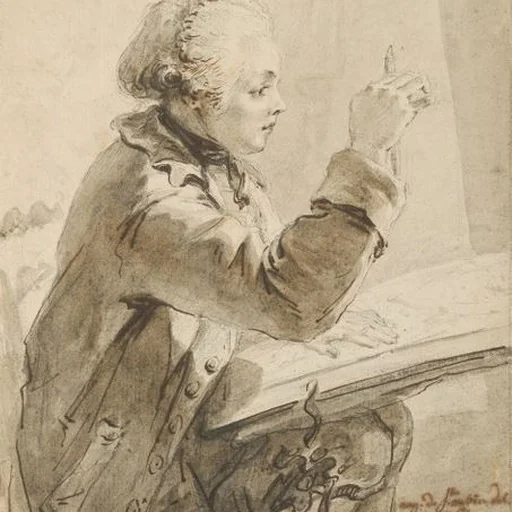
Augustin de Saint-Aubin sometimes styled Auguste de Saint-Aubin (3 January 1736 – 9 November 1807), belongs to an important dynasty of French designers and engravers.

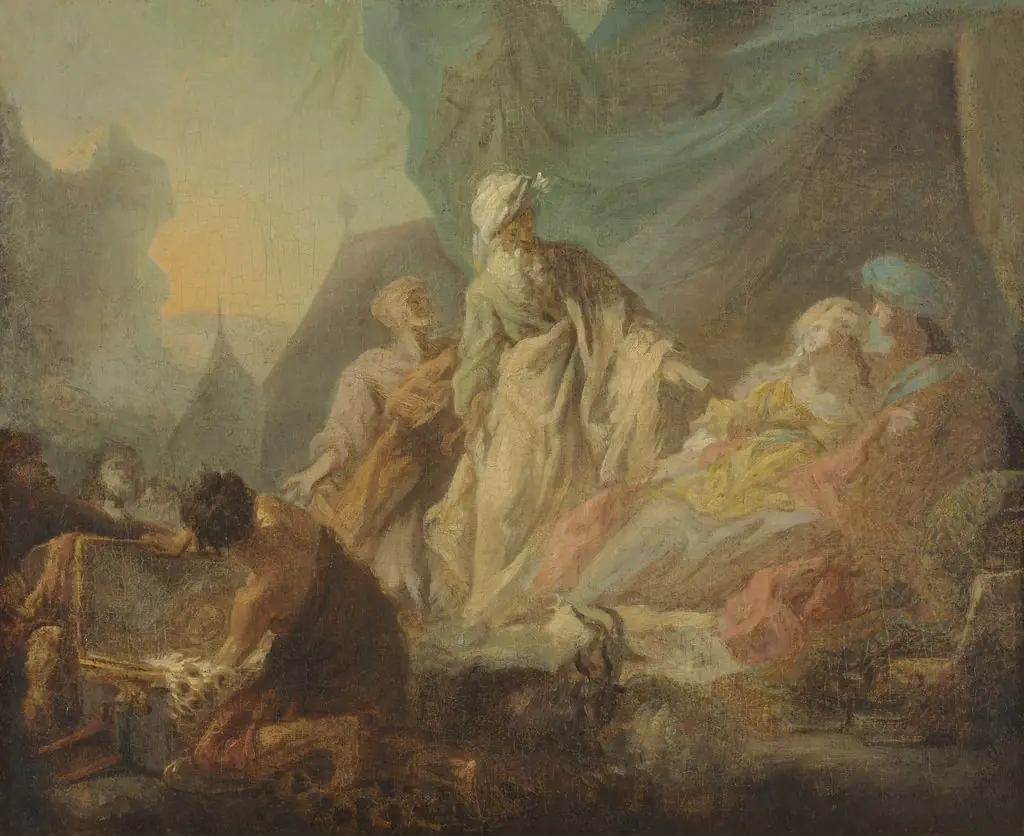 Laban Searching for His Stolen Gods
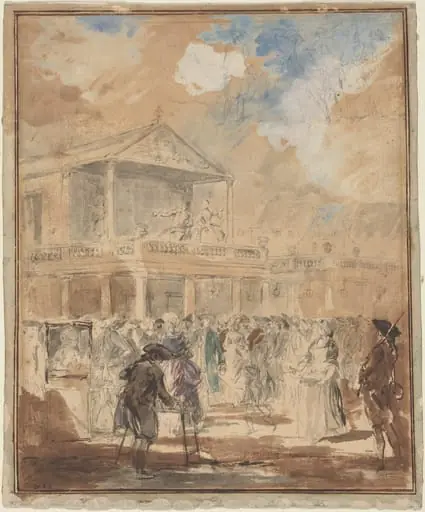 Parade (A Theatrical Procession in Paris)
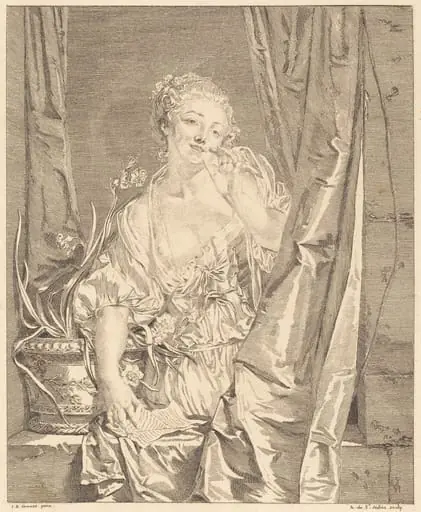 Le baiser envoyé
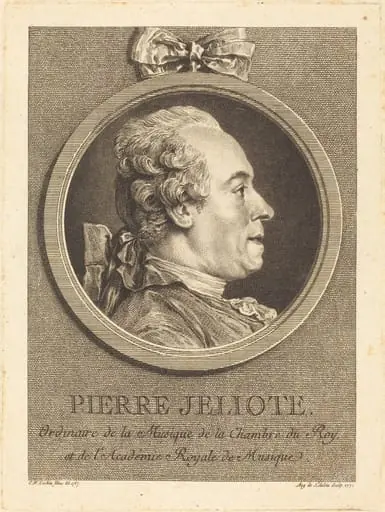 Pierre Jeliote
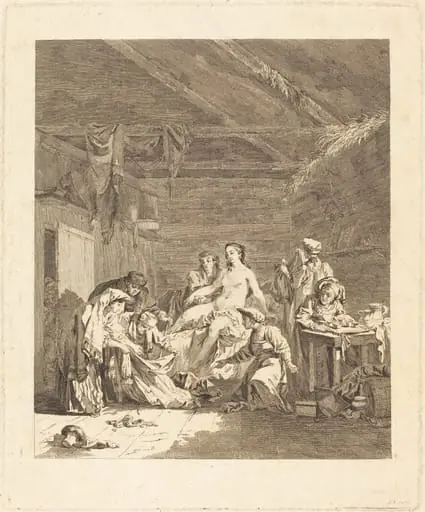 Le lever de la mariée russe (Custom of the Russians after the Marriage Ceremony and before the Wedding Feast)
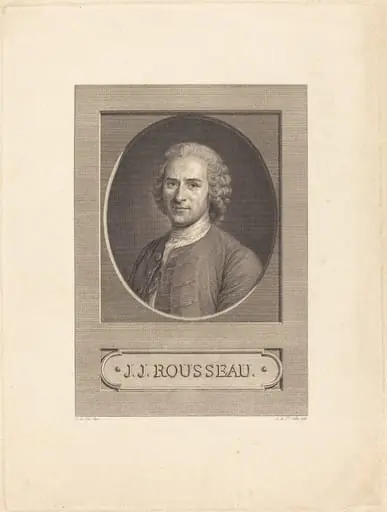 J.J. Rousseau
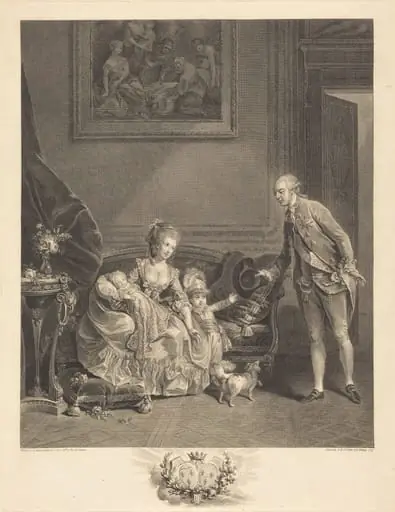 Le duc de Chartres, son epouse et ses enfants
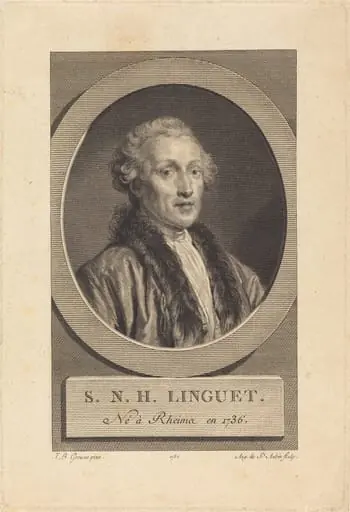 Simon-Nicolas-Henri Linguet