Artwork
Robert Carter
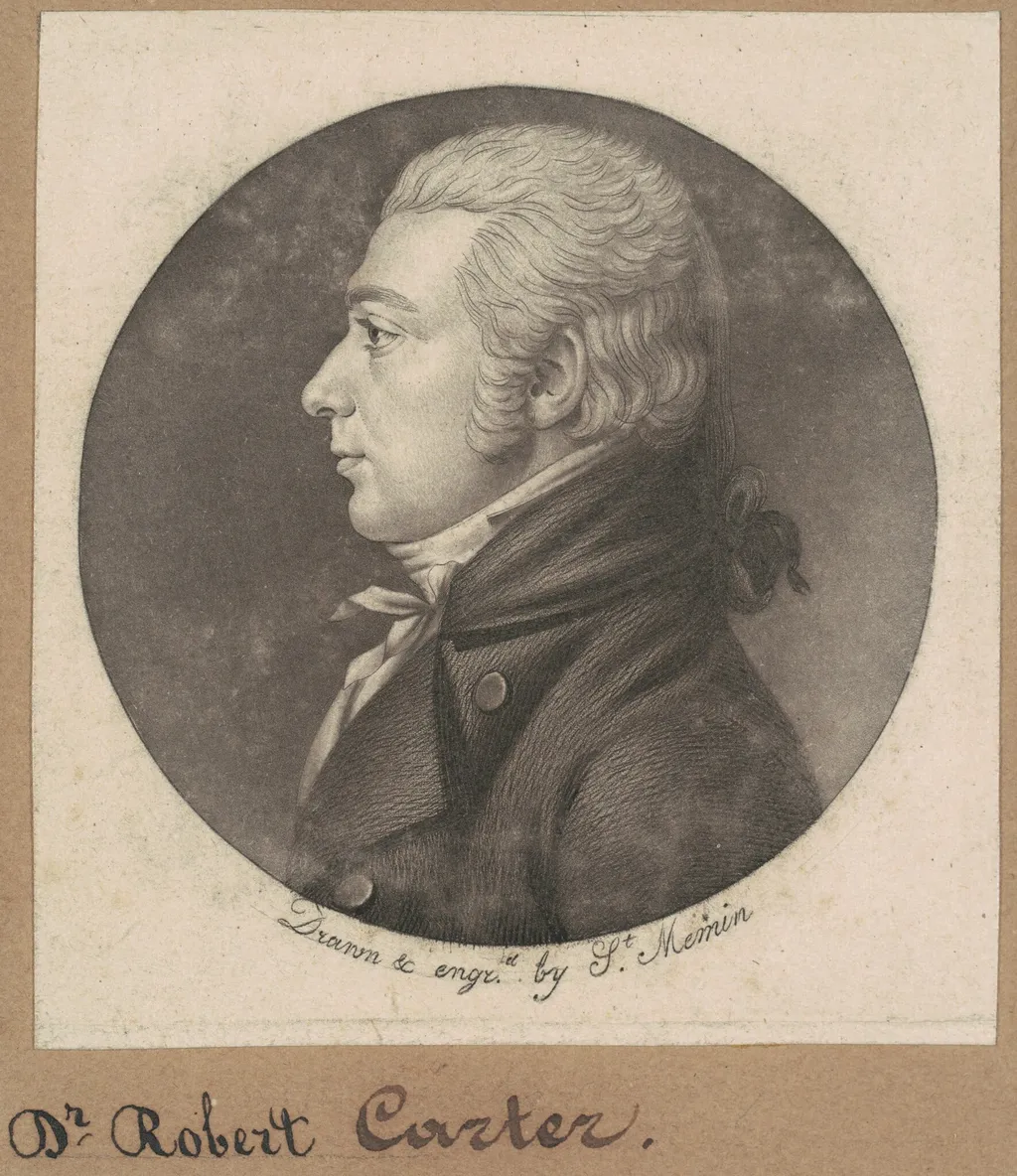
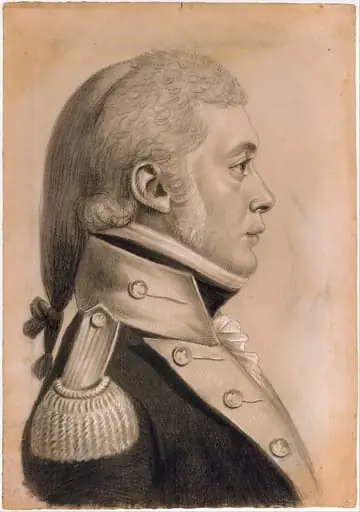
Robert Carter is an ink print by the Romanticist artist Charles Balthazar Julien Févret de Saint-Mémin. It dates from 1801 and is held in the collection of the National Gallery of Art. This small print, measuring 5.
About this work
Overview
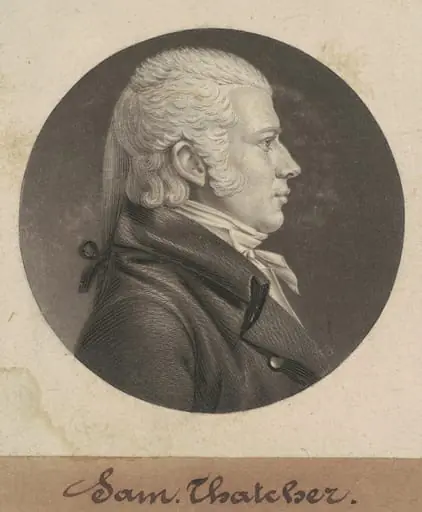
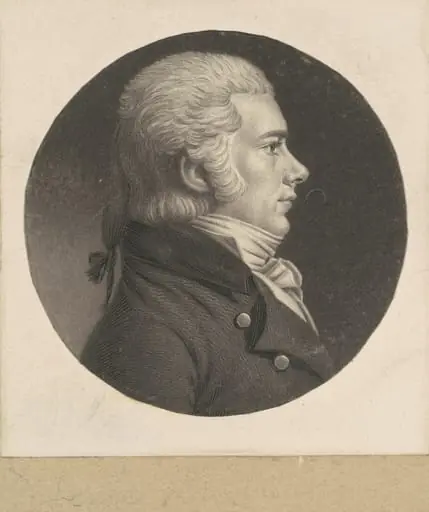
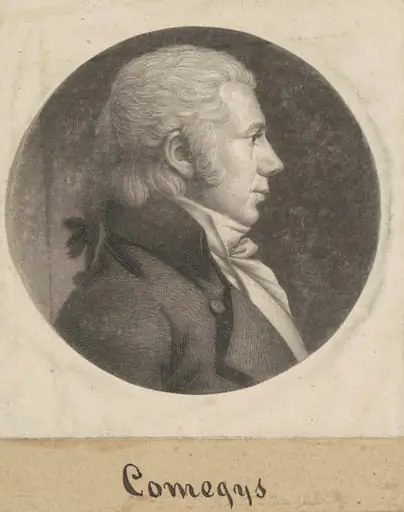
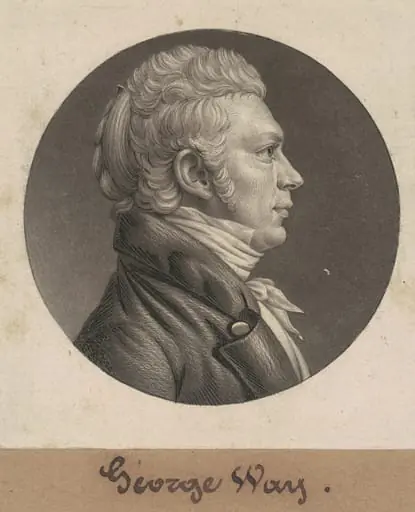
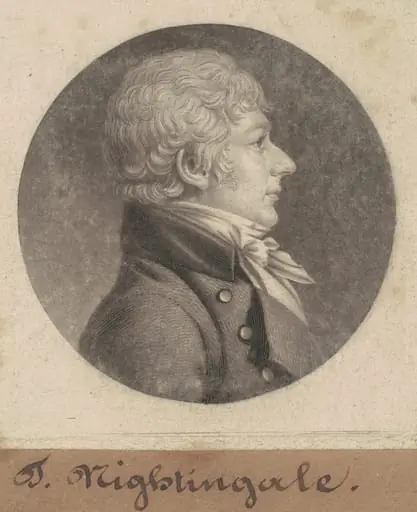
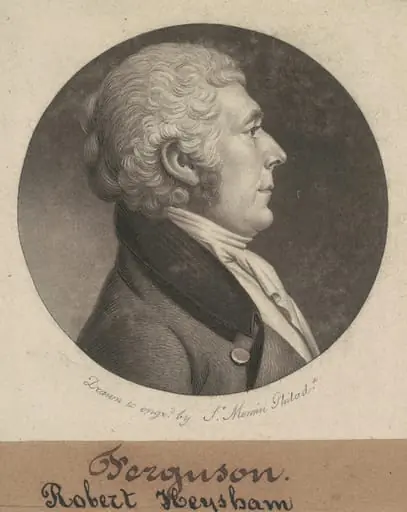
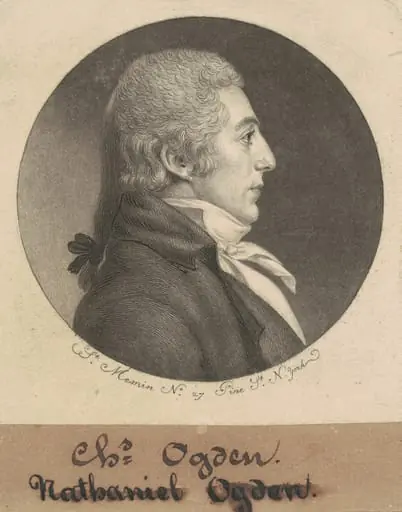
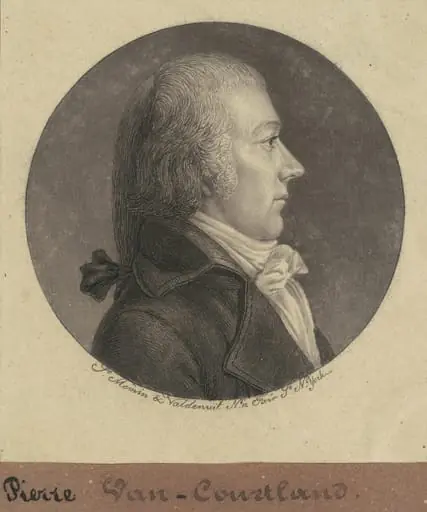
This small print, measuring 5.56 cm square, is a mezzotint and engraving by Charles B. J. Févret de Saint-Mémin, created in 1801. Rendered in black ink on wove paper and mounted to a brown backing, it depicts Robert Carter in a precise side profile. The work belongs to the Corcoran Collection and exemplifies the technical precision of early 19th-century American portraiture in print form.
Subject & Meaning
Robert Carter, a figure of social standing in early America, is portrayed without adornment or symbolic context. The profile view emphasizes dignity and restraint, aligning with contemporary ideals of civic virtue. The absence of background or attire details focuses attention on the individual’s physiognomy, suggesting a quiet, personal commemoration rather than public celebration.
Technique & Style
Fine engraving lines define edges and texture, while the flat paper surface paradoxically suggests three-dimensionality through controlled light and shadow.
Saint-Mémin employed mezzotint to achieve subtle tonal gradations, starting with a roughened copper plate and selectively smoothing areas to control ink retention. The result is a range of grays that model the contours of Carter’s face with remarkable delicacy. Fine engraving lines define edges and texture, while the flat paper surface paradoxically suggests three-dimensionality through controlled light and shadow.
History & Provenance
Created in 1801, the print was likely made during Saint-Mémin’s active years in the United States, when he produced numerous portraits of prominent individuals. It entered the Corcoran Collection in the 19th century and remained part of its holdings until the collection’s dispersal. Its small scale suggests it was intended for private ownership or album compilation rather than public display.
Context
In early 19th-century America, mezzotint was a favored medium for portraiture due to its ability to reproduce fine detail and tonal nuance. Saint-Mémin, a French émigré, helped popularize the technique among American elites. This print reflects a broader trend of using printmaking to circulate likenesses of notable figures, bridging the gap between painted portraits and mass reproduction.
Legacy
Though modest in size, the work stands as an example of Saint-Mémin’s skill in translating the human form into intimate, tactile imagery. It contributes to the historical record of American portraiture and demonstrates how technical innovation in printmaking enabled personal commemoration beyond the reach of oil painting. Its preservation underscores the value placed on such small-scale likenesses in early American visual culture.
Artist & collection

Artist
Charles Balthazar Julien Févret de Saint-Mémin
Charles Balthazar Julien Févret de Saint-Mémin (French pronunciation: ; 1770–1852) was a French portrait painter and museum director.