Artwork
Delhi. View of North Side of the Jamma Musjid in Principal Mabonedau Place of Worship
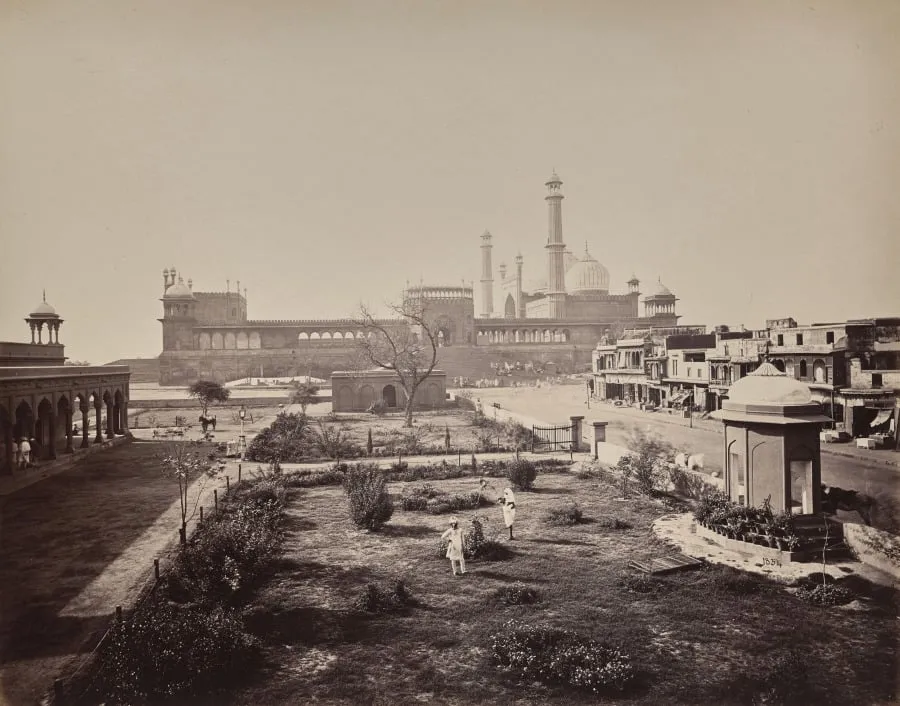
Delhi. View of North Side of the Jamma Musjid in Principal Mabonedau Place of Worship is a photography by the Impressionist artist Samuel Bourne. It dates from 1866 and is held in the collection of the Cleveland Museum of Art.
About this work
The details—cracks in the stone, the way light falls on the arches—show what the mosque really looked like in the 1860s.
You see a black-and-white photograph of Delhi’s Jama Masjid mosque, its domes and minarets rising against a bright sky.
This image is one of the earliest photos of the site, taken before modern restorations. The details—cracks in the stone, the way light falls on the arches—show what the mosque really looked like in the 1860s.
If you like this, look up more work by Samuel Bourne (British, 1834–1912).
Overview
This photograph is one of fifty taken in the 1860s by Samuel Bourne, documenting architectural sites across northern India. It captures the Jama Masjid in Delhi, one of the largest mosques built under Mughal rule. The image belongs to a series that traces the region’s major monuments from the Himalayan foothills to the Gangetic plains, offering a systematic visual record of the subcontinent’s built heritage during a period of rapid colonial change.
Subject & Meaning
The Jama Masjid, commissioned by Emperor Shah Jahan in the mid-17th century, served as the imperial mosque of Delhi and a center of religious and civic life. This photograph presents the structure not as a symbol of grandeur but as a physical entity shaped by time—its weathered stonework and uneven surfaces reveal decades of use and environmental exposure. The image preserves the mosque as it existed before later interventions, grounding its historical presence in tangible detail.
Technique & Style
Shot in wet-plate collodion, the photograph relies on long exposures to capture fine architectural textures. The high contrast of the black-and-white medium emphasizes the play of light across the mosque’s arches and domes, while the sharp focus on surface imperfections—cracks, erosion, and irregular masonry—reflects a documentary intent. Bourne’s composition avoids dramatic angles, favoring a frontal, balanced view that prioritizes structural clarity over aesthetic flourish.
History & Provenance
The photograph was taken during the decade following the 1857 Rebellion, when British photographers systematically recorded Indian monuments. Bourne, a commercial photographer based in Shimla, traveled extensively across northern India, producing albums for both European and Indian audiences. This image was likely part of a larger set sold as a collector’s item, contributing to the Western appetite for ethnographic documentation during the colonial era.
Context
In the 1860s, photography was emerging as a tool for both scientific record and imperial administration. Images of sites like the Jama Masjid were used to catalog cultural heritage, often implicitly framing it as static or in decline. Bourne’s work, while technically precise, operated within this framework—preserving structures that colonial authorities viewed as relics, even as they reshaped the urban landscapes around them.
Legacy
Bourne’s photographs of the Jama Masjid remain among the earliest visual records of the site in its pre-restoration state. They provide baseline data for conservators and historians studying architectural decay and intervention. Though his work was initially circulated as commercial imagery, it now serves as an essential reference for understanding the mosque’s physical evolution and the broader role of photography in shaping colonial and postcolonial perceptions of India’s heritage.
Artist & collection

Artist
Samuel Bourne was a British photographer known for his prolific seven years' work in India, from 1863 to 1870.

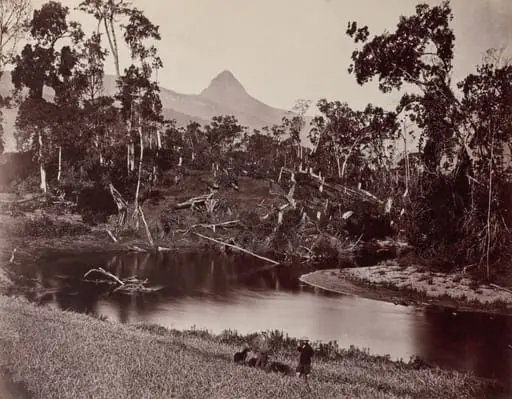 Ceylon Views to Adam's Tooth
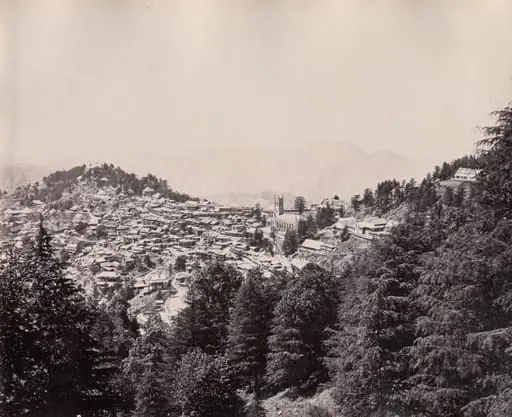 Shimla
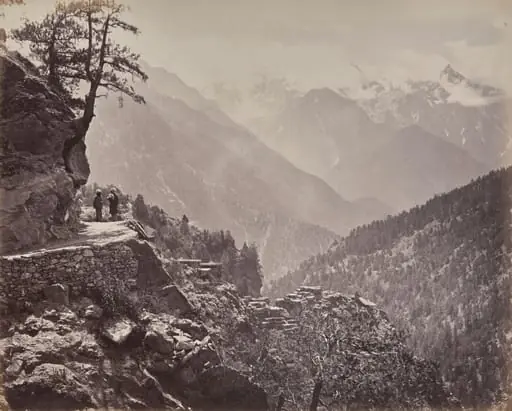 The Upper Himmalayahs. View on the New Road between India and China. Mt. Pangi with the Snowy Peaks of China in the Distance
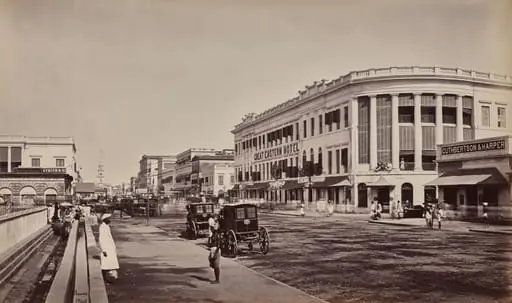 Calcutta. Old Court House Street
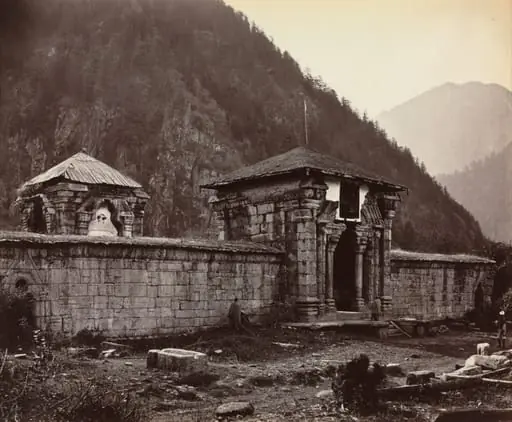 Temple at Naveshera, Kashmir, India
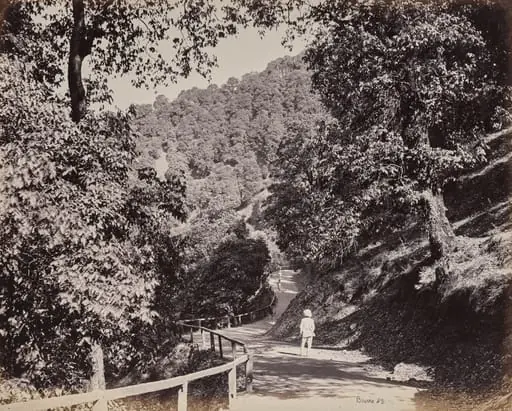 Shimla. The Mall near Rabq Lodge
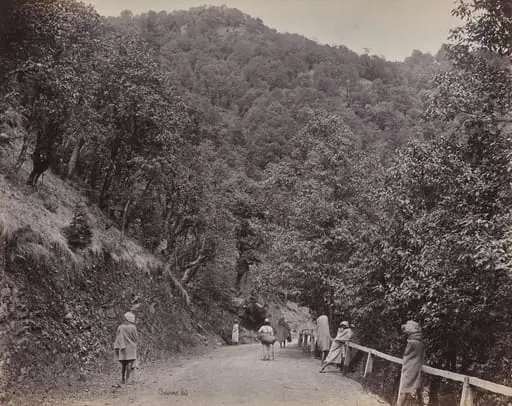 Shimla. The Mall or Principal
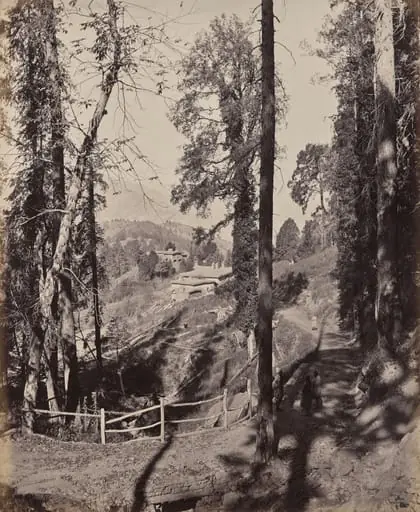 Murree. A Hill Station in the Himmalayahs, View Through the Forest
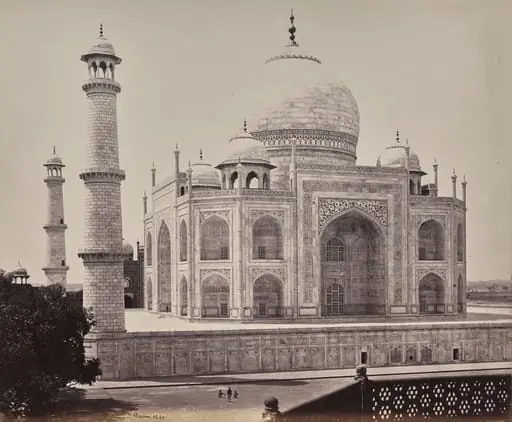 Agra. View of the Taj from a Corner in the Quadrangle
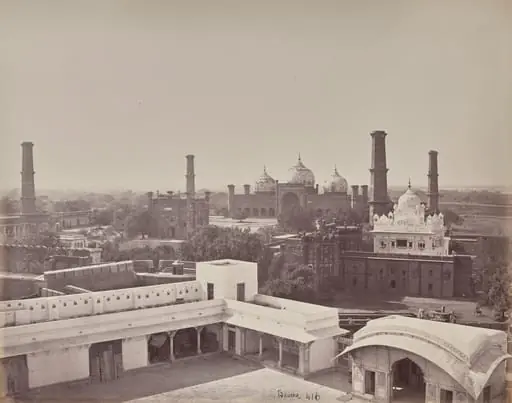 View of the City of Lahore Taken from the Roof of the Palace in the Fort
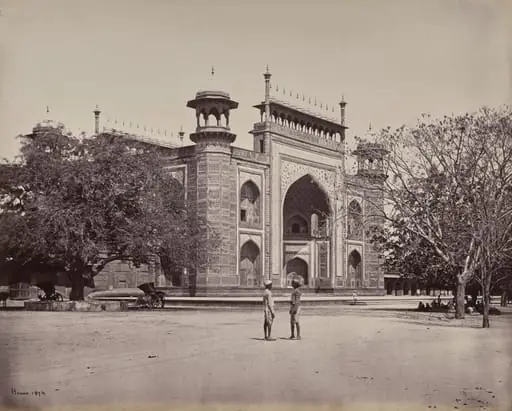 Agra. The Gateway of the Gardens Surrounding the Taj
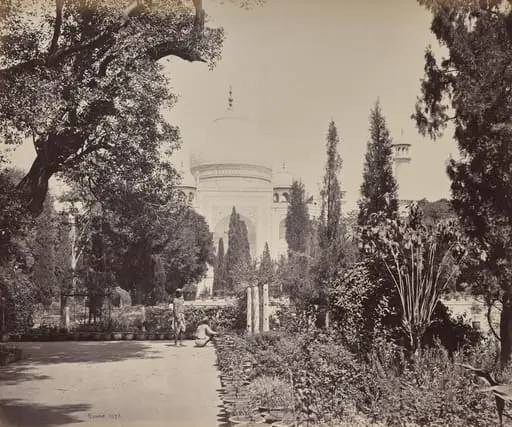 Agra. View of the Taj from the Garden
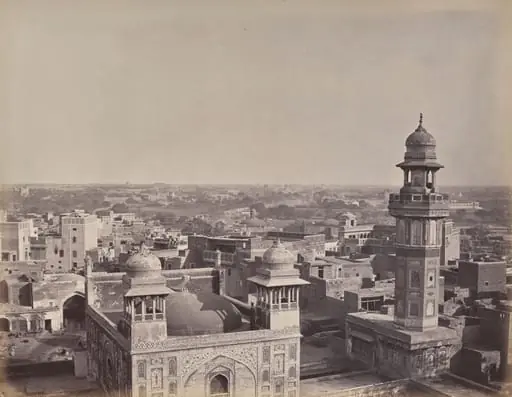 The City of Lahore. Another View Taken from Huzeer Khan's House
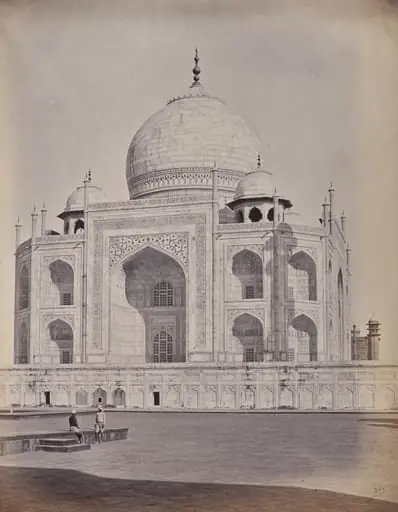 Agra. The Taj, the Central of Principal City
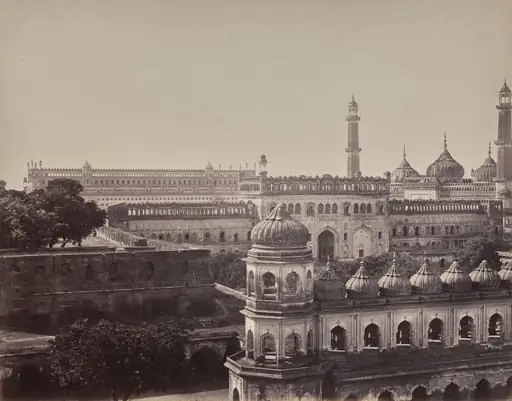 Lucknow. The Great Emambara and Mosque
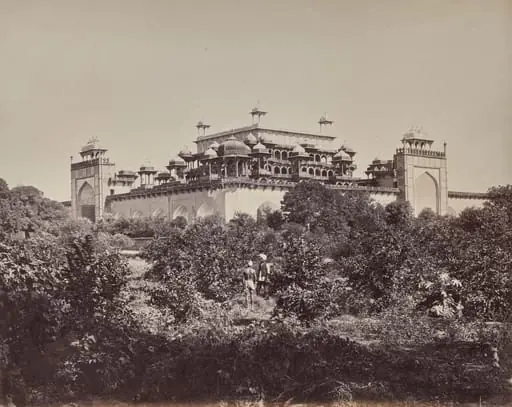 Secundra Near Agra. The Mausoleum of the Emperor Akbar
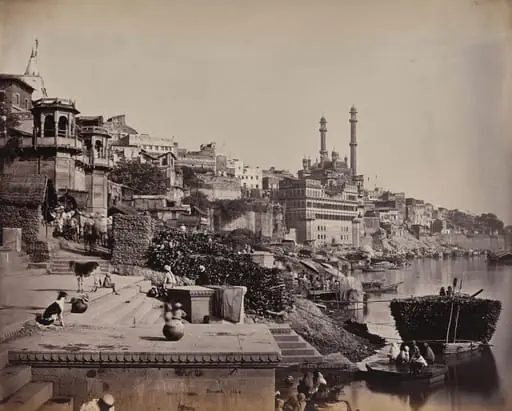 The City of Benares, on the Ganges, View of the Great Mosque of A (?) and Adjoining Landing Places
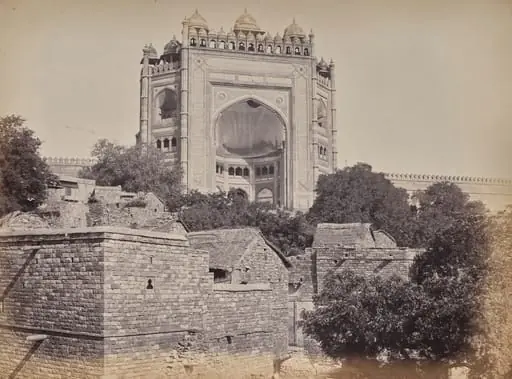 Futheypoor Sikre Guard Gate of the Fort
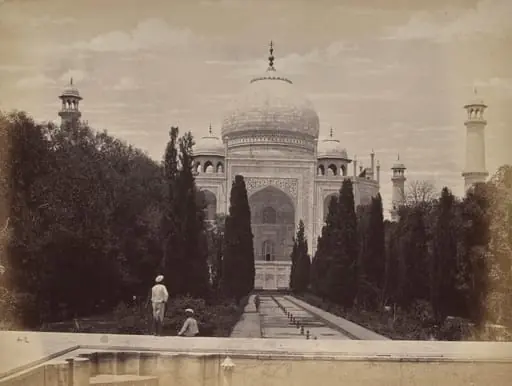 Agra. View of the Taj in Front of Nootkan (The Light of the World), Wife of the Emperor Akbar, View from the River