Artwork
The Weary Ploughman
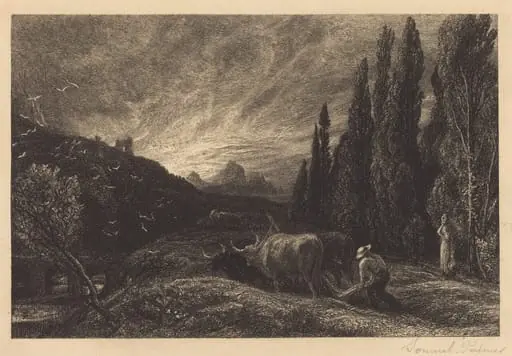
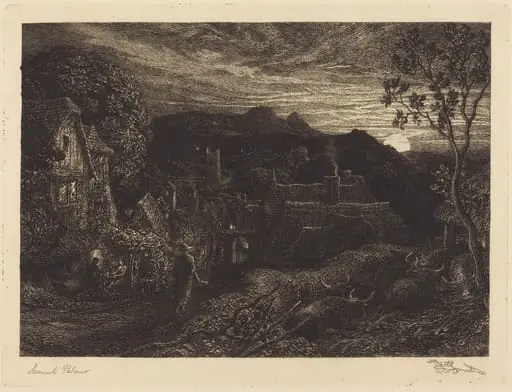
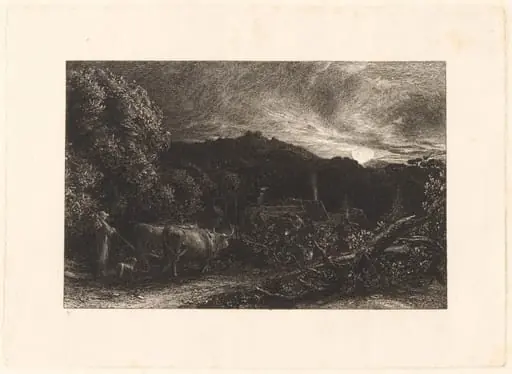
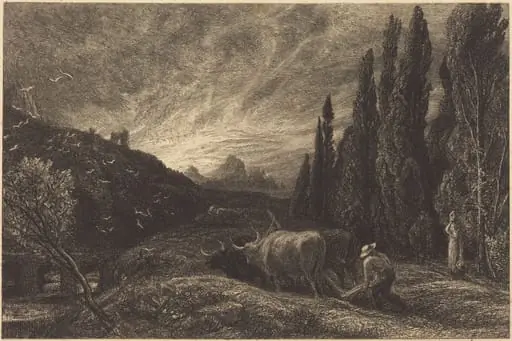
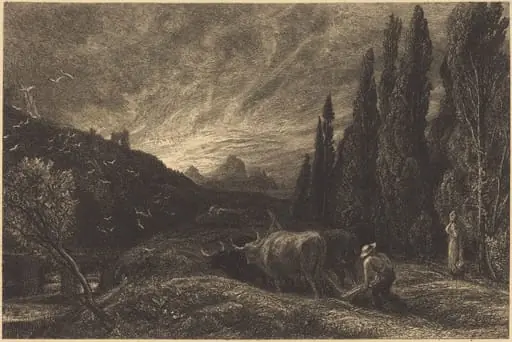
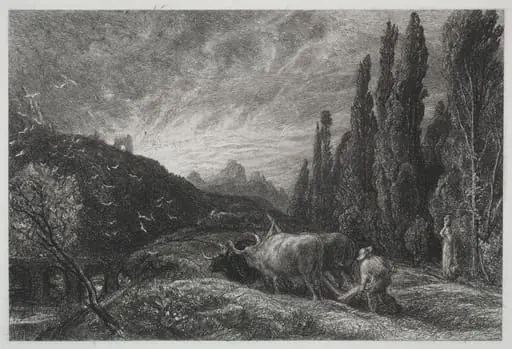
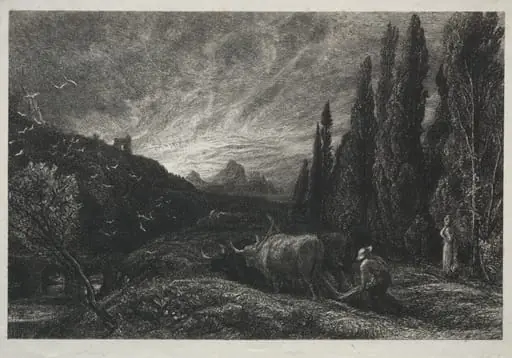
The Weary Ploughman is an ink print by the Impressionist artist Samuel Palmer. It dates from 1858 and is held in the collection of the National Gallery of Art.
About this work
Overview
Created in 1858, *The Weary Ploughman* is an etching on chine collé by the British artist Samuel Palmer. The work belongs to a series of prints in which Palmer explored rural labor and the quiet dignity of agricultural life. Its delicate paper layering and inked lines reflect his mastery of printmaking techniques, blending technical precision with emotional depth.
Subject & Meaning
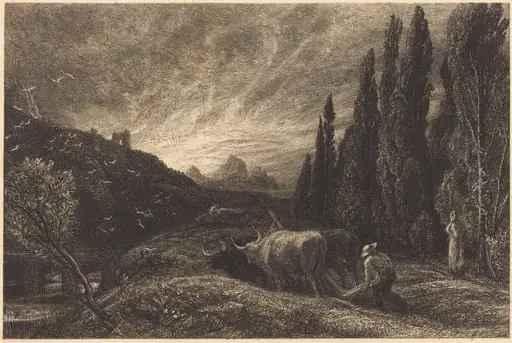
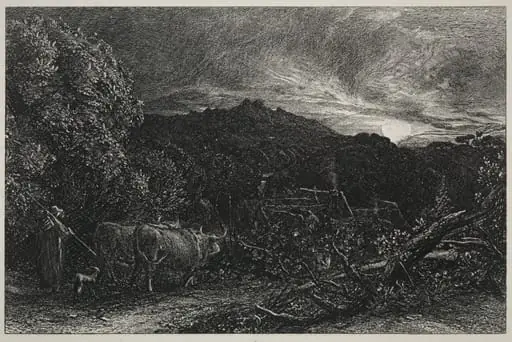
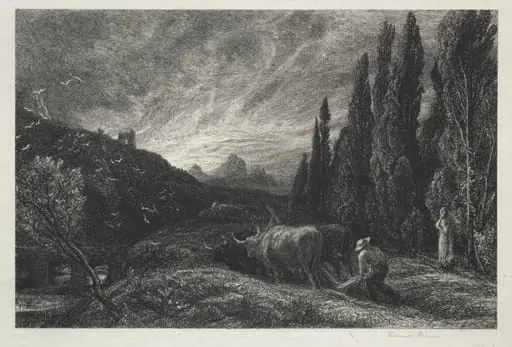
The print portrays a farmer, visibly spent, guiding two oxen through a shadowed landscape after a day’s labor. The plow, heavy and still, lingers behind them, suggesting the weight of toil. Palmer imbues the scene with quiet solemnity, framing rural existence not as idyllic, but as a cycle of endurance, grounded in the rhythms of earth and season.
Technique & Style
Palmer employed etching to carve fine lines into a metal plate, allowing ink to settle in grooves and transfer onto thin paper. The chine collé technique bonded a delicate sheet to a sturdier backing, enhancing tonal subtlety. His use of deep shadows and delicate hatching renders texture and mood, with the sky’s swirling clouds adding a sense of atmospheric tension.
History & Provenance
Made late in Palmer’s career, the print emerged after his earlier visionary phase in Shoreham, yet retained his preoccupation with rural life. It was likely produced for a private audience, as few of his prints were widely distributed. The work remained within British collections, reflecting its niche appeal among connoisseurs of Romantic printmaking.
Context
In mid-19th century Britain, industrialization reshaped the countryside, prompting artists to revisit agrarian themes with renewed gravity. Palmer’s work stood apart from both idealized pastoralism and social realism, offering instead a meditative, almost spiritual portrayal of labor — one that resonated with Romantic ideals of nature’s quiet power.
Legacy
Though not widely known during his lifetime, Palmer’s prints, including *The Weary Ploughman*, gained recognition in the 20th century as pivotal to British Romantic printmaking. His fusion of technical innovation with emotional resonance influenced later generations of artists seeking to express the inner life of landscape and labor.
Artist & collection
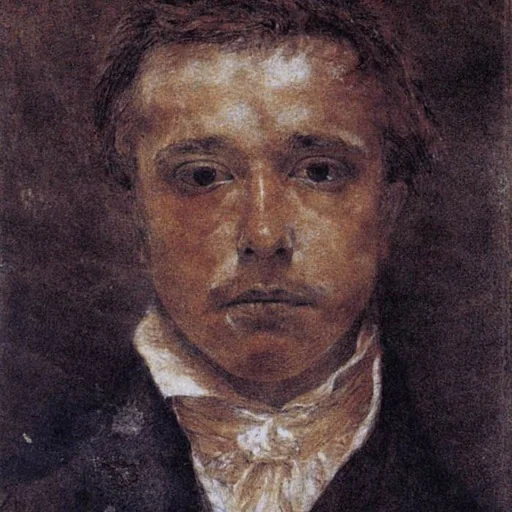
Artist
Samuel Palmer Hon.RE (Hon. Fellow of the Society of Painter-Etchers) (27 January 1805 – 24 May 1881) was a British landscape painter, etcher and printmaker. He was also a prolific writer. Palmer was a key figure in…