Artwork
The Willow
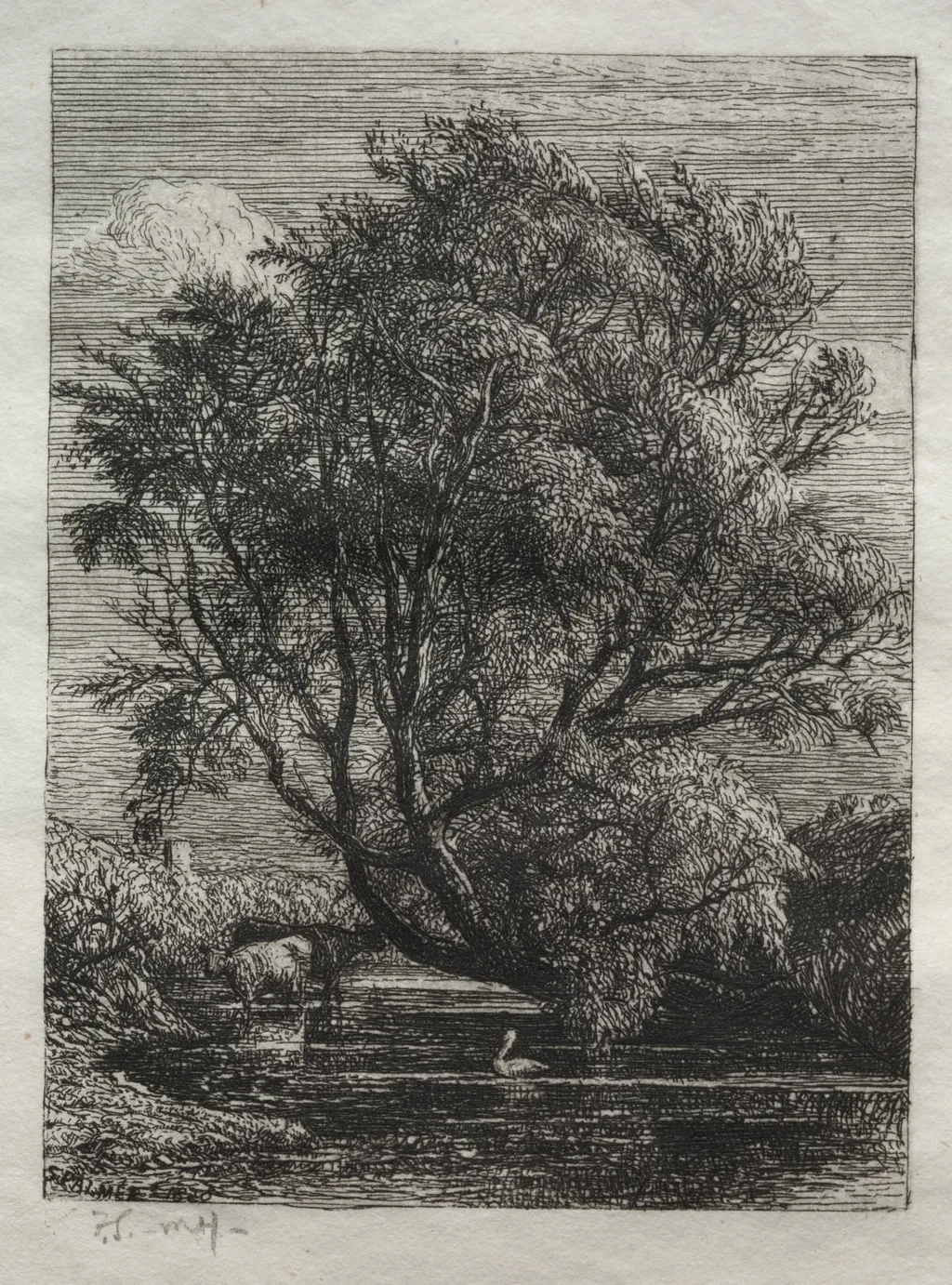
The Willow is a print by the Impressionist artist Samuel Palmer. It dates from 1850 and is held in the collection of the Cleveland Museum of Art.
About this work
Overview
Known for his intimate depictions of rural life, Palmer focused on quiet, contemplative landscapes at a time when industrialization dominated artistic themes.
Created in 1850, *The Willow* is a print by Samuel Palmer, a British artist associated with Romanticism. Known for his intimate depictions of rural life, Palmer focused on quiet, contemplative landscapes at a time when industrialization dominated artistic themes. The work is part of the Cleveland Museum of Art’s collection and reflects his deep engagement with the natural world through etching and drawing.
Subject & Meaning
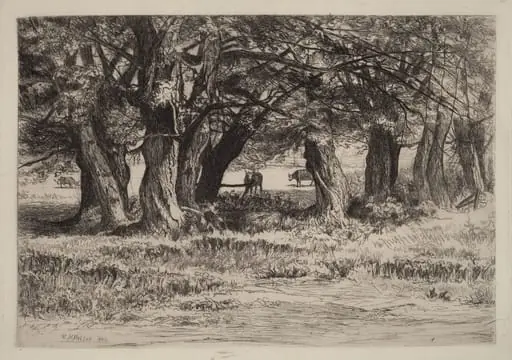
The scene centers on a massive willow tree bending over a still field, its branches nearly grazing the earth. A solitary figure leans on a fence, while sheep rest in the shade. The composition evokes solitude and quiet reverence for nature. Palmer’s repeated return to this tree suggests a personal, almost meditative connection, transforming a single landmark into a symbol of enduring peace and continuity.
Technique & Style
Palmer employed etching to achieve subtle tonal gradations, using fine lines and controlled ink washes to render soft, diffused light. The contrast between shadowed undergrowth and pale, hazy sky creates a sense of stillness. His attention to the willow’s twisted limbs reveals close observation, blending naturalism with an emotional resonance that anticipates later symbolic approaches in landscape art.
History & Provenance
The print was made during Palmer’s later years, after his early association with the Shoreham Ancients, a group of artists who sought spiritual meaning in rural England. Though less celebrated in his time, his work gained recognition among printmakers and collectors in the late 19th century. *The Willow* entered the Cleveland Museum of Art’s collection through established acquisition channels, reflecting growing scholarly interest in his oeuvre.
Context
While many 19th-century artists turned to urban scenes and industrial subjects, Palmer remained devoted to the English countryside. His focus on twilight, dawn, and solitary figures stood in contrast to prevailing trends. This retreat into pastoral quiet was both a personal refuge and a deliberate artistic stance, aligning his work with Romantic ideals of nature as a source of inner truth.
Legacy
Palmer’s use of chiaroscuro and his emotional rendering of landscape influenced later generations of British printmakers and symbolist painters. Though not widely known during his lifetime, his detailed, introspective works have since been recognized for their quiet power and technical refinement, securing his place in the history of printmaking and Romantic landscape tradition.
Artist & collection
Artist
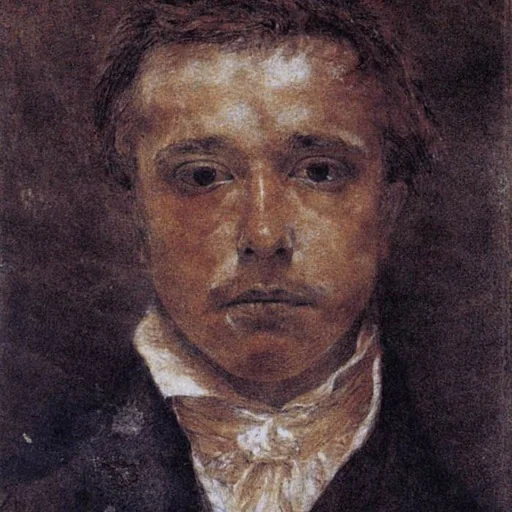
Samuel Palmer Hon.RE (Hon. Fellow of the Society of Painter-Etchers) (27 January 1805 – 24 May 1881) was a British landscape painter, etcher and printmaker. He was also a prolific writer. Palmer was a key figure in…

 In my Bordeaux Garden
 Hunters Leaving a Forest
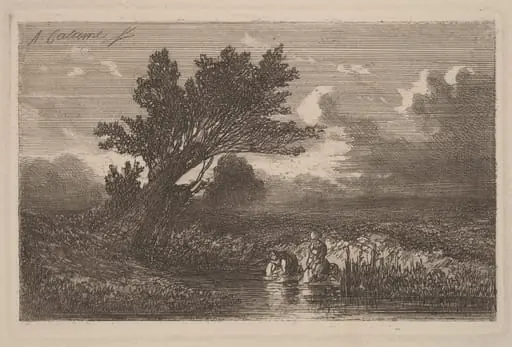 Laundresses
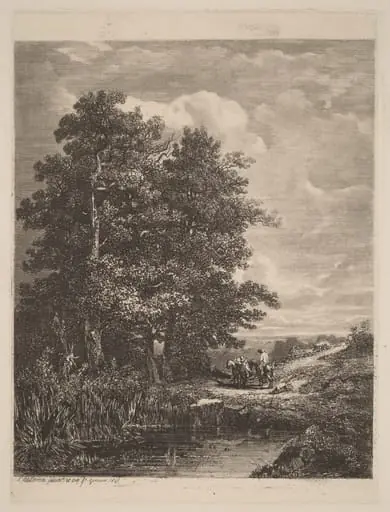 Riders by a Pond
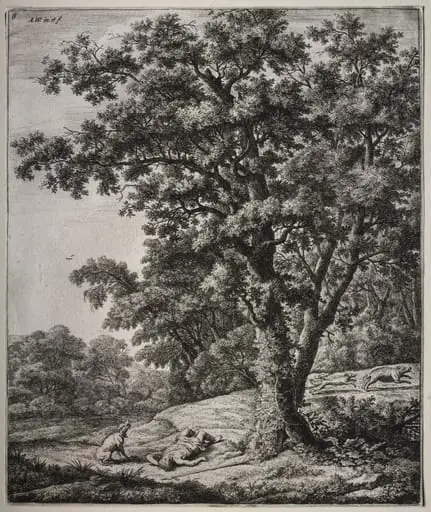 Six large upright landscapes with scenes from Ovid's Metamorphoses: The Death of Adonis
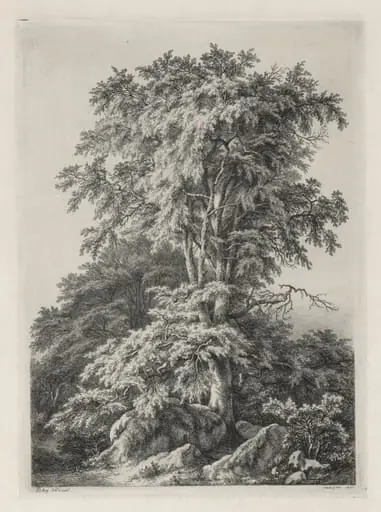 Studies Drawn and Engraved after Nature: The Beach, Fontainebleau (Études dessinées et Gravées D'après nature: Le hêtre, Fontainebleau)
 Landscape
 Six large upright landscapes with scenes from Ovid's Metamorphoses
 Brook in the Val Mondois
 The Mill at the Great Oaks
 Six Large Upright Landscapes: A Mother and Three Children at Rest
 A Group of Willows