Artwork
Dawn in Luton Park
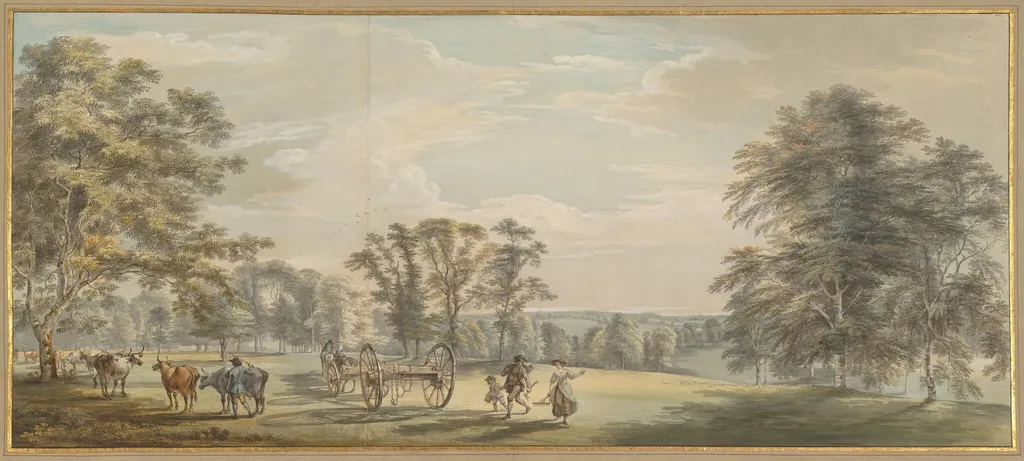
Dawn in Luton Park is a gouache drawing by the Romanticist artist Paul Sandby. It dates from 1764 and is held in the collection of the National Gallery of Art.
About this work
Overview
Created in 1764, *Dawn in Luton Park* is a delicate drawing in watercolor, gouache, and pen and ink on joined laid paper, mounted on an 18th-century backing.
Created in 1764, *Dawn in Luton Park* is a delicate drawing in watercolor, gouache, and pen and ink on joined laid paper, mounted on an 18th-century backing. The work combines graphite underdrawing with layered washes to capture a quiet morning scene in a private English estate. Its two-sheet construction suggests careful planning, typical of topographical artists of the period who valued precision and atmospheric nuance.
Subject & Meaning
The scene portrays a pastoral moment at daybreak: a small group of figures and livestock gather near a wooden cart, their stillness suggesting the quiet start of rural labor. Trees frame the composition, while a soft, overcast sky diffuses the early light. There is no narrative drama—only the calm rhythm of dawn in a managed landscape, reflecting an era’s appreciation for orderly nature and quiet human activity.
Technique & Style
Sandby employed layered watercolor and opaque gouache to build subtle tonal transitions, particularly in the sky and foliage. Pen and ink define structural elements like branches and cart wheels, while graphite underdrawing guides the composition. The texture of the laid paper enhances the matte quality of the pigments, reinforcing the work’s intimate scale and observational precision over theatrical effect.
History & Provenance
The drawing was made during Sandby’s early career, before his 1768 role as a founding member of the Royal Academy. It likely originated as a study for a larger composition or as a personal record of Luton Park, a country estate associated with the Earl of Mansfield. Its 19th-century mount indicates later preservation, though its early provenance remains undocumented.
Context
In mid-18th-century England, landscape drawing evolved from topographical surveying toward aesthetic observation. Sandby, trained as a military cartographer, helped shift this practice toward poetic realism. *Dawn in Luton Park* aligns with contemporaneous interests in naturalism and the picturesque, predating Romanticism’s emotional intensity by focusing on quiet, observed truth rather than idealized emotion.
Legacy
Though not widely exhibited, the work exemplifies Sandby’s role in elevating landscape drawing as a serious artistic discipline. His technical innovations in watercolor influenced later British watercolorists, and this piece stands as a quiet testament to the transition from survey to sensibility in 18th-century British art.
Artist & collection
Artist
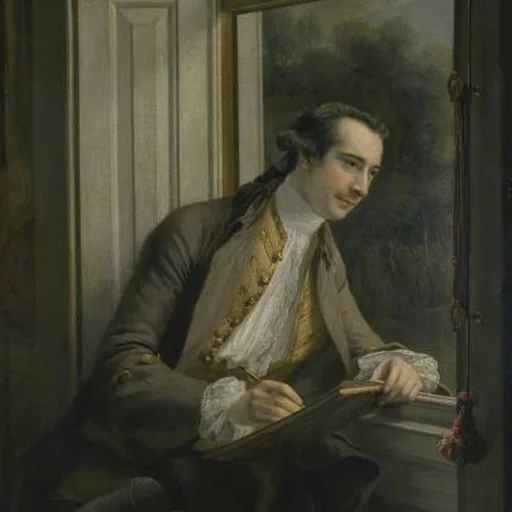
Paul Sandby, (1731 – 7 November 1809) was an English mapmaker and painter who specialised in landscape art. Along with his older brother Thomas Sandby, he was one of the founding members of the Royal Academy in 1768.

 Greenwich Park
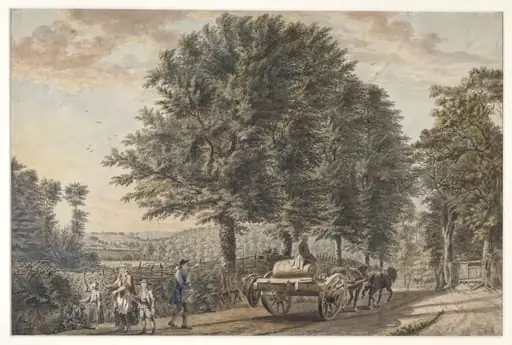 Landscape with Dray and Figures
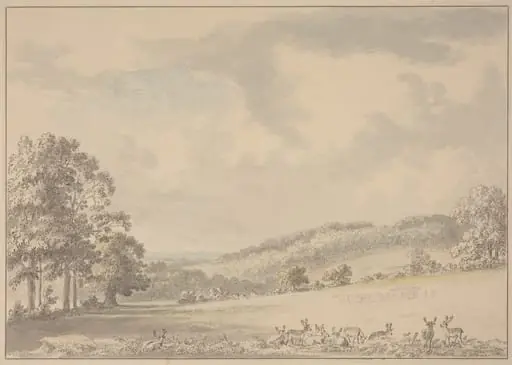 Deer Resting in Albury Park
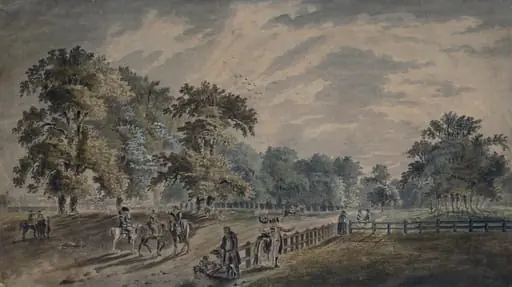 St. James's Park
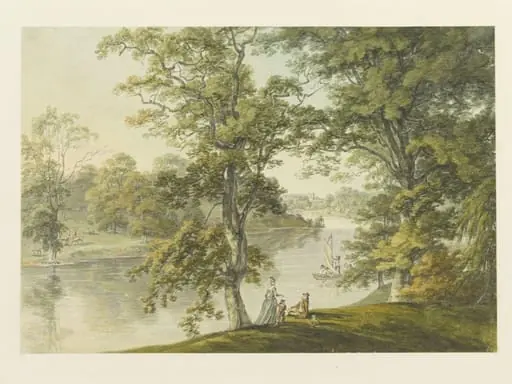 Wynnstay Park, Derbyshire
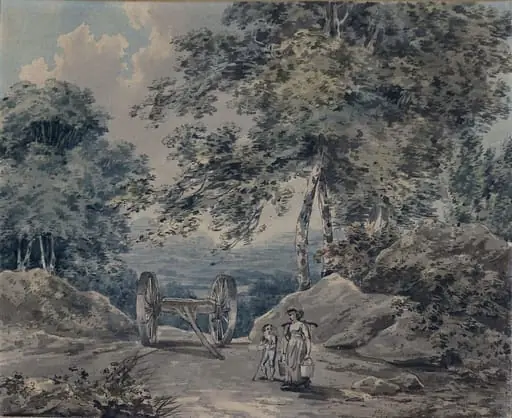 Landscape with timber wagon and figures
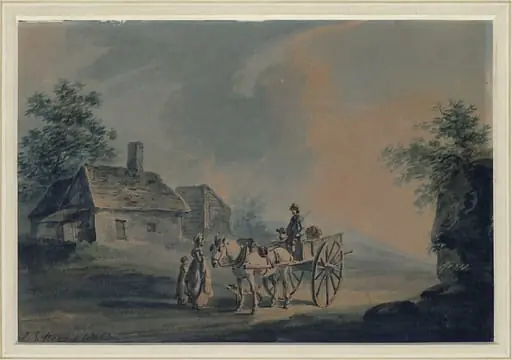 Cottage with cart and figures
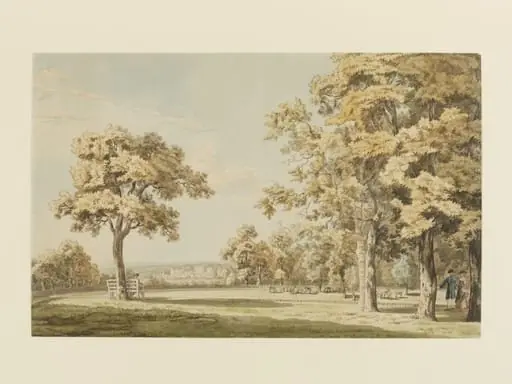 Windsor Castle from the Great Park, near the End of the Long Walk
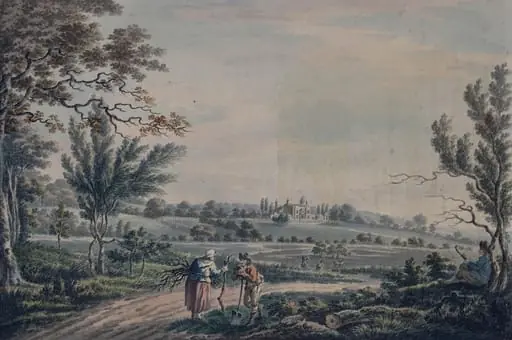 Landscape with a house and countryfolk
 Exeter seen from Alphinton Fields, 1796
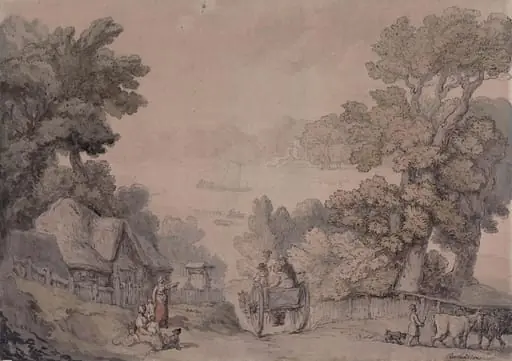 Landscape with a Cottage and Figures in the Foreground
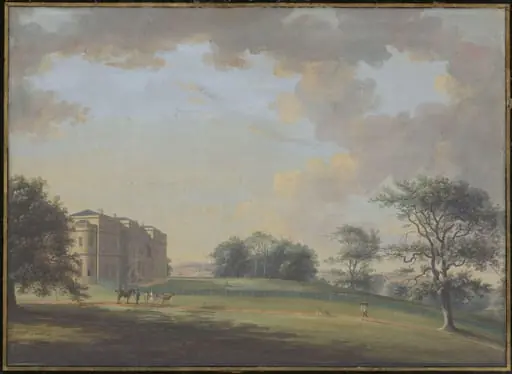 Luton Park (or Luton Hoo), Bedfordshire from the West