Artwork
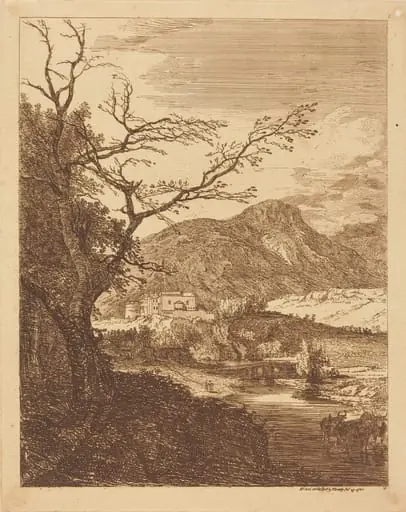
Part of the Remains of Llanphor near Pembroke
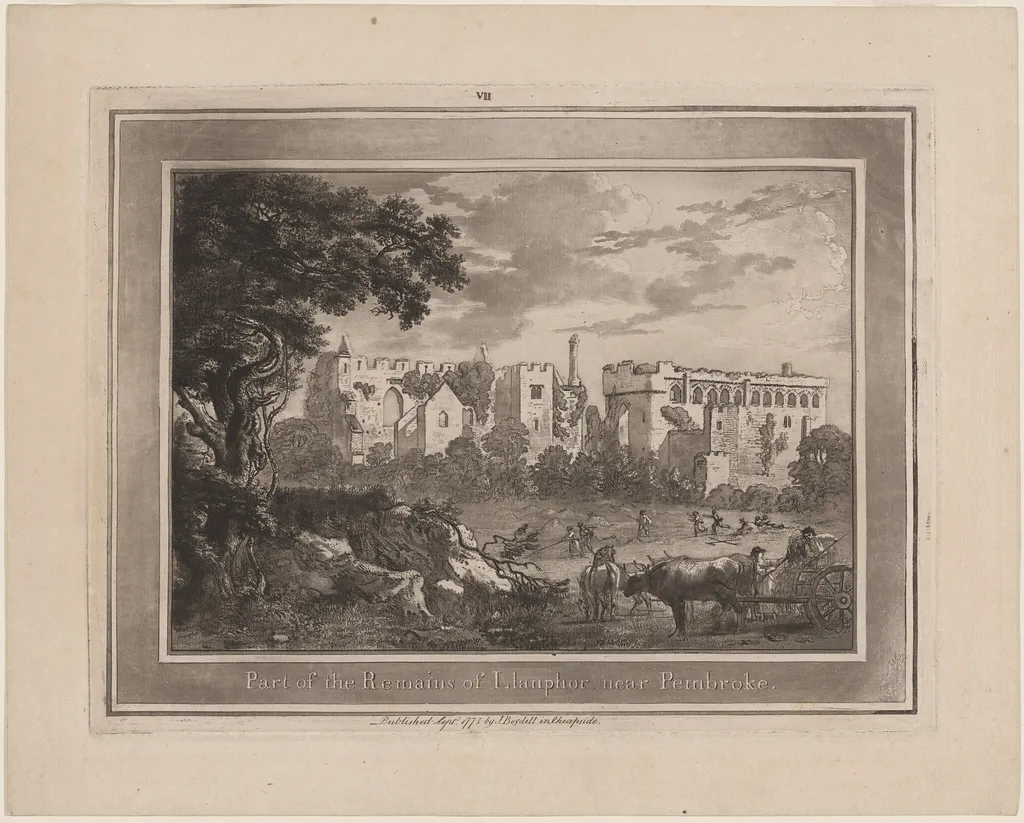
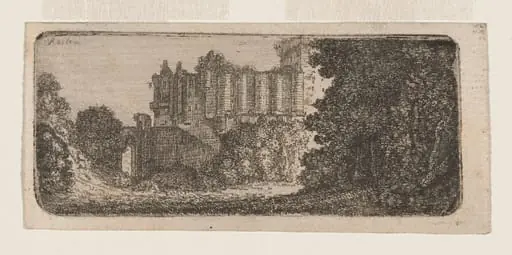
Part of the Remains of Llanphor near Pembroke is an ink print by the Romanticist artist Paul Sandby. It dates from 1775 and is held in the collection of the National Gallery of Art.
About this work
Overview
In the foreground, a farmer guides two oxen through a plowed field, accompanied by a few figures and livestock.
Created in 1775, this print by Paul Sandby combines etching with aquatint on laid paper. It portrays a Welsh countryside where a dilapidated stone structure stands amid a pastoral setting. A solitary tree frames the left side, while a modest settlement with weathered buildings lies beyond. In the foreground, a farmer guides two oxen through a plowed field, accompanied by a few figures and livestock.
Subject & Meaning
The composition juxtaposes human activity with the remnants of a bygone architecture, suggesting a continuity of everyday labor against the backdrop of decay. The ruined building, identified as part of Llanphor near Pembroke, serves as a visual anchor for the scene, while the active farm work underscores the resilience of rural life in 18th‑century Wales.
Technique & Style
Sandby employed a dual process: precise line work achieved through etching and tonal washes rendered by aquatint. The laid paper surface enhances the subtle gradations of light, allowing the sky and distant ruins to recede through delicate shading. This combination yields a balanced interplay of detail and atmosphere characteristic of Sandby’s landscape prints.
History & Provenance
Paul Sandby, originally a cartographer, transitioned to landscape art and became a founding member of the Royal Academy in 1768. The print reflects his interest in topographical subjects, merging cartographic accuracy with artistic observation. Its provenance traces to early collections of British prints, though specific ownership records after its publication remain limited.
Artist & collection
Artist
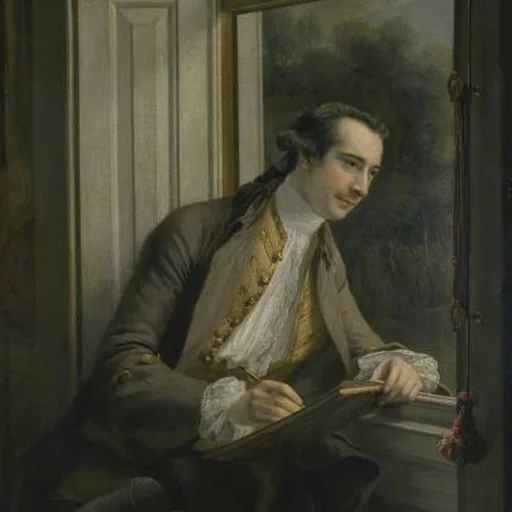
Paul Sandby, (1731 – 7 November 1809) was an English mapmaker and painter who specialised in landscape art. Along with his older brother Thomas Sandby, he was one of the founding members of the Royal Academy in 1768.