Artwork
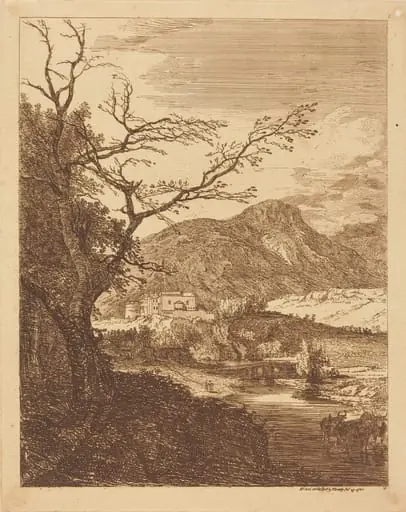
Ruins near a Stream, a Distant Building at the Foot of a Mountain
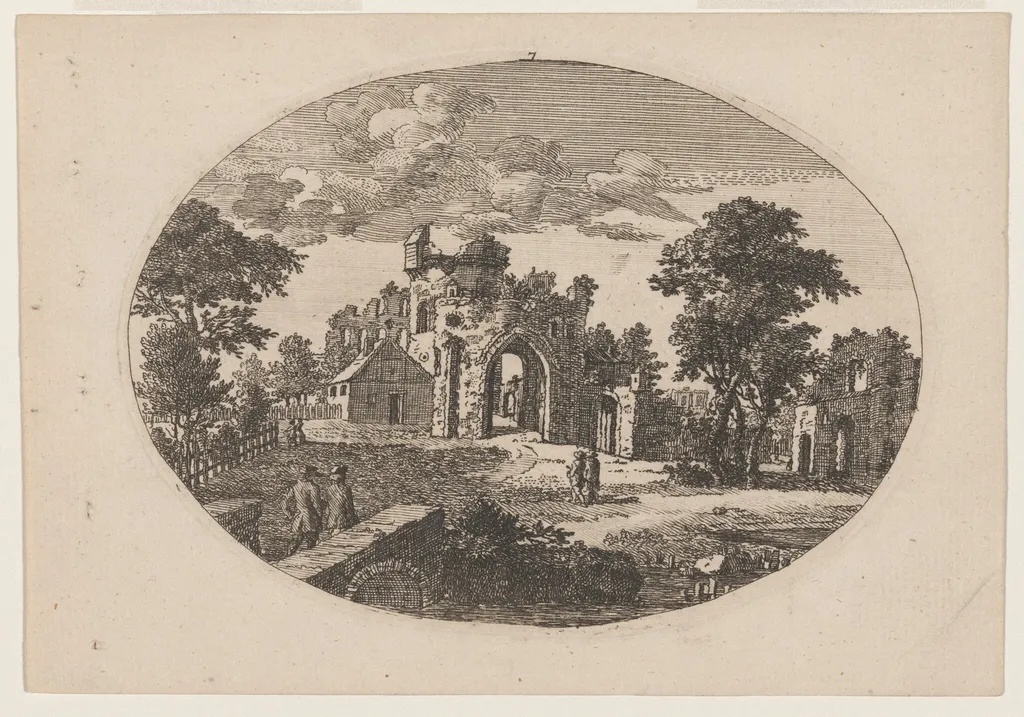
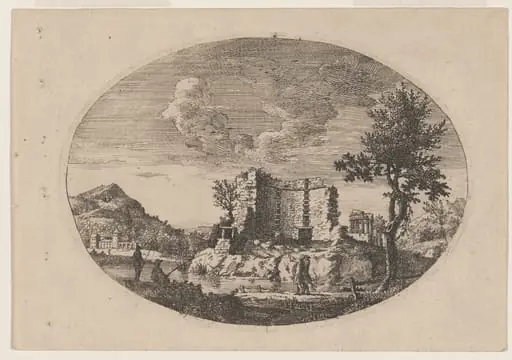
Ruins near a Stream, a Distant Building at the Foot of a Mountain is an ink print by the Baroque artist Paul Sandby. It dates from 1750 and is held in the collection of the National Gallery of Art.
About this work
Overview
This etching on laid paper, titled Ruins near a Stream, a Distant Building at the Foot of a Mountain, is a work by Paul Sandby, an English artist known for his landscapes. Created around 1750, it showcases Sandby's skill in capturing serene natural scenes.
Subject & Meaning
The etching depicts a tranquil landscape featuring a stream, trees, and a distant building at the foot of a mountain. Figures are gathered near the stream and walking in the distance, set against a cloudy sky. The scene presents a harmonious balance between natural surroundings and architectural remnants.
Technique & Style
Sandby's use of etching techniques creates depth and texture, with varied rendering of the sky, trees, and buildings. The contrast between soft and detailed elements contributes to the overall calm atmosphere of the scene.
History & Provenance
Paul Sandby, trained as a mapmaker, later became a founding member of the Royal Academy in 1768, alongside his brother Thomas. This work, dated to around 1750, reflects his early exploration of landscape etching.
Artist & collection

Artist
Paul Sandby, (1731 – 7 November 1809) was an English mapmaker and painter who specialised in landscape art. Along with his older brother Thomas Sandby, he was one of the founding members of the Royal Academy in 1768.

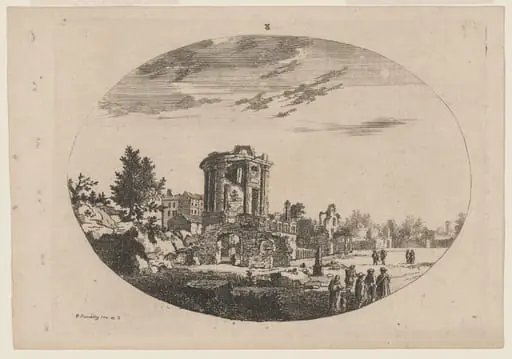 Ruined Circular Temple
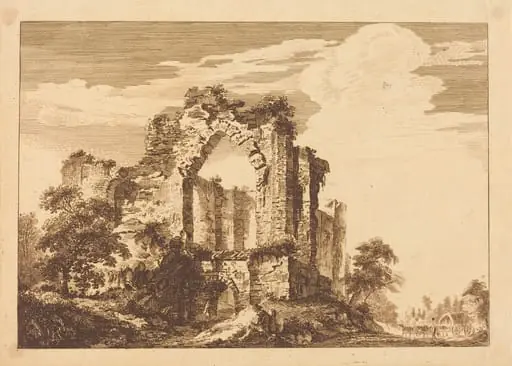 Ruins with a Seated Man, and a Covered Wagon in the Distance
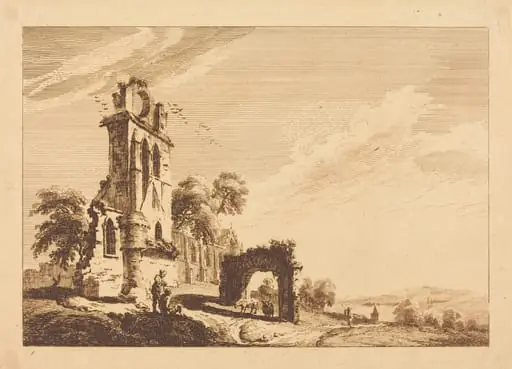 Ruined Abbey
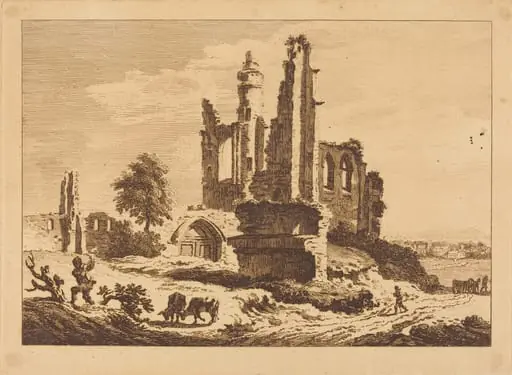 Ruined Abbey with Cattle and a Man Chopping Wood
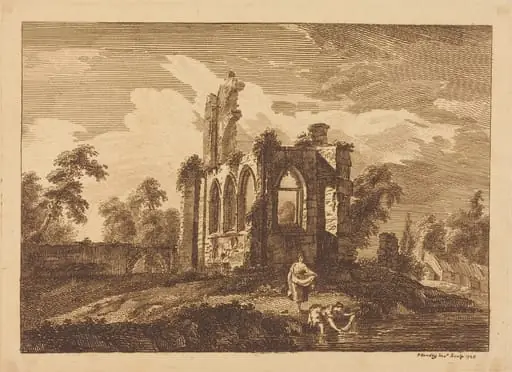 Ruins with Two Women Washing Clothes in a River
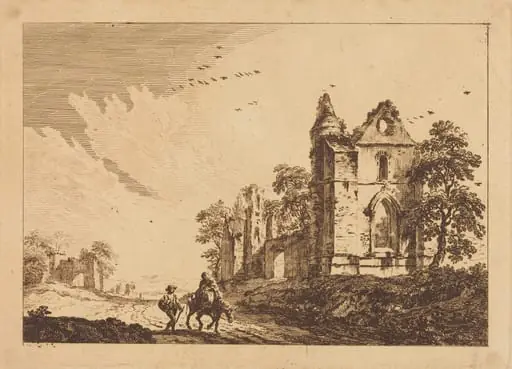 Ruined Abbey with Travelers on the Road
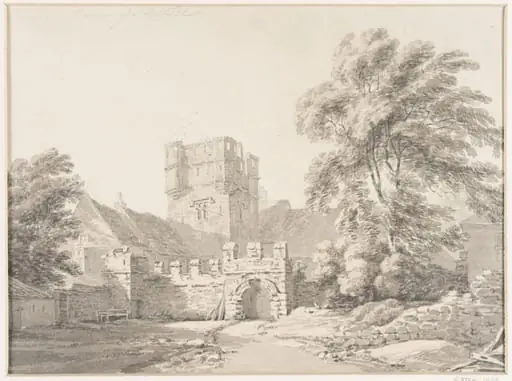 Mortham Tower, near Rokeby, Yorkshire.
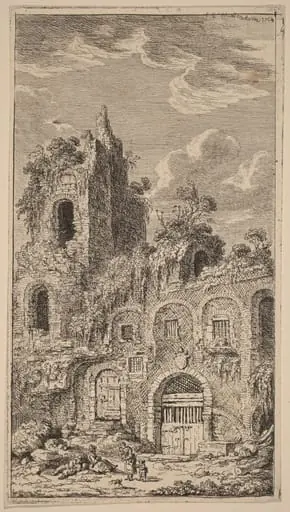 Fragment of the Old City Wall at San Giovanni Laterano
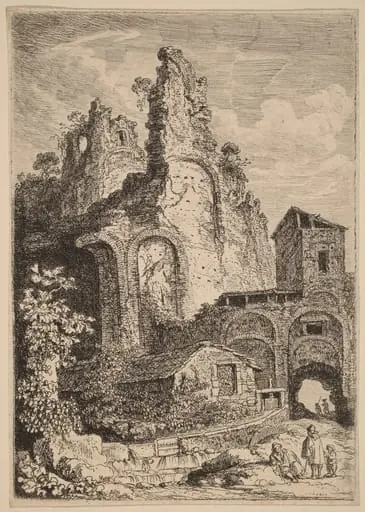 The Old Palace at Tivoli
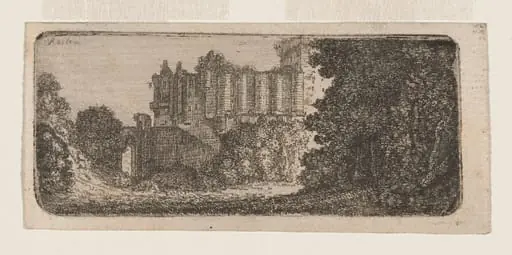 Roslin Castle III
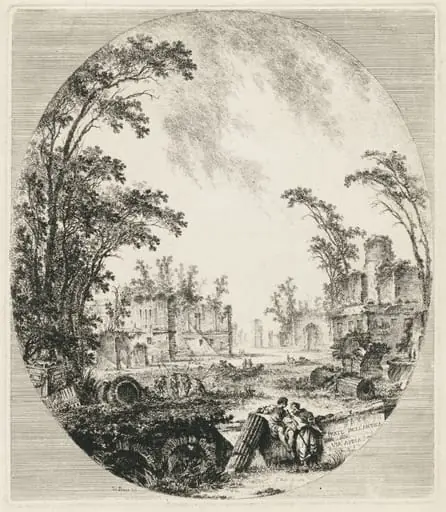 Parte dell'antica via Appia (Section of the Old Appian Way)
 Ruined Two-Story Building with Mountains in Distance