Artwork
The Triumph of Bacchus with Dancing Nymphs
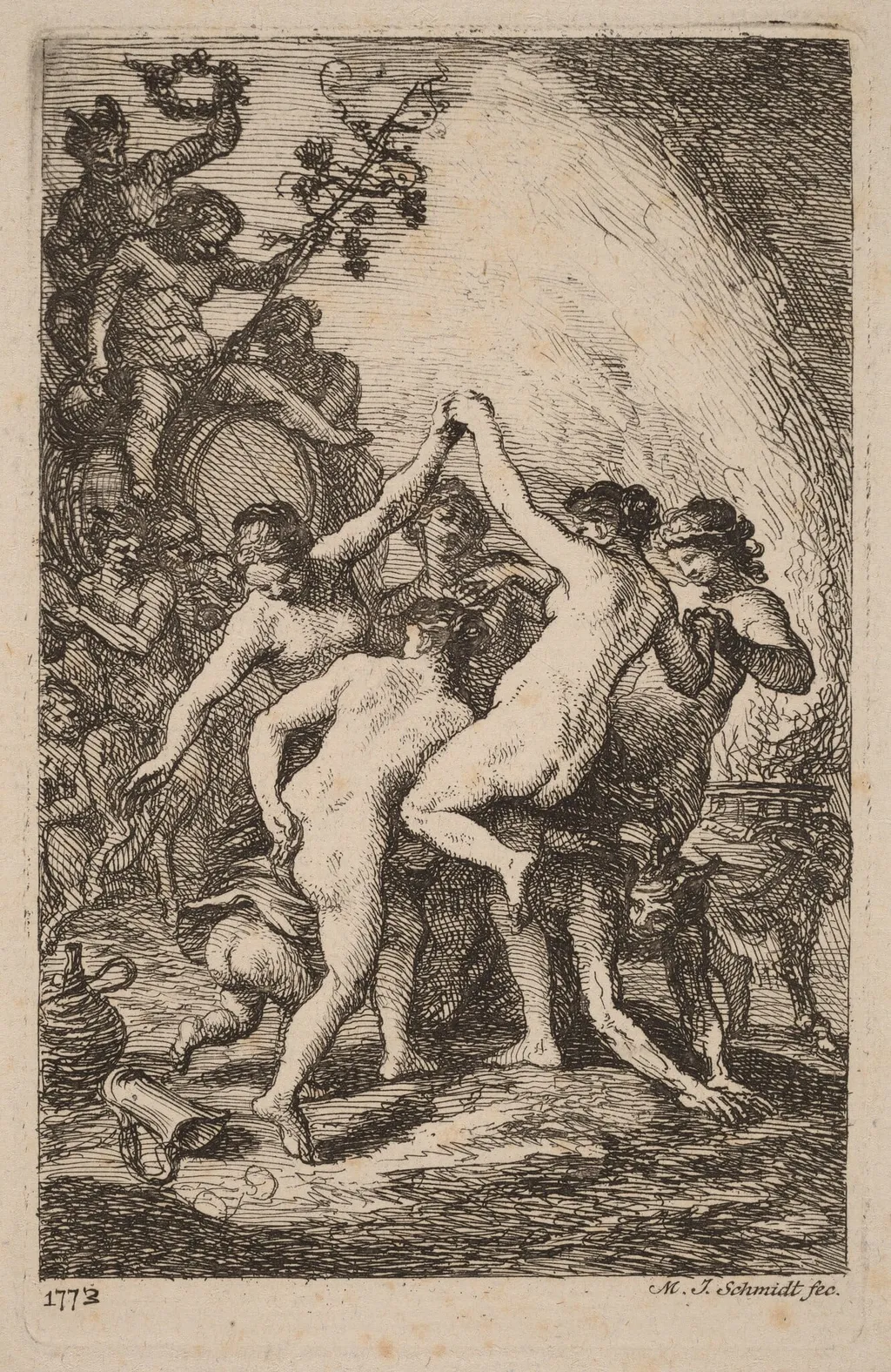
The Triumph of Bacchus with Dancing Nymphs is an ink print by the Romanticist artist Martin Johann Schmidt. It dates from 1773 and is held in the collection of the National Gallery of Art.
About this work
Overview
The Triumph of Bacchus with Dancing Nymphs is an etching on laid paper created by Martin Johann Schmidt in 1773. It is a representative work of the late Baroque/Rococo period, characterized by its lively and dynamic depiction of a mythological scene.
Subject & Meaning
The print portrays a procession centered on Bacchus, the Roman god of wine and revelry, surrounded by dancing nymphs. The scene is set amidst swirling vines and foliage, conveying a sense of chaotic celebration.
Technique & Style
Schmidt's etching technique is notable for its use of fine lines to create texture, particularly in the hair and foliage of the figures. The style reflects influences from northern Italy and captures the dynamic movement of the figures, giving the impression of a moment frozen in time.
History & Provenance
Martin Johann Schmidt, known as Kremser Schmidt, was a leading Austrian artist who worked primarily in Lower Austria, often decorating churches and monasteries. His work on The Triumph of Bacchus with Dancing Nymphs showcases his skill in etching and his ability to convey the spirit of the late Baroque/Rococo period.
Artist & collection
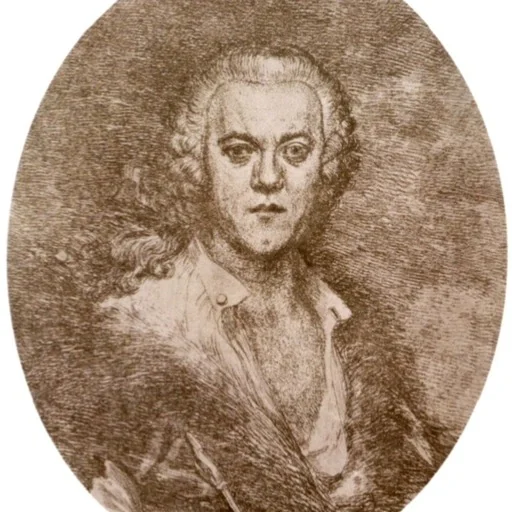
Artist
Martin Johann Schmidt, called Kremser Schmidt or Kremserschmidt, (25 September 1718 – 28 June 1801), was one of the outstanding Austrian painters of the late Baroque/Rococo along with Franz Anton Maulbertsch.

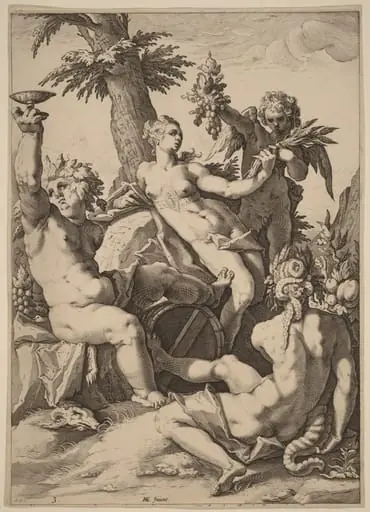 Without Ceres and Bacchus, Venus Would Freeze
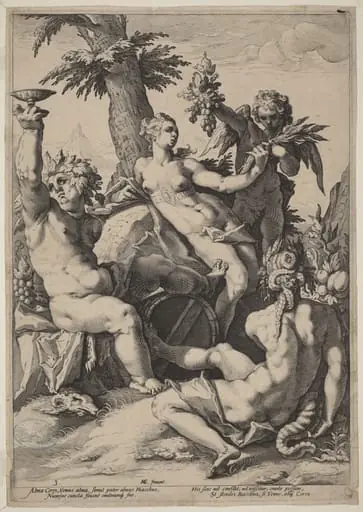 Without Ceres and Bacchus, Venus Would Freeze
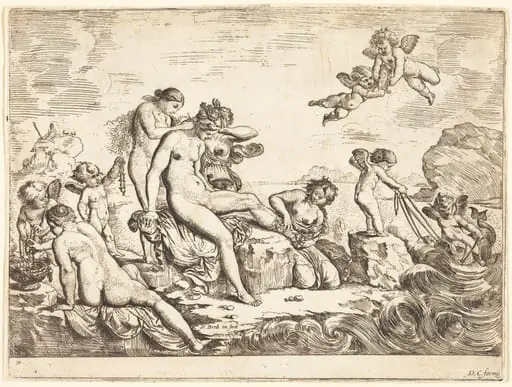 The Toilet of Thetis
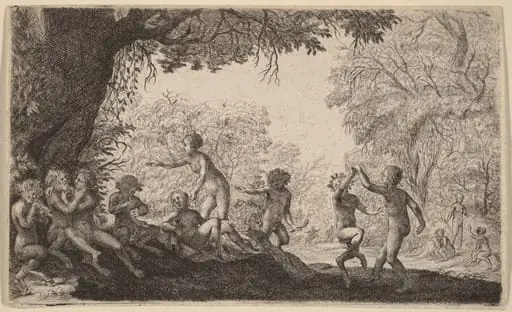 Bacchanal with a Dancing Couple on the Right
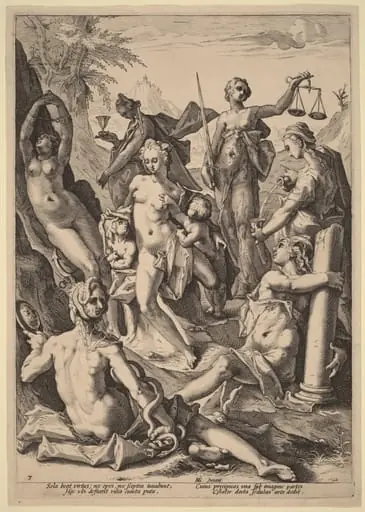 The Seven Virtues
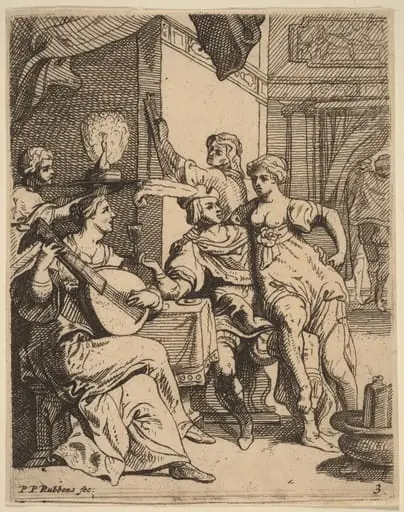 The Prodigal Wasting His Substance in the Tavern
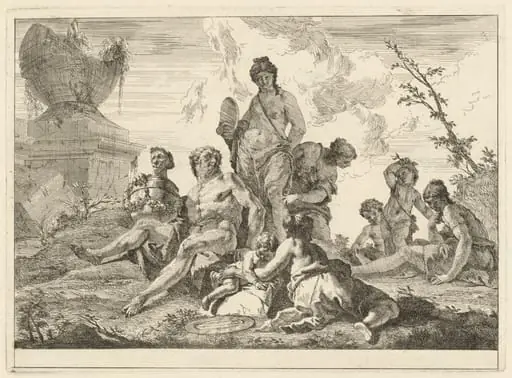 Venus and Vulcan with Three Nymphs and Three Cupids
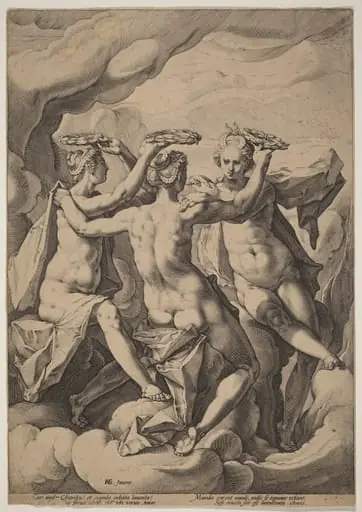 The Three Graces
 Putto Herding Goats through Garlands