Artwork
Veue de la Tour de Quinquangrongne
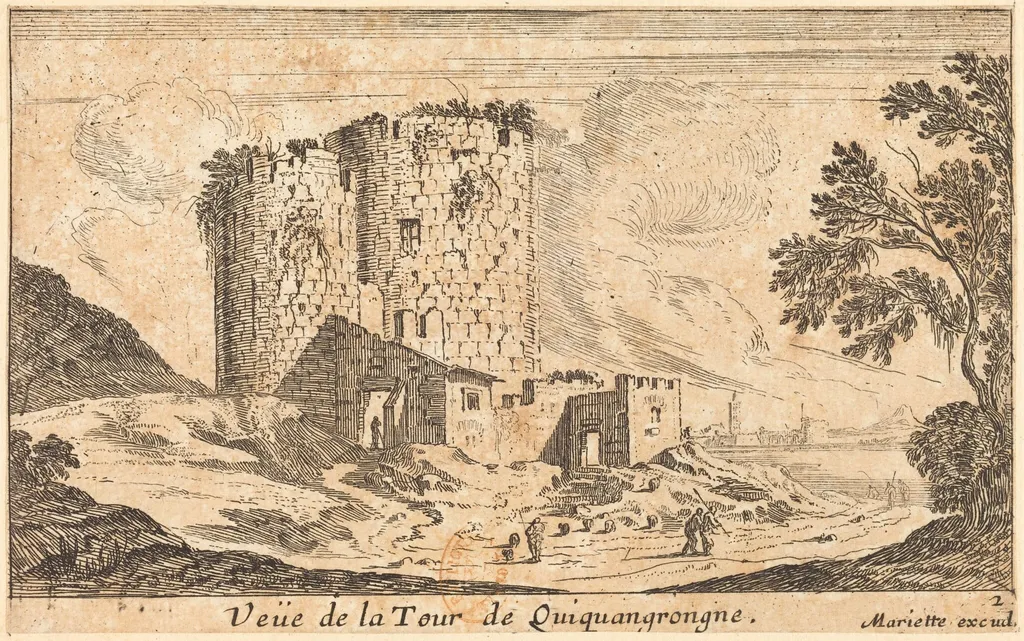
Veue de la Tour de Quinquangrongne is an ink print by the Baroque artist Israël Silvestre. It dates from 1656 and is held in the collection of the National Gallery of Art.
About this work
Overview
Veue de la Tour de Quinquangrongne is a 1656 etching by French artist Israel Silvestre, depicting a scenic view of a tall, crumbling tower situated on a rocky cliff overlooking water, accompanied by smaller structures, a ruined arch, and distant figures.
Subject & Meaning
The etching documents a specific, unnamed tower (referred to as 'Quinquangrongne') in a state of decay, set amidst a broader, serene landscape. The subject reflects Silvestre's focus on topographical and architectural documentation.
Technique & Style
Silvestre employed fine etching lines to achieve detailed textures, contrasting the roughness of the tower's stones with the smoothness of the water, characteristic of his meticulous topographical rendering style.
History & Provenance
Created in 1656 by Israel Silvestre, who, after being orphaned and trained by his uncle in Paris, traveled extensively to produce such detailed sketches later etched into prints for sale.
Context
Part of a broader body of work by Silvestre capturing architectural and landscape views across France, Spain, and Italy, reflecting 17th-century interest in documenting notable sites and landscapes.
Legacy
Contributes to the historical record of European architecture and landscapes of the time, exemplifying the etching technique's role in disseminating visual knowledge in the 17th century.
Artist & collection
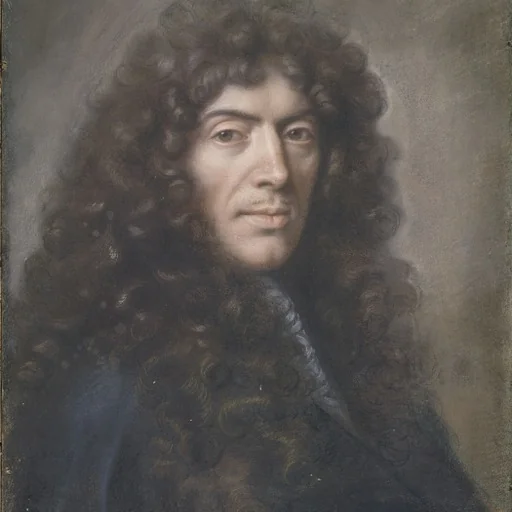
Artist
Israel Silvestre (13 August 1621 in Nancy – 11 October 1691 in Paris), called the Younger to distinguish him from his father, was a prolific French draftsman, etcher and print dealer who specialized in topographical views and perspectives…

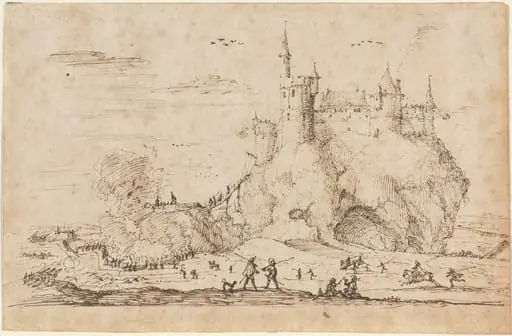 Castle under Siege
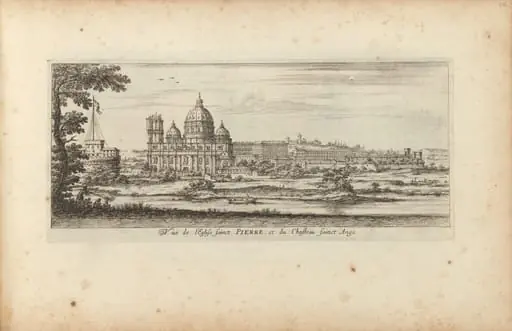 Vuë de l'Eglise sainct Pierre, et du Chasteau Sainct Ange
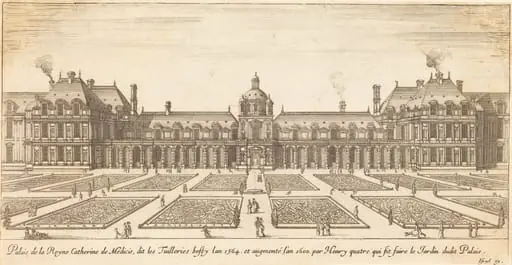 Palais de la Reyne Catherine de Medicis
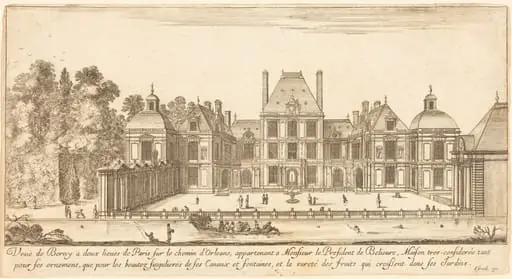 Veue de Berny a deux lieues de Paris sur le chemin d'Orléans
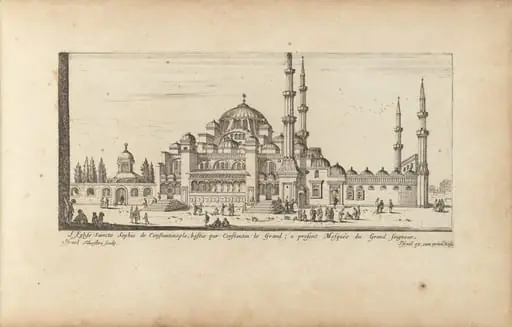 L'Eglise Saincte Sophie de Constantinople, bastie par Constantin le Grand; a present Mosquée du Grand seigneur
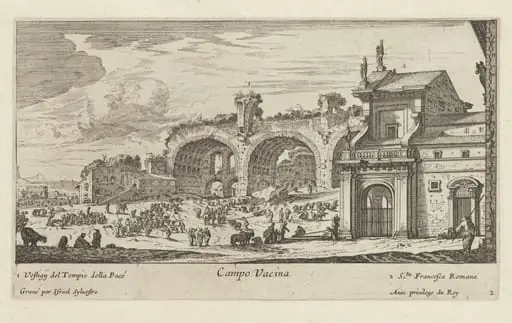 Campo Vacina
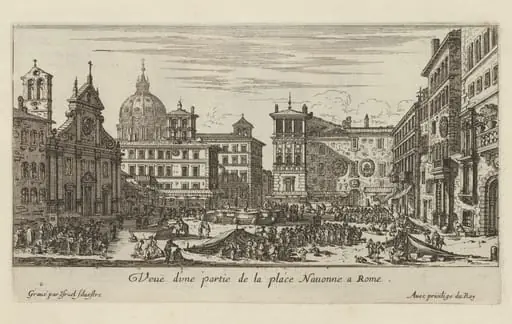 Veuë d'une partie de la place Navonne a Rome
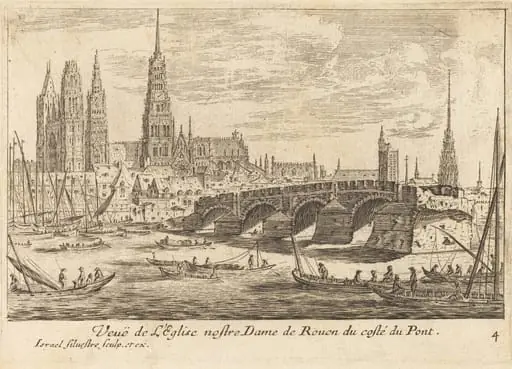 Veue de l'Eglise nostre Dame de Rouen
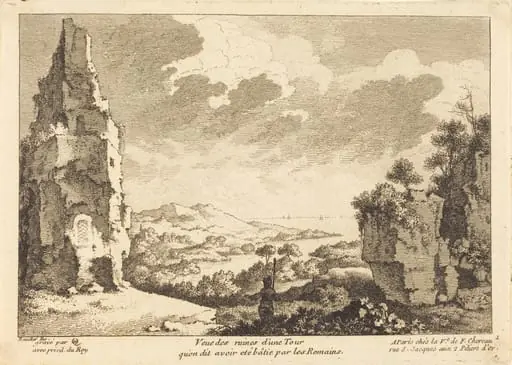 Veue des ruines d'une Tour qu'on dit avoir ete batie par les Romains
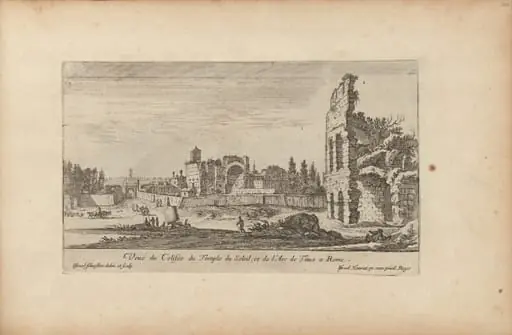 Veuë du Colisée du Temple du Soleil, et de l'Arc de Titus a Rome
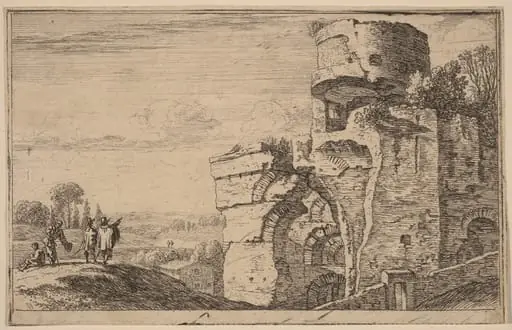 Ruins on the Palatine Hill
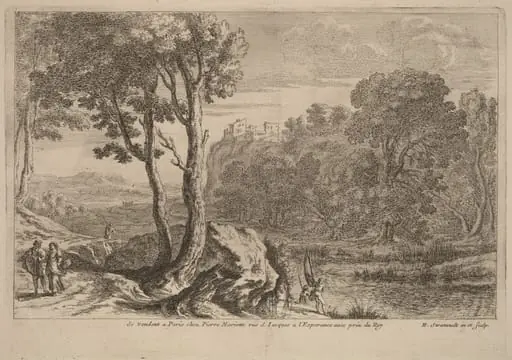 The Fishermen
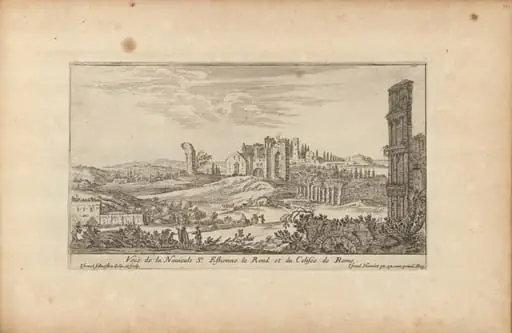 Veuë de la Navicule St. Estienne le Rond et du Colisée de Rome
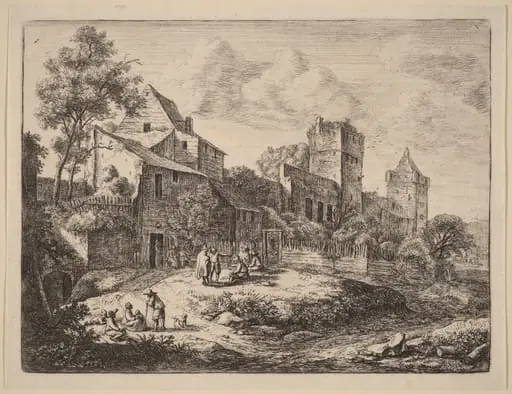 Square in Front of an Inn
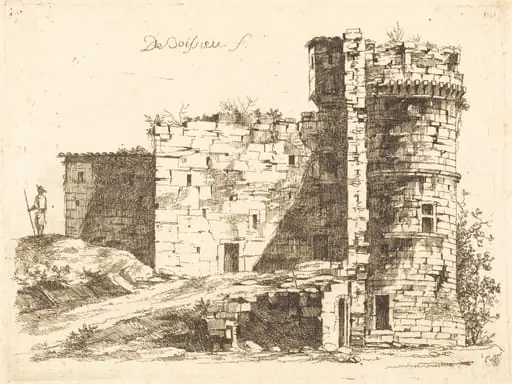 Ruins of the Château Saint-Chamond, Loire
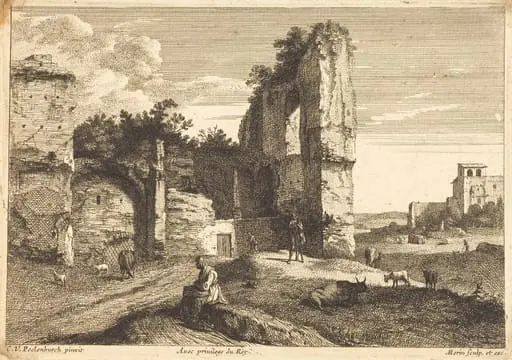 Old Woman Seated
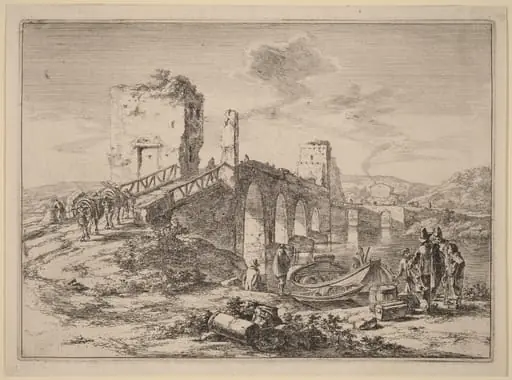 The Ponte Molle
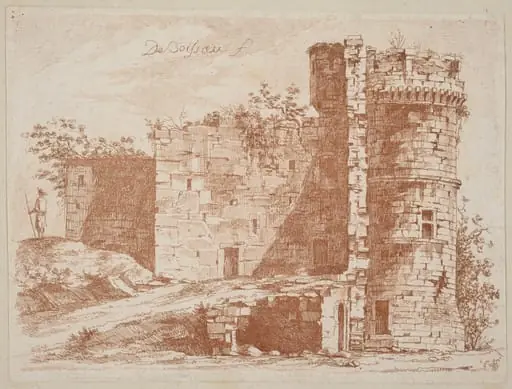 Ruins of an Old Castle at Saint-Chamond, Loire
 Ancient Tower with a Water Mill
 Veue de la Tour de Grignon