Artwork
Indian School Calcutta
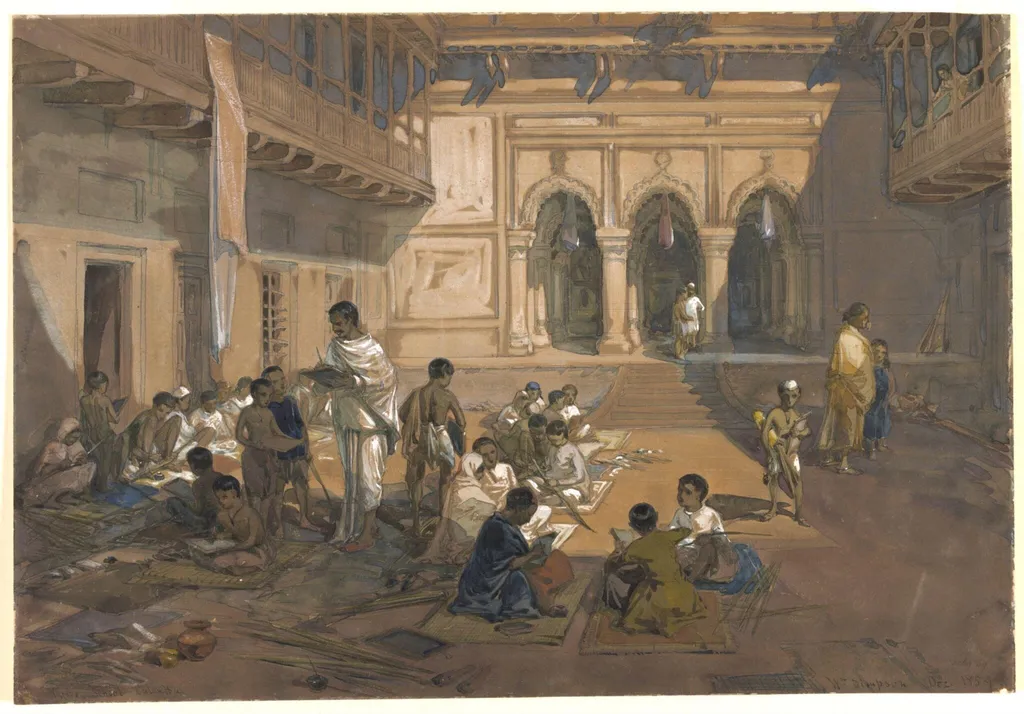
Indian School Calcutta is a paint painting by the Patna School of Painting artist William Simpson. It dates from 1859 and is held in the collection of the Victoria and Albert Museum.
About this work
This watercolor shows a busy Calcutta street in 1859. Rickshaws, horses, and British officers fill the scene. The colors feel soft but clear, like a photograph before cameras.
Simpson wasn’t just touring. He was hired to record the Revolt of 1857 aftermath for British audiences. His sketches later became this finished watercolor.
See more of his work at the Victoria and Albert Museum.
Overview
This watercolour, completed that same year, captures a bustling urban street scene, blending observation with artistic interpretation.
William Simpson, a British watercolourist and war artist, created this painting during his 1859 journey through India. Commissioned by the London firm Day and Sons, he documented sites linked to the 1857 Revolt. Though he arrived in Calcutta after the conflict, his work aimed to convey its aftermath to British audiences. This watercolour, completed that same year, captures a bustling urban street scene, blending observation with artistic interpretation.
Subject & Meaning
The painting depicts a lively Calcutta street in 1859, populated by rickshaws, horses, and British military officers. The presence of colonial figures amid local transport and architecture reflects the layered social order of post-revolt India. Simpson’s focus on movement and detail suggests a record of daily life under British rule, subtly reinforcing imperial presence while documenting a city in transition.
Technique & Style
Simpson used watercolour to achieve soft yet precise tones, resembling early photographic clarity without mechanical aid. His preparatory pencil sketches, made on-site, informed the final composition, which retains the immediacy of direct observation. The palette is muted but deliberate, with careful attention to light and texture, lending the scene a quiet realism despite its romanticized framing.
History & Provenance
Created in 1859 during Simpson’s travels in India, the work originated as part of a commissioned project to visually document locations tied to the 1857 Revolt. The finished watercolour was produced after his return to London in 1862, based on field studies. His journals and sketches from this period are held in the Victoria and Albert Museum, where many related works remain archived.
Context
Simpson’s commission emerged in the wake of the 1857 Revolt, a turning point in British colonial policy. His imagery served to inform and reassure British viewers about the stability of imperial control. While ostensibly documentary, his depictions often softened the violence of recent events, framing India as orderly and picturesque—a visual narrative aligned with colonial interests.
Legacy
Simpson’s Indian watercolours contributed to the 19th-century British visual archive of South Asia. Though romanticized, they remain valuable records of urban life and architecture during a period of political upheaval. His method—combining on-site sketching with studio refinement—set a precedent for later travel artists. His works continue to be studied for their historical and aesthetic dimensions.
Own this work as a print
Artist & collection
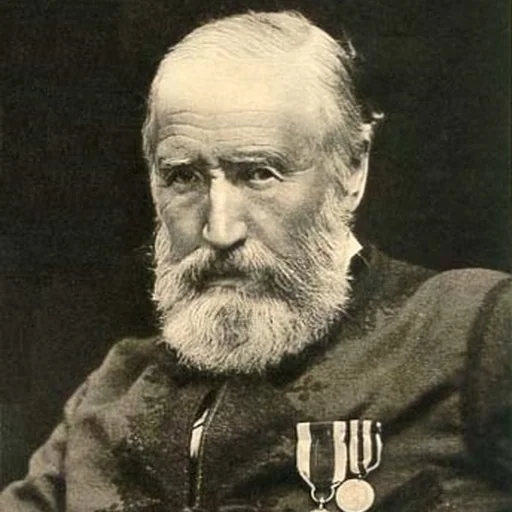

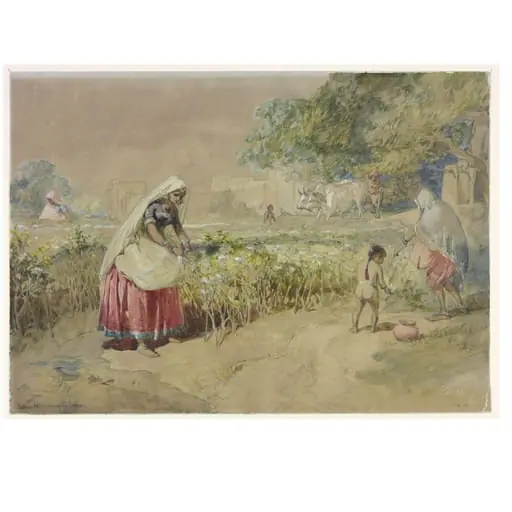
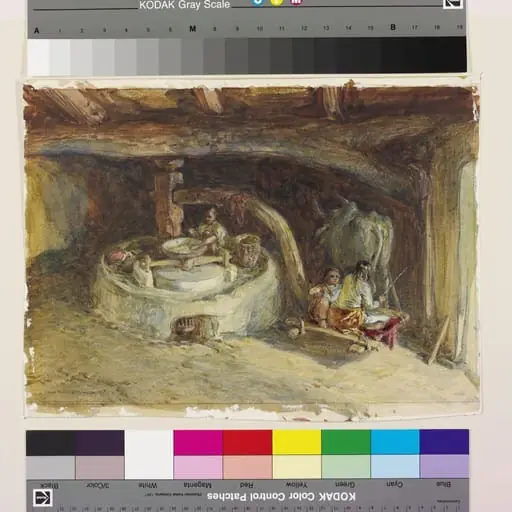
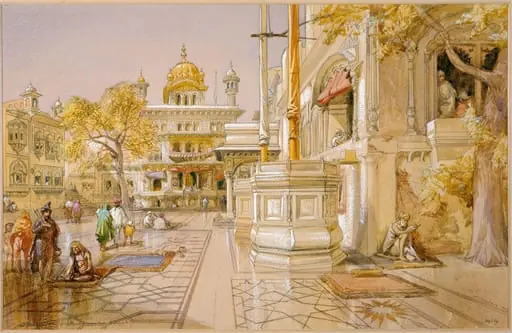 Akal Boonga at the Golden temple. Umritsar. Punjaub
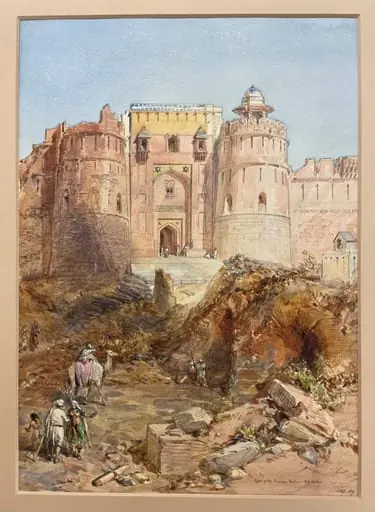 Gate of Purana Qila, Old Delhi
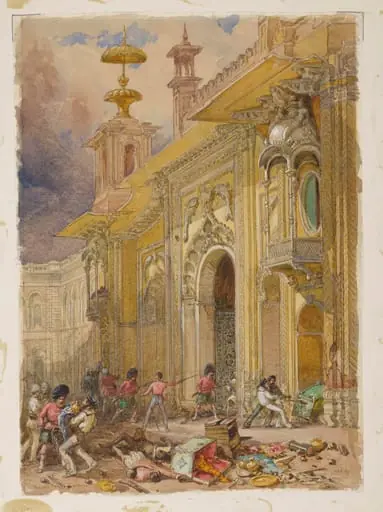 View of the Kaiser Bagh in Lucknow
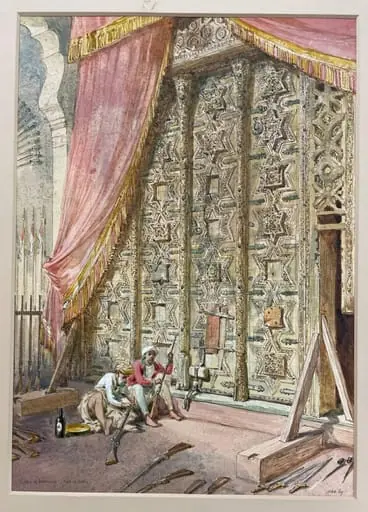 The Somnath gates, Fort Agra
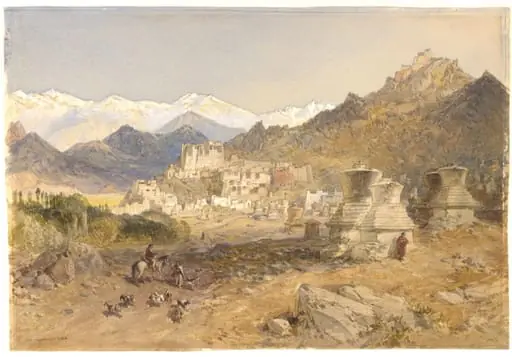 The Palace at Leh with stupas in the foreground
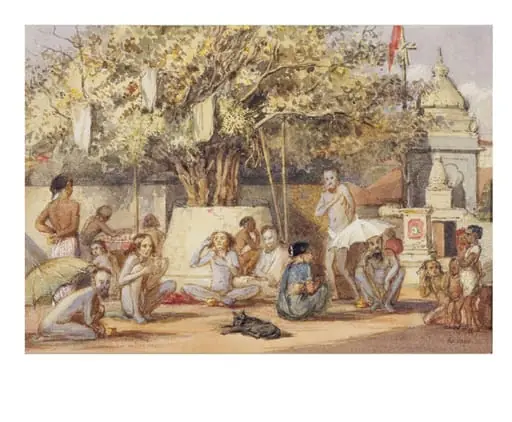 Hindu bairagis preparing for a festival outside a shrine
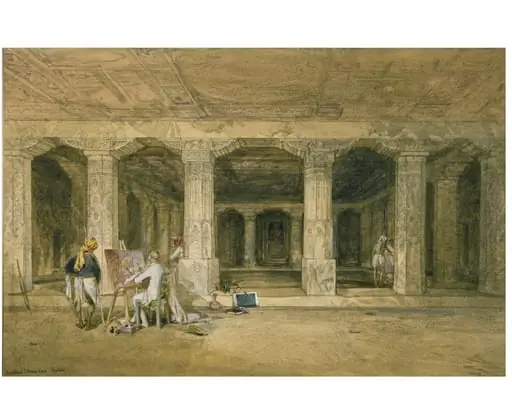 Buddhist vihara cave, Ajanta
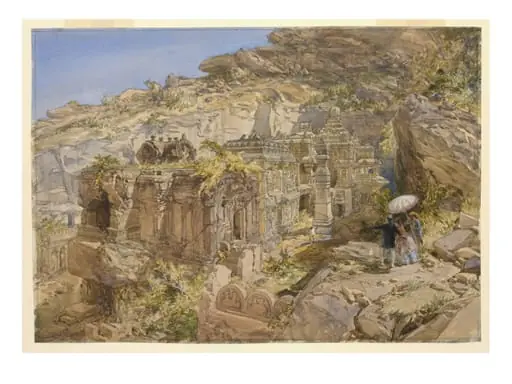 Kailasanatha temple, Ellora
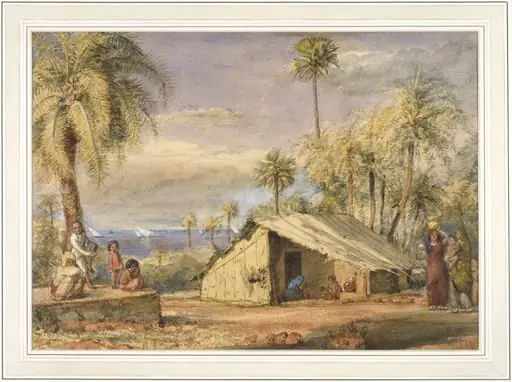 Toddywallah's hut in a grove of date palms near Breach Candy, Bombay