Artwork
Cotton cultivation in India
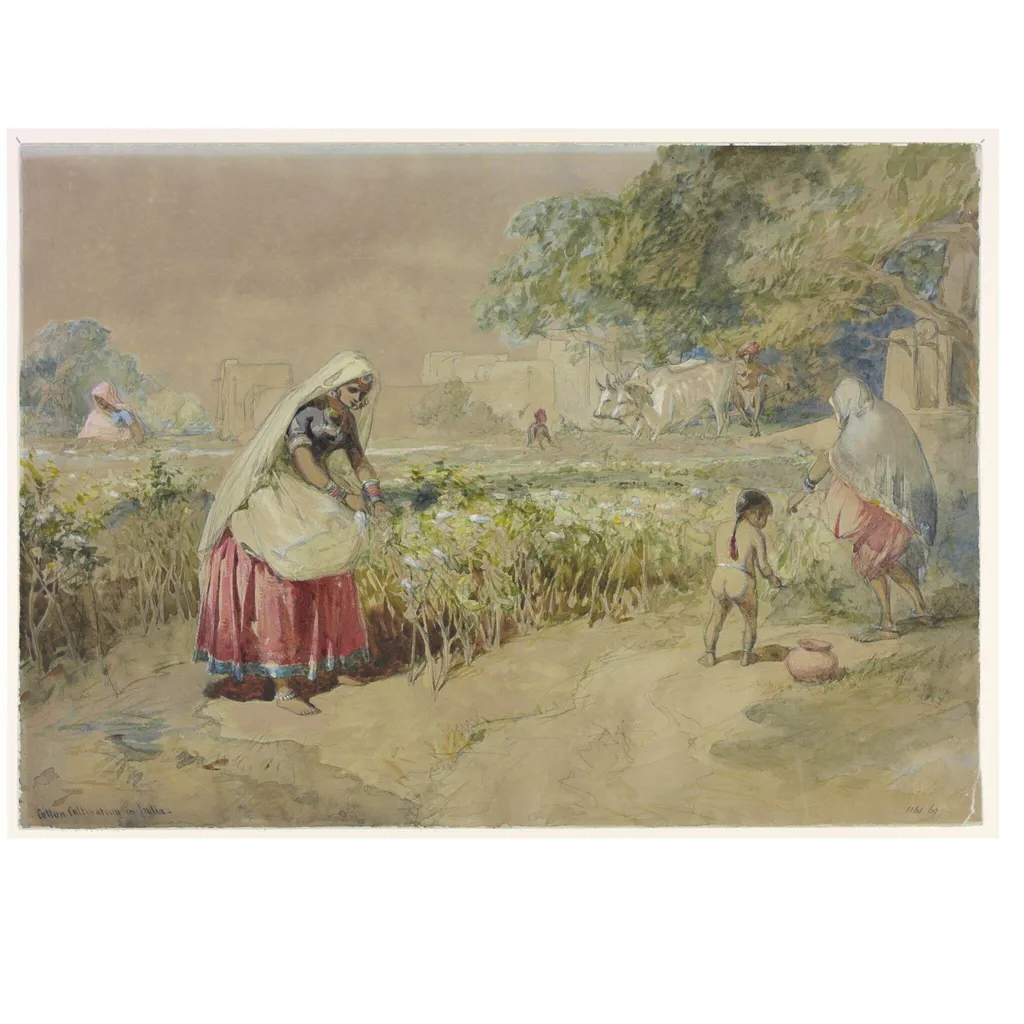
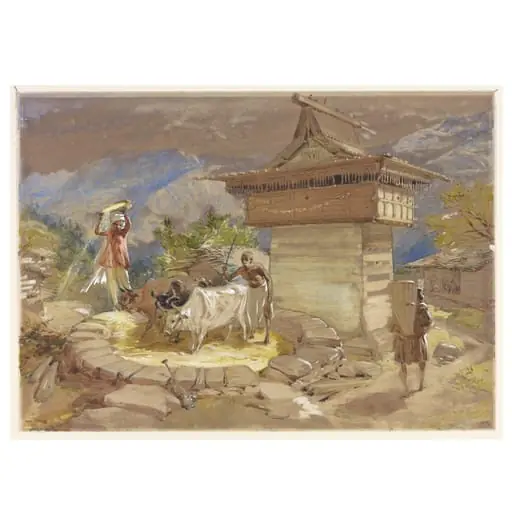
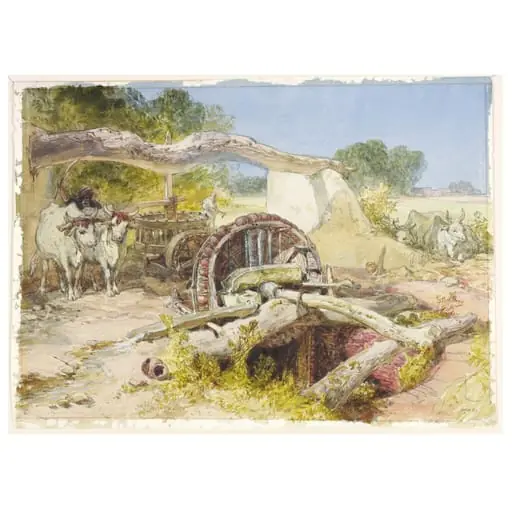
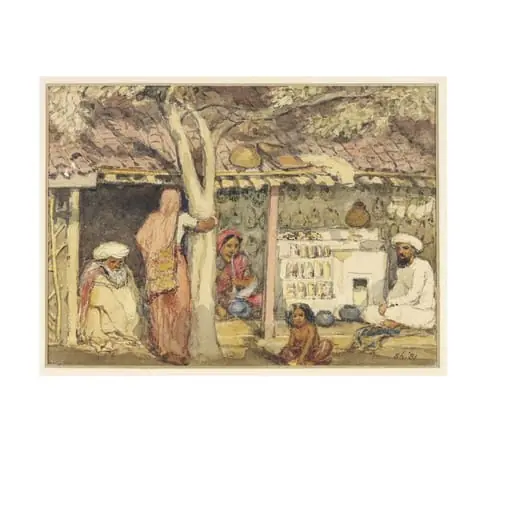
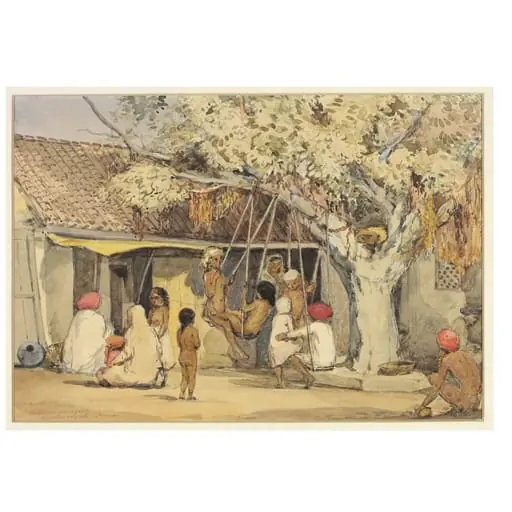
Cotton cultivation in India is a paint painting by the Impressionist artist William Simpson. It dates from 1862 and is held in the collection of the Victoria and Albert Museum.
About this work
This painting shows workers bent over cotton plants in a bright Indian field. The sky is clear, the colors mostly earthy greens and browns.
Simpson visited India after the 1857 uprising. He sketched what he saw, not just battles but daily life like this farm scene. The work mixes realism with a soft, sketchy style.
Check out more of his drawings at the Victoria and Albert Museum.
Overview
Cotton cultivation in India is a watercolour painting by William Simpson, created after his travels to India between 1859 and the 1880s. The work depicts a scene of women harvesting cotton in a field, likely set in Rajasthan.
Subject & Meaning
The painting shows women labouring in a cotton field, capturing a moment of everyday life in rural India. Cotton has been cultivated in India since ancient times, and was a significant commodity in both local and international trade.
Technique & Style
Simpson's watercolour combines realistic observation with a loose, sketchy style, characteristic of his working method. He made numerous pencil drawings on site, later developing them into finished watercolours in his London studio.
History & Provenance
The painting was originally intended for a book on the Indian mutiny of 1857, but was instead sold as part of a batch of 250 watercolours in 1869, following the bankruptcy of Simpson's commissioners, Day and Son.
Own this work as a print
Artist & collection