Artwork
Pandrethan temple, Srinagar
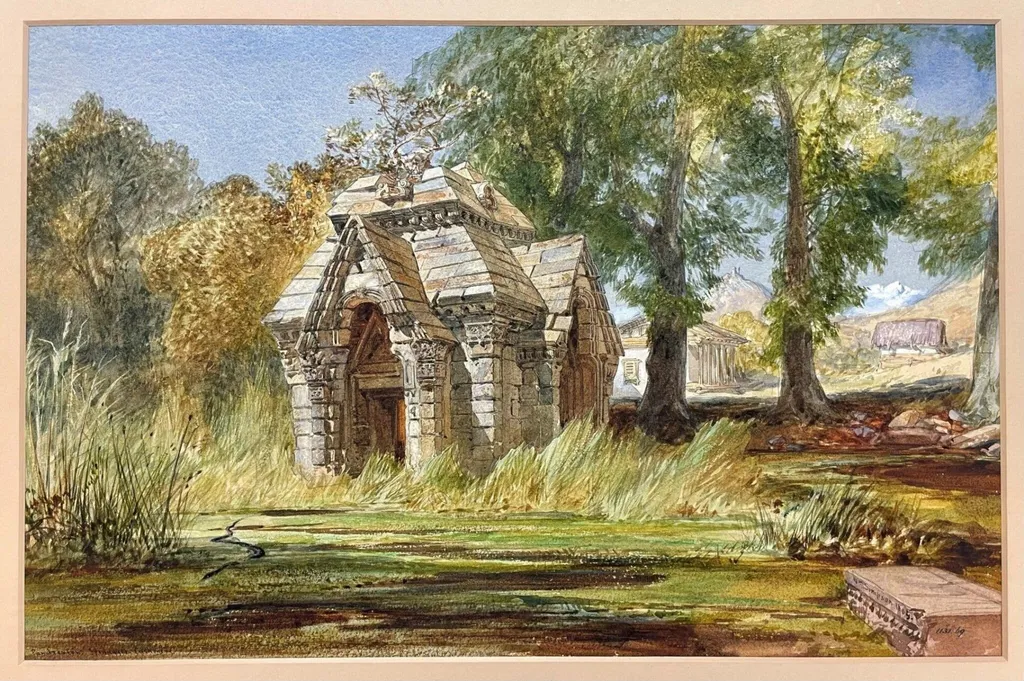
Pandrethan temple, Srinagar is a paint painting by the Impressionist artist William Simpson. It dates from 1865 and is held in the collection of the Victoria and Albert Museum.
About this work
Overview
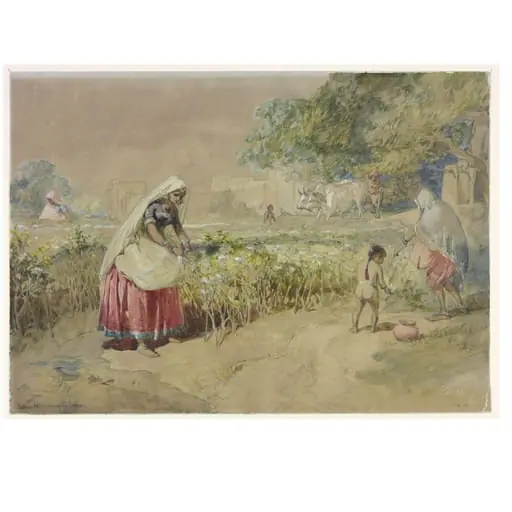
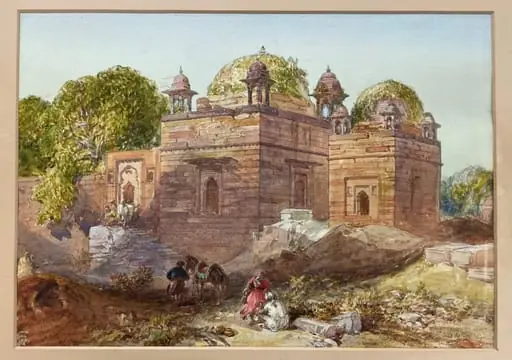
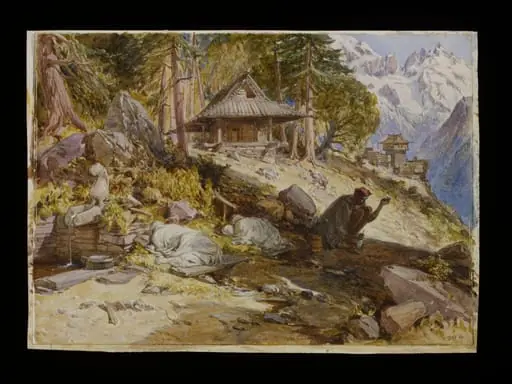
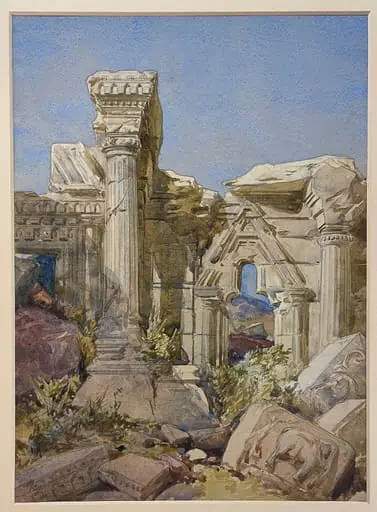
This watercolour painting depicts the Pandrethan temple near Srinagar, created by William Simpson after his visit in 1859. The artwork is one of a series of watercolours Simpson produced following his travels in India, documenting significant sites and landscapes.
Subject & Meaning
The Pandrethan temple, believed to have been built between 913 and 921 A.D., is shown set in a spring-fed tank. The painting captures the temple's architectural details and its surroundings, highlighting its historical and cultural significance.
Technique & Style
Simpson's watercolour is characterized by its vivid colours and romantic interpretation of the landscape and architecture. The painting was based on preparatory pencil drawings made during his travels, later completed in London in 1862.
History & Provenance
Commissioned by Day and Sons, a London lithography firm, Simpson's work was part of a broader project to document sites associated with the Indian Revolt of 1857. Simpson travelled extensively in India from 1859 until his return to London in 1862.
Context
The Pandrethan temple features one of the finest surviving temple ceilings in Kashmir, with an elaborately carved stone ceiling in bas-relief figures, formed from nine blocks of stone in a pattern of intersecting squares.
Artist & collection