Artwork
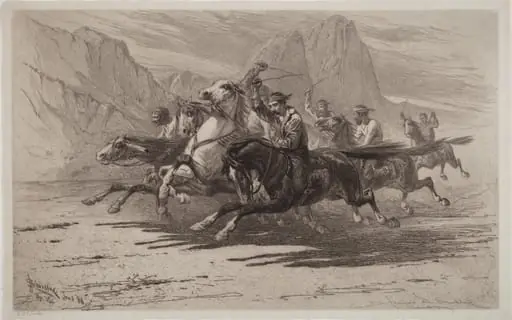
Rough Sport in the Yosemite
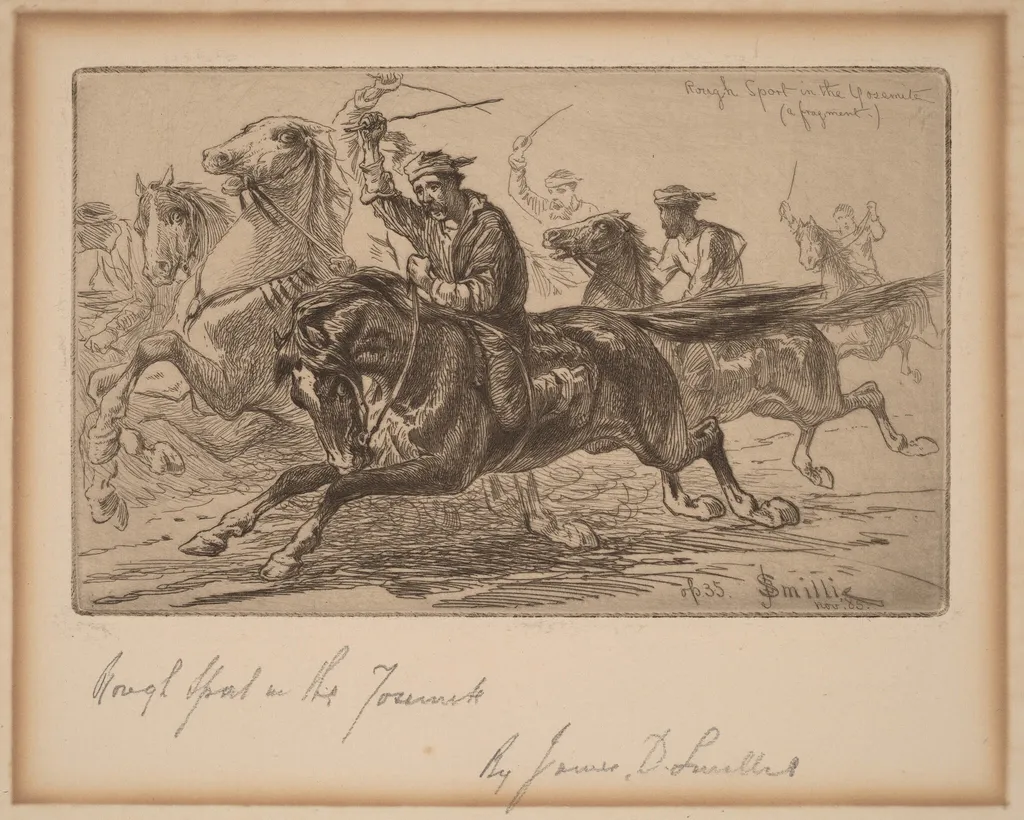
Rough Sport in the Yosemite is an ink print by the Impressionist artist James David Smillie. It dates from 1885 and is held in the collection of the National Gallery of Art.
About this work
The title says this is "Rough Sport in the Yosemite," which hints at a dangerous horseback ride.
This sketch shows a wild scene with a man riding a bucking horse. Other horses and riders are scattered around, looking chaotic. The artist used only black lines on a light background to show the action.
The title says this is "Rough Sport in the Yosemite," which hints at a dangerous horseback ride. The artist signed it as Smillie in 1885.
Want to learn more? Try looking up etching to see how this technique works.
Overview
Rough Sport in the Yosemite is an 1885 etching by James David Smillie, depicting a dynamic scene of equestrian chaos in the Yosemite landscape. Rendered entirely in black ink on a pale ground, the print captures motion through swift, angular lines. The composition centers on a rider struggling to stay atop a rearing horse, surrounded by other figures and animals in disarray. The work belongs to a series of American landscape and frontier scenes Smillie produced in the late 19th century.
Subject & Meaning
The image portrays a moment of uncontrolled energy—horse and rider locked in a battle of wills amid a rugged natural setting. The title suggests a form of frontier entertainment, possibly a local variation of rodeo or rough riding common in western territories. Rather than idealizing the West, Smillie emphasizes physical tension and unpredictability, reflecting a more grounded view of life beyond settled communities.
Technique & Style
Smillie employed traditional etching methods, incising lines into a metal plate with a needle before inking and printing. The absence of tone or shading relies entirely on the density and direction of fine black lines to convey movement and depth. His brushwork-like strokes mimic the urgency of the scene, with loose, overlapping contours suggesting dust, motion, and the instability of the riders.
History & Provenance
Created in 1885, the print was likely made for private collectors or as part of a broader series documenting American natural and cultural landscapes. Smillie, known for his detailed topographical prints, often combined artistic expression with documentary intent. The signature 'Smillie' and date confirm its origin, though specific early ownership records remain undocumented in public archives.
Context
In the 1880s, Yosemite was becoming a symbol of American wilderness, attracting artists and tourists alike. While many depicted its serene vistas, Smillie turned to human activity within it—showing the frontier’s physical demands. His etching aligns with a growing interest in authentic, unromanticized portrayals of western life, countering the mythologized narratives common in popular media of the era.
Legacy
Rough Sport in the Yosemite stands as a rare example of an etching focused on equestrian action in a national park setting. Though not widely reproduced, it contributes to the understanding of how 19th-century artists engaged with the West beyond picturesque landscapes. Smillie’s work remains a quiet counterpoint to more celebrated depictions of the era, valued for its immediacy and restraint.
Artist & collection

Artist
James David Smillie was an American artist, cofounder of the American Watercolor Society and New York Etching Club. His brother was painter George Henry Smillie.

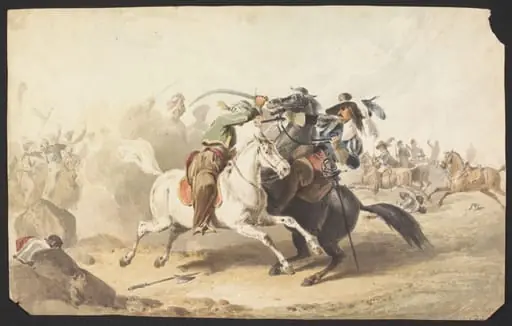 A Clash between European and Ottoman Cavalry
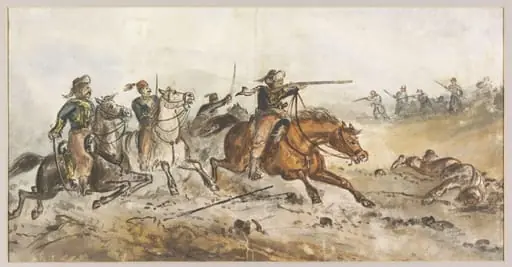 Turkish irregular cavalry charging Russian infantry
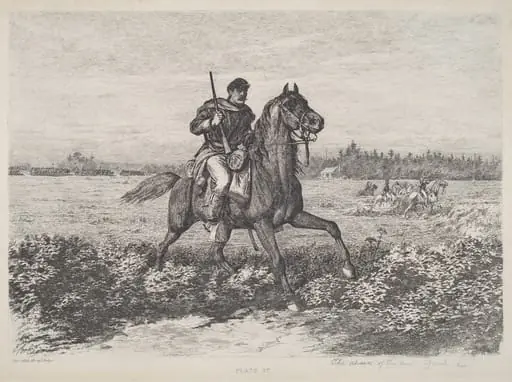 The Advance of the Cavalry
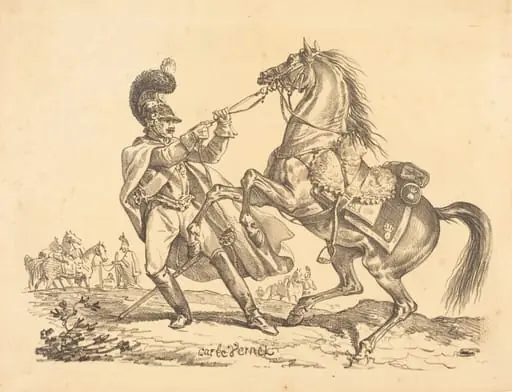 Cuirassier retenant son cheval qui se cabre
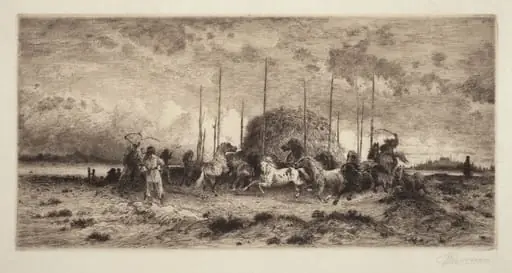 Harvest at San Juan, New Mexico
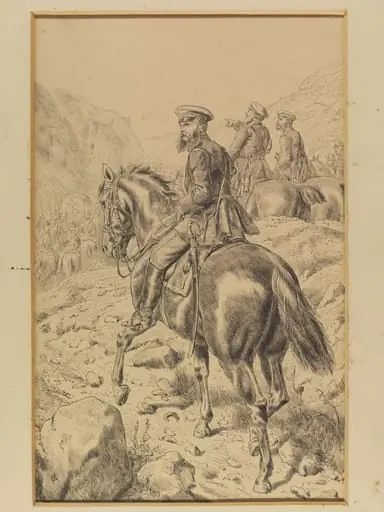 Portrait of Field Marshal Joseph Vladimirovich Gourko
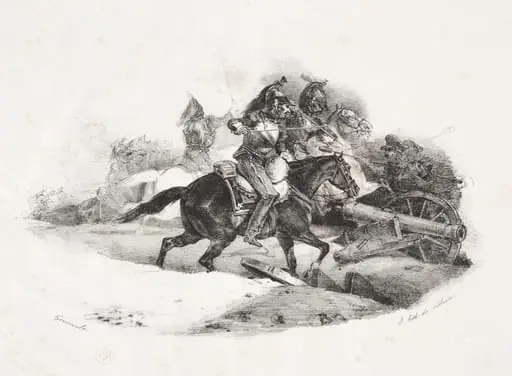 Cuirassiers Charging an Artillery Battery
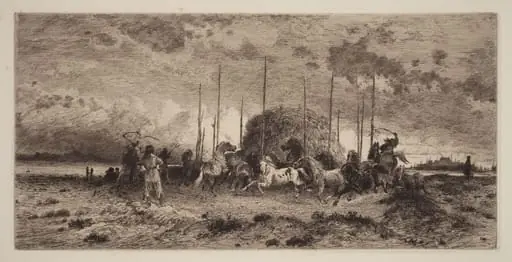 Harvest at San Juan, New Mexico
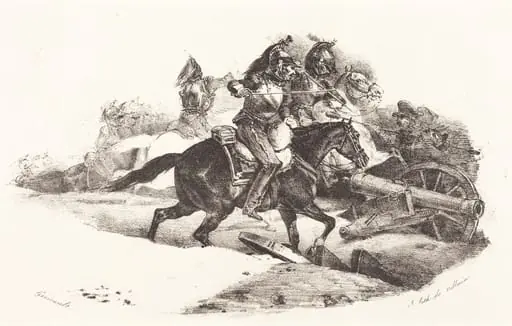 Cuirassiers Charging
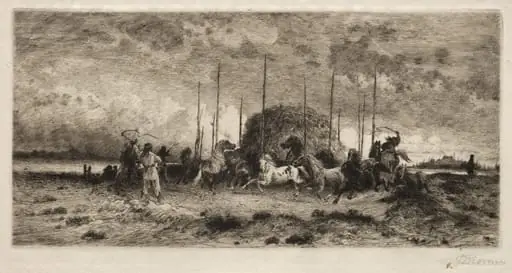 Harvest at San Juan, New Mexico
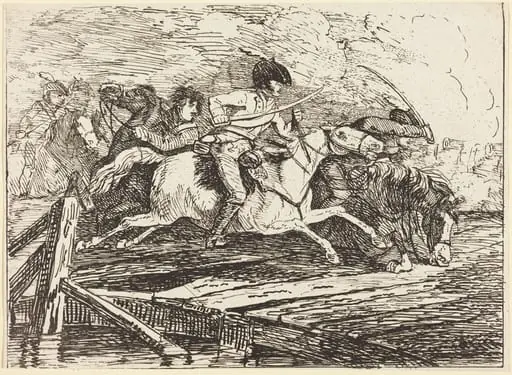 Cavalry Charging
 Rough Sport in the Yosemite