Artwork
Bungla, Cawnpoor
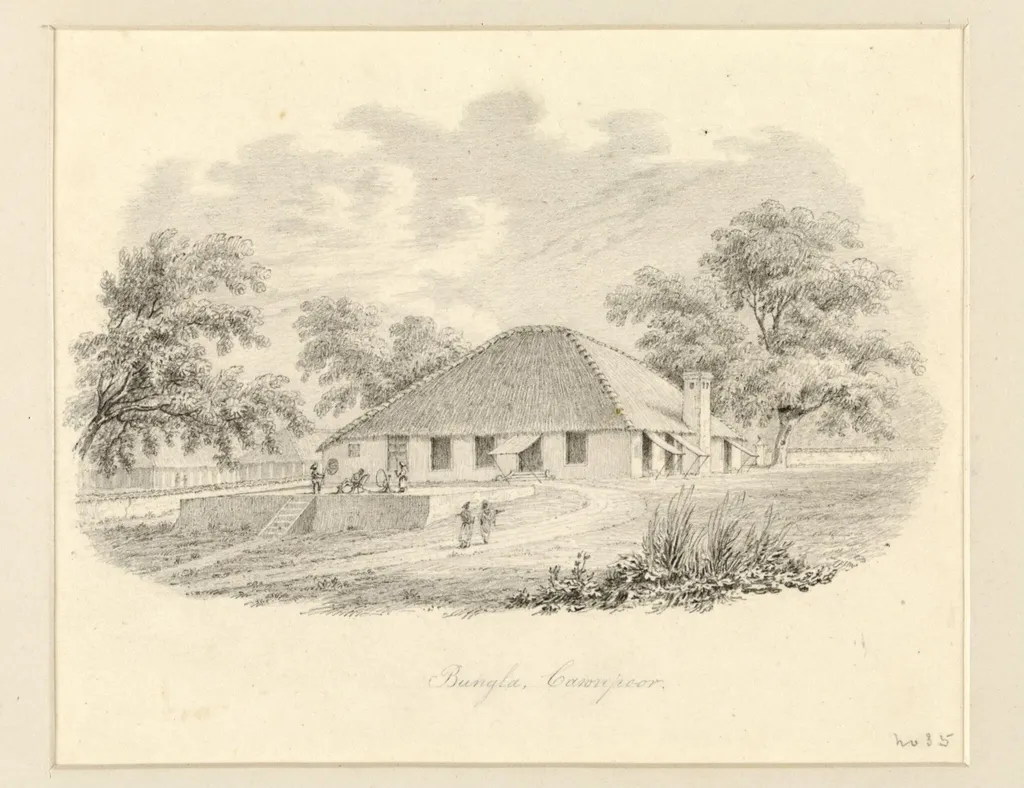
Bungla, Cawnpoor is a drawing by the Romanticist artist Robert Captain Smith. It dates from 1830 and is held in the collection of the Victoria and Albert Museum. Captain Robert Smith, an officer of the 44th Regiment, produced this pen drawing during his Indian travels between 1828 and 1833.
About this work
Overview
Captain Robert Smith, an officer of the 44th Regiment, produced this pen drawing during his Indian travels between 1828 and 1833. It records a modest bungalow near Cawnpore, rendered with delicate line work that captures the building’s thatched roof, chimney, and surrounding yard.
Subject & Meaning
The composition presents a quiet domestic scene: a simple house framed by trees, with two figures at the porch and a third moving across the yard. The inclusion of everyday activity suggests an interest in ordinary life rather than grand architecture.
Technique & Style
Smith employed fine, intersecting lines to model shadows on the roof, foliage, and ground, a method akin to cross‑hatching. The light, airy treatment of the sky and the careful rendering of texture give the drawing a tranquil, observational quality.
History & Provenance
Originally part of an illustrated journal that also recorded voyages on the Ganges and visits to Delhi, Agra and Lucknow, the sketch remained unpublished. After Smith retired to Ireland in 1833, he continued to refine the manuscript until 1845. The work entered the museum’s collection in 1915, purchased from W. M. Biden of Hampton‑on‑Thames.
Context
The drawing belongs to a broader tradition of British military officers documenting Indian landscapes and architecture during the early nineteenth century. Such visual records served both personal curiosity and the imperial appetite for geographic and cultural information.
Artist & collection

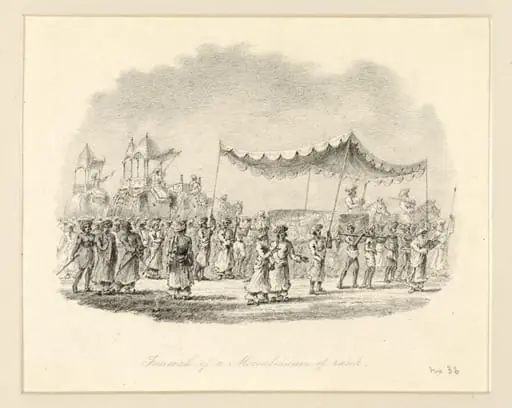
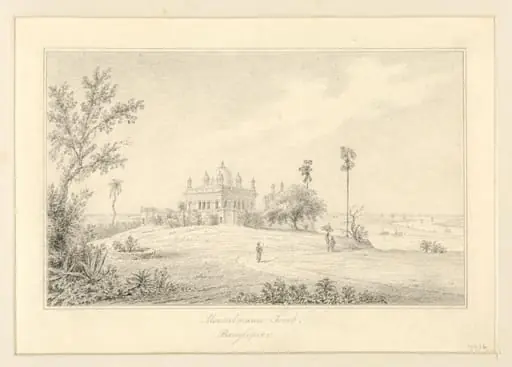 Moosulman Tomb, Bauglepoor
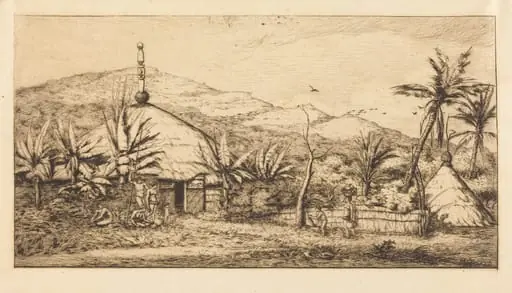 Nouvelle-Calédonie: Grande case indigène sur le chemin de Ballade à Poepo, 1845 (New Caledonia: Large Native Hut on the Road from Balade to Puebo, 1845)
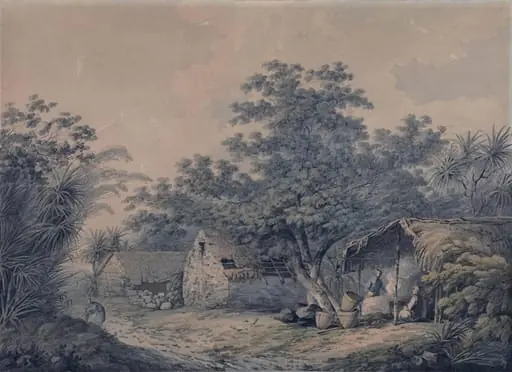 View in Krakatoa Island, near the Straits of Sunda
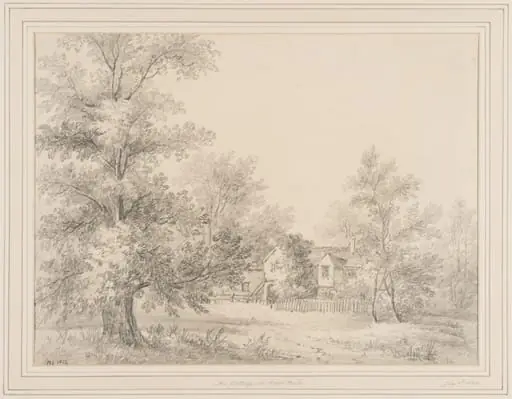 The cottage in Hyde Park
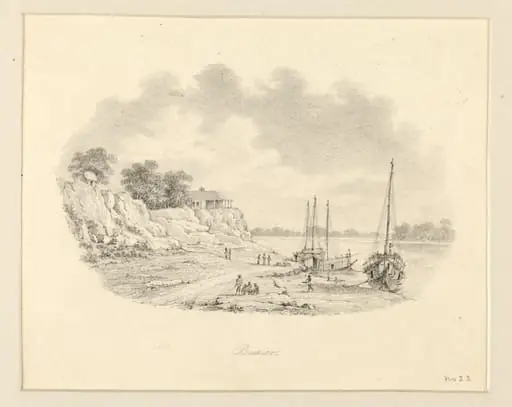 Buxar
Buxar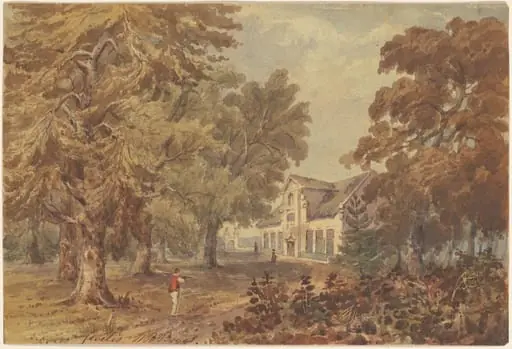 Cloetis
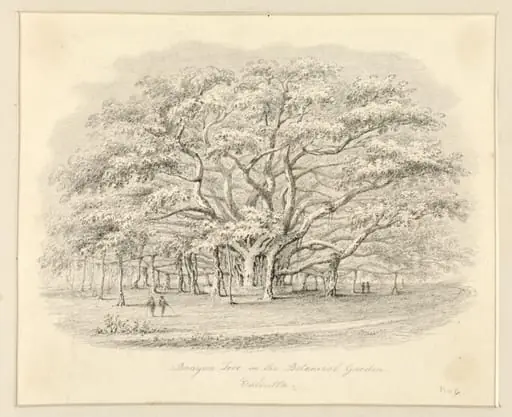 Banyan Tree in the Botanical Garden, Calcutta
 Liselund
 Whitwell Hall, Derbyshire
 The first lecture theatre at the South Kensington Museum, later the Victoria and Albert Museum