Artwork
Picturesque Architecture in Paris, Ghent, Antwerp, Rouen: Vieille Rue du Temple, Paris
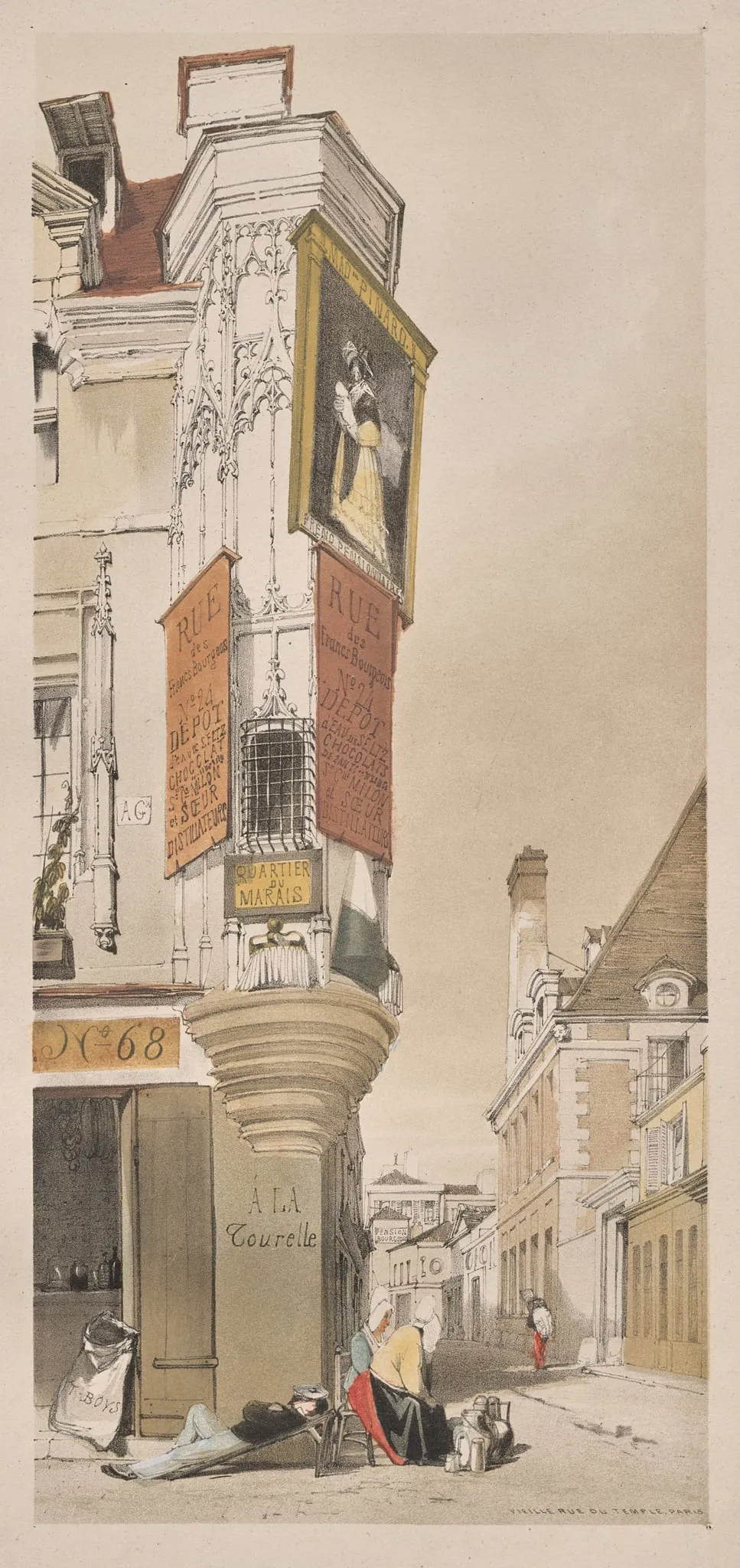
Picturesque Architecture in Paris, Ghent, Antwerp, Rouen: Vieille Rue du Temple, Paris is a work on paper by the Romanticist artist Thomas Shotter Boys. It dates from 1839 and is held in the collection of the Cleveland Museum of Art.
About this work
The buildings have tall signs advertising shops—one says "Rue des Francs Bourgeois" and another has a small portrait.
This drawing shows a Paris street corner with old buildings and signs. Two women sit on the ground, one with a basket, near a dog and a cat. The buildings have tall signs advertising shops—one says "Rue des Francs Bourgeois" and another has a small portrait. The street is quiet, with a few people walking in the distance.
The signs list businesses like a "Dépot de Bois" and a "Chocolatier," hinting at daily life in 1839. The artist focused on old architecture, capturing details like the carved stone and weathered walls.
Next, look up Romanticism to see how artists used emotion and everyday scenes like this one.
Overview
Created in 1839, this watercolour and lithographic work by English artist Thomas Shotter Boys records a corner of the Vieille Rue du Temple in Paris. The composition captures a quiet urban scene, populated by a few passers‑by, shop signs and weathered façades, offering a snapshot of everyday life in the French capital during the early nineteenth century.
Subject & Meaning
The drawing depicts a modest street intersection framed by tall, stone‑clad buildings bearing commercial signage for a wood depot, a chocolatier and other local trades. Two women sit on the ground, one with a basket, while a dog and a cat add domestic detail. The scene emphasizes the ordinary rhythms of urban commerce and social interaction.
Technique & Style
Boys employed a combination of watercolour washes and lithographic line work to render architectural texture and atmospheric light. Fine brushstrokes convey the carved stone and weathered walls, while the lithographic process allows precise reproduction of signage and figures. The style reflects the early Romantic interest in documenting the picturesque qualities of cityscapes.
History & Provenance
The piece forms part of a larger series in which Boys recorded architectural details across several European cities, including Ghent, Antwerp and Rouen. After its creation, the work entered private collections before being acquired by the Cleveland Museum of Art, where it remains in the museum’s permanent holdings.
Context
Produced during a period when artists turned to everyday urban scenes to explore mood and historic character, the drawing aligns with Romantic tendencies toward the picturesque and the documentary. Paris in 1839 was undergoing modernization, yet the Vieille Rue du Temple retained its medieval street pattern, offering a visual record of a city in transition.
Artist & collection
Artist
Thomas Shotter Boys (1803–1874) was an English watercolour painter and lithographer, mostly producing cityscapes and images of buildings, although he produced some rural landscapes and marine subjects.

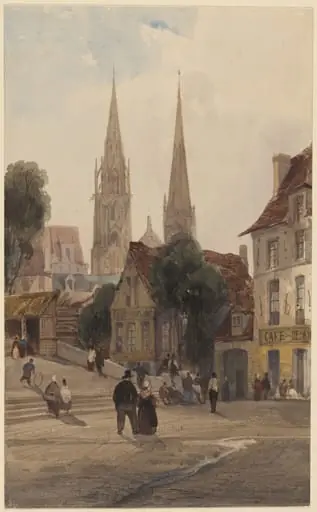
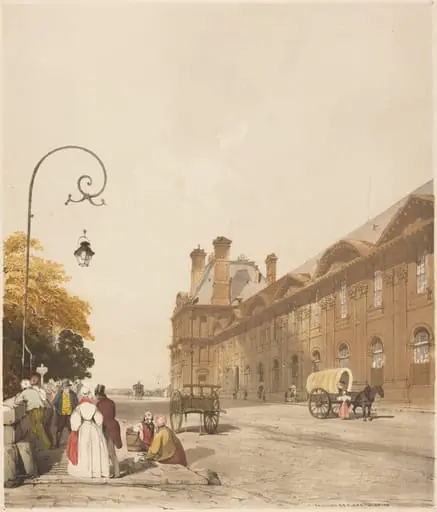
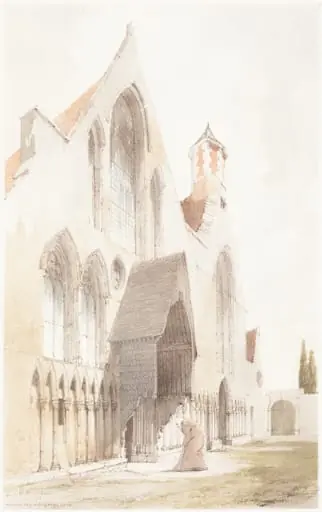
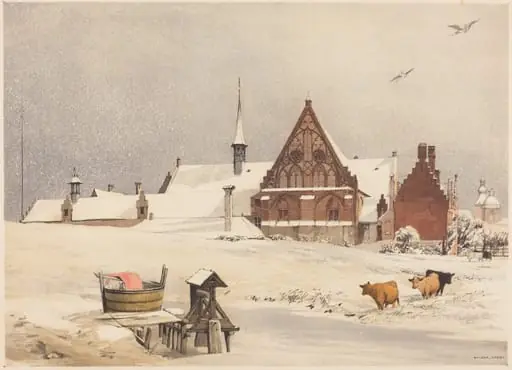
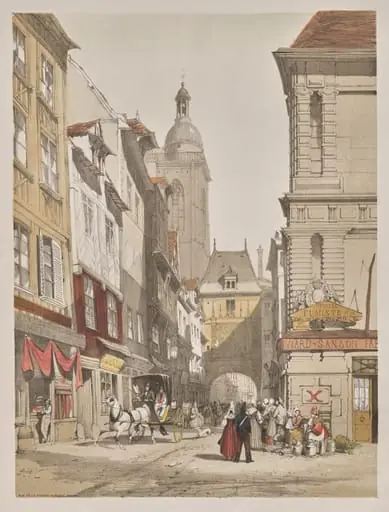 Picturesque Architecture in Paris, Ghent, Antwerp, Rouen: Rue de la Crosse Horlogue, Rouen, France
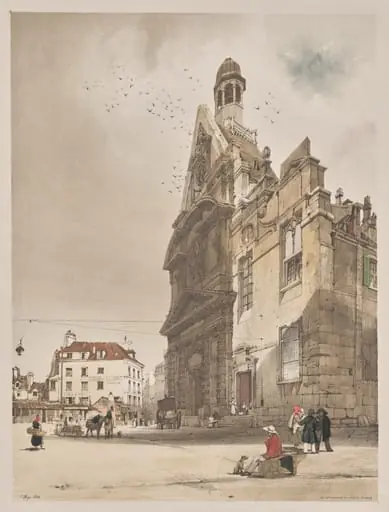 Picturesque Architecture in Paris, Ghent, Antwerp, Rouen: St. Etienne du Mont, Paris
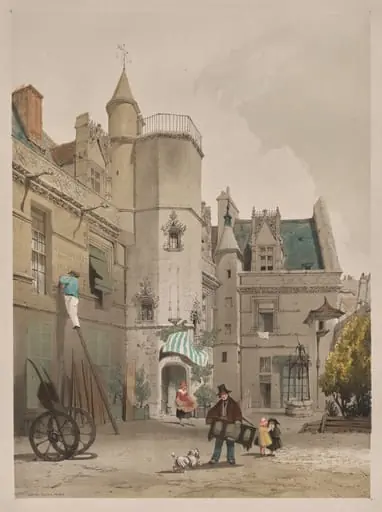 Picturesque Architecture in Paris, Ghent, Antwerp, Rouen: Hôtel Cluny, Paris
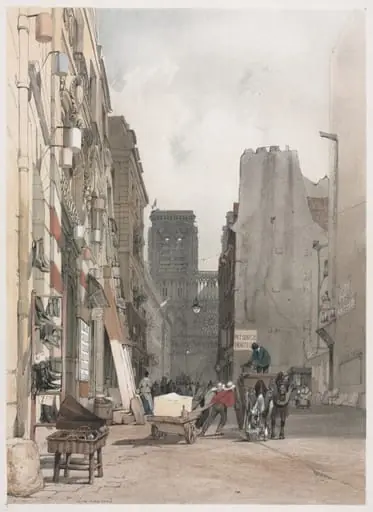 Picturesque Architecture in Paris, Ghent, Antwerp, Rouen: Nôtre Dame, Paris
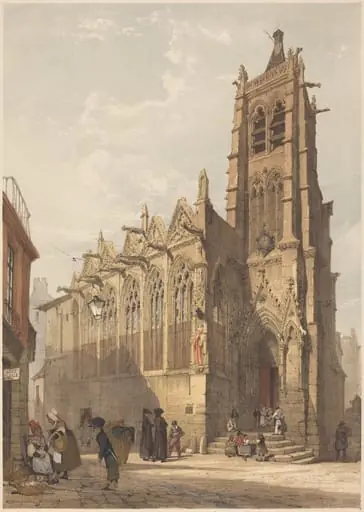
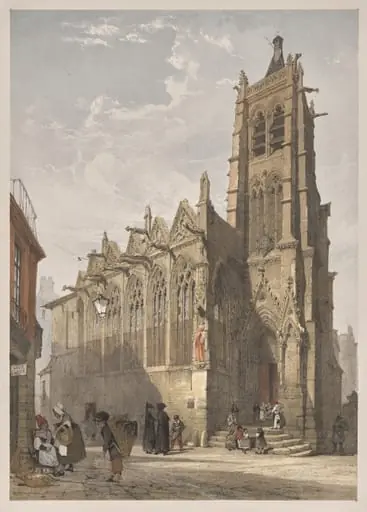 Picturesque Architecture in Paris, Ghent, Antwerp, Rouen: St. Severin, Paris
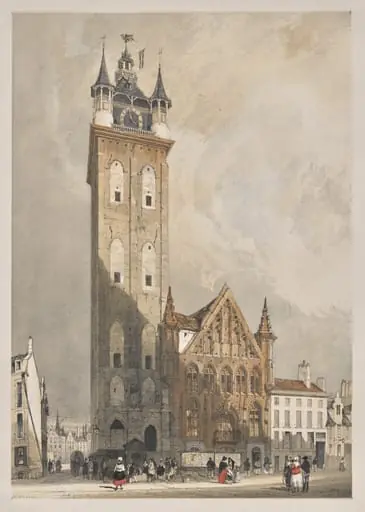 Picturesque Architecture in Paris, Ghent, Antwerp, Rouen: Belfrey, Ghent, Belgium
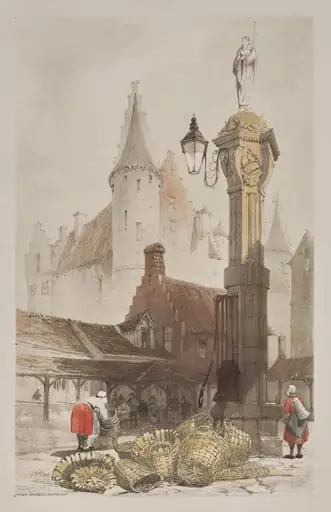 Picturesque Architecture in Paris, Ghent, Antwerp, Rouen: Fish Market, Antwerp, Belgium