Artwork
Picturesque Architecture in Paris, Ghent, Antwerp, Rouen: Hôtel Cluny, Paris
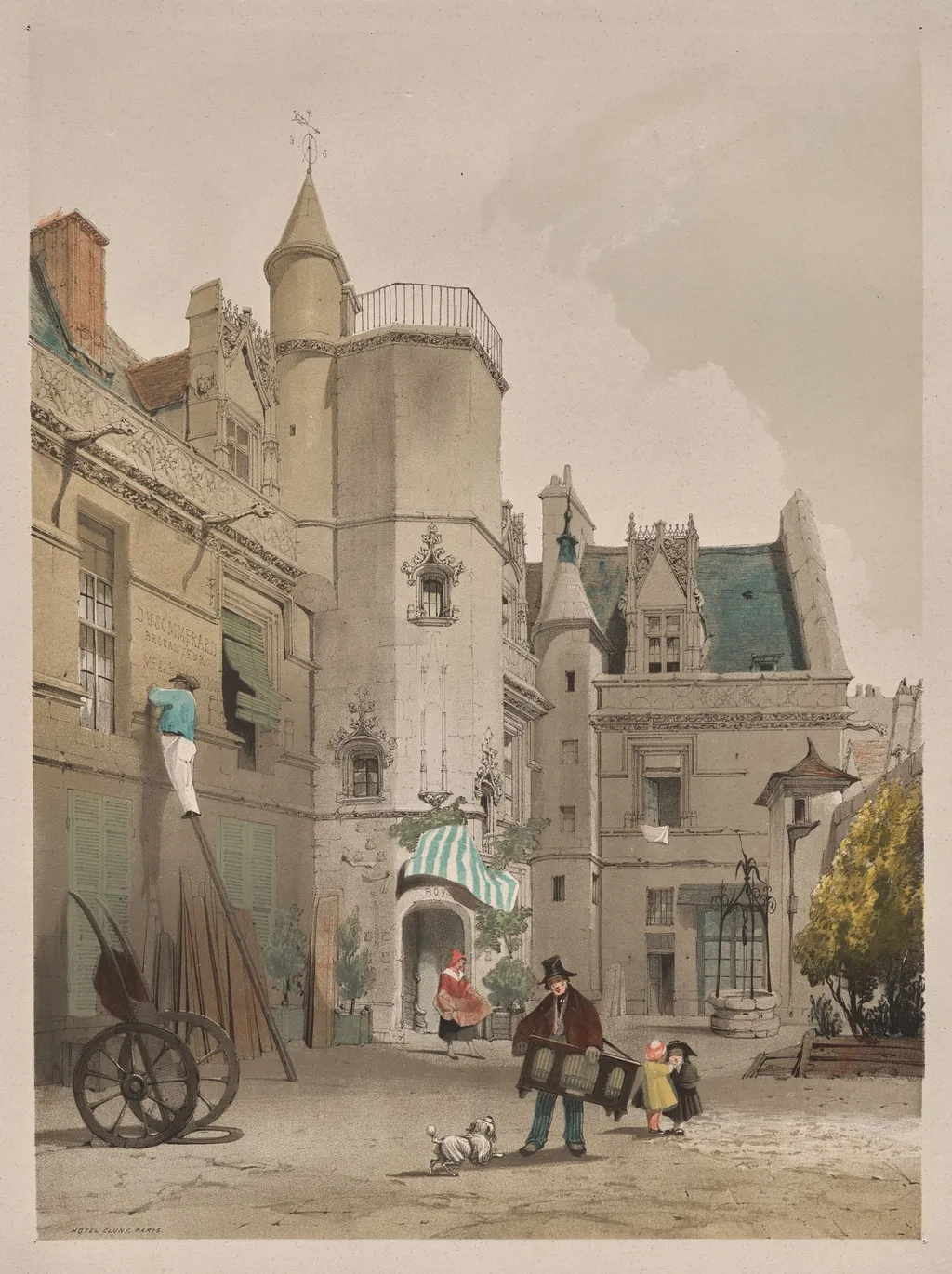
Picturesque Architecture in Paris, Ghent, Antwerp, Rouen: Hôtel Cluny, Paris is a work on paper by the Romanticist artist Thomas Shotter Boys. It dates from 1839 and is held in the collection of the Cleveland Museum of Art.
About this work
Overview
The Hôtel Cluny in Paris served as one of several focal points in this series, chosen for its medieval heritage and integration into the evolving cityscape.
Thomas Shotter Boys produced this lithograph in 1839 as part of a portfolio documenting urban architecture across northern Europe. A British artist known for precise topographical views, he combined watercolour techniques with lithographic printing to capture the character of historic cities. The Hôtel Cluny in Paris served as one of several focal points in this series, chosen for its medieval heritage and integration into the evolving cityscape.
Subject & Meaning
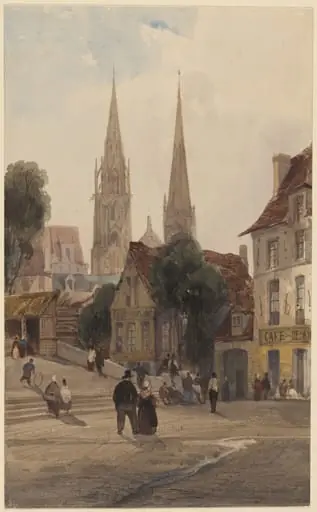
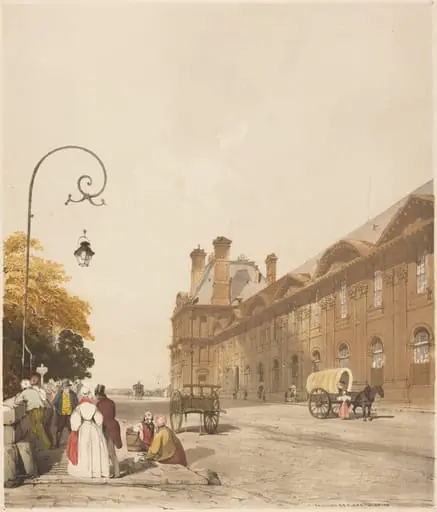
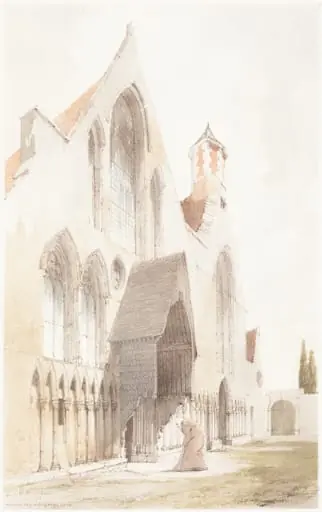
The scene centers on the Hôtel Cluny, a 15th-century noble residence, framed by active street life. Figures—pedestrians, a shopkeeper, a woman near an archway—animate the architecture without dominating it. The inclusion of daily routines, such as a man carrying a ladder or a child walking with a dog, underscores the coexistence of historical monument and contemporary urban activity, reflecting an interest in architecture as lived space rather than isolated relic.
Technique & Style
Boys rendered the scene using lithography to achieve fine linear detail and tonal gradation, mimicking the subtlety of watercolour. Architectural elements are rendered with careful perspective, while human figures are simplified yet distinct. The interplay of vertical towers and horizontal awnings, along with textured shutters and cobblestones, creates a sense of depth and authenticity. His style avoids romantic exaggeration, favoring observational clarity over dramatic effect.
History & Provenance
The Hôtel Cluny, built in the 1330s as the Paris residence of the Abbots of Cluny, had by the 19th century become a site of antiquarian interest. Boys’s lithograph was published during a period of renewed scholarly attention to medieval architecture in France. The portfolio was distributed in Britain and continental Europe, contributing to a growing market for illustrated architectural guides among the educated middle class.
Context
In the 1830s, European cities were undergoing rapid change, yet there was increasing public interest in preserving and documenting older structures. Boys’s work aligned with broader antiquarian movements and the rise of illustrated travel literature. His focus on modest, everyday details—shop awnings, street carts, windowed balconies—reflected a shift from idealized landscapes toward grounded, human-scaled urban observation.
Legacy
Boys’s portfolio helped establish lithography as a viable medium for architectural documentation, influencing later topographical artists and urban historians. His restrained approach, avoiding overt sentimentality, provided a model for recording architectural heritage with fidelity. The Hôtel Cluny itself, now the Musée de Cluny, continues to be studied in part due to such early visual records that captured its condition before modern restorations.
Artist & collection
Artist
Thomas Shotter Boys (1803–1874) was an English watercolour painter and lithographer, mostly producing cityscapes and images of buildings, although he produced some rural landscapes and marine subjects.

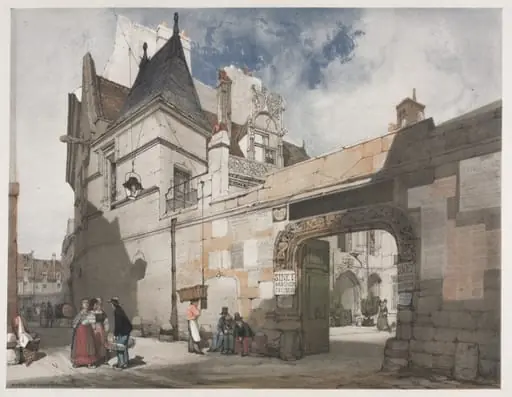 Picturesque Architecture in Paris, Ghent, Antwerp, Rouen: Hôtel de Cluny, Paris
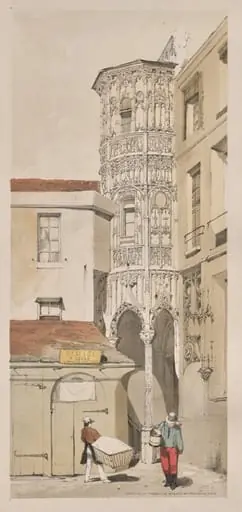 Picturesque Architecture in Paris, Ghent, Antwerp, Rouen: Hôtel de la Tremouille, Rue des Bourbonnois, Paris
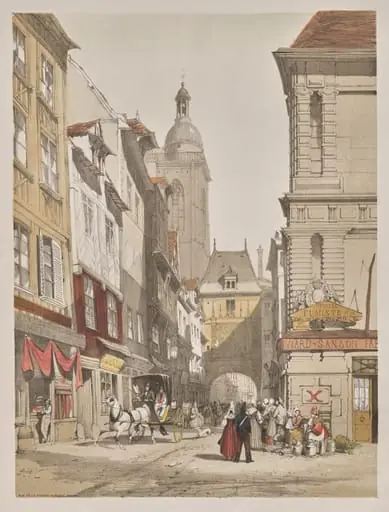 Picturesque Architecture in Paris, Ghent, Antwerp, Rouen: Rue de la Crosse Horlogue, Rouen, France
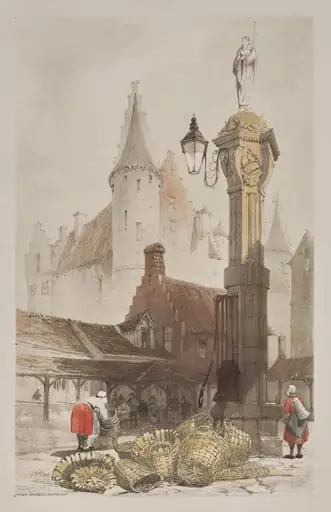 Picturesque Architecture in Paris, Ghent, Antwerp, Rouen: Fish Market, Antwerp, Belgium
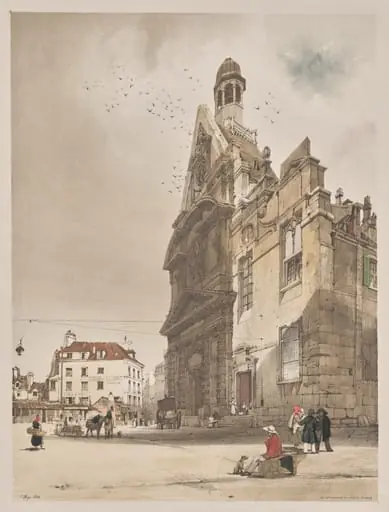 Picturesque Architecture in Paris, Ghent, Antwerp, Rouen: St. Etienne du Mont, Paris
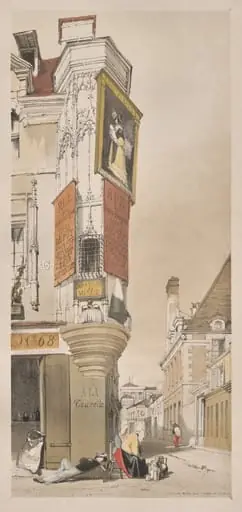 Picturesque Architecture in Paris, Ghent, Antwerp, Rouen: Vieille Rue du Temple, Paris
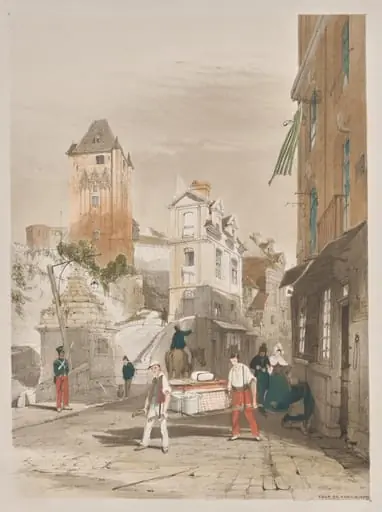 Picturesque Architecture in Paris, Ghent, Antwerp, Rouen: Tour de Remy, Dieppe, France
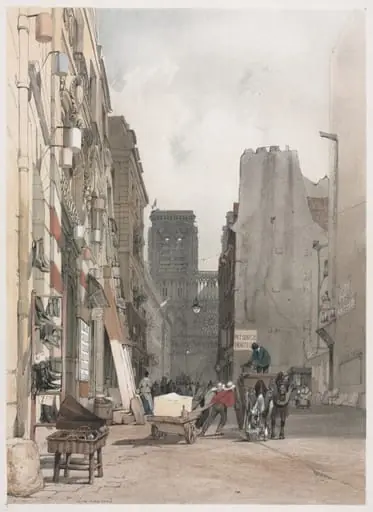 Picturesque Architecture in Paris, Ghent, Antwerp, Rouen: Nôtre Dame, Paris
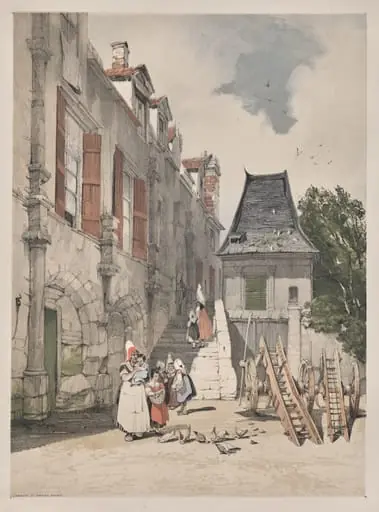 Picturesque Architecture in Paris, Ghent, Antwerp, Rouen: L'Abbaye St. Amand, Rouen, France
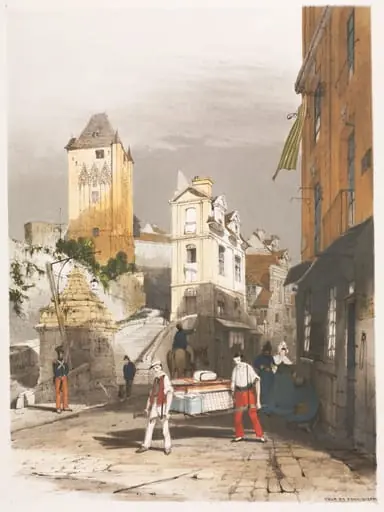 Picturesque Architecture in Paris, Ghent, Antwerp, Rouen, Etc.: Tour de Remy, Dieppe
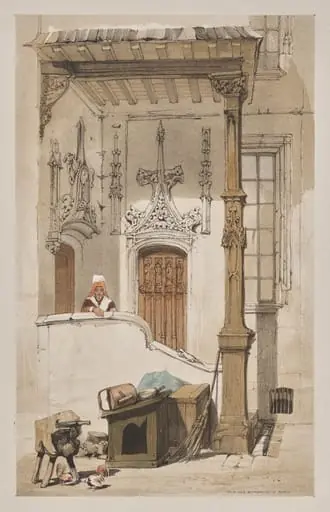 Picturesque Architecture in Paris, Ghent, Antwerp, Rouen: Rue des Marmousets, Paris