Artwork
Picturesque Architecture in Paris, Ghent, Antwerp, Rouen: St. Etienne du Mont and the Pantheon, Paris
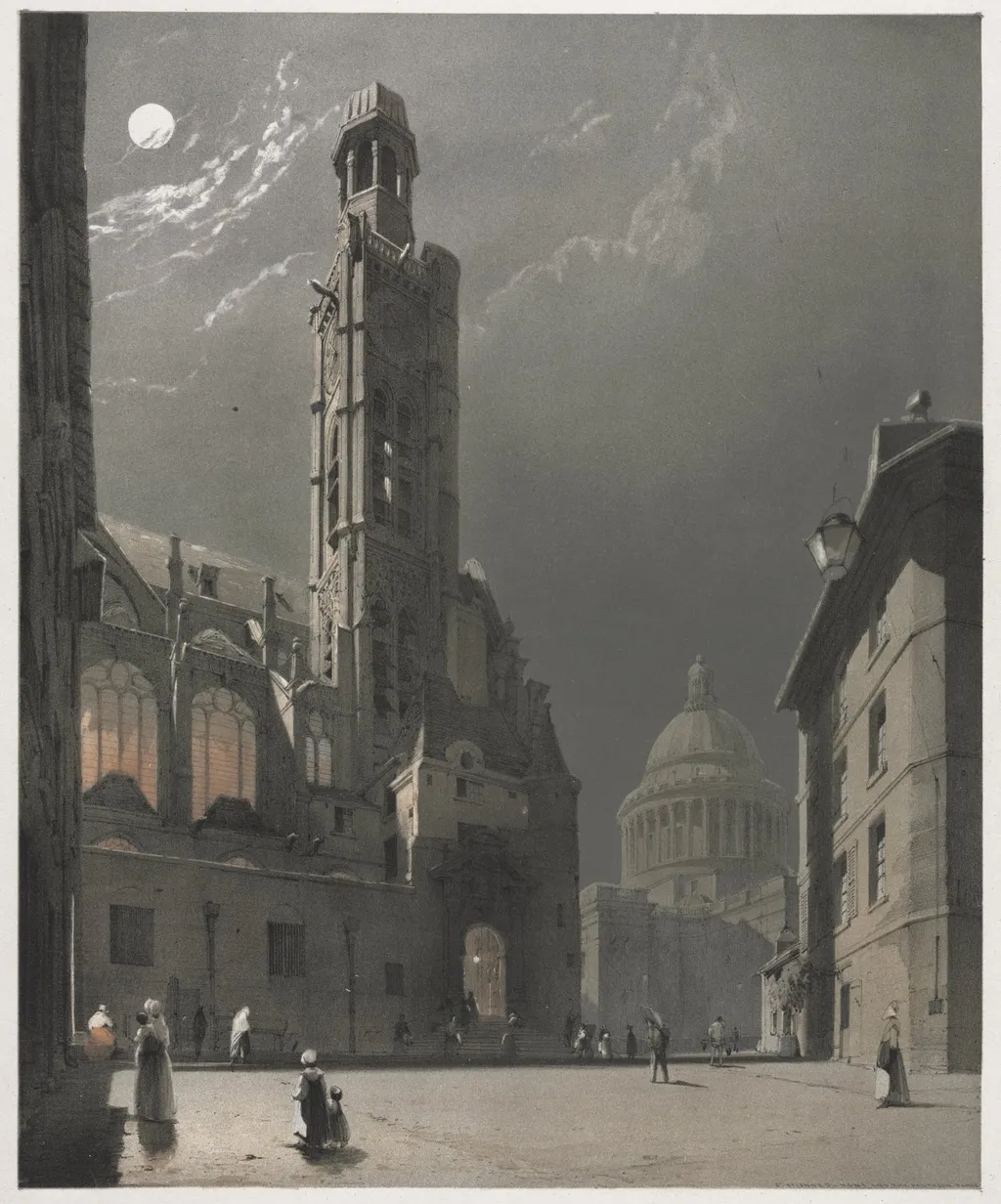
Picturesque Architecture in Paris, Ghent, Antwerp, Rouen: St. Etienne du Mont and the Pantheon, Paris is a work on paper by the Romanticist artist Thomas Shotter Boys. It dates from 1839 and is held in the collection of the Cleveland Museum of Art.
About this work
Overview
Thomas Shotter Boys produced a lithographic print as part of a portfolio capturing urban architecture across four European cities.
Thomas Shotter Boys produced a lithographic print as part of a portfolio capturing urban architecture across four European cities. This particular sheet focuses on two prominent Parisian structures: the Church of Saint-Étienne-du-Mont and the Panthéon. Executed in the late 1830s, the work exemplifies Boys’s interest in documenting architectural detail through the medium of lithography, combining topographical accuracy with atmospheric rendering.
Subject & Meaning
The scene juxtaposes the medieval church with the neoclassical Panthéon, representing two eras of French architectural identity. The inclusion of pedestrians in the foreground grounds the image in daily life, suggesting a quiet, contemplative urban rhythm. The nocturnal setting and moonlit illumination evoke stillness and reverence, framing the buildings not merely as monuments but as enduring presences within the city’s lived experience.
Technique & Style
Boys employed lithography to achieve fine tonal gradations, using ink washes to simulate the soft glow of moonlight and the deep shadows of night. Chiaroscuro enhances spatial depth, with the illuminated domes and spires emerging from darker foregrounds. The precision of architectural lines contrasts with the fluid, atmospheric handling of sky and pavement, reflecting a blend of documentary intent and Romantic sensibility.
History & Provenance
Created in 1839, the print was part of a series commissioned to illustrate architectural diversity in northern European cities. Boys traveled extensively to sketch these sites firsthand, later translating them into lithographs for publication. The portfolio was distributed in England, catering to a growing middle-class interest in continental travel and architectural study during the early Victorian period.
Context
In the 1830s, European cities were undergoing rapid change, and there was renewed scholarly and public interest in preserving architectural heritage. Boys’s work aligned with broader antiquarian movements, offering detailed visual records that emphasized historical continuity. His focus on lesser-known urban views, alongside major landmarks, reflected a shift toward appreciating the everyday character of cityscapes.
Legacy
Boys’s lithographs contributed to the dissemination of architectural knowledge in Britain, influencing both amateur sketchers and professional designers. His method of combining precise draftsmanship with evocative lighting became a model for later topographical artists. While not widely celebrated today, his work remains a valuable record of 19th-century urban landscapes as they appeared before modernization transformed them.
Artist & collection
Artist
Thomas Shotter Boys (1803–1874) was an English watercolour painter and lithographer, mostly producing cityscapes and images of buildings, although he produced some rural landscapes and marine subjects.

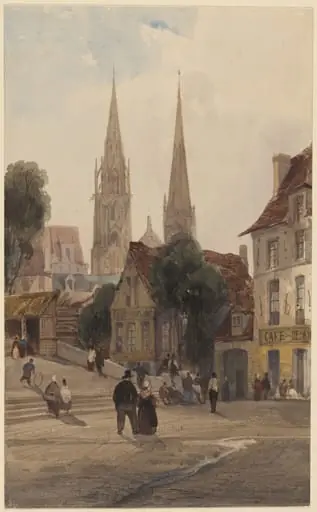
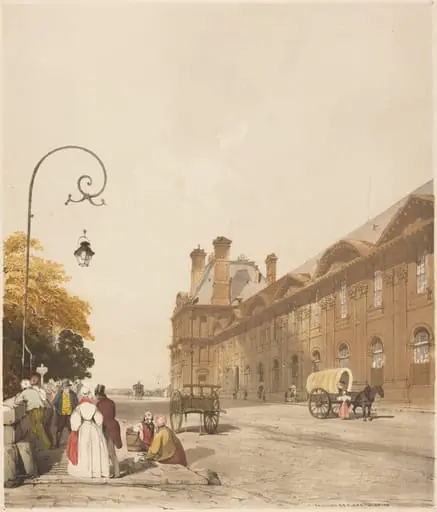
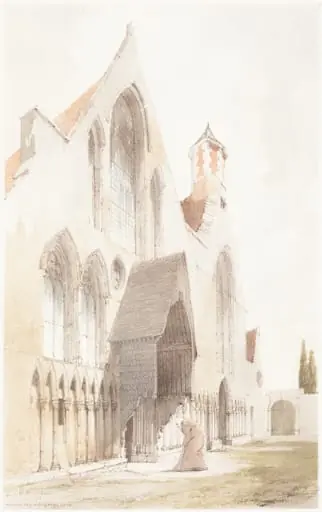
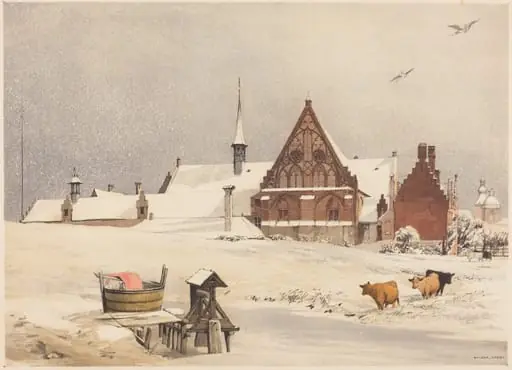
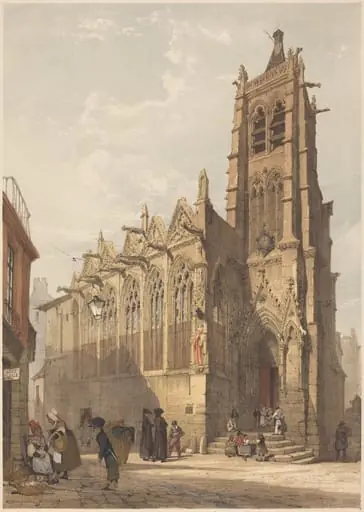
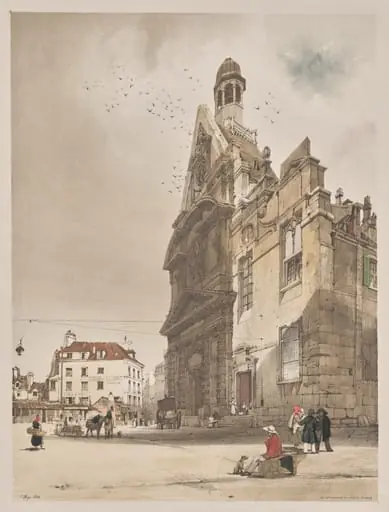 Picturesque Architecture in Paris, Ghent, Antwerp, Rouen: St. Etienne du Mont, Paris
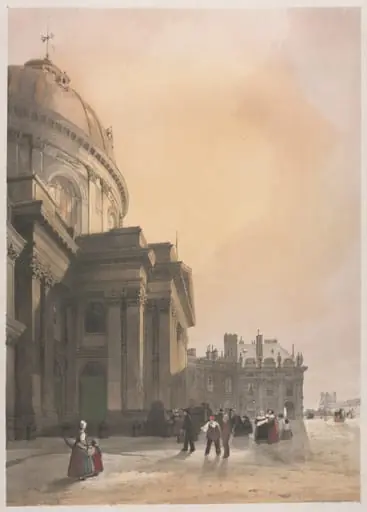 Picturesque Architecture in Paris, Ghent, Antwerp, Rouen: La Chapelle de l'Institut, Paris
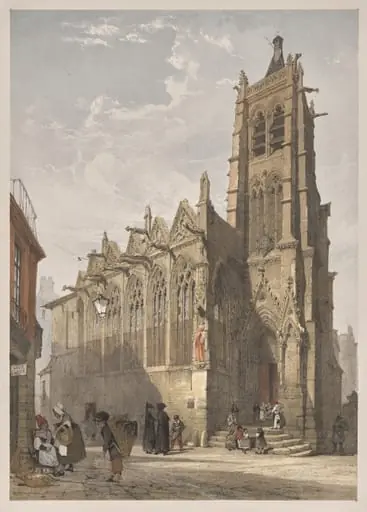 Picturesque Architecture in Paris, Ghent, Antwerp, Rouen: St. Severin, Paris
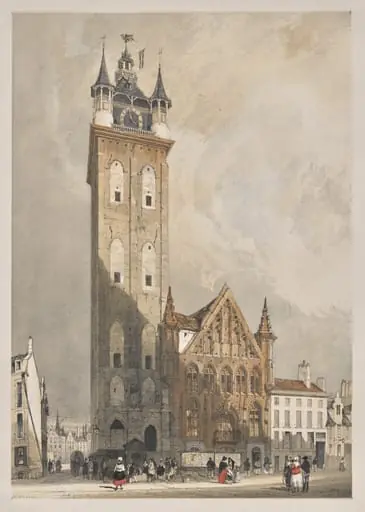 Picturesque Architecture in Paris, Ghent, Antwerp, Rouen: Belfrey, Ghent, Belgium
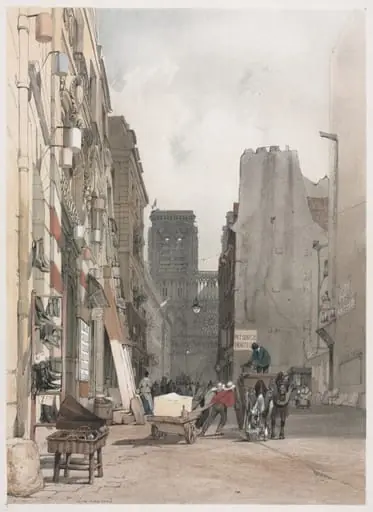 Picturesque Architecture in Paris, Ghent, Antwerp, Rouen: Nôtre Dame, Paris
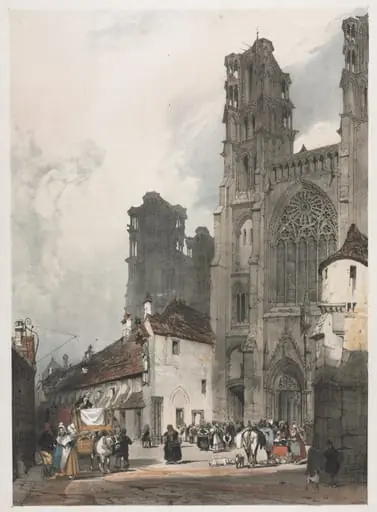 Picturesque Architecture in Paris, Ghent, Antwerp, Rouen: Laon, France
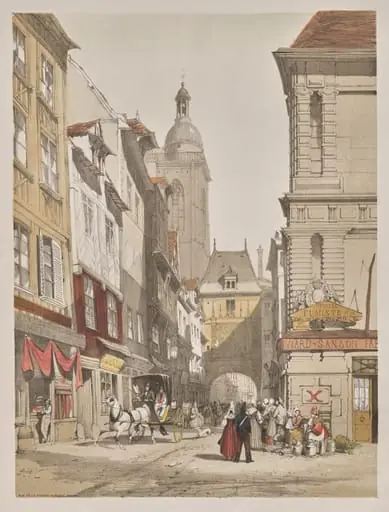 Picturesque Architecture in Paris, Ghent, Antwerp, Rouen: Rue de la Crosse Horlogue, Rouen, France