Artwork
Oliver Cromwell
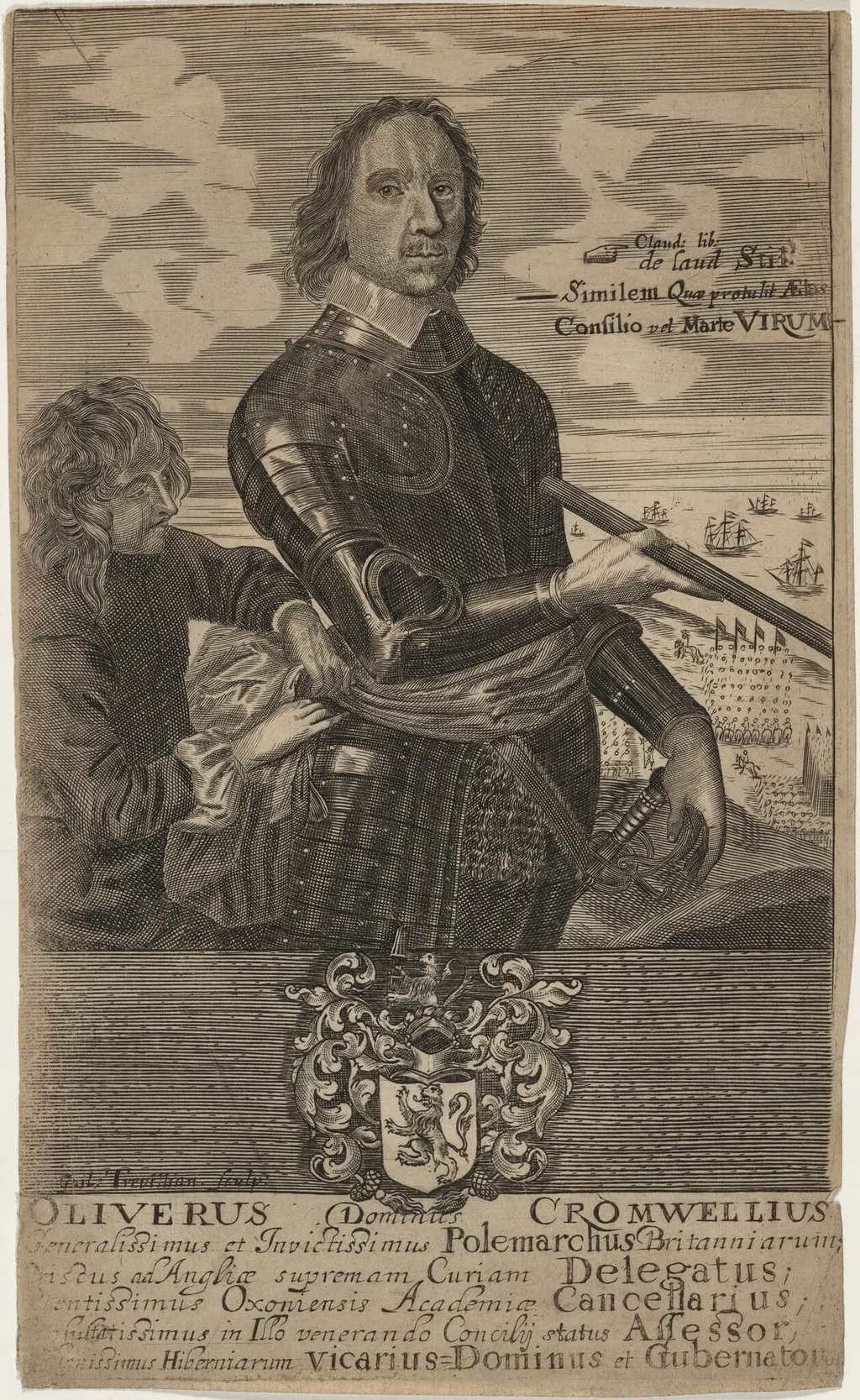
Oliver Cromwell is an ink print by the Baroque artist Guglielmo Trevilian. It dates from 1690 and is held in the collection of the National Gallery of Art.
About this work
Overview
Guglielmo Trevilian’s 1690 engraving presents Oliver Cromwell in a solemn, martial pose. Rendered entirely in black and white, the image centers a heavily armored figure brandishing a long sword, with a diminutive kneeling figure behind him. In the background, faint outlines suggest ships and a battlefield, while a decorative coat of arms and a block of Latin inscription frame the lower edge.
Subject & Meaning
The inclusion of heraldic and textual elements serves to identify the subject explicitly and to situate him within a narrative of power and legacy.
The composition emphasizes Cromwell’s authority and military leadership, underscored by his stern expression and commanding stance. The kneeling figure may symbolize subordination or tribute, and the distant war scene reinforces his association with conflict. The inclusion of heraldic and textual elements serves to identify the subject explicitly and to situate him within a narrative of power and legacy.
Technique & Style
Trevilian employs intricate line work and cross‑hatching to model volume and convey depth across the metallic armor and surrounding landscape. Subtle gradations of shading delineate facial features and the texture of the sword, while broader, lighter strokes suggest distant ships and terrain. The precision of the engraving reflects the period’s skill in producing detailed, reproducible images without pigment.
History & Provenance
Created in 1690, the print emerges shortly after Cromwell’s death, reflecting ongoing interest in his political and military role. The work is attributed to the Italian engraver Guglielmo Trevilian, whose output includes portraiture and historical scenes. Surviving copies have been catalogued in several European collections, where the accompanying Latin legend has aided identification over the centuries.
Artist & collection

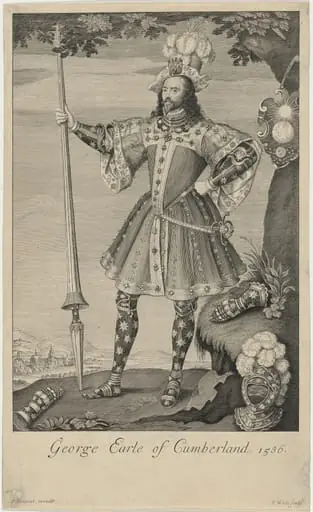 George, Earl of Cumberland
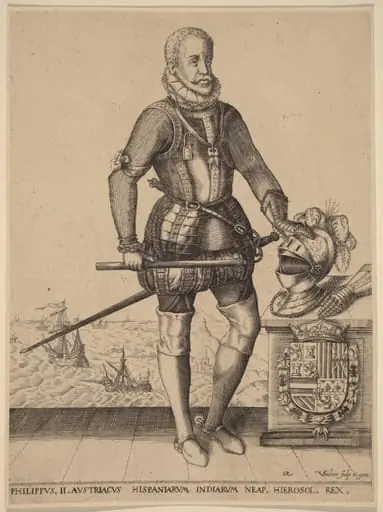 Philip II, King of Spain
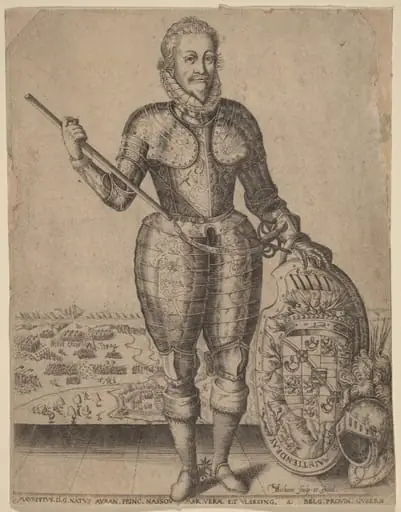 Maurice of Nassau, Prince of Orange
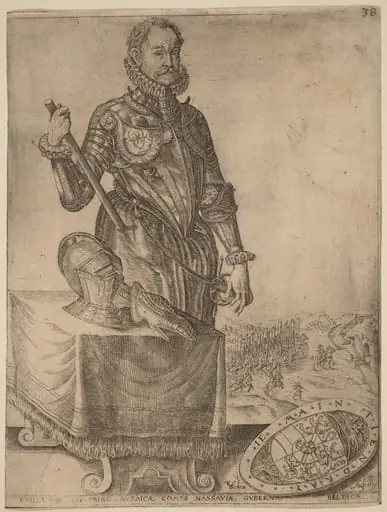 William of Nassau, Prince of Orange
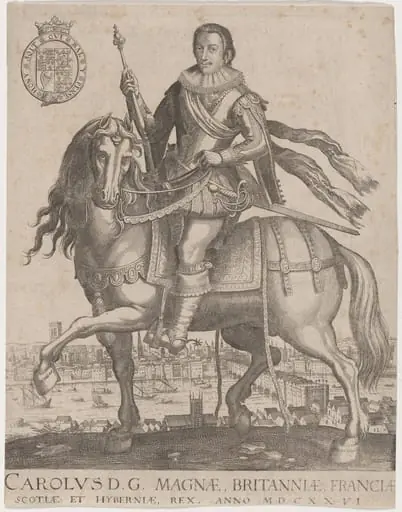 Charles I
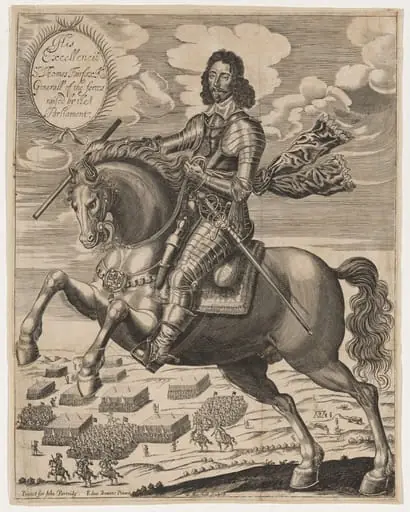 Sir Thomas Fairfax, General of the Forces Raised by Parliament
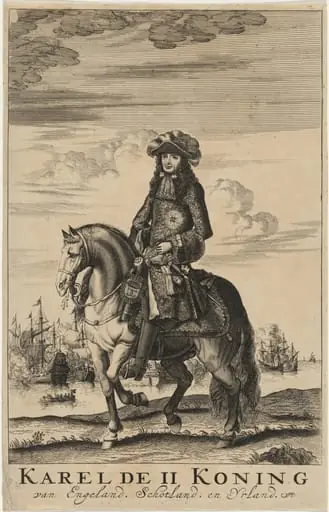 Charles II on Horseback
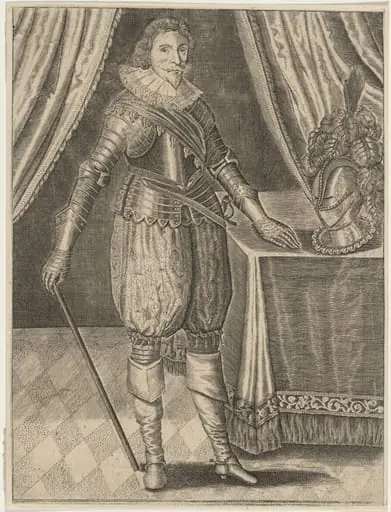 James, Second Marquis of Hamilton
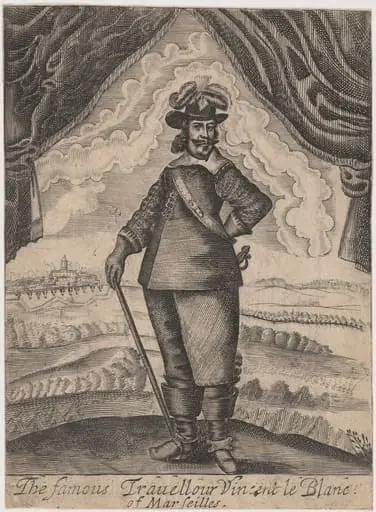 Vincent le Blanc of Marseilles
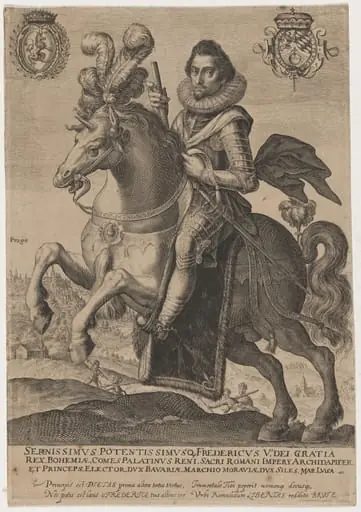 Frederick, King of Bohemia
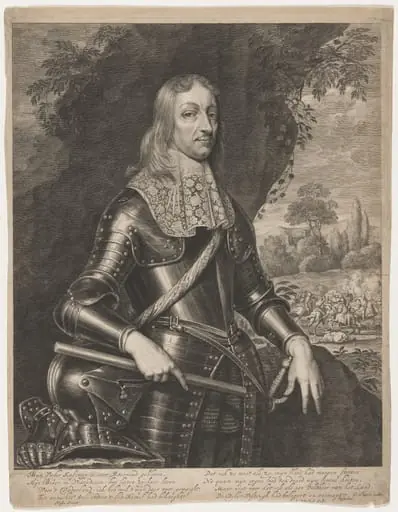 William Frederick of Nassau
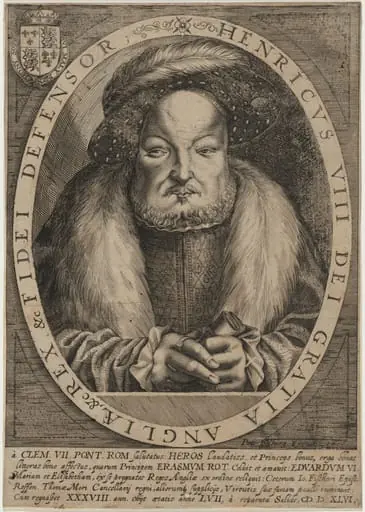 Henry VIII