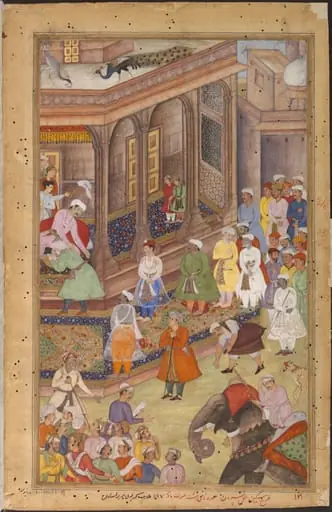
Artwork
Untitled
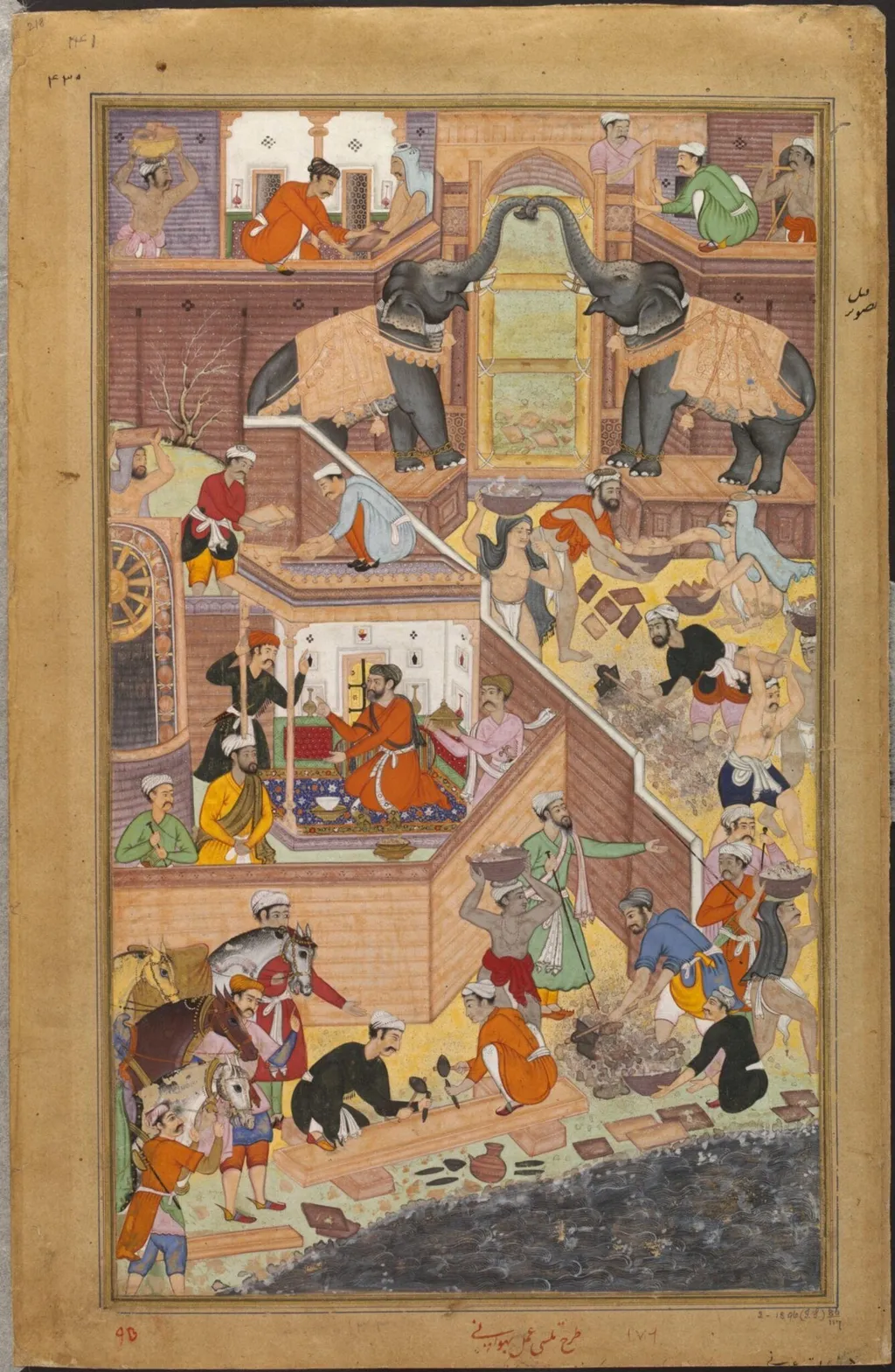
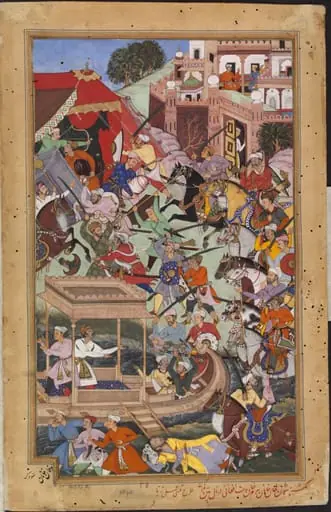
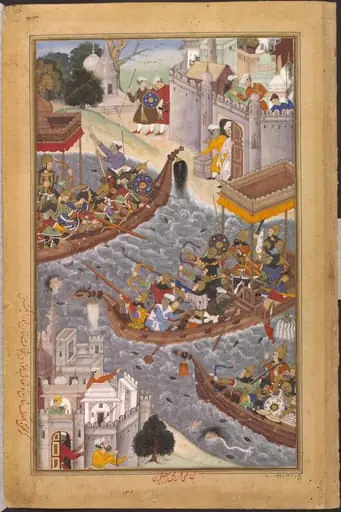
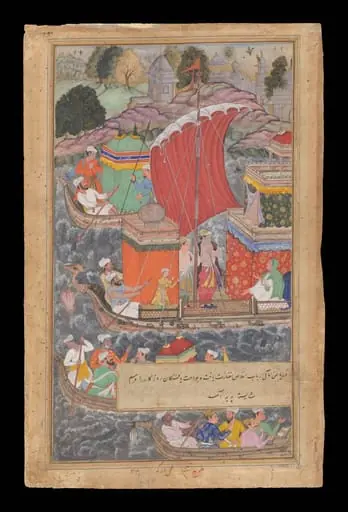
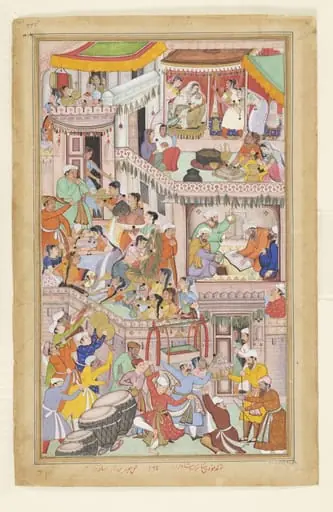
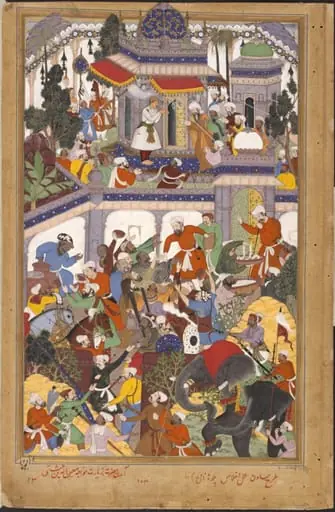
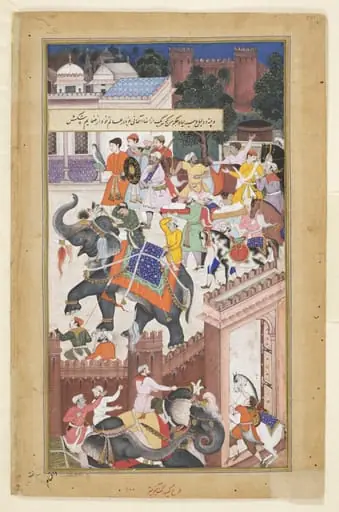
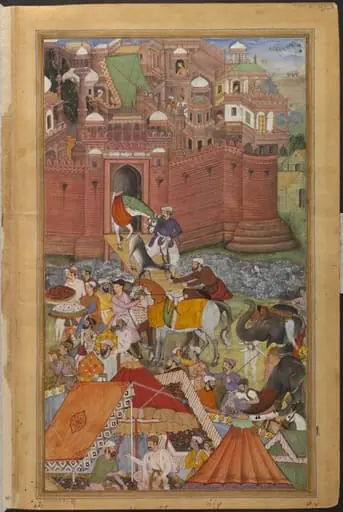
Untitled is a paint painting by the Mughal Painting artist Tulsi. It dates from 1592 and is held in the collection of the Victoria and Albert Museum.
About this work
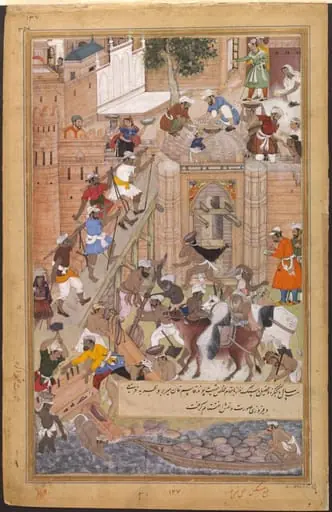
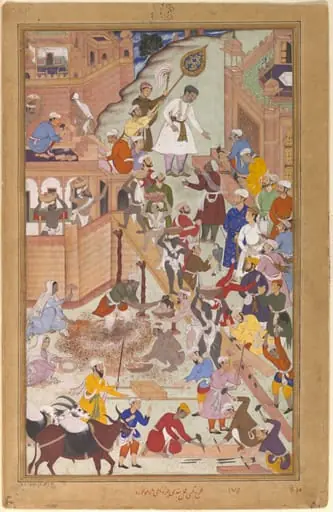
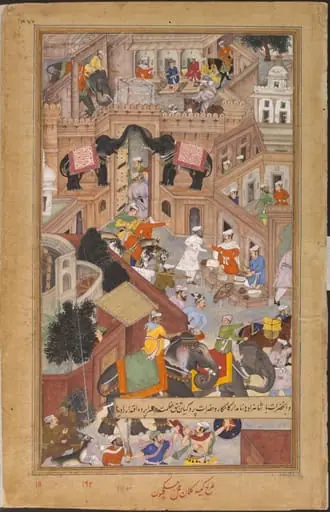
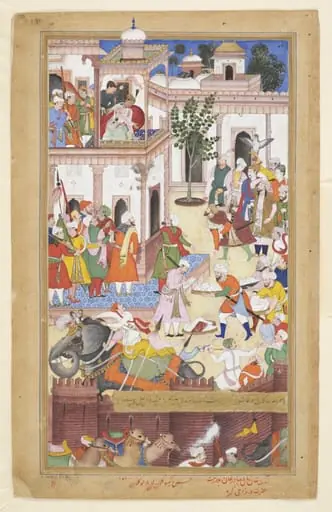
This painting shows a city under construction, with buildings and walls being built.
The city is Fathpur Sikri, a new royal city built by Akbar in 1571.
It's interesting because it shows a specific moment in history, with a lot of detail about the construction process.
To learn more about this style of painting, look up the technique of sfumato.
Overview
The scene captures the organized labor and architectural ambition behind the new imperial capital, located 38 kilometers east of Agra.
This painting is part of the Akbarnama, a commissioned chronicle of Emperor Akbar’s reign, illustrating the early stages of Fathpur Sikri’s construction in 1571. The scene captures the organized labor and architectural ambition behind the new imperial capital, located 38 kilometers east of Agra. It records a pivotal moment in Mughal urban planning, before the city’s eventual abandonment as capital in 1585.
Subject & Meaning
The painting depicts the physical realization of Akbar’s political and spiritual vision following his Gujarat campaign. The fortified city, intended to symbolize imperial triumph, includes palaces, mosques, and public infrastructure. The presence of a noble overseer in a decorated pavilion underscores the centralized authority directing the project, while the inclusion of practical elements like the saqiya reflects a blend of Persian engineering and local adaptation.
Technique & Style
Executed in the Mughal miniature tradition, the painting combines precise draftsmanship with delicate color application. Tulsi composed the layout, while Bandi handled the pigments, reflecting the collaborative nature of imperial ateliers. Figures and structures are rendered with clarity and spatial awareness, though without Western perspective. The use of fine brushwork and layered pigments creates texture in textiles, stone, and water devices, emphasizing material realism over atmospheric depth.
History & Provenance
The painting originates from the Akbarnama manuscript, compiled under Akbar’s patronage between 1586 and 1602. It was likely produced in the imperial workshop in Fatehpur Sikri or Agra. Later, the manuscript passed through royal and colonial hands, eventually entering institutional collections. The specific folio referencing this scene is documented in Beveridge’s 19th-century English translation, preserving its historical context despite the manuscript’s dispersal.
Context
Fathpur Sikri’s construction coincided with Akbar’s efforts to consolidate power and foster a syncretic court culture. The city’s design integrated Islamic, Hindu, and Persian motifs, reflecting his policy of religious tolerance. Its brief tenure as capital—ending when water shortages and strategic needs prompted relocation to Lahore—underscores the practical constraints of imperial ambition, even as its visual legacy endured in courtly art.
Legacy
The painting remains a key visual record of Mughal urban development and administrative organization. Its detailed depiction of labor, technology, and architecture informs modern understanding of 16th-century Indian engineering and courtly life. Though the city fell into disuse, the imagery from the Akbarnama preserved its form for posterity, influencing later historical reconstructions and scholarly interpretations of Mughal power.
Artist & collection
Artist
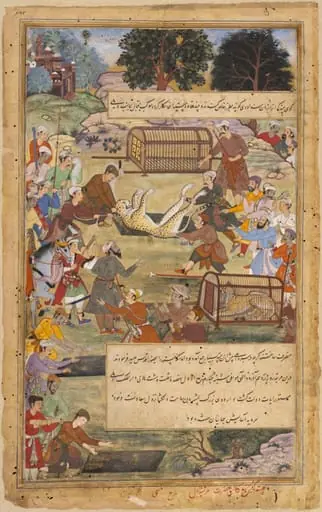
Tulsi painted delicate scenes from the Mughal court in the late 1500s. His brush traced Akbar’s hunts, portraits, and battles—like *Sultan Adam* and *Akbar assists in capturing a cheetah*—full of fine fabrics and sharp…