Artwork
Untitled
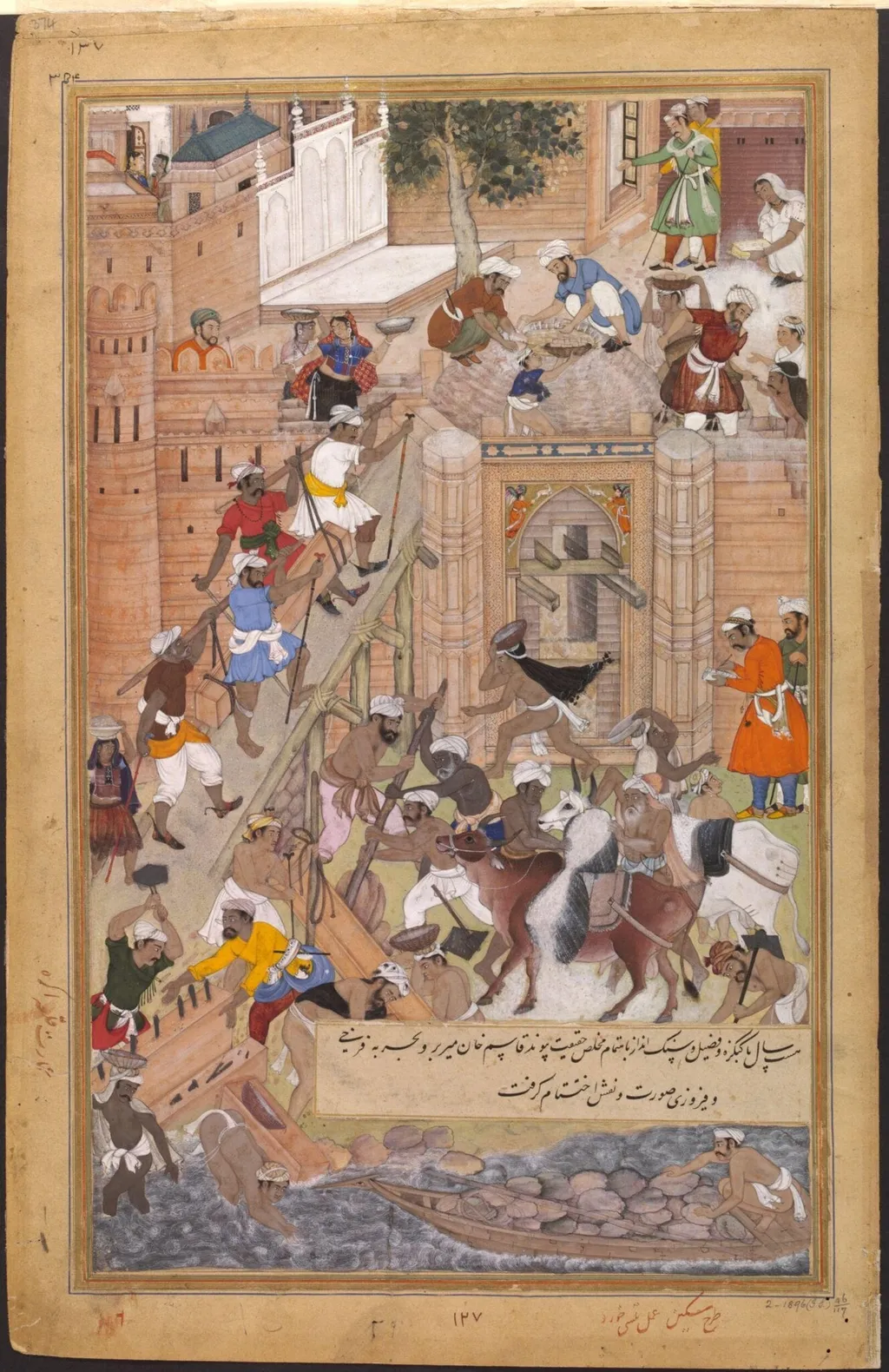
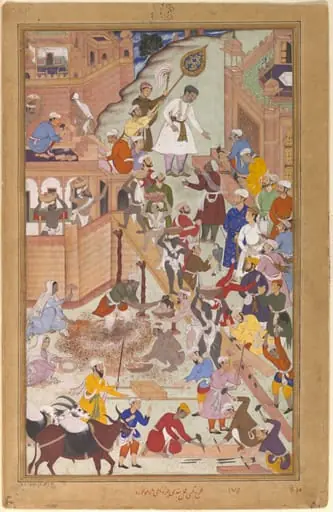
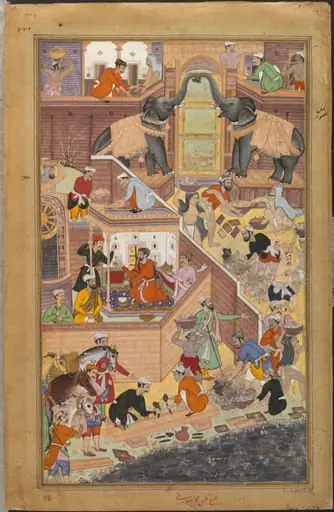
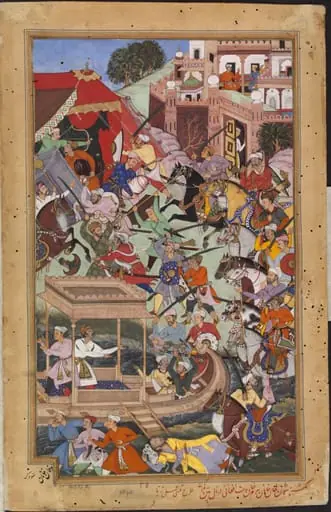
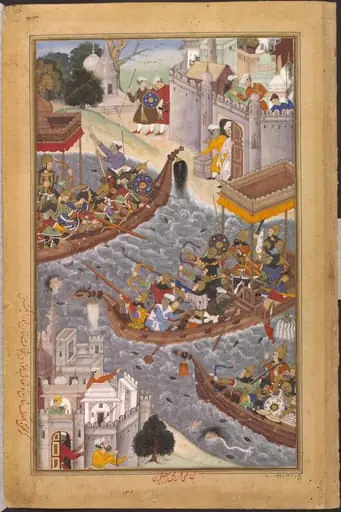
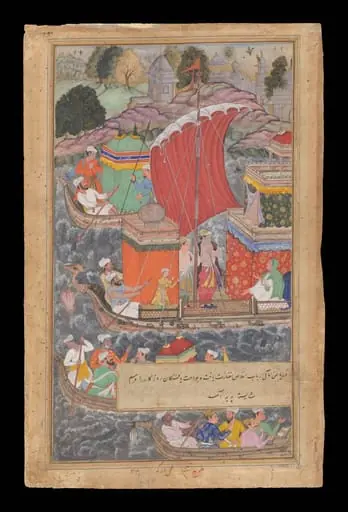
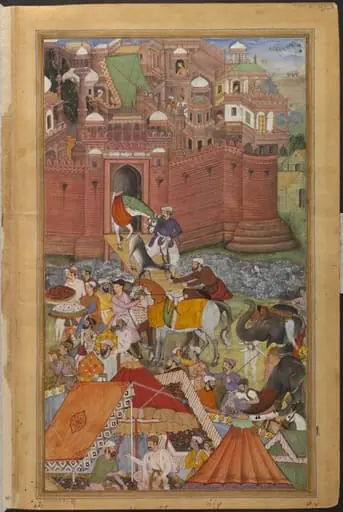
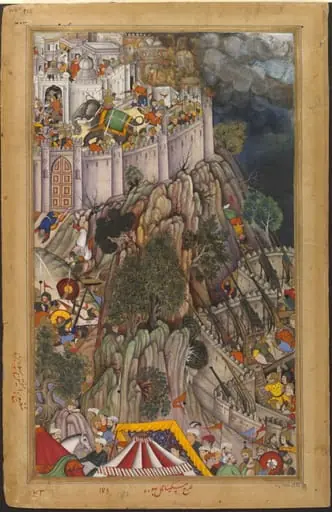
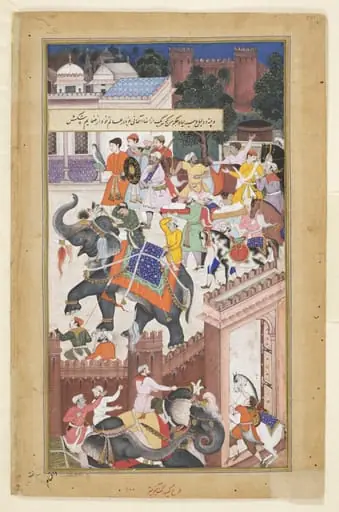
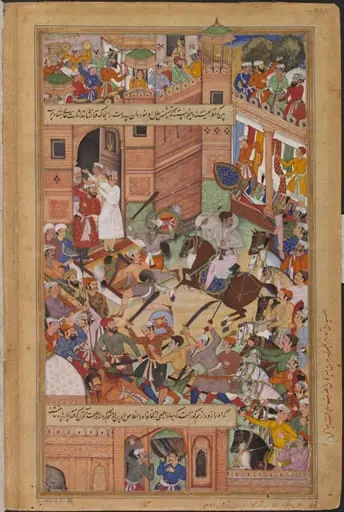
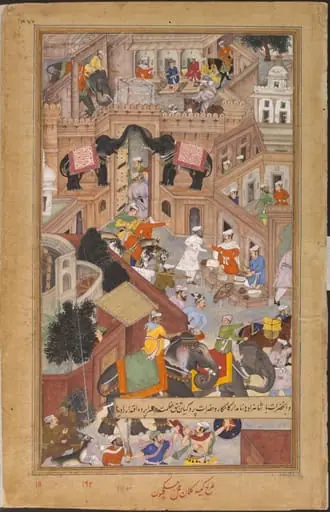
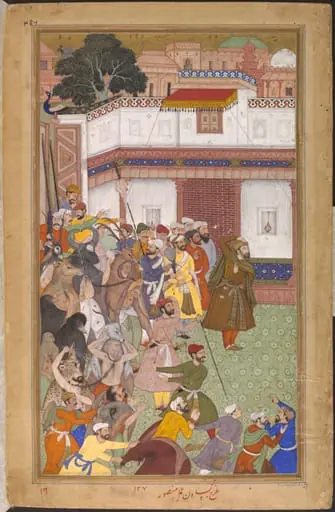
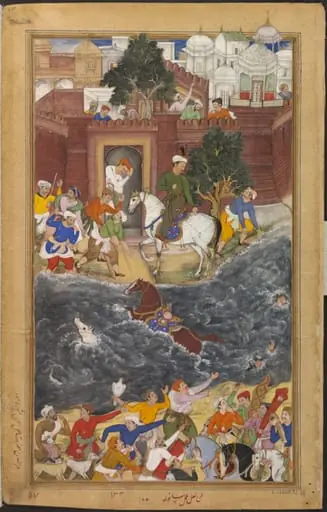
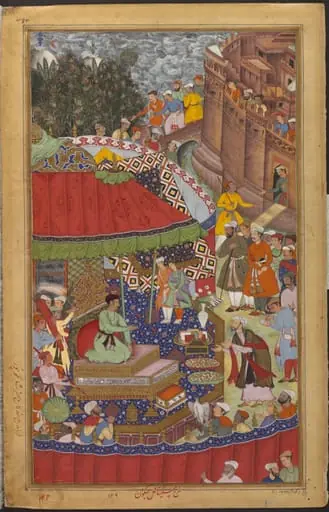
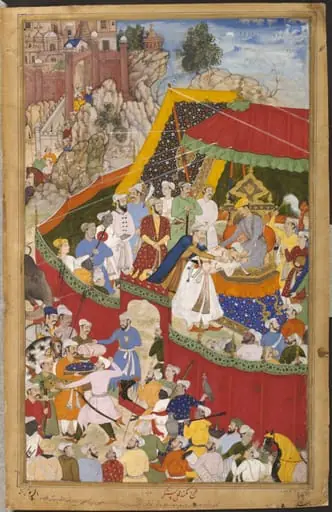
Untitled is a paint painting by the Mughal Painting artist Tulsi. It dates from 1592 and is held in the collection of the Victoria and Albert Museum. The left page of a two‑page illustration from the Akbarnama, the official chronicle of Emperor Akbar, shows the construction of Agra Fort.
About this work
Overview
The left page of a two‑page illustration from the Akbarnama, the official chronicle of Emperor Akbar, shows the construction of Agra Fort. Designed by the court artist Miskin and painted by Tulsi the Younger, the scene records the building of the water gate within the massive red‑stone fortress that was completed in 1566 and enclosed roughly two kilometres of perimeter.
Subject & Meaning
The composition presents a bustling workforce of men and women engaged in bricklaying, mortar mixing, and stone shaping beneath a clear sky. Figures carry baskets on their heads, haul materials, and operate simple tools, emphasizing the scale of labor—textual sources record three to four thousand workers involved in the project.
Technique & Style
Executed in miniature painting technique, the illustration combines fine line drawing with delicate washes of colour. The spandrels of the water gate are adorned with winged figures holding gazelles, a motif identified as paris, the mythic attendants of Solomon in Persianate iconography. Red ink signatures beneath the image name the contributing artists.
History & Provenance
The Akbarnama was compiled by the historian Abu’l‑Fazl between 1590 and 1596 under Akbar’s patronage. The V&A’s partial manuscript, likely illustrated between 1592 and 1595, represents the earliest known illustrated edition of the text, employing several of the emperor’s leading court painters as listed in the A’in‑i‑Akbari.
Context
Agra Fort’s construction was a major imperial undertaking, reflecting Akbar’s ambition to create a durable political and ceremonial centre. The depiction of both male and female laborers illustrates the inclusive organization of Mughal state projects, while the decorative elements echo the court’s synthesis of Persian artistic traditions with Indian architectural forms.
Artist & collection
Artist
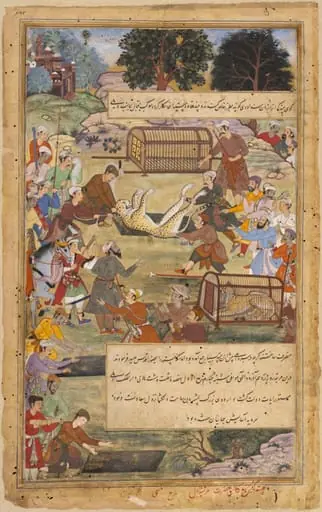
Tulsi painted delicate scenes from the Mughal court in the late 1500s. His brush traced Akbar’s hunts, portraits, and battles—like *Sultan Adam* and *Akbar assists in capturing a cheetah*—full of fine fabrics and sharp…