Artwork
The parrot addresses Khujasta at the beginning of the fifty-second night, from a Tuti-nama (Tales of a Parrot): Fifty-second Night
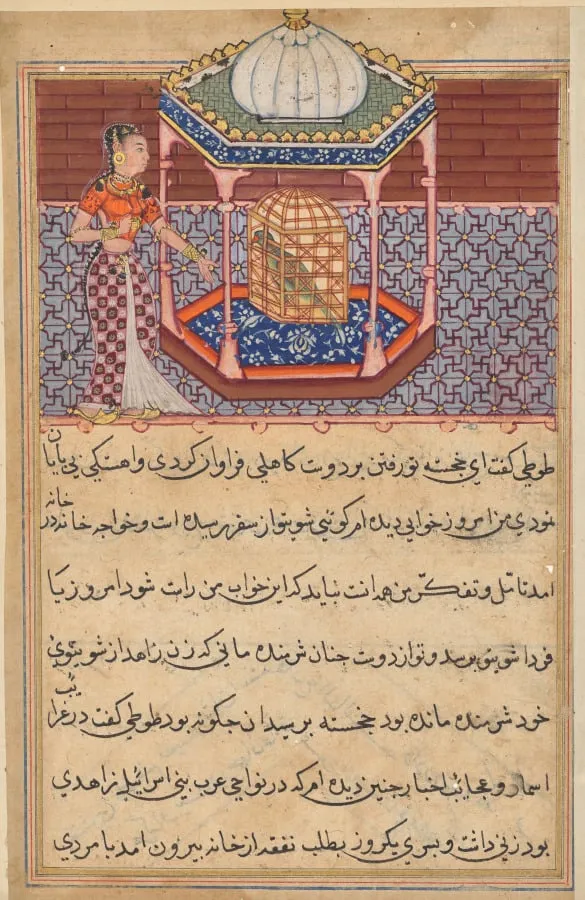
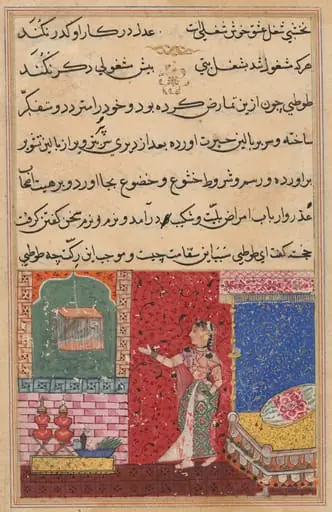
The parrot addresses Khujasta at the beginning of the fifty-second night, from a Tuti-nama (Tales of a Parrot): Fifty-second Night is an unspecified painting by the Mughal Painting artist Unknown. It dates from 1560 and is held in the collection of the Cleveland Museum of Art. The painting illustrates a scene from the fifty‑second night of the Tuti‑nama, a collection of tales narrated by a parrot.
About this work
The bright colors and fine details show how artists in Mughal India mixed Persian and local styles.
You see a woman in a red dress sitting on the floor, a green parrot perched on a stand beside her. The parrot’s beak is open, as if it’s talking.
This painting comes from a book of stories told by a parrot to delay its owner’s secret meetings. The woman here is about to be caught—her husband is coming home. The bright colors and fine details show how artists in Mughal India mixed Persian and local styles.
If you like this, look up Mughal India, court of Akbar (reigned 1556–1605).
Overview
The painting illustrates a scene from the fifty‑second night of the Tuti‑nama, a collection of tales narrated by a parrot. In this episode, a woman in a red garment sits on the floor while a green parrot, its beak open, appears to speak. The composition captures the moment just before the husband’s return, signalling the imminent revelation of the woman’s secret liaison.
Subject & Meaning
The narrative depicts Khujasta pleading with the parrot to secure permission to leave and meet her lover. As the story concludes, her husband Maymun arrives, discovers the affair, and exacts a fatal punishment. The scene therefore embodies themes of deception, betrayal, and the moral consequences of illicit love within the moral framework of the tale.
Technique & Style
Executed in the Mughal miniature tradition, the work combines precise line work with vivid pigments. The red dress and green parrot are rendered in bright, saturated hues, while fine detailing conveys texture in the fabrics and feathers. The style reflects a synthesis of Persian miniature influences and indigenous Indian artistic conventions characteristic of the Akbar court.
Context
The Tuti‑nama was compiled in Mughal India during the reign of Emperor Akbar (1556–1605), a period noted for cultural patronage and the fusion of Persian and Indian artistic vocabularies. Illustrations such as this were produced for illuminated manuscripts intended for elite audiences, serving both decorative and didactic purposes.
Legacy
Works from the Tuti‑nama exemplify the narrative richness and visual sophistication of Mughal book art. They continue to inform scholarship on cross‑cultural exchange in South Asian visual culture and remain reference points for studies of courtly literature and illustration techniques of the era.
Artist & collection

 Domestic Scene
 Giacomo and Cardinal Marco, investing Andrea, Abbot of San Zeno, with his Benefice
 The Nymph of Fontainebleau
 Portrait of a Woman
 Madonna and Child with Saints in the Enclosed Garden
 Venus and Minerva
 Family Group of Four on Sofa
 Wall painting from Room H of the Villa of P. Fannius Synistor at Boscoreale
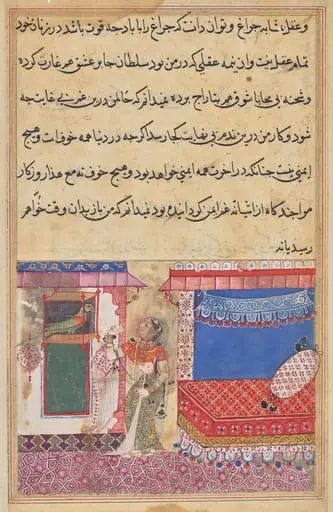 The Parrot Addresses Khujasta at the Beginning of the Eighteenth Night, from a Tuti-nama (Tales of a Parrot)
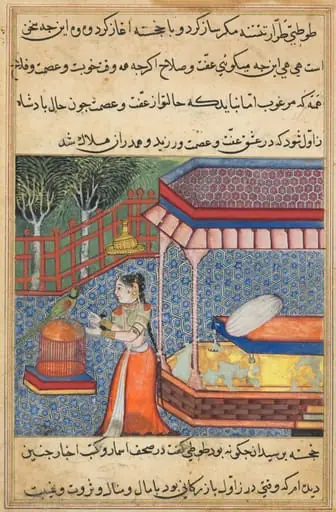 The parrot addresses Khujasta at the beginning of the thirty-sixth night, from a Tuti-nama (Tales of a Parrot)
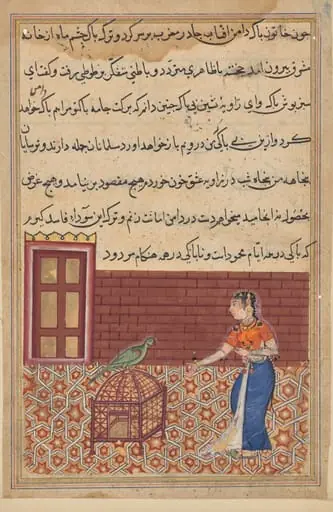 The parrot addresses Khujasta at the beginning of the fifty-first night, from a Tuti-nama (Tales of a Parrot): Fifty-first Night
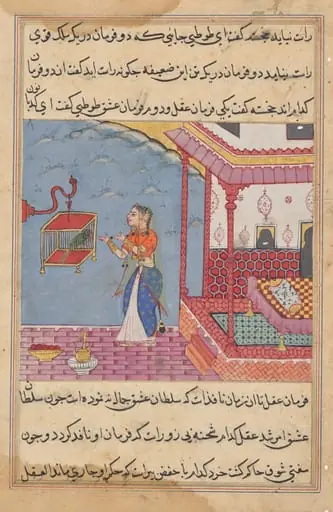 The Parrot Addresses Khujasta at the Beginning of the Twenty-Fourth Night, from a Tuti-nama (Tales of a Parrot)
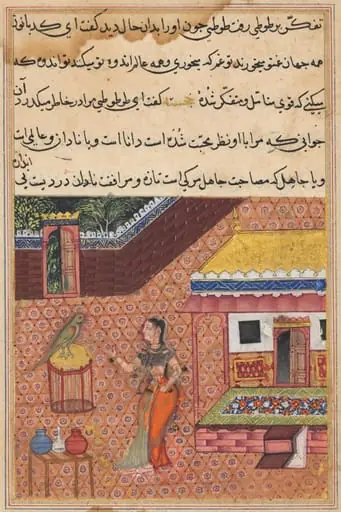 The parrot addresses Khujasta at the beginning of the thirty-fourth night, from a Tuti-nama (Tales of a Parrot)
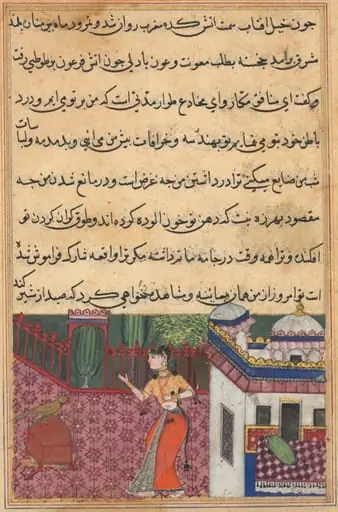 The parrot addresses Khujasta at the beginning of the thirty-third night, from a Tuti-nama (Tales of a Parrot)
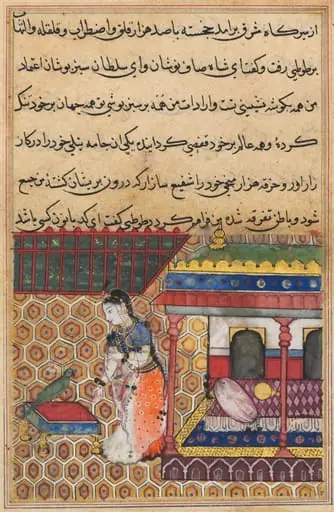 The parrot addresses Khujasta at the beginning of the thirty-eighth night, from a Tuti-nama (Tales of a Parrot)
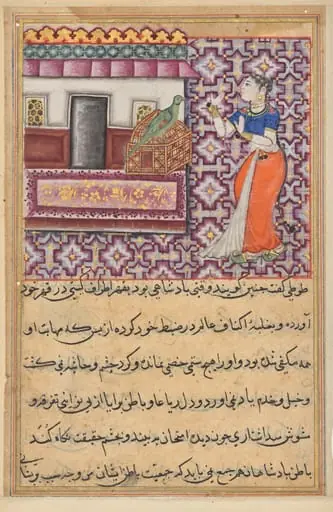 The parrot addresses Khujasta at the beginning of the fiftieth night, from a Tuti-nama (Tales of a Parrot): Fiftieth Night
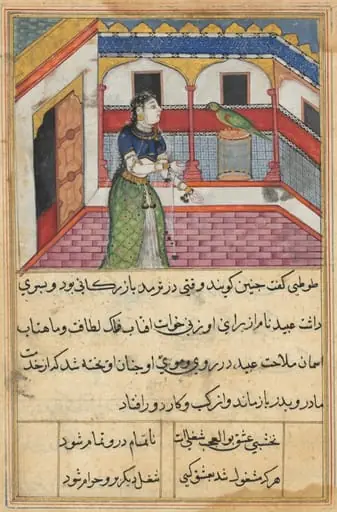 The parrot addresses Khujasta at the beginning of the forty-second night, from a Tuti-nama (Tales of a Parrot)
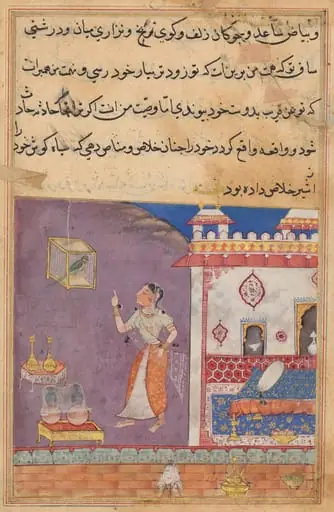 The Parrot Addresses Khujasta at the Beginning of the Twenty-ninth Night, from a Tuti-nama (Tales of a Parrot)
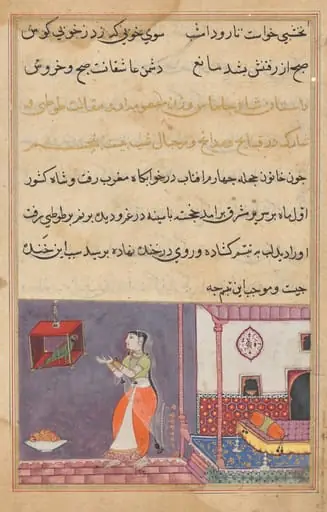 The Parrot Addresses Khujasta at the Beginning of the Twenty-fifth Night, from a Tuti-nama (Tales of a Parrot)
 The Parrot Addresses Khujasta at the Beginning of the Fifteenth Night, from a Tuti-nama (Tales of a Parrot)