Artwork
The two couples reach a foreign city where they make their home, from a Tuti-nama (Tales of a Parrot): Thirty-third Night
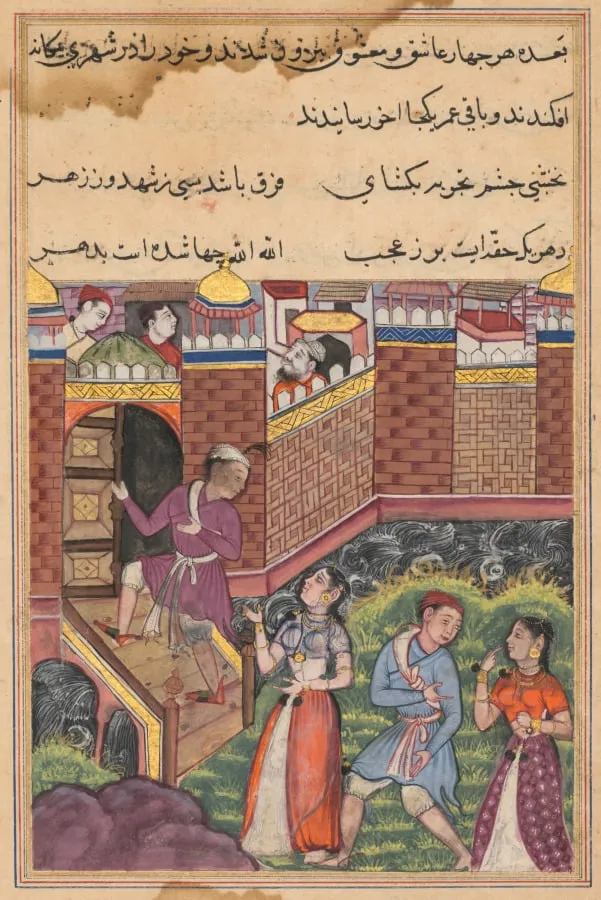
The two couples reach a foreign city where they make their home, from a Tuti-nama (Tales of a Parrot): Thirty-third Night is an unspecified painting by the Mughal Painting artist Unknown. It dates from 1560 and is held in the collection of the Cleveland Museum of Art. The miniature depicts two couples walking across a bridge toward the gates of a walled city.
About this work
You see two couples crossing a bridge into a walled city, their clothes bright against the patterned stone.
You see two couples crossing a bridge into a walled city, their clothes bright against the patterned stone. Above them, three men watch from the ramparts.
This painting comes from a *Tuti-nama*, a book of parrot tales told to a queen in Mughal India. The stories were meant to entertain, but also to teach lessons—here, love winning over obstacles. The city’s walls are covered in tiny flowers and vines, almost like fabric.
To see more of these intricate miniatures, look up Mughal India, court of Akbar (reigned 1556–1605).
Overview
The miniature depicts two couples walking across a bridge toward the gates of a walled city. Their brightly colored garments contrast with the delicately patterned stone of the walls, while three figures stand on the ramparts observing their arrival.
Subject & Meaning
The scene illustrates lovers who have escaped together to a new settlement, seeking a peaceful life away from forces that once threatened to separate them. The composition conveys the triumph of love over adversity, a moral common to the parrot tales from which the work originates.
Technique & Style
Executed in the Mughal miniature tradition, the painting employs fine brushwork and vibrant pigments. The city walls are rendered with intricate floral and vine motifs that resemble woven fabric, and the figures are outlined with delicate lines that emphasize their elegant attire.
Context
The image is part of a *Tuti‑nama* ("Tales of a Parrot"), a collection of stories narrated to a Mughal queen during the reign of Akbar (1556–1605). These illustrated manuscripts combined entertainment with didactic messages, reflecting the court’s patronage of the arts and literature.
Legacy
The work exemplifies the synthesis of Persian miniature techniques with Indian artistic sensibilities that characterized Mughal court painting. Its detailed decorative elements and narrative focus continue to inform studies of South Asian manuscript illumination.
Artist & collection

 Domestic Scene
 Giacomo and Cardinal Marco, investing Andrea, Abbot of San Zeno, with his Benefice
 The Nymph of Fontainebleau
 Portrait of a Woman
 Madonna and Child with Saints in the Enclosed Garden
 Venus and Minerva
 Family Group of Four on Sofa
 Wall painting from Room H of the Villa of P. Fannius Synistor at Boscoreale
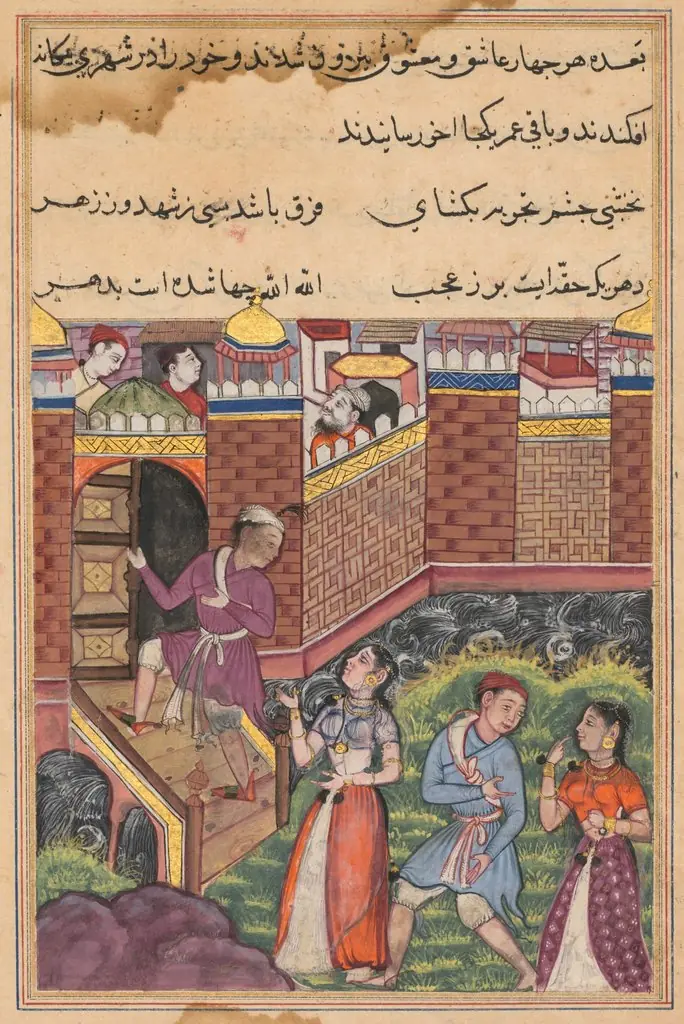 The two couples reach a foreign city where they make their home, from a Tuti-nama (Tales of a Parrot): Thirty-third Night
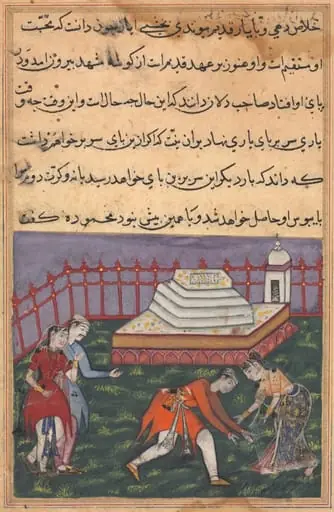 Hearing her declaration of love, Ayaz falls at the feet of Mahmuda at the holy shrine. The scene is witnessed by Salim, Ayaz’s friend, and a maid, from a Tuti-nama (Tales of a Parrot): Thirty-third Night
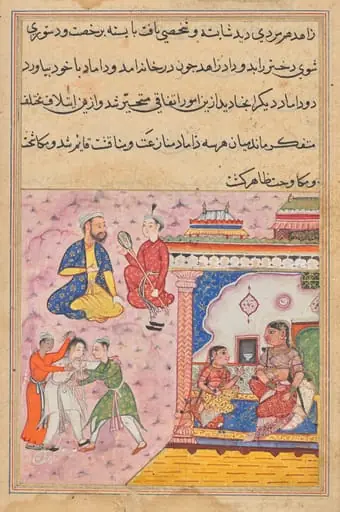 Three suitors fight amongst themselves for the hand of the devotee’s daughter, from a Tuti-nama (Tales of a Parrot): Twentieth Night
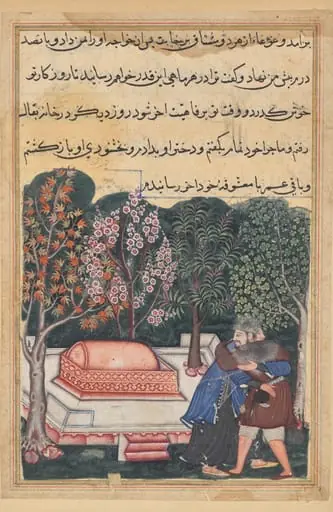 The young man of Baghdad reunited with his slave-girl, from a Tuti-nama (Tales of a Parrot): Forty-eighth Night
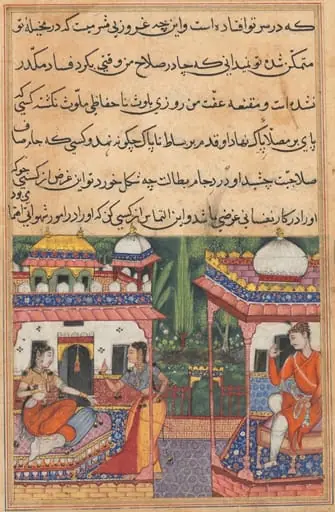 Kaiwan sends a message of love to Khurshid, wife of his brother Utarid who is away on a journey, from a Tuti-nama (Tales of a Parrot): Thirty-second Night
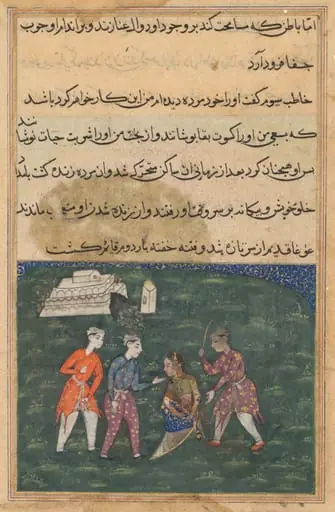 The third suitor strikes the devotee’s daughter and thus restores her to life, from a Tuti-nama (Tales of a Parrot): Twentieth Night
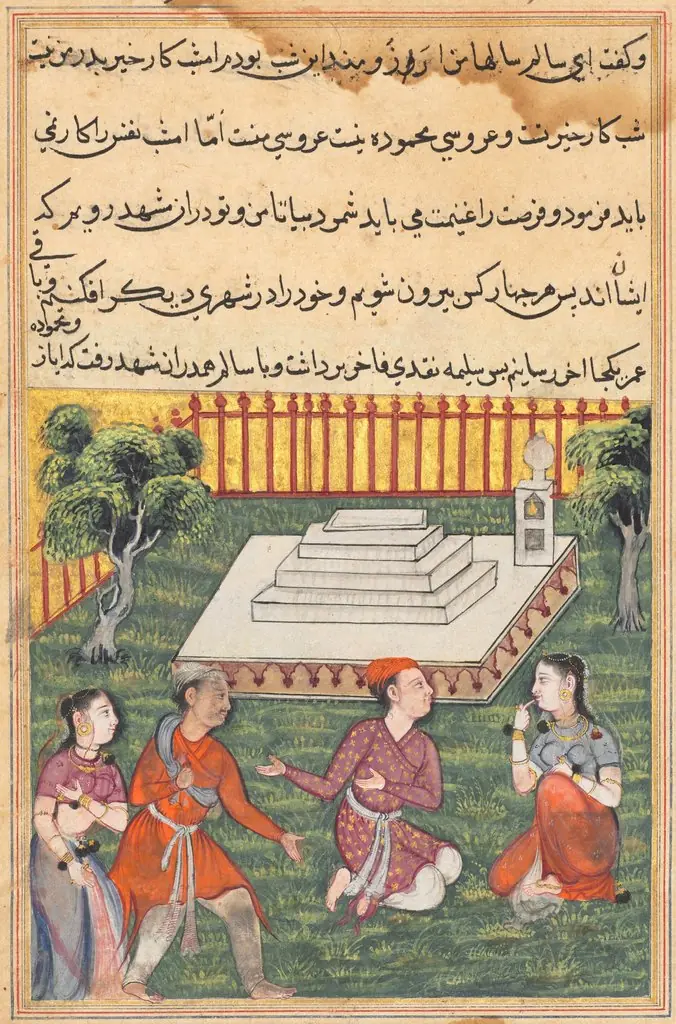 Salim and Salima return to Ayaz and Mahmuda in the sanctuary, from a Tuti-nama (Tales of a Parrot): Thirty-third Night
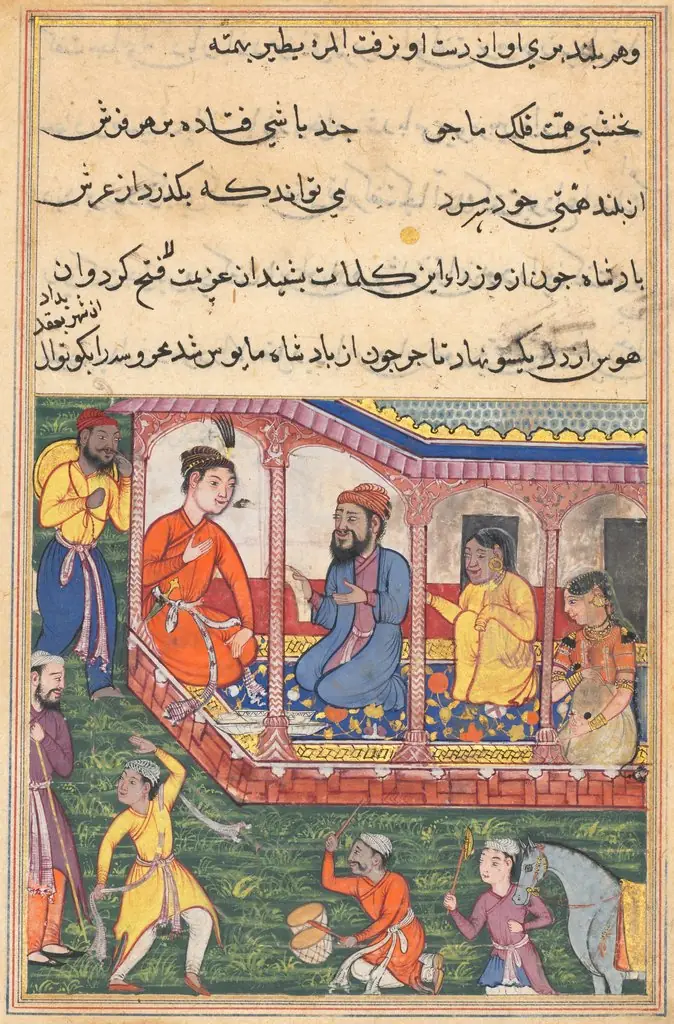 Mahrusa’s marriage to the prefect of the city, from a Tuti-nama (Tales of a Parrot): Thirty-sixth Night
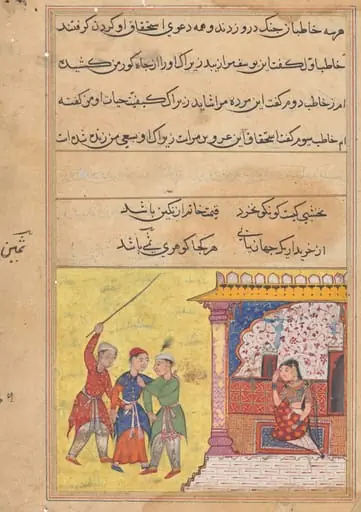 The three suitors again begin to quarrel among themselves for the hand of the devotee’s daughter, from a Tuti-nama (Tales of a Parrot): Twentieth Night
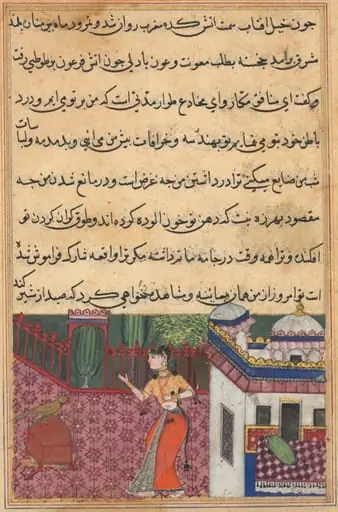 The parrot addresses Khujasta at the beginning of the thirty-third night, from a Tuti-nama (Tales of a Parrot)