Artwork
Kamjuy, the wife of the Raja, averts her face from the fishes, from a Tuti-nama (Tales of a Parrot): Twenty-third Night
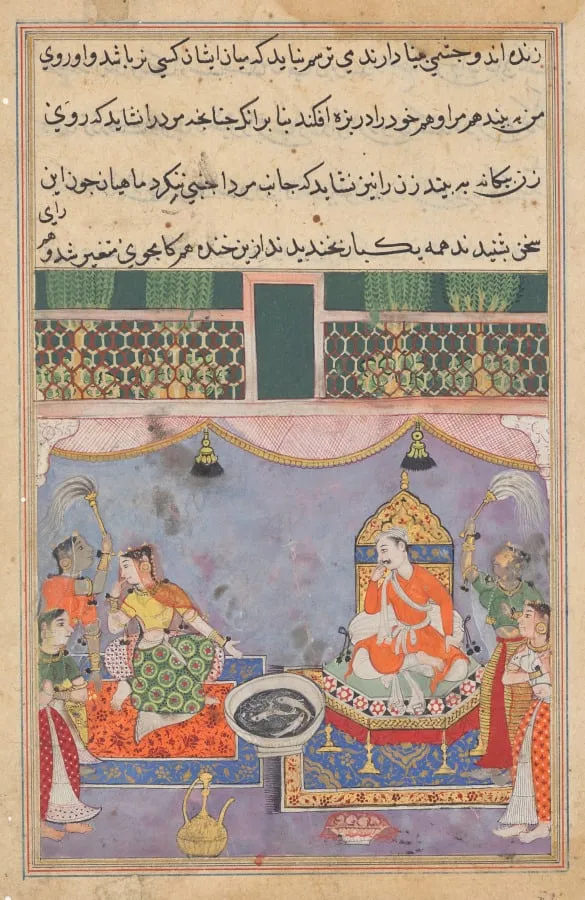
Kamjuy, the wife of the Raja, averts her face from the fishes, from a Tuti-nama (Tales of a Parrot): Twenty-third Night is an unspecified painting by the Mughal Painting artist Unknown. It dates from 1560 and is held in the collection of the Cleveland Museum of Art. The work illustrates a scene from the Tuti‑nama, a collection of parrot stories associated with the Mughal court.
About this work
To see more like this, look up *Mughal India, court of Akbar (reigned 1556–1605)*.
A woman in a rich red robe turns her face away from a bowl of fish. Her veil hides her expression, but her body language says she’s embarrassed. The fish, though, aren’t just swimming—they’re laughing.
This painting comes from a book of parrot tales told in the Mughal court. The story pokes fun at Kamjuy’s extreme modesty, making even the fish react. It’s a small moment, but it shows how humor and daily life appeared in royal art.
To see more like this, look up *Mughal India, court of Akbar (reigned 1556–1605)*.
Overview
The work illustrates a scene from the Tuti‑nama, a collection of parrot stories associated with the Mughal court. In the composition, a woman in a vivid red garment averts her gaze from a bowl of fish, concealing herself behind a veil while the fish appear to laugh. The image captures a brief, humorous episode that comments on courtly modesty.
Subject & Meaning
The figure is identified as Kamjuy, the senior among the Raja’s forty wives. She declares that allowing any male, even a fish, to see her would be sinful, prompting the fish to respond with laughter. The narrative uses the absurd reaction of the fish to satirize the extremes of her modesty, highlighting a playful critique within royal storytelling.
Technique & Style
Rendered in a miniature painting tradition, the piece employs fine brushwork and a rich palette dominated by reds and blues. The delicate line work defines the veil and the fish, while the composition’s tight framing focuses attention on the interaction between the veiled figure and the animated bowl.
History & Provenance
The painting originates from a manuscript of the Tuti‑nama, a text circulated in the Mughal court during the reign of Akbar (1556–1605). It reflects the court’s patronage of illustrated literature that blended moral instruction with entertainment.
Context
Mughal court culture prized both refined artistic production and the moralizing tales told by parrots, a popular literary device. This scene exemplifies how everyday court life and ethical commentary were merged in visual form, offering insight into the values and humor of the period.
Artist & collection

 Domestic Scene
 Giacomo and Cardinal Marco, investing Andrea, Abbot of San Zeno, with his Benefice
 The Nymph of Fontainebleau
 Portrait of a Woman
 Madonna and Child with Saints in the Enclosed Garden
 Venus and Minerva
 Family Group of Four on Sofa
 Wall painting from Room H of the Villa of P. Fannius Synistor at Boscoreale
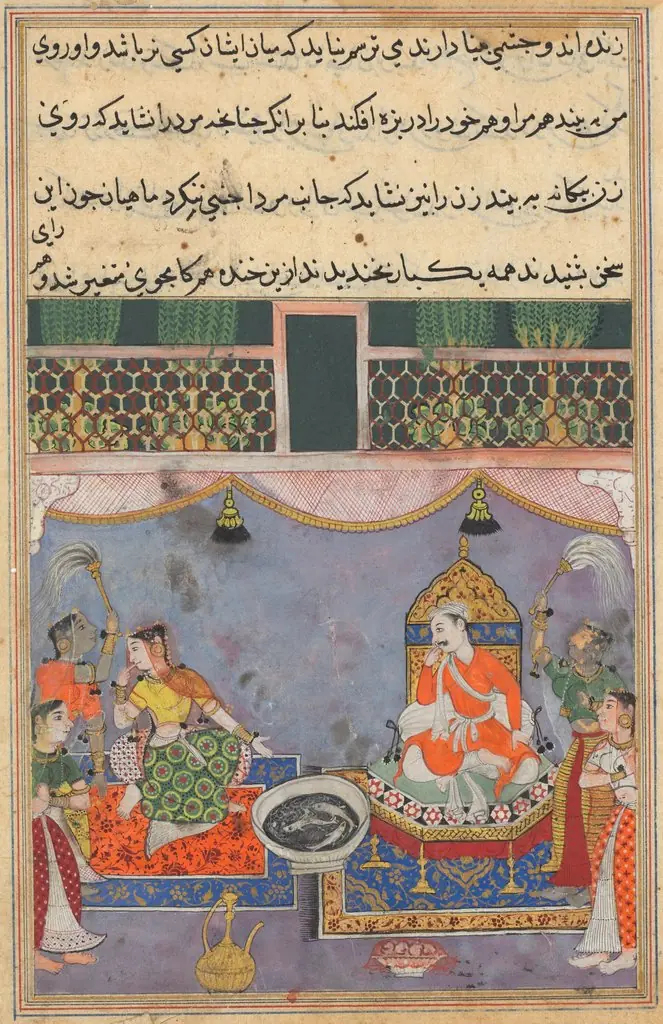 Kamjuy, the wife of the Raja, averts her face from the fishes, from a Tuti-nama (Tales of a Parrot): Twenty-third Night
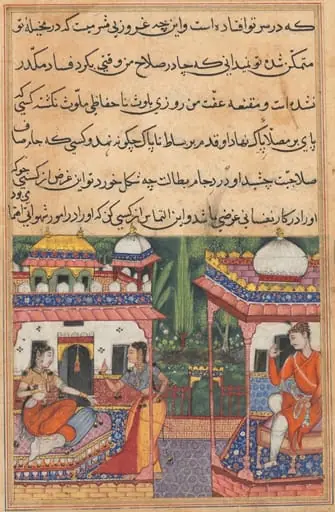 Kaiwan sends a message of love to Khurshid, wife of his brother Utarid who is away on a journey, from a Tuti-nama (Tales of a Parrot): Thirty-second Night
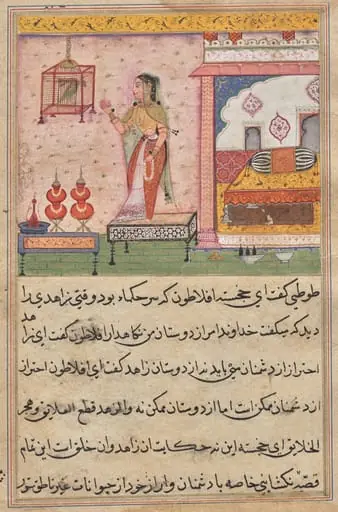 The Parrot Addresses Khujasta at the Beginning of the Twenty-third Night, from a Tuti-nama (Tales of a Parrot)
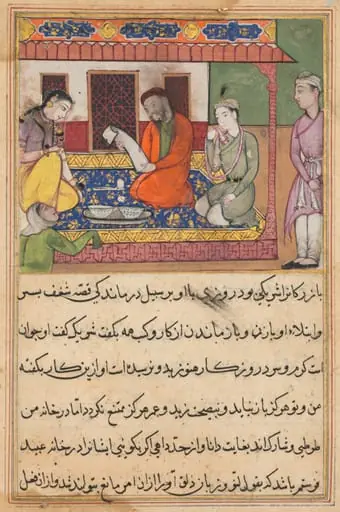 The marriage of ‘Ubaid, son of a merchant of Tirmiz, from a Tuti-nama (Tales of a Parrot): Forty-second Night
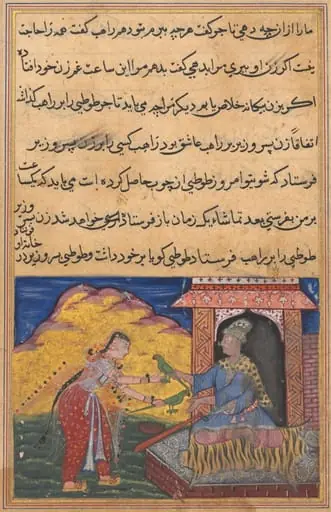 The wife of the son of the vizier brings the magic wooden parrot to her lover, the monk, who exchanges it for the replica, from a Tuti-nama (Tales of a Parrot): Tenth Night
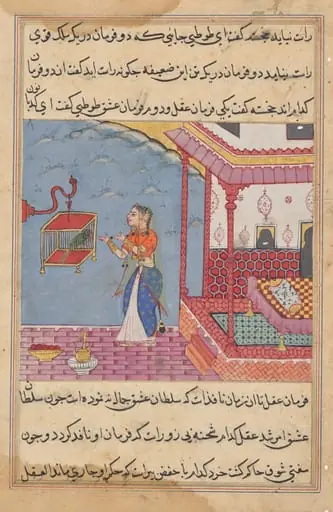 The Parrot Addresses Khujasta at the Beginning of the Twenty-Fourth Night, from a Tuti-nama (Tales of a Parrot)
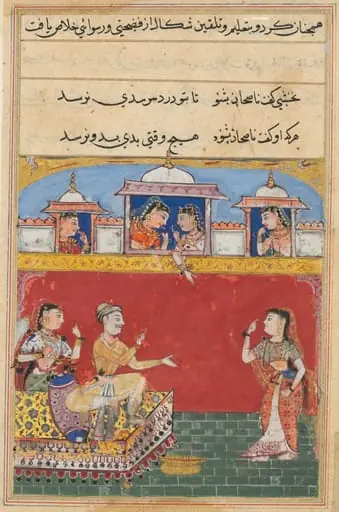 The daughter-in-law returns from her misadventure, feigning insanity, from a Tuti-nama (Tales of a Parrot): Sixteenth Night
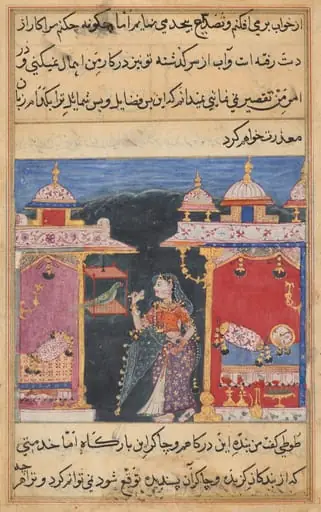 The Parrot Addresses Khujasta at the Beginning of the Seventh Night, from a Tuti-nama (Tales of a Parrot)
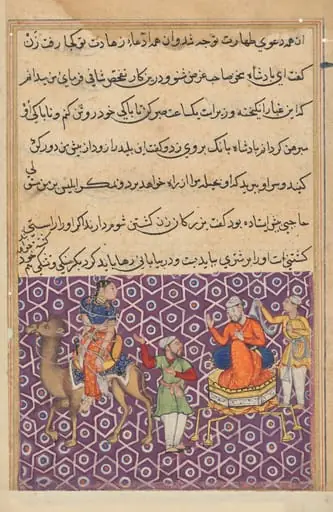 King Bahram, who has married Khassa’s daughter, has her tied to a camel to be abandoned in the desert as a result of false accusations made by Khulasa, from a Tuti-nama (Tales of a Parrot): Fifty-first Night
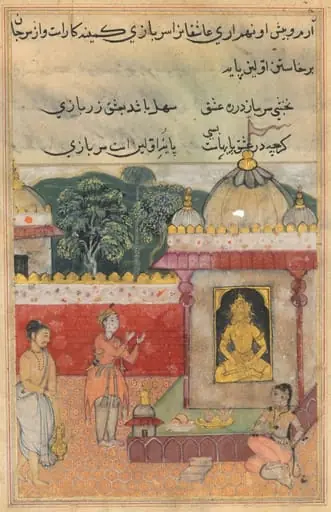 The Raja’s son vows to sever his head and offer it to the image if he is united with the princess he has seen in the temple, from a Tuti-nama (Tales of a Parrot): Thirty-fourth Night