Artwork
Nașterea lui Iisus Hristos; Botezul lui Iisus Hristos
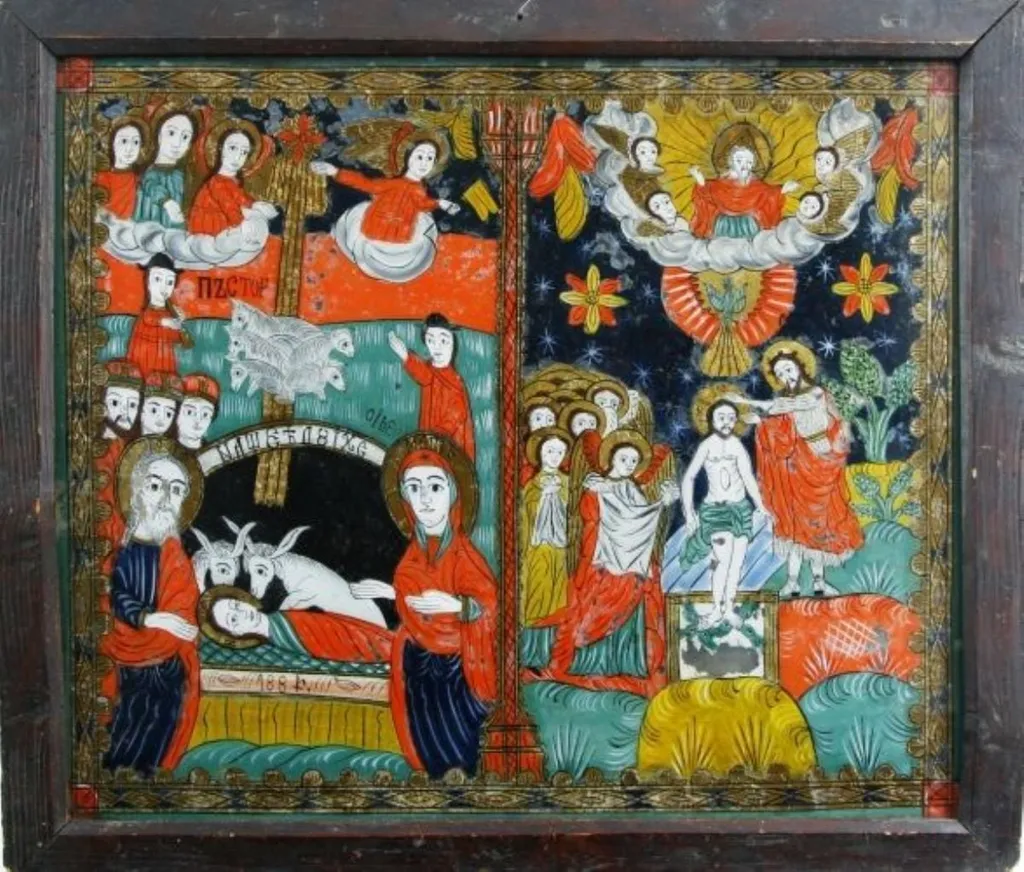
Nașterea lui Iisus Hristos; Botezul lui Iisus Hristos is a drawing by the Impressionist artist Unknown. It dates from 1887 and is held in the collection of the Romanian Peasant Museum. This drawing depicts two key events in the life of Jesus Christ: his birth and his baptism.
About this work
Overview
This drawing depicts two key events in the life of Jesus Christ: his birth and his baptism. Rendered with minimal, deliberate lines, the composition presents both scenes within a single frame. The simplicity of form suggests an artisanal origin, likely made for devotional use within a local religious community rather than by a trained academic artist.
Subject & Meaning
The birth of Christ is shown with figures surrounding a newborn, while the baptism unfolds in a river with John the Baptist performing the rite. These moments symbolize divine entry into human life and spiritual renewal. Their juxtaposition in one image reinforces a theological narrative of beginning and consecration, common in folk religious art meant to educate and inspire devotion.
Technique & Style
The artist employed straightforward lines and repetitive shapes to define figures and space, avoiding perspective or naturalistic detail. Cross-hatching is used sparingly to suggest volume and shadow, a technique common in hand-drawn religious illustrations of rural traditions. The style reflects a functional aesthetic, prioritizing clarity and symbolic recognition over realism.
History & Provenance
The work’s origin is undocumented, but its form aligns with 19th-century Eastern European folk devotional art, often produced for village churches or private homes. Likely created by an untrained hand, it was probably used in domestic or liturgical settings, passed down through generations as a visual aid for prayer and teaching.
Context
In communities with limited access to printed religious texts, hand-drawn images served as essential tools for conveying biblical stories. This piece fits within a broader tradition of vernacular Christian art, where symbolic representation replaced academic conventions. Its creation reflects a cultural practice of embedding faith into everyday visual culture.
Legacy
Though unsigned and unattributed, the drawing preserves a mode of religious expression that once flourished outside institutional art systems. It stands as a quiet testament to the role of local artisans in sustaining spiritual traditions, offering insight into how faith was visually communicated in pre-industrial societies.
Artist & collection

 Domestic Scene
 Giacomo and Cardinal Marco, investing Andrea, Abbot of San Zeno, with his Benefice
 The Nymph of Fontainebleau
 Portrait of a Woman
 Madonna and Child with Saints in the Enclosed Garden
 Venus and Minerva
 Family Group of Four on Sofa
 Wall painting from Room H of the Villa of P. Fannius Synistor at Boscoreale
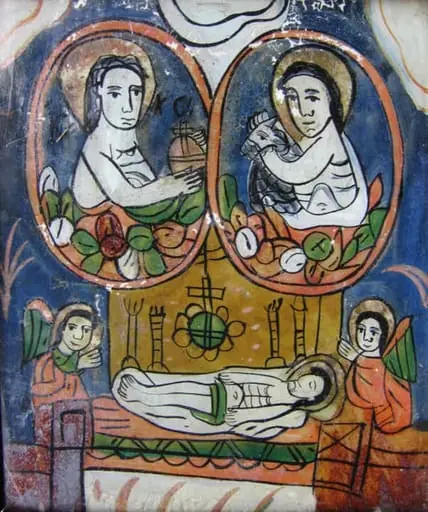 Ioan Botezătorul cu mielul și Iisus; Îngroparea lui Iisus
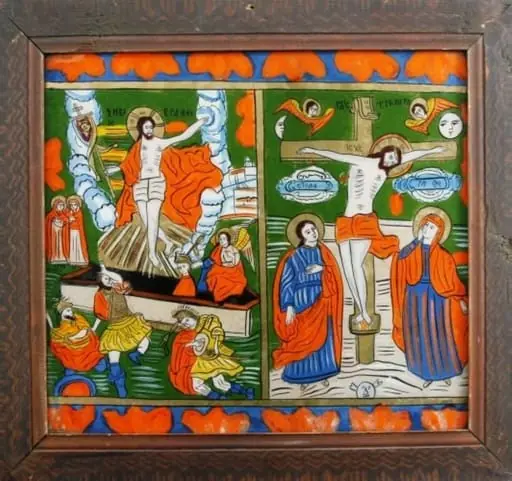 Înălțarea lui Iisus Hristos la ceruri; Răstignirea lui Iisus Hristos
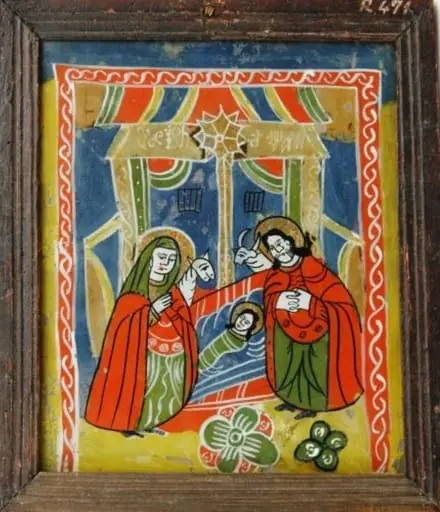 Nașterea lui Iisus Hristos
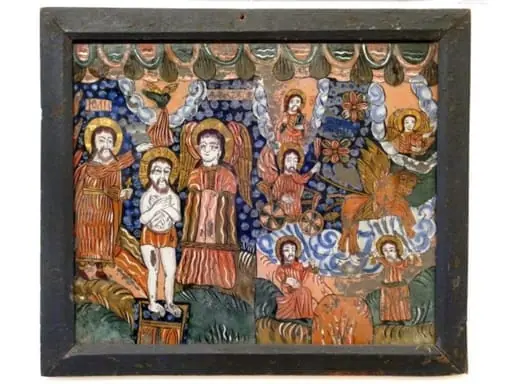 Botezul lui Iisus Hristos; Sfântul Proroc Ilie
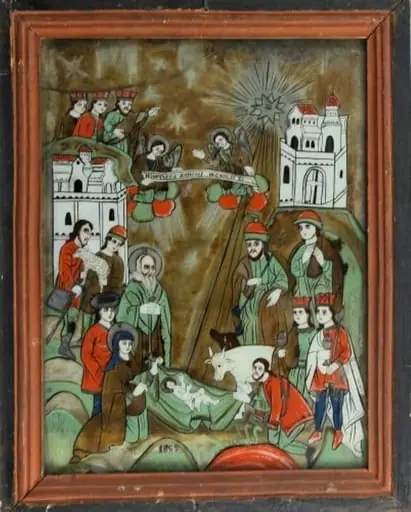 Nașterea lui Iisus Hristos
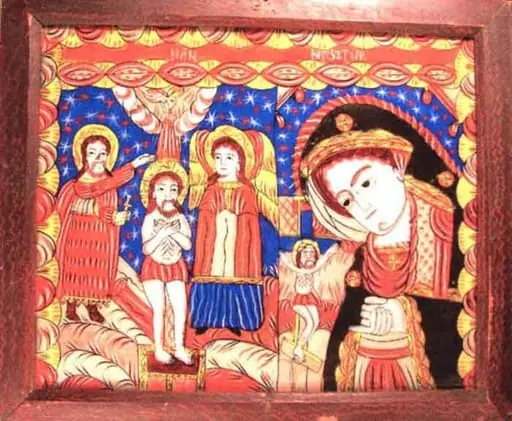 Maica Domnului Îndurerată (Botezul Domnului)
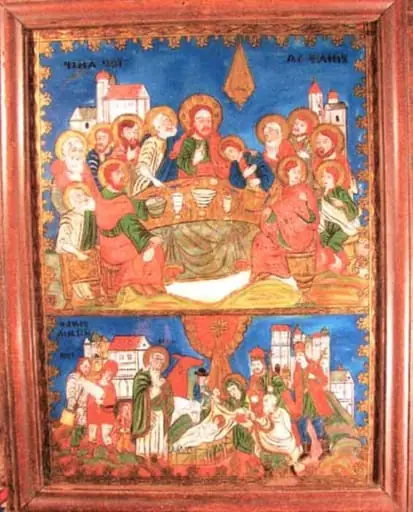 Cina cea de Taină și Nașterea lui Iisus
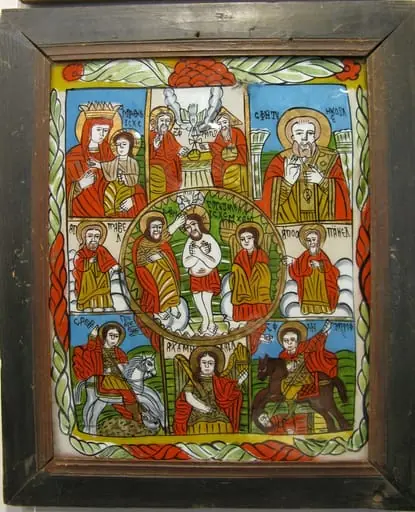 Prăznicar – Botezul lui IS HS
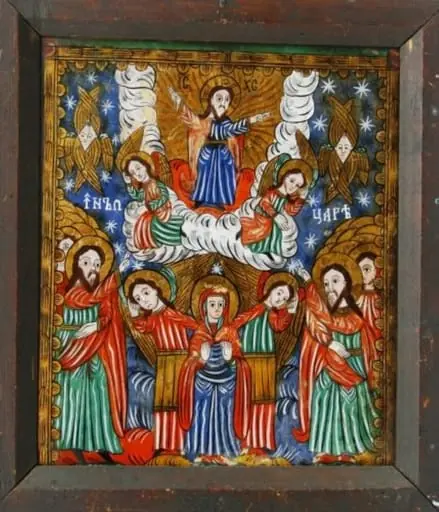 Înălțarea lui Iisus Hristos la ceruri
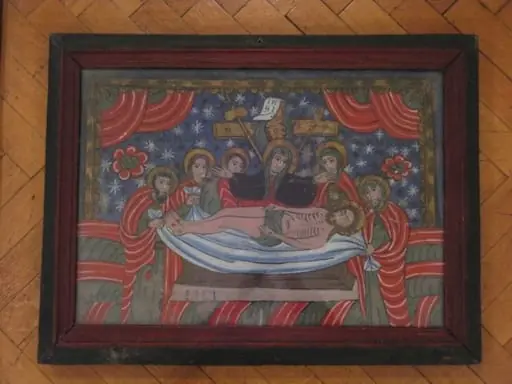 Plângerea lui Iisus Hristos (Prohodul)
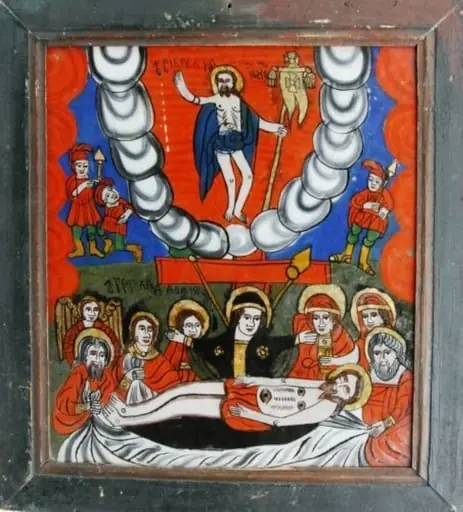 Îngroparea lui Iisus Hristos; Înălțarea lui Iisus Hristos la ceruri (Plângerea, Prohodul)