Artwork
Tamil Gateway (Gopura), Tamil Nadu
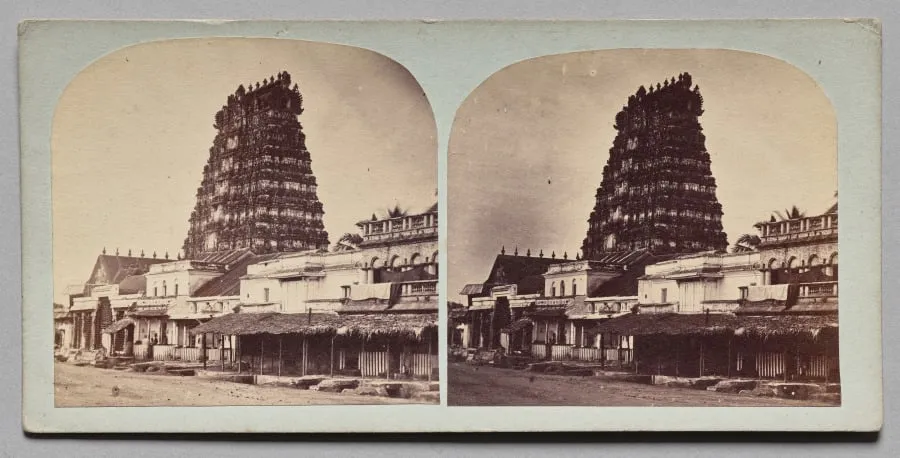
Tamil Gateway (Gopura), Tamil Nadu is a photography by the Impressionist artist Unknown. It dates from 1860 and is held in the collection of the Cleveland Museum of Art.
About this work
When viewed through a special device, the two images merge into one, making the gate pop out in 3D.
You see a tall, colorful temple gate called a gopura, covered in carved figures and bright paint. The photo is split in two—almost identical images side by side.
This isn’t just a picture; it’s a stereograph. When viewed through a special device, the two images merge into one, making the gate pop out in 3D. People in the 1800s used these to "visit" faraway places without leaving home. The detail in the carvings and the way the light hits the stone make the scene feel real.
To see more like this, look up 19th century photography.
Overview
The image is a 19th‑century stereographic photograph depicting the towering gopura, or gateway tower, of a Hindu temple in Tamil Nadu, southern India. When examined through a stereoscope, the paired images merge to give the viewer a convincing sense of depth, making the richly painted and sculpted façade appear to project outward.
Subject & Meaning
The gopura serves as the ceremonial entrance to the temple complex, a hallmark of medieval South Indian temple architecture. Its elaborate stone carvings and vivid pigments illustrate religious narratives and iconography, inviting contemplation of the sacred space that lies beyond the gate.
Technique & Style
Created as a stereograph, the photograph consists of two nearly identical exposures placed side by side. The stereoscopic process, popularized in the mid‑1800s, exploits binocular disparity to simulate three‑dimensional perception, allowing viewers to experience the monument’s height and detail without physically traveling to the site.
History & Provenance
Stereoscopic images entered public exhibition in London in 1851, quickly becoming a favored medium for presenting distant locales. This particular view of the Tamil Nadu gopura reflects that trend, offering Victorian audiences a mediated encounter with Indian architectural heritage.
Context
The gopura’s design reflects the Dravidian temple tradition that flourished from the 7th to 13th centuries, characterized by tiered towers adorned with sculptural programs. The photograph captures the structure at a time when colonial interest in documenting Indian culture was intensifying, contributing to a broader visual archive of the subcontinent.
Artist & collection

 Domestic Scene
 Giacomo and Cardinal Marco, investing Andrea, Abbot of San Zeno, with his Benefice
 The Nymph of Fontainebleau
 Portrait of a Woman
 Madonna and Child with Saints in the Enclosed Garden
 Venus and Minerva
 Family Group of Four on Sofa
 Wall painting from Room H of the Villa of P. Fannius Synistor at Boscoreale
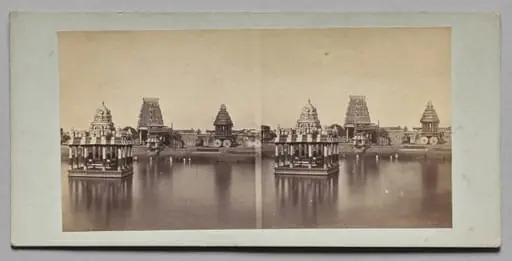 Temple Tank, Tamil Nadu
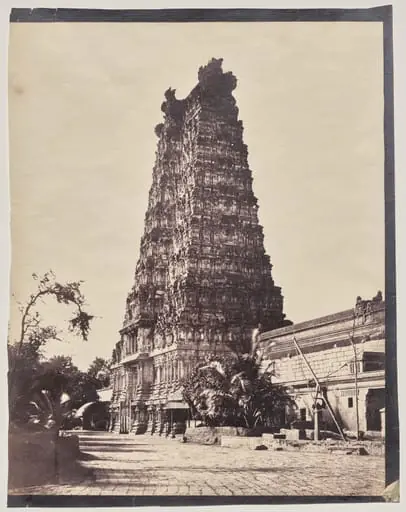 Western Gateway (Gopuram) of the Minakshi Sundareshvara Temple, Madurai
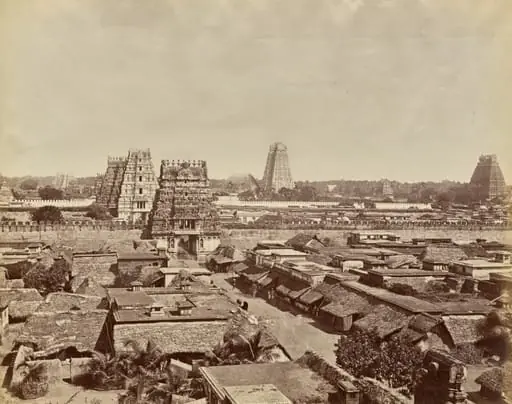 View from the Top of the Rock, looking over the native Town, Trichinopoly, India
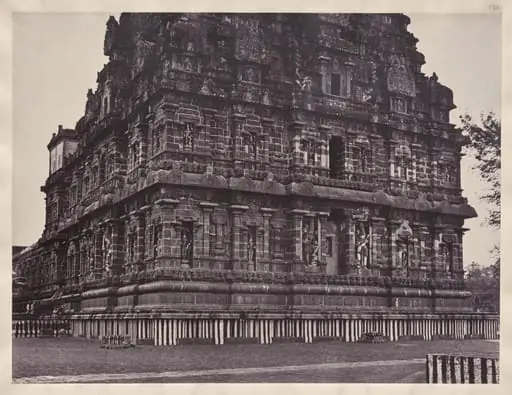 West and South Sides of the Vimana Walls, Great Temple (Brihadeshvara) at Tanjore (Thanjavur)
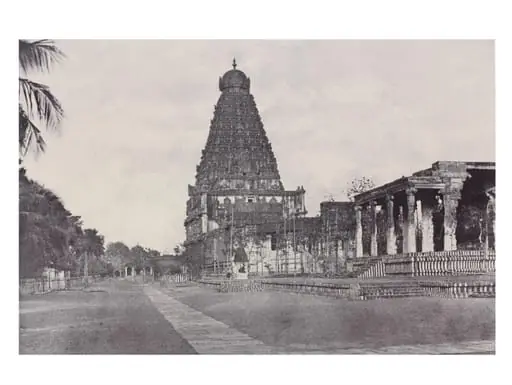 The Central Tower of the Great Pagoda
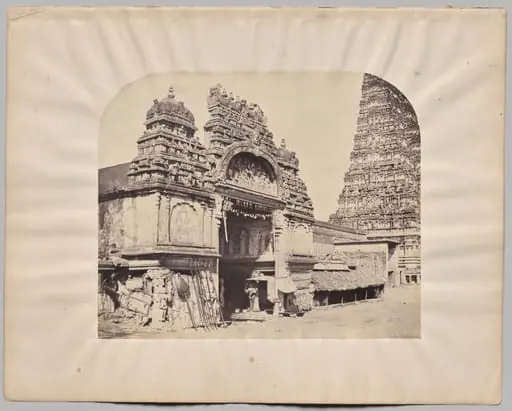 Entrance to the Minakshi Sundareshvara Temple, Madurai
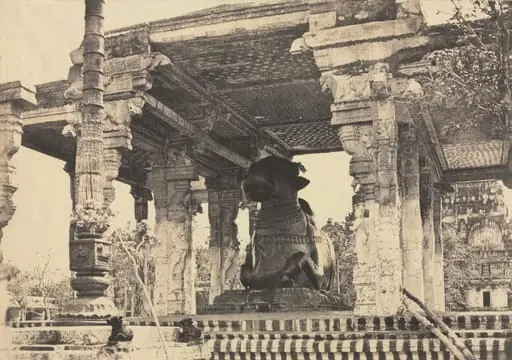 Great Pagoda, Great Bull, Front View, Tanjore, India (Rajarajeshvara Temple), plate 12 from Photographic Views of Tanjore and Trivady (Madras: Madras Presidency)
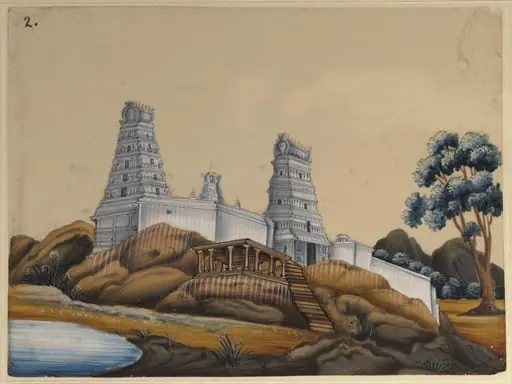 One of sixteen paintings of unidentified South Indian temples.
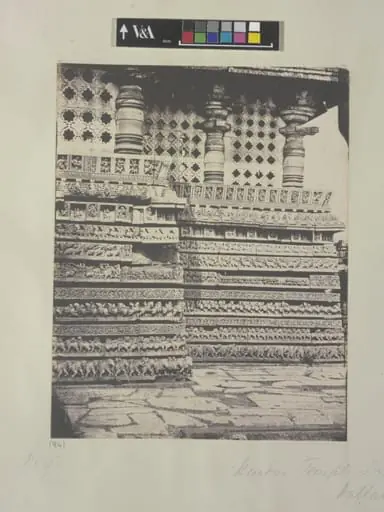 Hindoo Temple Sculpture, Southern India, Hullabeed
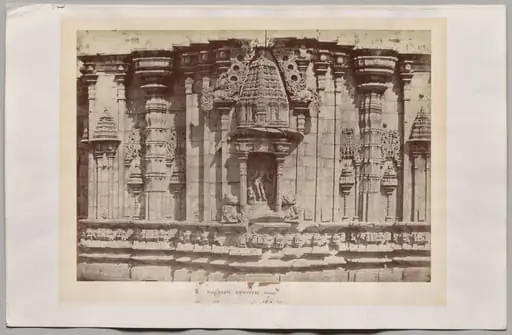 Kirwuttee, A Temple, India
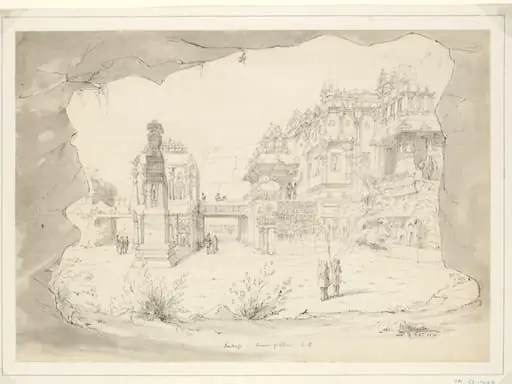 Kailasanatha Temple, Ellora
 Hindoo Temple Sculptures, Southern India, Hullabeed