Artwork
The parrot addresses Khujasta at the beginning of the fiftieth night, from a Tuti-nama (Tales of a Parrot): Fiftieth Night
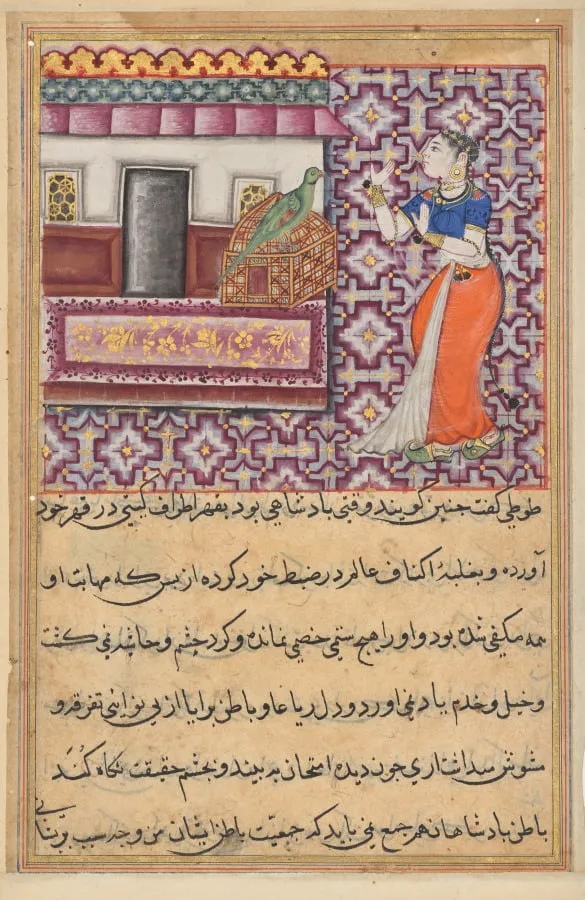
The parrot addresses Khujasta at the beginning of the fiftieth night, from a Tuti-nama (Tales of a Parrot): Fiftieth Night is an unspecified painting by the Mughal Painting artist Unknown. It dates from 1560 and is held in the collection of the Cleveland Museum of Art. The painting illustrates a scene from the *Tuti‑nama*, a Mughal manuscript of fifty‑two nightly tales.
About this work
The parrot is telling a story to stop the woman from sneaking out to meet her lover—just one of 52 nights of tales.
You see a woman in a green robe sitting on a carpet, a white parrot perched on a stand beside her.
This painting is from a book of stories called the *Tuti-nama*, or *Tales of a Parrot*. The parrot is telling a story to stop the woman from sneaking out to meet her lover—just one of 52 nights of tales. The bright colors and fine details show how important storytelling was in Mughal courts.
To see more art like this, look up Mughal India, court of Akbar (reigned 1556–1605).
Overview
The painting illustrates a scene from the *Tuti‑nama*, a Mughal manuscript of fifty‑two nightly tales. In this episode, a woman named Khujasta, dressed in a green robe and seated on a carpet, is confronted by a white parrot perched on a nearby stand. The bird begins a long story that delays her departure to meet her lover, extending until sunrise.
Subject & Meaning
The narrative captures a moment of interruption: the clever parrot, Tuti, uses storytelling as a means of control, keeping Khujasta from her clandestine rendezvous. The tale he recounts—about a Rum princess and the sorrow of her son—serves as a moral or cautionary device, reflecting the broader function of narrative in regulating courtly behavior.
Technique & Style
Executed in the vibrant palette typical of Mughal court painting, the work combines fine linear detail with rich coloration. The figures are rendered with delicate brushwork, emphasizing the texture of the green robe and the intricate patterns of the carpet. The white parrot is depicted with precise feather detailing, highlighting the artist’s skill in naturalistic representation within a decorative framework.
Context
Created for the *Tuti‑nama*, a collection compiled during the reign of Emperor Akbar (1556–1605), the painting exemplifies the importance of literary and visual storytelling in Mughal culture. Such manuscripts were produced for elite audiences, illustrating the court’s patronage of the arts and its fascination with Persianate narrative traditions adapted to Indian settings.
Artist & collection

 Domestic Scene
 Giacomo and Cardinal Marco, investing Andrea, Abbot of San Zeno, with his Benefice
 The Nymph of Fontainebleau
 Portrait of a Woman
 Madonna and Child with Saints in the Enclosed Garden
 Venus and Minerva
 Family Group of Four on Sofa
 Wall painting from Room H of the Villa of P. Fannius Synistor at Boscoreale
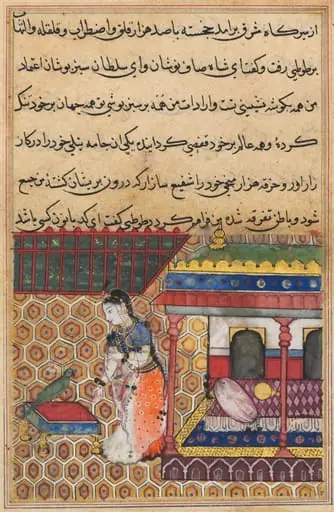 The parrot addresses Khujasta at the beginning of the thirty-eighth night, from a Tuti-nama (Tales of a Parrot)
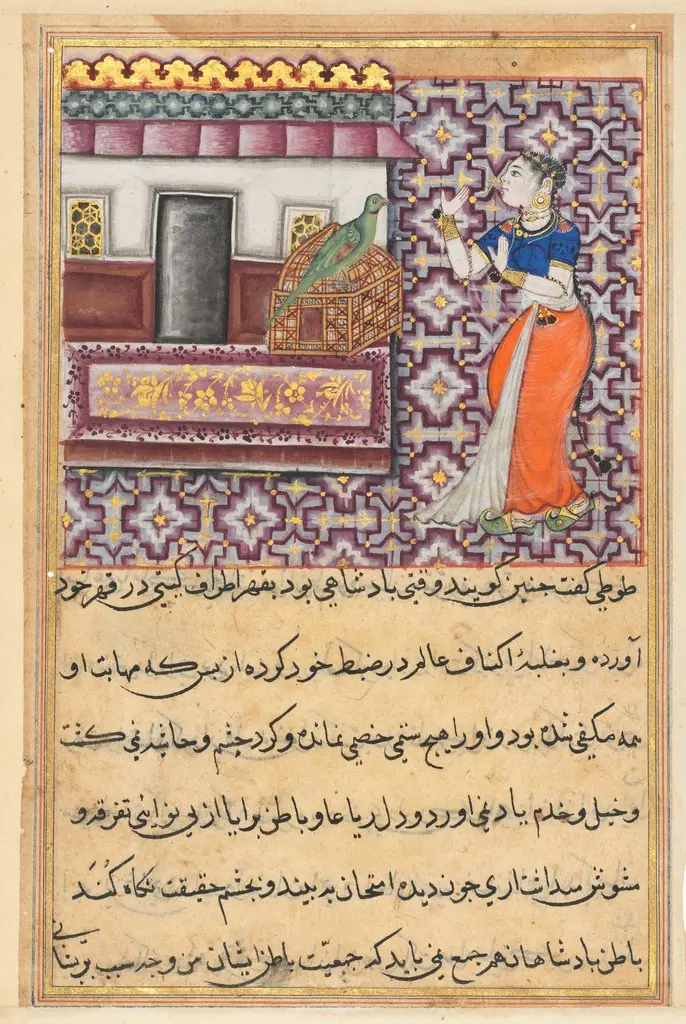 The parrot addresses Khujasta at the beginning of the fiftieth night, from a Tuti-nama (Tales of a Parrot): Fiftieth Night
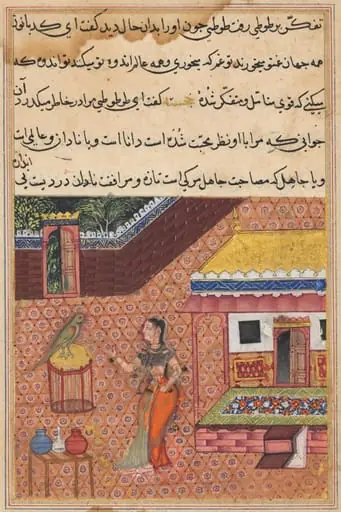 The parrot addresses Khujasta at the beginning of the thirty-fourth night, from a Tuti-nama (Tales of a Parrot)
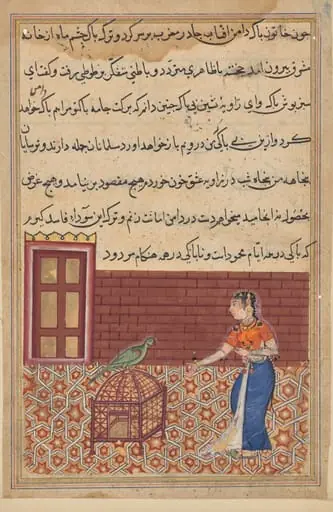 The parrot addresses Khujasta at the beginning of the fifty-first night, from a Tuti-nama (Tales of a Parrot): Fifty-first Night
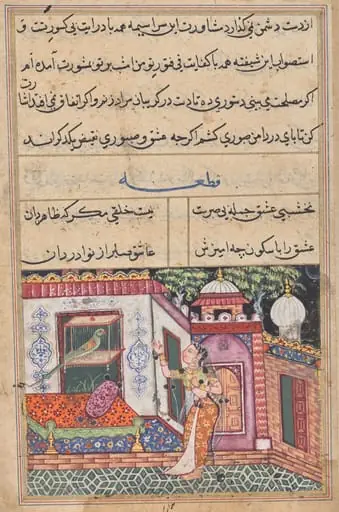 The Parrot Addresses Khujasta at the Beginning of the Eleventh Night, from a Tuti-nama (Tales of a Parrot)
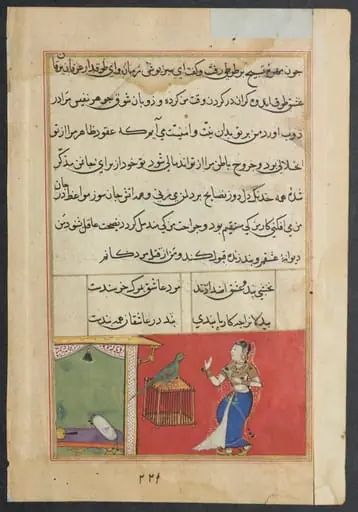 The parrot addresses Khujasta at the beginning of the forty-seventh night, from a Tuti-nama (Tales of a Parrot): Forty-seventh Night
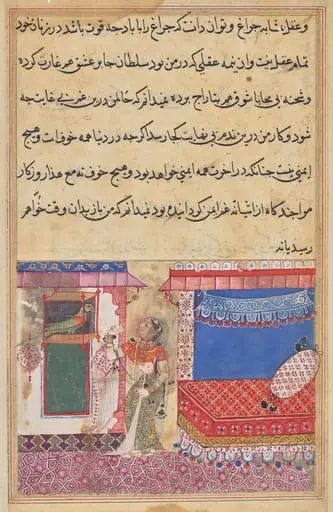 The Parrot Addresses Khujasta at the Beginning of the Eighteenth Night, from a Tuti-nama (Tales of a Parrot)
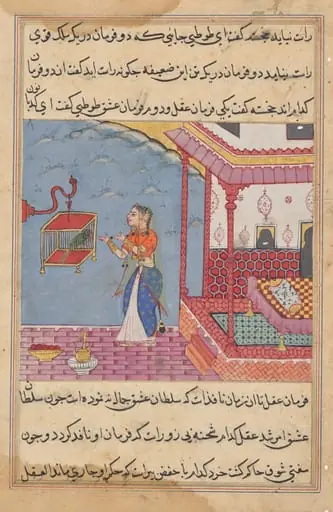 The Parrot Addresses Khujasta at the Beginning of the Twenty-Fourth Night, from a Tuti-nama (Tales of a Parrot)
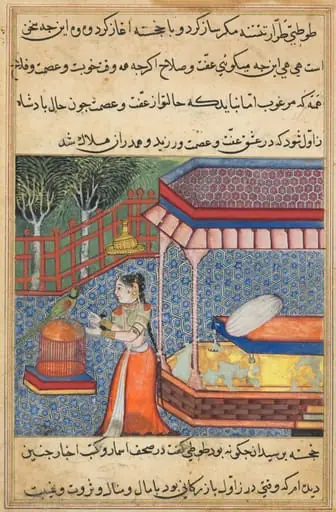 The parrot addresses Khujasta at the beginning of the thirty-sixth night, from a Tuti-nama (Tales of a Parrot)
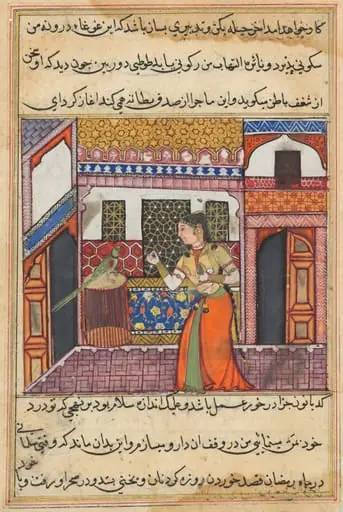 The parrot addresses Khujasta at the beginning of the forty-third night, from a Tuti-nama (Tales of a Parrot)
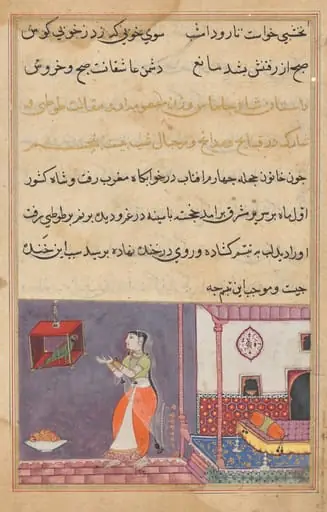 The Parrot Addresses Khujasta at the Beginning of the Twenty-fifth Night, from a Tuti-nama (Tales of a Parrot)