Artwork
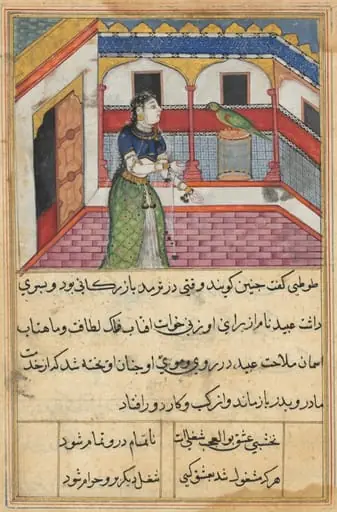
The parrot addresses Khujasta at the beginning of the fortieth night, from a Tuti-nama (Tales of a Parrot)
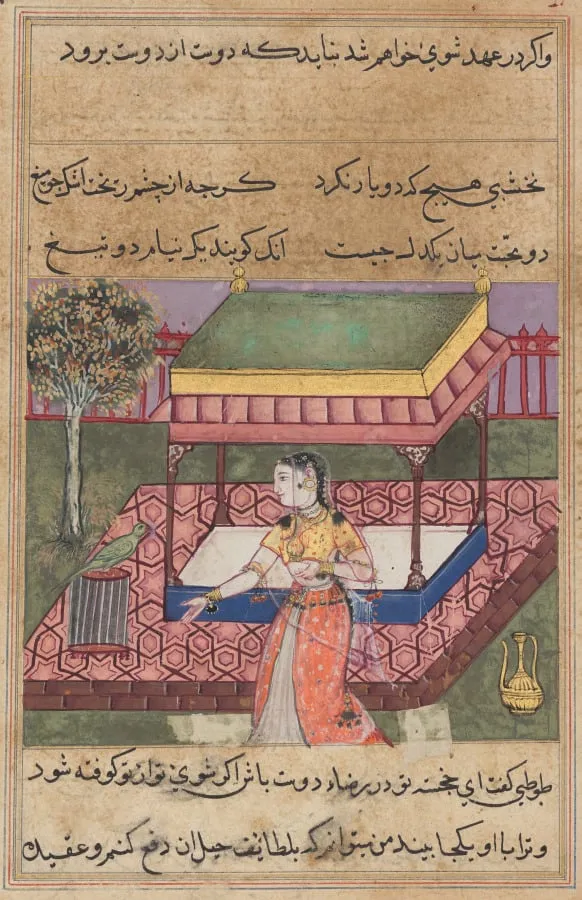
The parrot addresses Khujasta at the beginning of the fortieth night, from a Tuti-nama (Tales of a Parrot) is an unspecified painting by the Mughal Painting artist Unknown. It dates from 1560 and is held in the collection of the Cleveland Museum of Art.
About this work
The parrot isn’t just a bird—it’s a storyteller, trying to keep the woman from sneaking out to meet her lover by telling her a tale of its own.
You see a woman in a red dress standing in a garden, talking to a bright green parrot perched on a branch.
This painting comes from a book of stories called the *Tuti-nama*, or *Tales of a Parrot*. The parrot isn’t just a bird—it’s a storyteller, trying to keep the woman from sneaking out to meet her lover by telling her a tale of its own. The garden feels alive, with flowers and trees framing the scene like a stage.
If you like this, look up *mughal india, court of akbar (reigned 1556–1605)*.
Overview
The painting illustrates a moment from the *Tuti‑nama*, a narrative collection in which a bright‑green parrot addresses a woman named Khujasta as she prepares to depart for a secret nocturnal rendezvous. Set within a lush garden, the scene captures the parrot perched on a branch while Khujasta, dressed in a vivid red garment, listens to the bird’s admonition.
Subject & Meaning
Khujasta is halted by the parrot, which begins recounting the tale of Shahr‑Arai, a merchant’s wife from Nishapur who deceived her husband to pursue an affair. The parrot’s story functions as a moral counterpoint, warning against infidelity by presenting a parallel narrative of betrayal.
Technique & Style
Rendered with delicate brushwork, the composition balances rich, saturated colors—particularly the red of the woman's dress and the parrot’s emerald plumage—against a verdant garden backdrop. The setting is framed by stylized foliage that creates a theatrical space, characteristic of miniature painting traditions that emphasize narrative clarity.
Context
The work belongs to the *Tuti‑nama* tradition, a literary and visual genre popular in Mughal India during the reign of Akbar (1556–1605). Such illustrated manuscripts combined courtly poetry with moral instruction, often employing animal narrators to convey ethical lessons within an aristocratic setting.
Artist & collection

 Domestic Scene
 Giacomo and Cardinal Marco, investing Andrea, Abbot of San Zeno, with his Benefice
 The Nymph of Fontainebleau
 Portrait of a Woman
 Madonna and Child with Saints in the Enclosed Garden
 Venus and Minerva
 Family Group of Four on Sofa
 Wall painting from Room H of the Villa of P. Fannius Synistor at Boscoreale
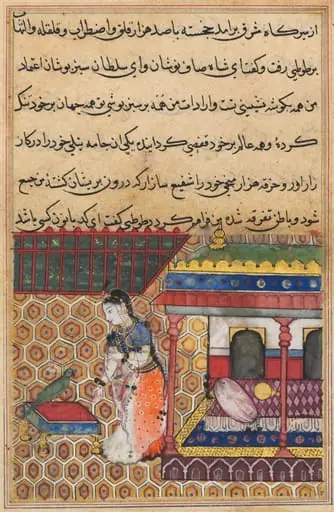 The parrot addresses Khujasta at the beginning of the thirty-eighth night, from a Tuti-nama (Tales of a Parrot)
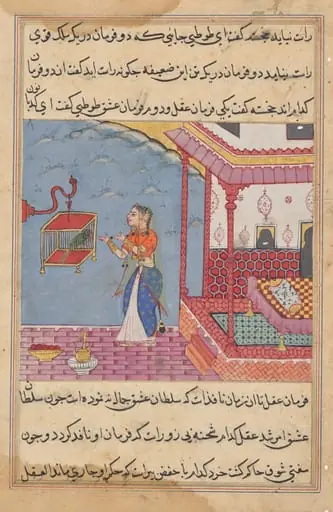 The Parrot Addresses Khujasta at the Beginning of the Twenty-Fourth Night, from a Tuti-nama (Tales of a Parrot)
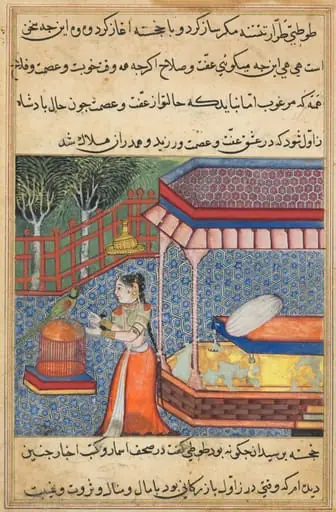 The parrot addresses Khujasta at the beginning of the thirty-sixth night, from a Tuti-nama (Tales of a Parrot)
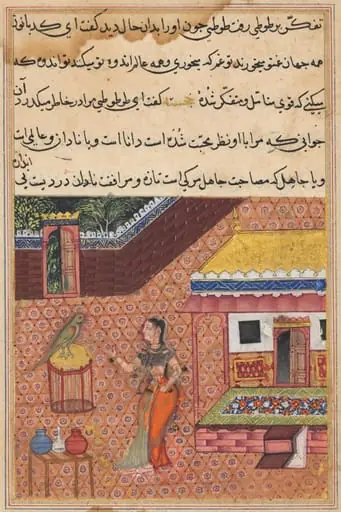 The parrot addresses Khujasta at the beginning of the thirty-fourth night, from a Tuti-nama (Tales of a Parrot)
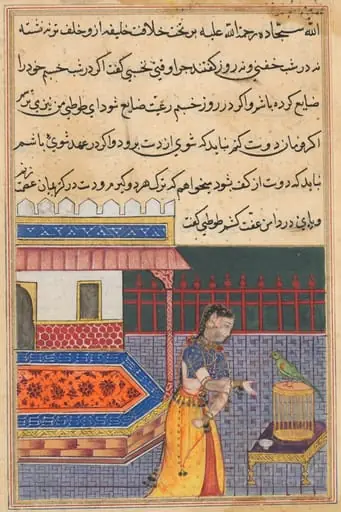 The parrot addresses Khujasta at the beginning of the forty-first night, from a Tuti-nama (Tales of a Parrot): Forty-first Night
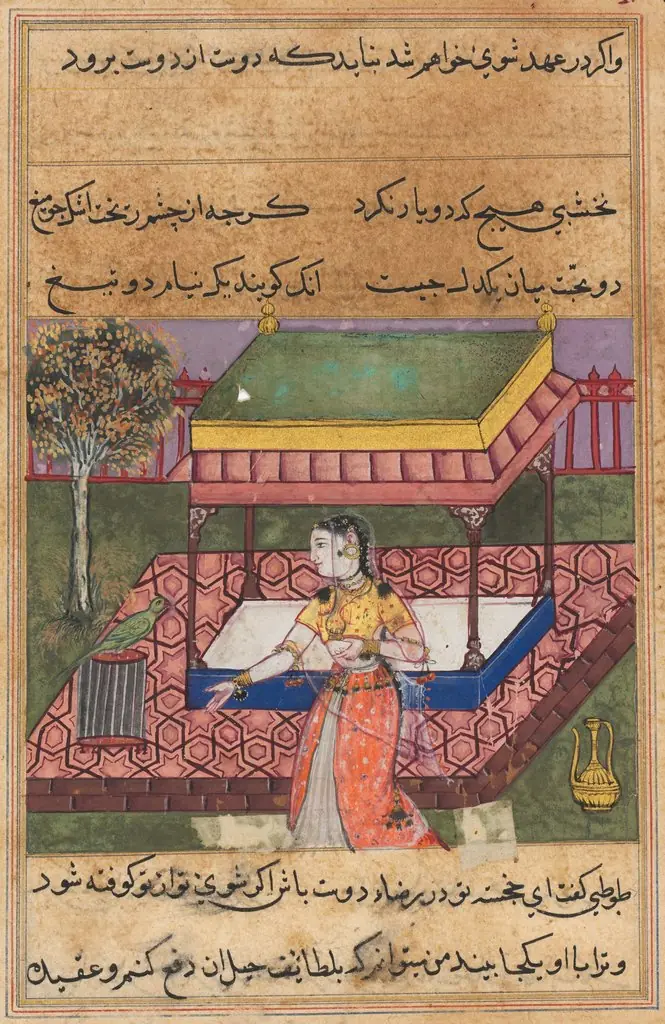 The parrot addresses Khujasta at the beginning of the fortieth night, from a Tuti-nama (Tales of a Parrot)
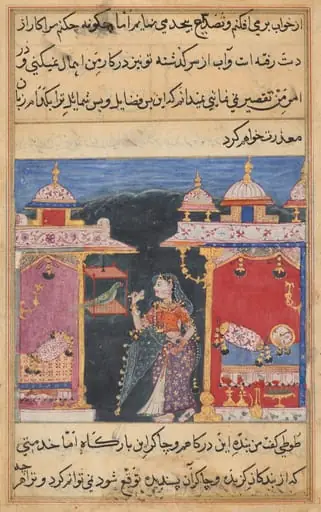 The Parrot Addresses Khujasta at the Beginning of the Seventh Night, from a Tuti-nama (Tales of a Parrot)
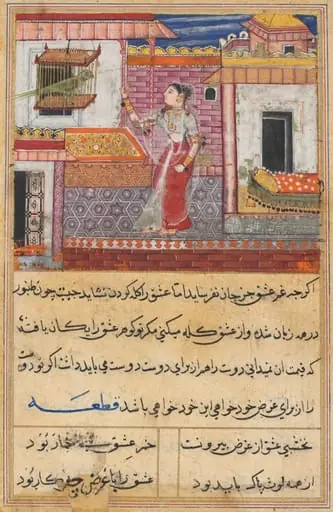 The Parrot Addresses Khujasta at the Beginning of the Thirteenth Night, from a Tuti-nama (Tales of a Parrot)
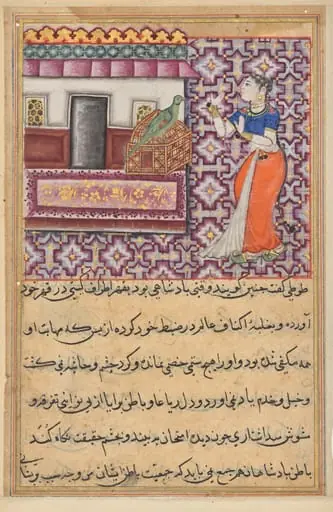 The parrot addresses Khujasta at the beginning of the fiftieth night, from a Tuti-nama (Tales of a Parrot): Fiftieth Night
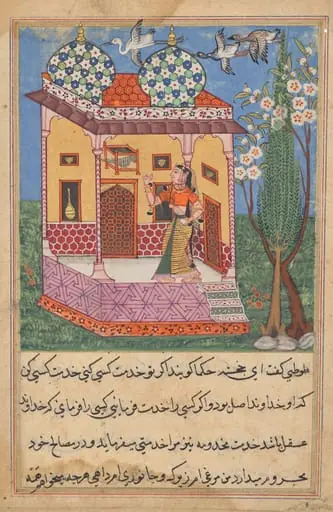 The Parrot Addresses Khujasta at the Beginning of the Twenty-sixth Night, from a Tuti-nama (Tales of a Parrot)
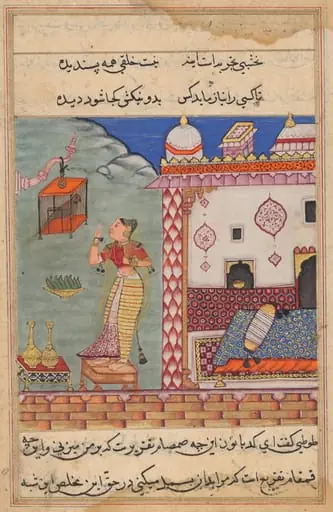 The Parrot Addresses Khujasta at the Beginning of the Twenty-seventh Night, form a Tuti-nama (Tales of a Parrot)
 The parrot addresses Khujasta at the beginning of the forty-second night, from a Tuti-nama (Tales of a Parrot)