Artwork
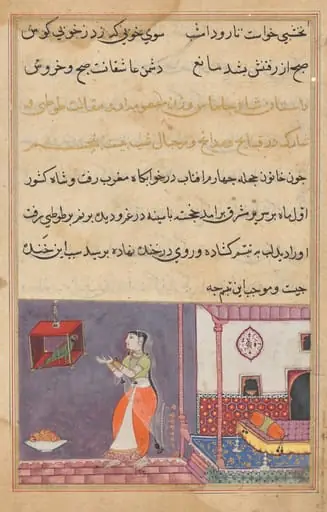
The parrot addresses Khujasta at the beginning of the fifty-first night, from a Tuti-nama (Tales of a Parrot): Fifty-first Night
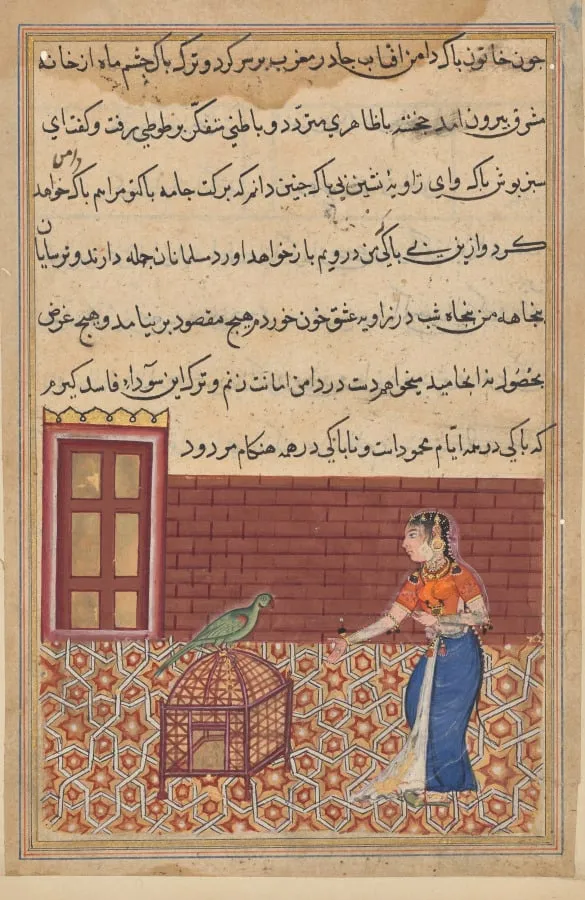
The parrot addresses Khujasta at the beginning of the fifty-first night, from a Tuti-nama (Tales of a Parrot): Fifty-first Night is an unspecified painting by the Mughal Painting artist Unknown. It dates from 1560 and is held in the collection of the Cleveland Museum of Art. The work illustrates a scene from the fifty‑first night of a fifty‑two night narrative cycle.
About this work
The tiny details—embroidered slippers, a jeweled birdcage—show the luxury of Emperor Akbar’s court.
A woman in a pink robe sits on a carpet, listening to a green parrot perched on a stand. Behind them, a servant holds a lantern as night falls.
This painting comes from a book of stories told over 52 nights. The parrot keeps the woman from sneaking out by spinning tales—like a feathered Scheherazade. The tiny details—embroidered slippers, a jeweled birdcage—show the luxury of Emperor Akbar’s court.
To see more art from this world, look up *Mughal India, court of Akbar (reigned 1556–1605)*.
Overview
The work illustrates a scene from the fifty‑first night of a fifty‑two night narrative cycle. A woman in a pink robe, identified as Khujasta, sits on a carpet while a green parrot named Tuti perches on a nearby stand. A servant bearing a lantern adds a dim, nocturnal ambience as the evening deepens.
Subject & Meaning
At this juncture Khujasta is about to depart for a secret rendezvous with her lover, but the clever parrot intervenes, recounting a cautionary tale about King Bahram and the tragic fate of his vizier’s daughter. The bird functions as a narrative foil, echoing the role of Scheherazade by using storytelling to delay action.
Technique & Style
The painting emphasizes courtly opulence through finely rendered elements: embroidered slippers, a jeweled birdcage, and the richly dyed pink garment of the heroine. The parrot’s vivid green plumage contrasts with the muted background, while the lantern’s warm glow highlights the textures of the carpet and the figures’ faces.
Context
The scene derives from a Mughal manuscript tradition that blended Persian storytelling with Indian courtly aesthetics during Emperor Akbar’s reign (1556–1605). Such illustrations were intended for elite audiences, reflecting the sophisticated literary culture of the imperial atelier and the patronage of lavishly illustrated books.
History & Provenance
The painting originates from a deluxe illustrated volume of the Tuti‑nama, a collection of tales narrated over fifty‑two nights. The manuscript was produced in the Mughal imperial workshop and later entered museum collections as part of the broader corpus of Akbar‑era court paintings.
Artist & collection

 Domestic Scene
 Giacomo and Cardinal Marco, investing Andrea, Abbot of San Zeno, with his Benefice
 The Nymph of Fontainebleau
 Portrait of a Woman
 Madonna and Child with Saints in the Enclosed Garden
 Venus and Minerva
 Family Group of Four on Sofa
 Wall painting from Room H of the Villa of P. Fannius Synistor at Boscoreale
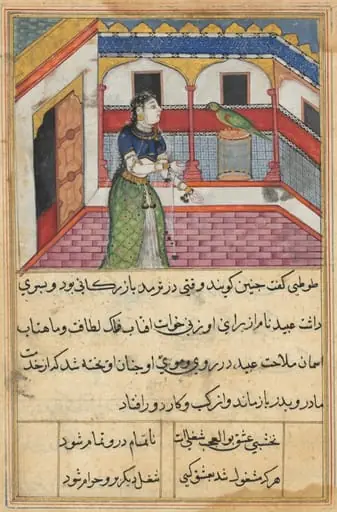 The parrot addresses Khujasta at the beginning of the forty-second night, from a Tuti-nama (Tales of a Parrot)
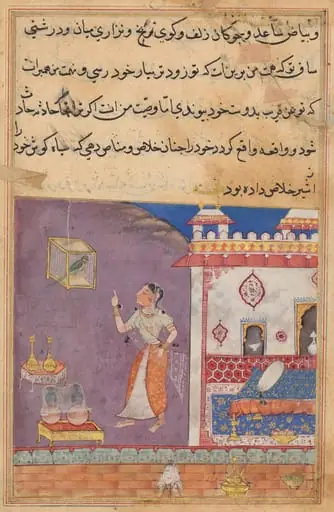 The Parrot Addresses Khujasta at the Beginning of the Twenty-ninth Night, from a Tuti-nama (Tales of a Parrot)
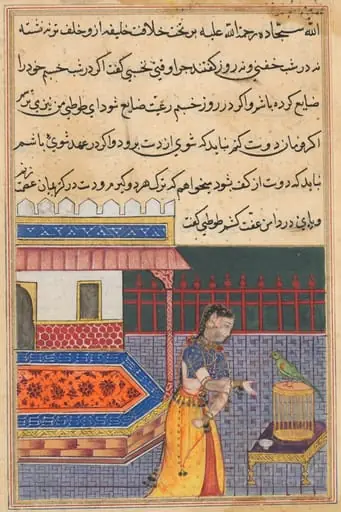 The parrot addresses Khujasta at the beginning of the forty-first night, from a Tuti-nama (Tales of a Parrot): Forty-first Night
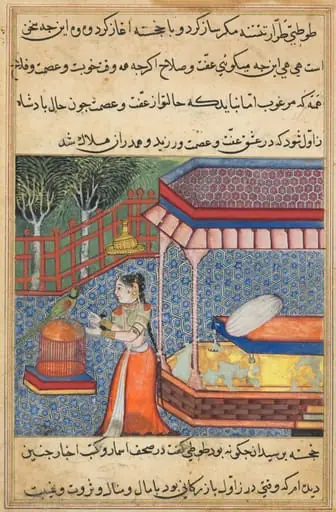 The parrot addresses Khujasta at the beginning of the thirty-sixth night, from a Tuti-nama (Tales of a Parrot)
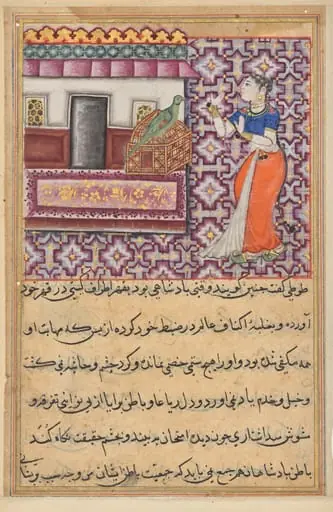 The parrot addresses Khujasta at the beginning of the fiftieth night, from a Tuti-nama (Tales of a Parrot): Fiftieth Night
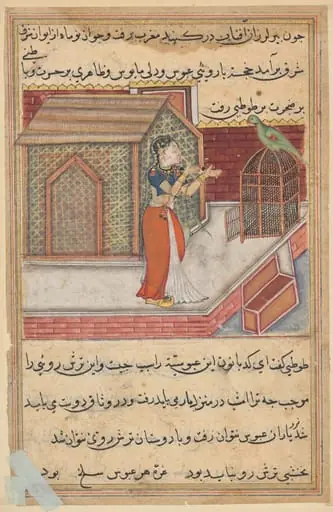 The parrot addresses Khujasta at the beginning of the forty-ninth night, from a Tuti-nama (Tales of a Parrot): Forty-Ninth Night
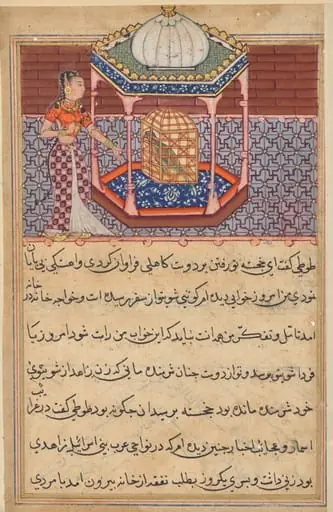 The parrot addresses Khujasta at the beginning of the fifty-second night, from a Tuti-nama (Tales of a Parrot): Fifty-second Night
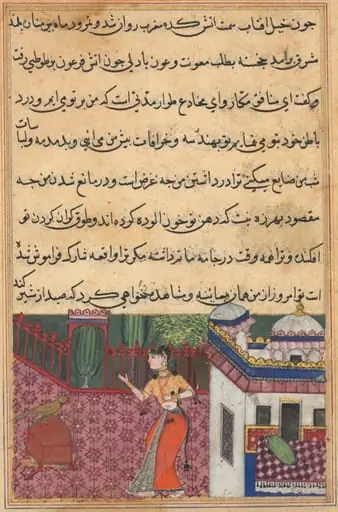 The parrot addresses Khujasta at the beginning of the thirty-third night, from a Tuti-nama (Tales of a Parrot)
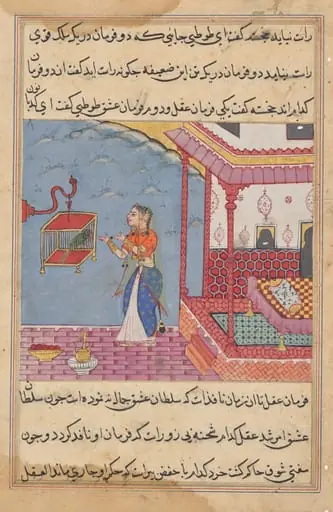 The Parrot Addresses Khujasta at the Beginning of the Twenty-Fourth Night, from a Tuti-nama (Tales of a Parrot)
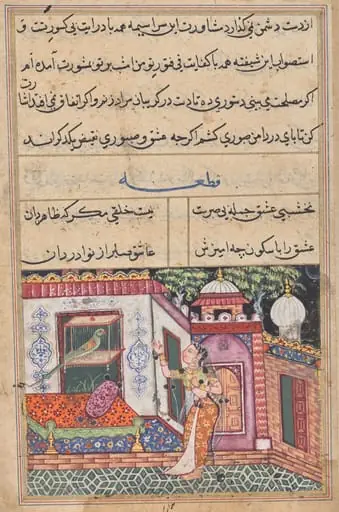 The Parrot Addresses Khujasta at the Beginning of the Eleventh Night, from a Tuti-nama (Tales of a Parrot)
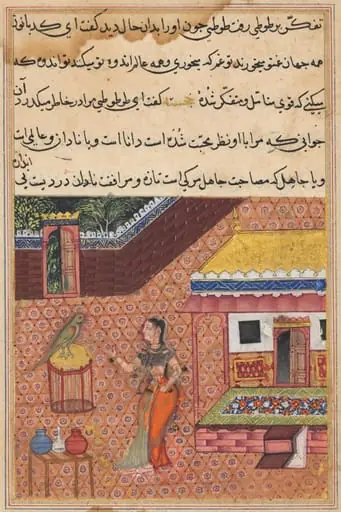 The parrot addresses Khujasta at the beginning of the thirty-fourth night, from a Tuti-nama (Tales of a Parrot)
 The Parrot Addresses Khujasta at the Beginning of the Twenty-fifth Night, from a Tuti-nama (Tales of a Parrot)